-1791966549842.webp)





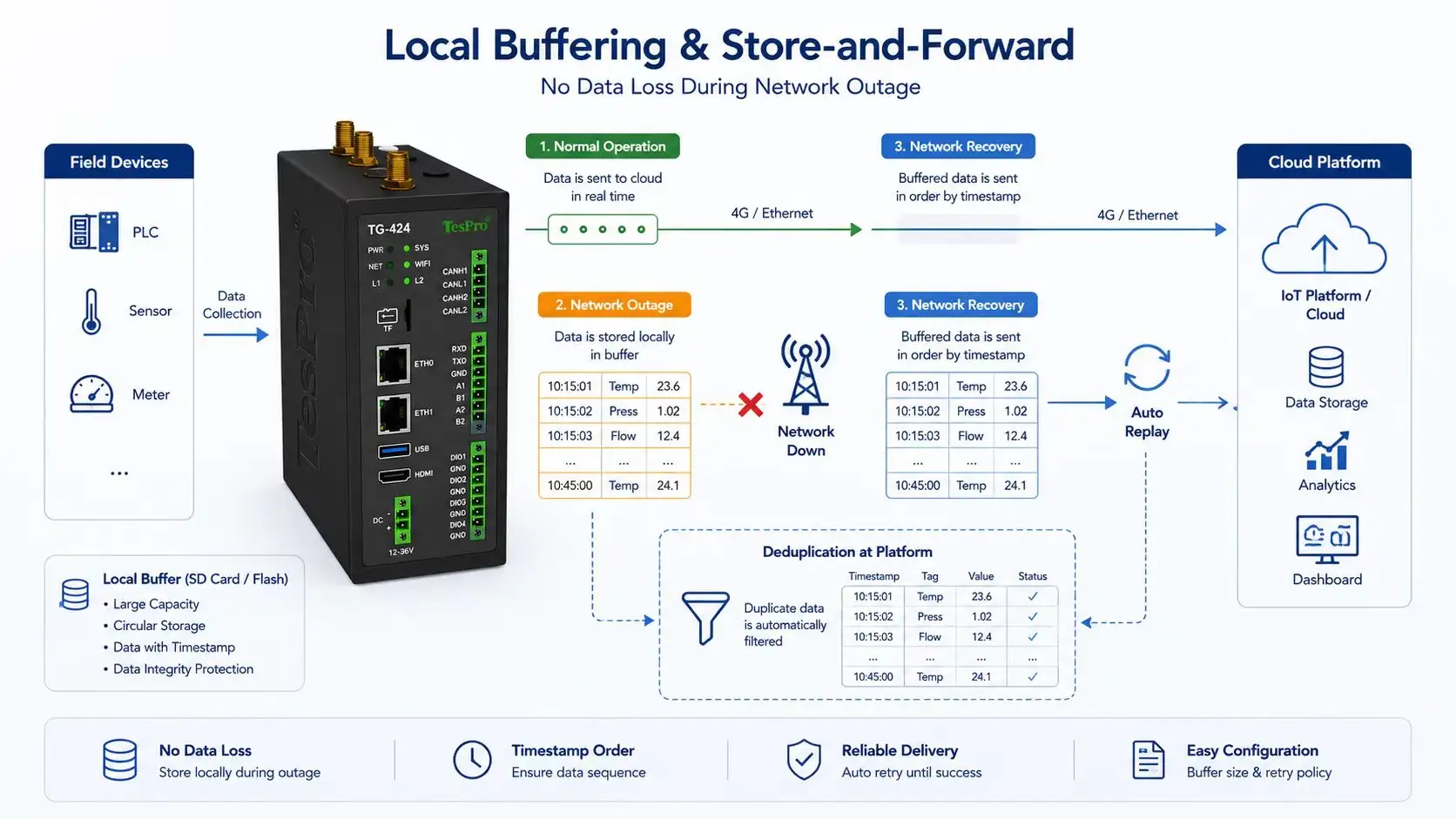

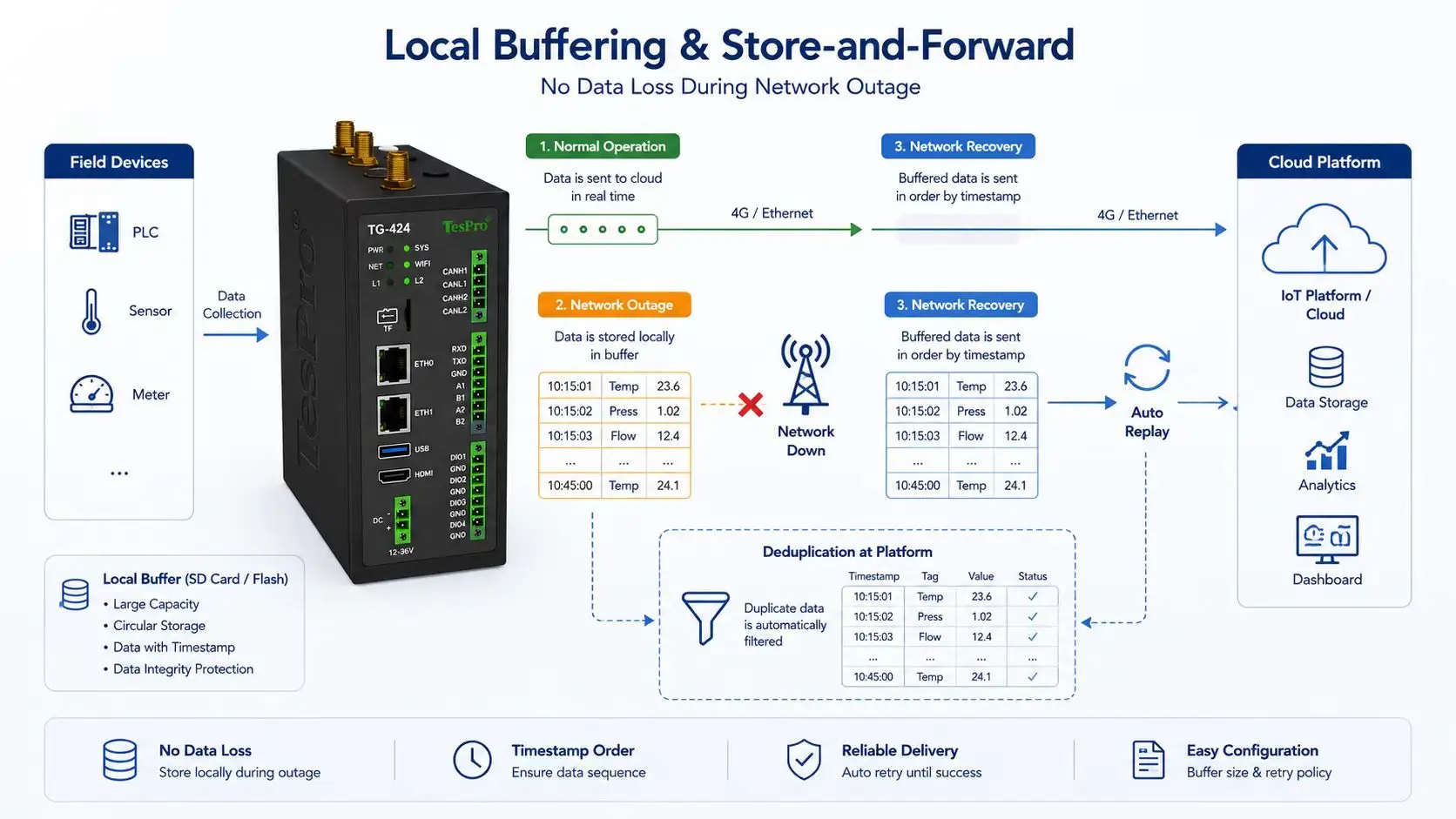
Local buffering stores timestamped data when the network is unavailable or the platform rejects records, then replays it after recovery. It can reduce gaps but does not automatically guarantee zero loss. The project must define what is buffered, capacity, retention, power-loss persistence, replay order, rate limiting and platform deduplication.
Key Takeaways
• The buffer should retain business records and timestamps, not only raw network frames.
• Replay that is too fast can overload the platform; replay that is too slow prolongs recovery.
• The platform must handle duplicates, out-of-order and late-arriving records.
Begin with data value
High-frequency raw data, alarms, cumulative values and control events have different priorities. Define which tags must be retained, which may be aggregated or dropped, and which records replay first.
Capacity requires real inputs
Retention depends on point count, sampling interval, record size, metadata and logs. Reserve space for abnormal high-frequency data, long platform outages and future growth.
Replay testing must include abnormal conditions
Simulate network loss, DNS failure, server rejection, expired certificates, power restart, full storage and clock changes, then verify platform completeness and order.
How Tespro Fits
Selected Tespro TG Series configurations can be evaluated for local data buffering, replay after network recovery and edge processing. Storage media, capacity, policy and protocol behavior depend on model, firmware and project application; “supports buffering” alone is not enough.
Compatibility and Selection Checklist
✓ Point count, sampling interval and record size
✓ Mandatory and aggregatable data
✓ Maximum network or platform outage
✓ Power-loss persistence and storage life
✓ Replay order, rate and bandwidth limits
✓ Platform deduplication, late data and clock policy
Frequently Asked Questions
Q: Does buffering guarantee that no data is lost?
A: No. Capacity, power-loss persistence, write policy, storage failure and platform handling still matter.
Q: How can replayed records avoid duplicates?
A: Use unique keys such as device ID, tag, timestamp and sequence number, and make platform ingestion idempotent.
Q: Does transparent transmission automatically store business data?
A: Not necessarily. Pure passthrough may only maintain the connection. Confirm whether the selected mode stores payloads.