-1791966549842.webp)





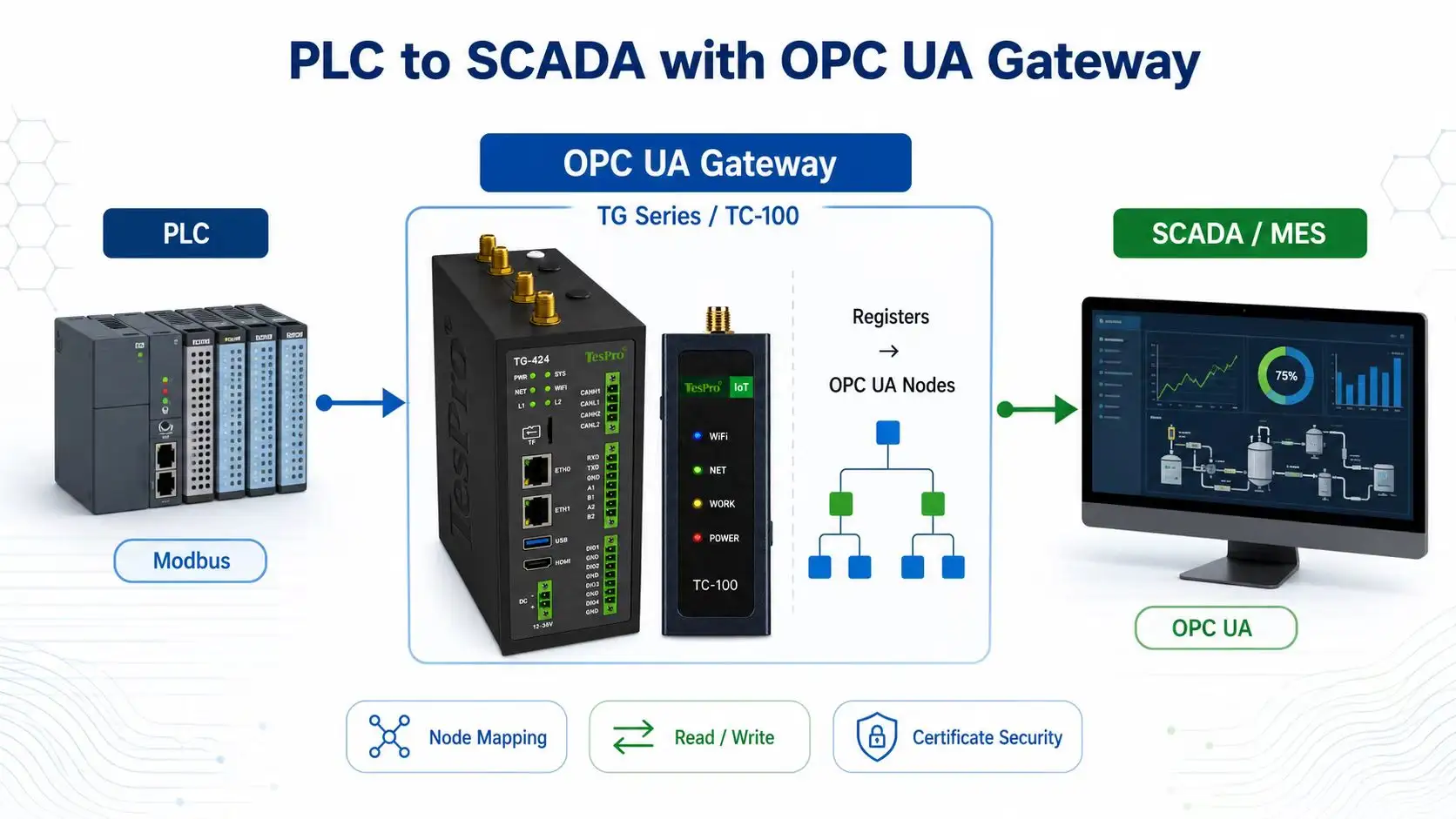

An industrial gateway for energy storage commonly connects the BMS, PCS, meters, fire-safety or environmental devices, normalizes their interfaces and protocols, and publishes data to the EMS or cloud. Selection should cover protocols, point scale, polling, time synchronization, buffering, cybersecurity, redundancy and edge applications—not only CPU performance.
Key Takeaways
• The gateway normally does not replace BMS or PCS safety control.
• Consistent tags, units and quality are the foundation of EMS integration.
• High-performance edge computing must remain separate from real-time control boundaries.
Why energy-storage devices create data silos
BMS, PCS, meters and auxiliaries may come from different vendors with different protocols, byte order, scaling, timestamps and alarm definitions. The gateway should normalize the data while preserving source and quality.
Separate real-time control from data processing
Protection, interlocking and fast control should remain in the BMS, PCS or PLC. The gateway can perform acquisition, conversion, statistics, buffering, logging and platform communication.
Validation must represent long-term operation
Beyond normal tags, test device offline states, exception codes, system restart, clock drift, network loss, replay, certificates and remote updates.
How Tespro Fits
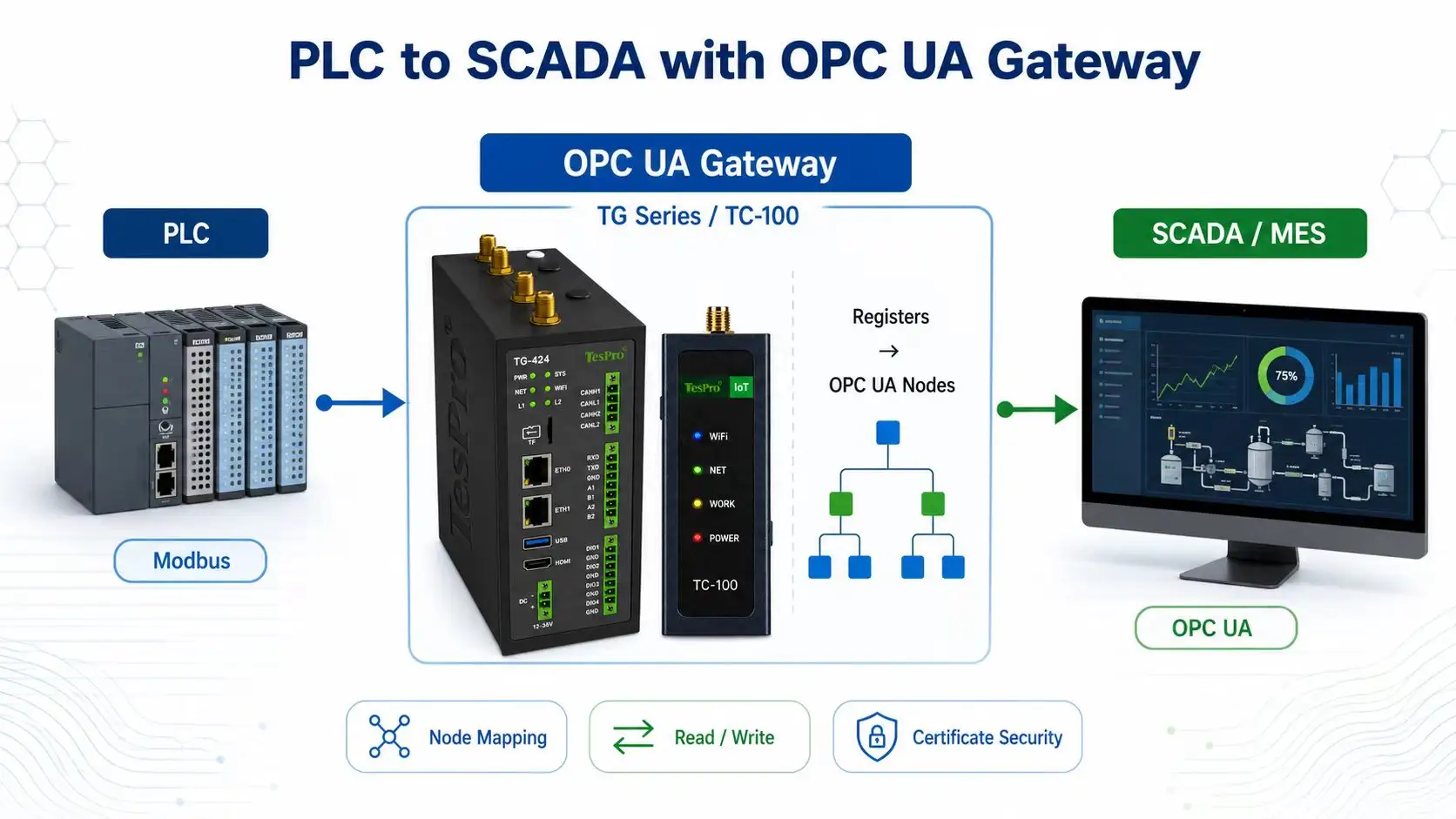
Tespro TG Series gateways can be evaluated for multi-protocol acquisition, tag mapping, buffering and EMS connectivity at energy-storage sites. TG-424 may be evaluated for higher-performance edge computing and local AI inference, subject to confirmation of NPU, optional coprocessor, interfaces, protocols and redundancy in the current configuration.
Compatibility and Selection Checklist
✓ BMS, PCS, meter and auxiliary-device list
✓ Protocols, interfaces, point maps, units and scaling
✓ Polling, alarms and write requirements
✓ EMS interface, data model and time sync
✓ Buffering, logs, VPN and certificates
✓ Edge algorithms, resources and control boundary
Frequently Asked Questions
Q: Can an energy-storage gateway replace the BMS?
A: No. The BMS performs battery monitoring, protection and safety logic; the gateway mainly integrates data and communications.
Q: Does every BESS project need local AI?
A: No. AI should be evaluated against a defined task and data quality, not deployed only because compute resources exist.
Q: What if BMS and PCS point maps are different?
A: Create separate mappings for units, scaling and quality, then normalize them into the EMS model.