-1791966549842.webp)





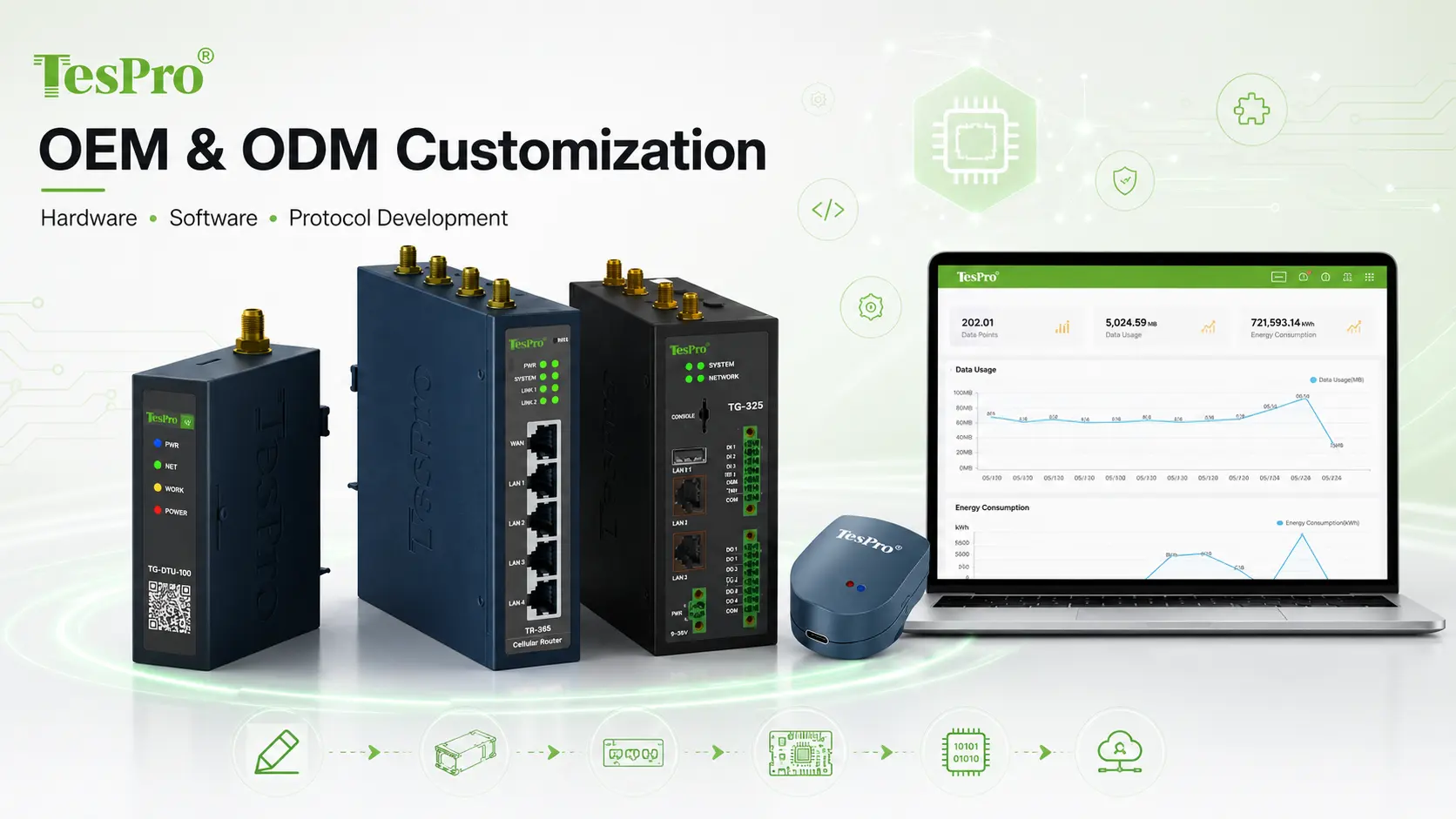

OEM and ODM customization is more than placing a logo on an enclosure. The project must define which elements remain standard, which require development, and who owns validation and certification. Tespro has OEM and ODM experience across optical probes, industrial communication hardware and software, ranging from branding on standard products to interface, structure, PCB, firmware and protocol development.
Separate light customization from engineering development
Logos, labels, packaging and manuals are normally light customization. New connectors, PCB changes, tooling, proprietary protocols and terminal compatibility require engineering development. Minimum quantities, cost, schedule and risk differ between the two.
Development fees should map to deliverables
Engineering cost should correspond to defined work such as design, samples, tooling, software, validation and documentation. The agreement should also cover sample rounds, change scope, intellectual property, production acceptance and future revisions.
Why real-device testing is essential
Matching connector dimensions or protocol names does not guarantee compatibility. Drivers, meter firmware, handshake, authentication and mechanical fit may differ. Tespro customization should be tested with the customer terminal, software and real workflow, especially for optical probes and proprietary protocols.
Project evaluation checklist
✓ Standard product or new hardware
✓ Branding, packaging and manuals
✓ Connector, PCB, enclosure or tooling
✓ Firmware, protocol and software interface
✓ Samples, certification, volume and schedule
Frequently asked questions
Q: Does logo customization always require a development fee?
A: Branding on a standard product is different from engineering development. Cost depends on quantity, process and documentation. Structural, PCB, firmware or protocol changes normally require engineering work.
Q: What is the difference between OEM and ODM?
A: OEM usually applies a customer brand or limited changes to an existing product. ODM can include deeper hardware, mechanical, software and functional design. The real scope should be defined by deliverables.
Q: Why is a minimum order quantity needed for custom products?
A: Customization creates fixed engineering, sourcing, production-change and quality-control costs. A practical volume helps distribute those costs and maintain production consistency.
Q: How can customization risk be reduced?
A: Freeze requirements and interfaces, test samples with real equipment, use staged acceptance points, and document engineering cost, certification, production and change control.
Next step: For an OEM or ODM project, divide requirements into mandatory customization, reusable standard features and future options, then confirm the development boundary, sample plan and production conditions with Tespro.
Pre-publication check: Confirm all brand, product, customization, validation and case statements against current datasheets, product status and project records.