-1791966549842.webp)





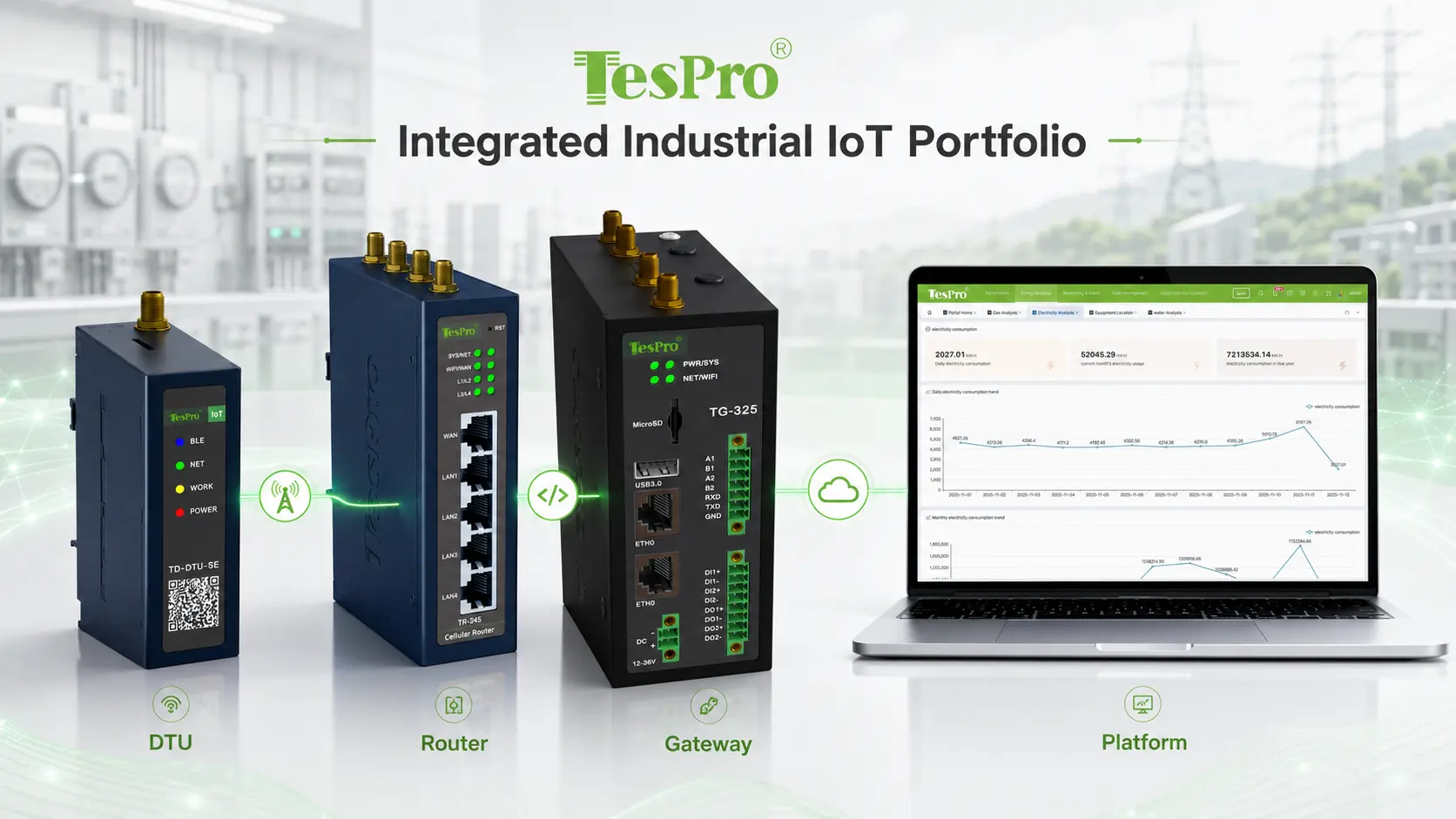

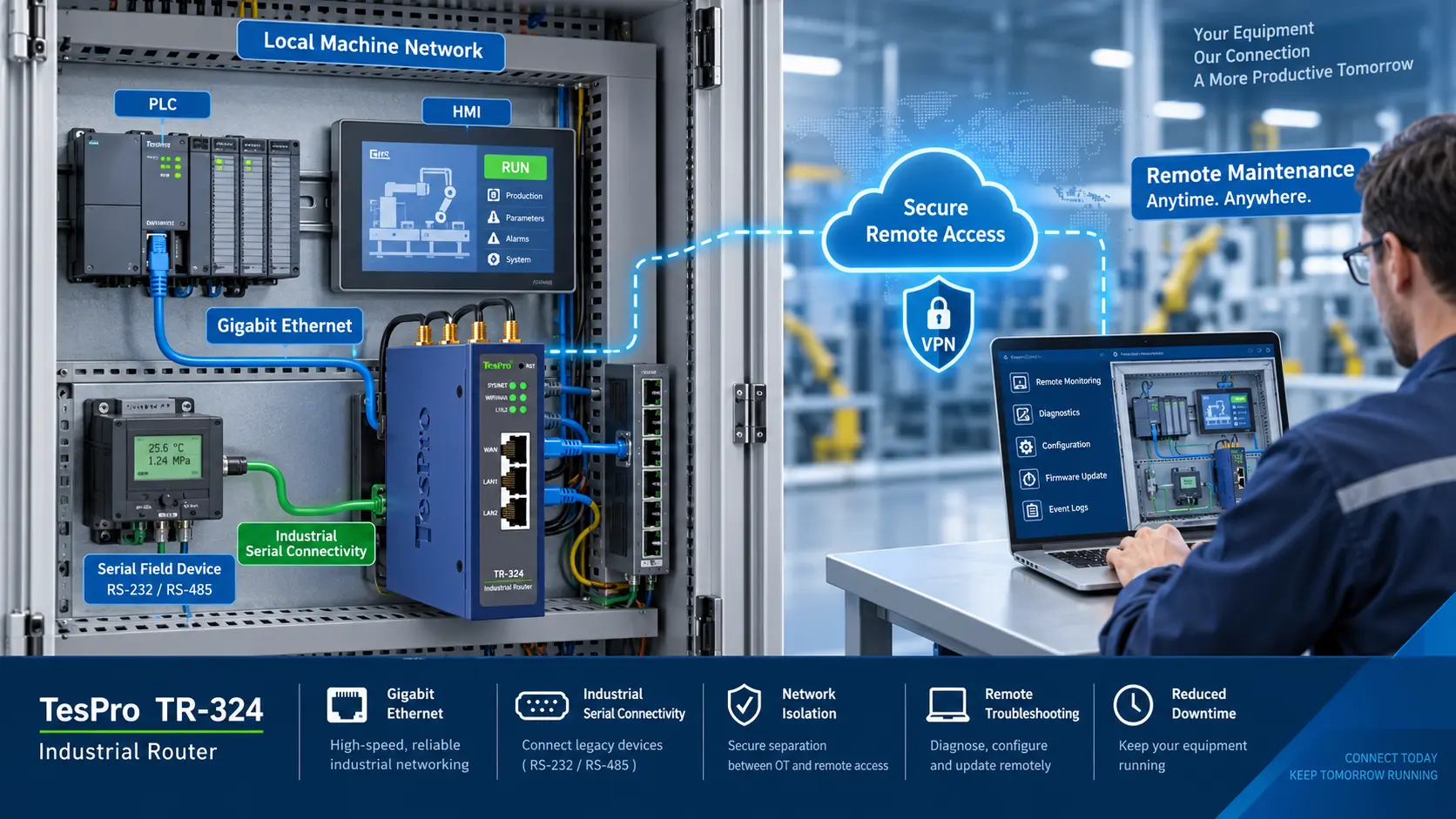
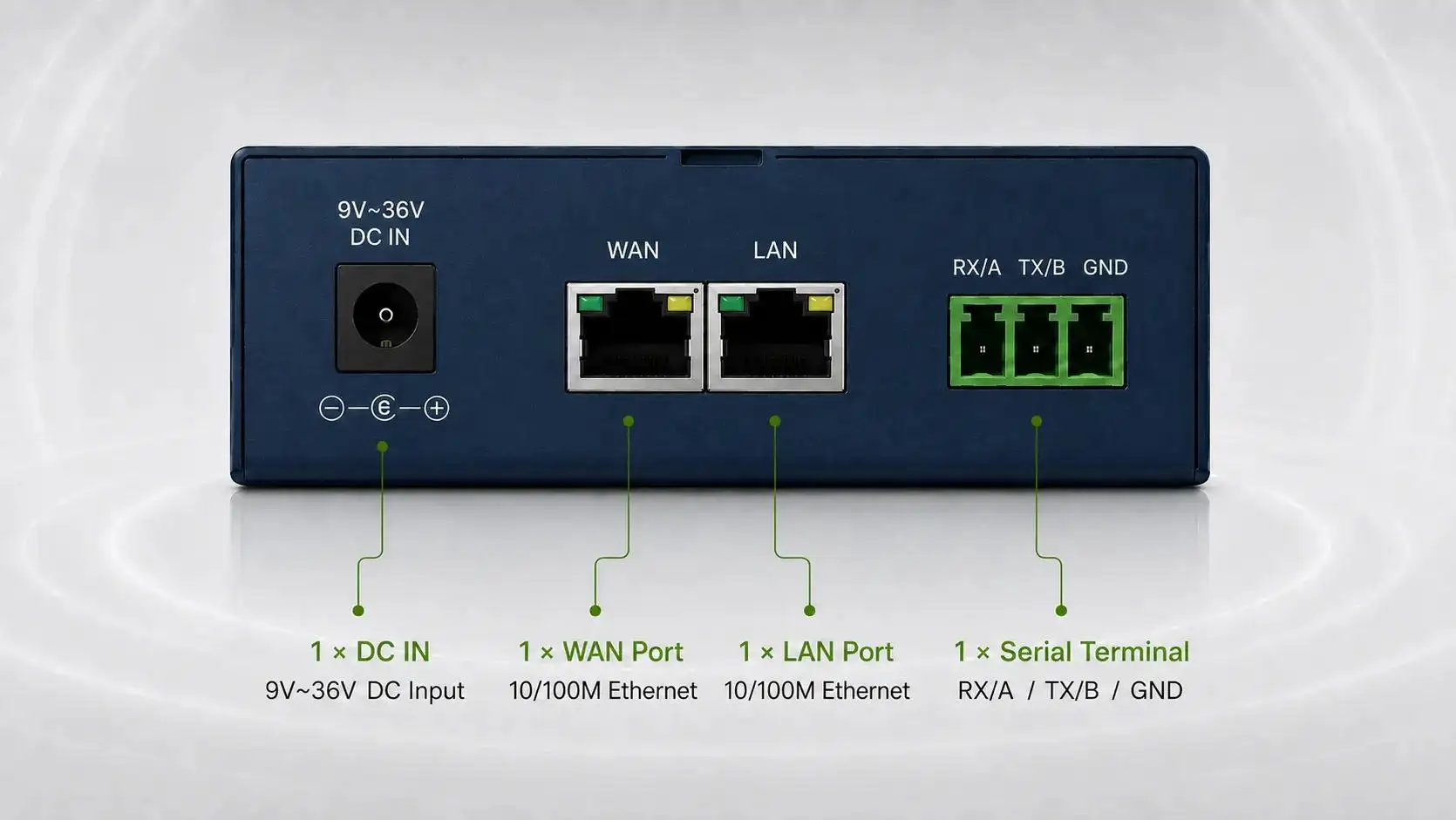
Most industrial IoT projects cannot be completed by one device type. Routers provide IP connectivity and secure backhaul, DTUs transport simple serial data, gateways parse protocols and process data at the edge, optical probes support local meter communication, and platforms manage information. One advantage of the Tespro portfolio is that these roles can be combined under a consistent project logic.
Design by responsibility, not by product labels
Define who collects, parses, connects, buffers and displays data. If the server already parses raw serial protocols, a TD-DTU may be sufficient. If the site needs register polling, tag mapping and MQTT publishing, a TG gateway is more appropriate.
A portfolio can reduce over-configuration
Installing a complex gateway at every simple site increases cost and maintenance. Asking a DTU to perform full multi-protocol conversion may exceed its role. Tespro TR, TG, TD-DTU, TC and TP products can be layered according to site complexity.
One supplier should not mean a closed system
The purpose of a coordinated portfolio is to reduce interface risk, not to block third-party equipment. Protocols, APIs, point maps and data formats should remain explicit so Tespro hardware, SEMS and external platforms can be integrated and validated.
Project evaluation checklist
✓ Field devices and protocol complexity
✓ Need for local parsing and buffering
✓ Backhaul, VPN and redundancy
✓ Platform API, data model and access
✓ Third-party devices and expansion
Frequently asked questions
Q: What is the main difference between Tespro routers, gateways and DTUs?
A: TR Series products focus on network backhaul and secure connectivity. TG Series gateways handle multi-protocol acquisition, conversion and edge processing. TD-DTU devices fit serial transport and simple remote acquisition.
Q: Must every component in a project be from Tespro?
A: No. Tespro products can integrate with compatible third-party meters, PLCs, SCADA systems and platforms when interfaces, protocols, data formats and security are confirmed.
Q: When should SEMS be evaluated?
A: SEMS can be evaluated when electricity, water, gas or heat data needs centralized visualization, trends, alarms, reports and access management.
Q: How can overlapping functions be avoided?
A: Build a responsibility matrix for acquisition, parsing, networking, buffering and management, then choose the simplest device that meets each requirement.
Classify field requirements into connectivity, passthrough, parsing, edge processing and platform management to determine whether the project needs TR, TG, TD-DTU, TP products or a combined architecture.