-1791966549842.webp)






An industrial cellular router should be selected around the real network and device topology, not only the 4G/5G label. Tespro currently offers TR-series options covering 2G to 5G, Fast or Gigabit Ethernet, Wi-Fi, dual SIM, VPN and remote management. Start with country and carrier bands, then confirm ports, bandwidth, security and maintenance requirements.
Key Points
- 4G or 5G is only one part of selection; local bands and coverage matter first.
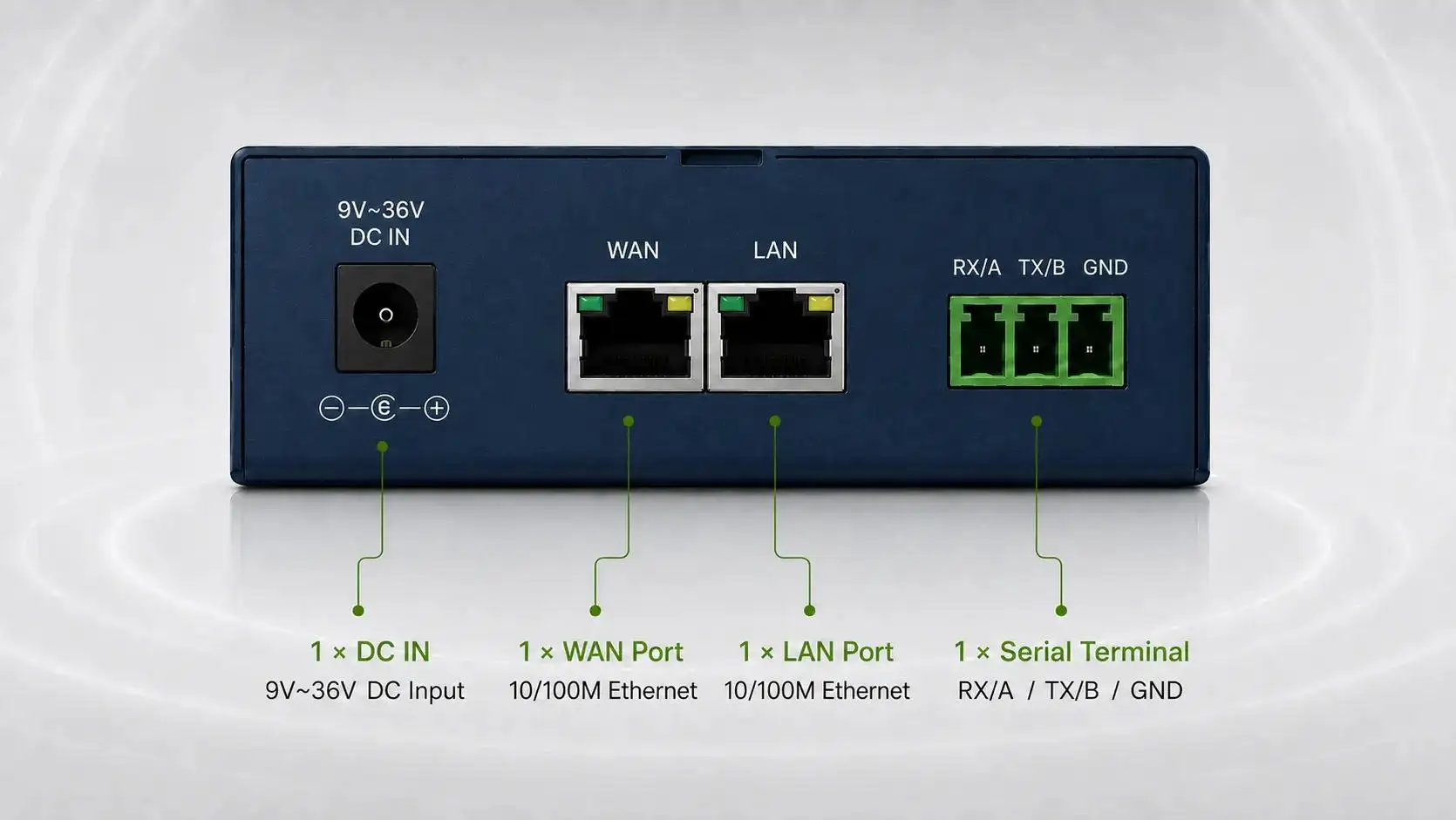
- Ethernet and serial ports should match the real PLC, HMI, camera and switch topology.
- Dual SIM, VPN and remote management can materially affect unattended-site O&M.
Cellular generation is only one layer of the site network
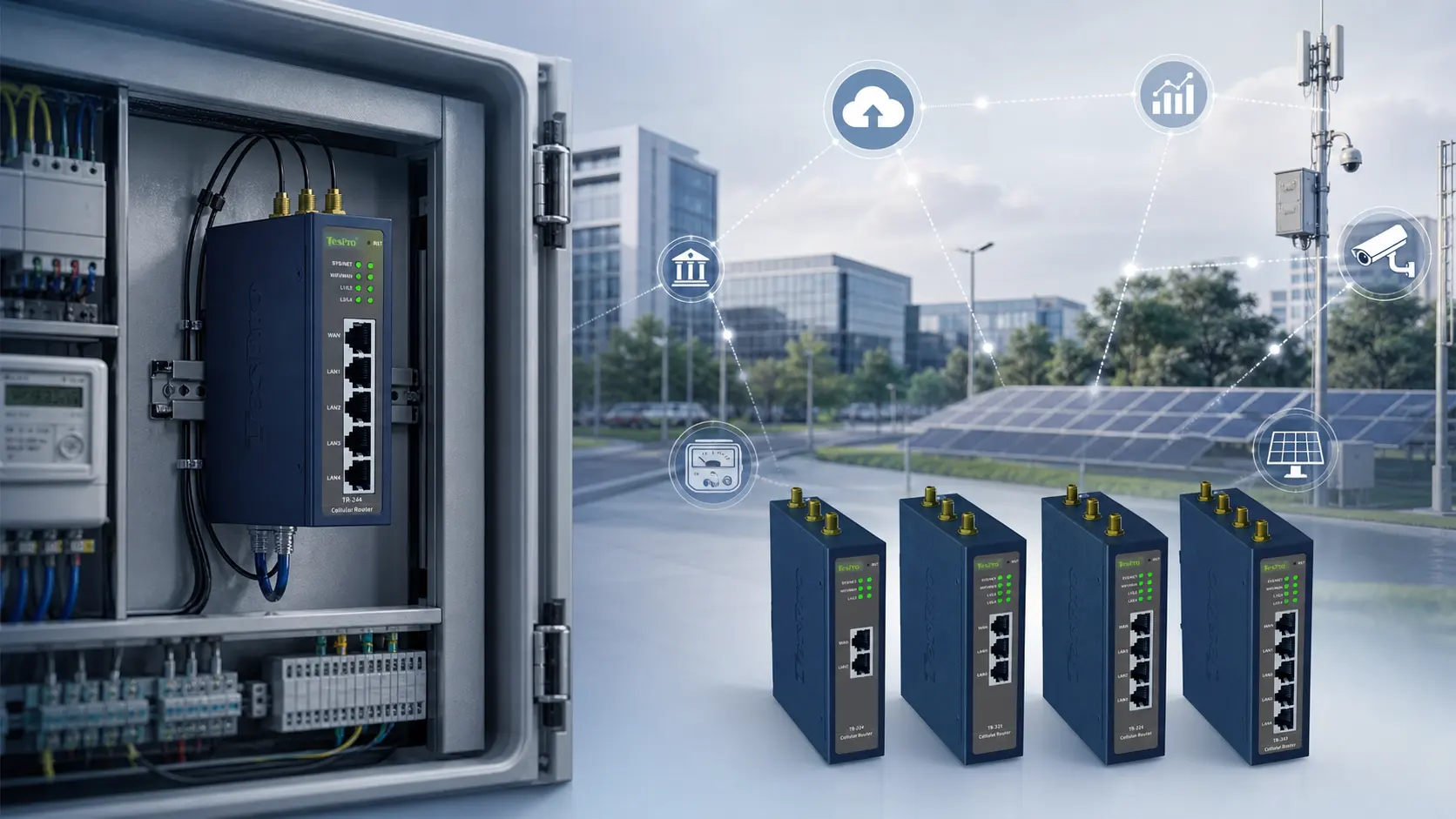
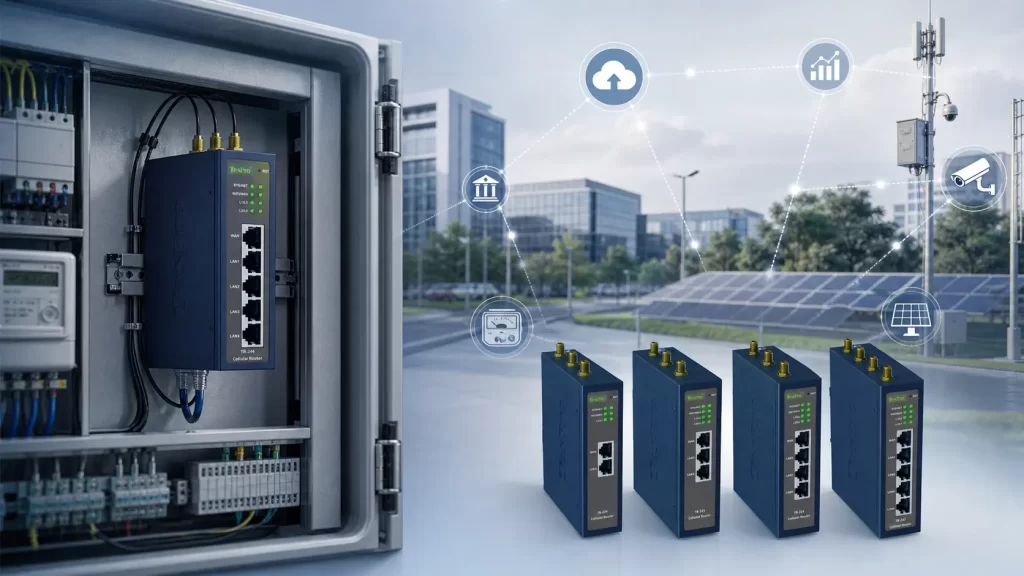
Tespro lists multiple TR-series configurations, including TR-100, TR-224/225, TR-244/245, TR-324/325, TR-344/345 and TR-424. Their cellular generation, Ethernet speed and LAN-port count differ. 4G can be sufficient for periodic telemetry and metering, while 5G is more relevant to video, mobile equipment or sustained higher-bandwidth traffic.
Reliability is more than the cellular generation
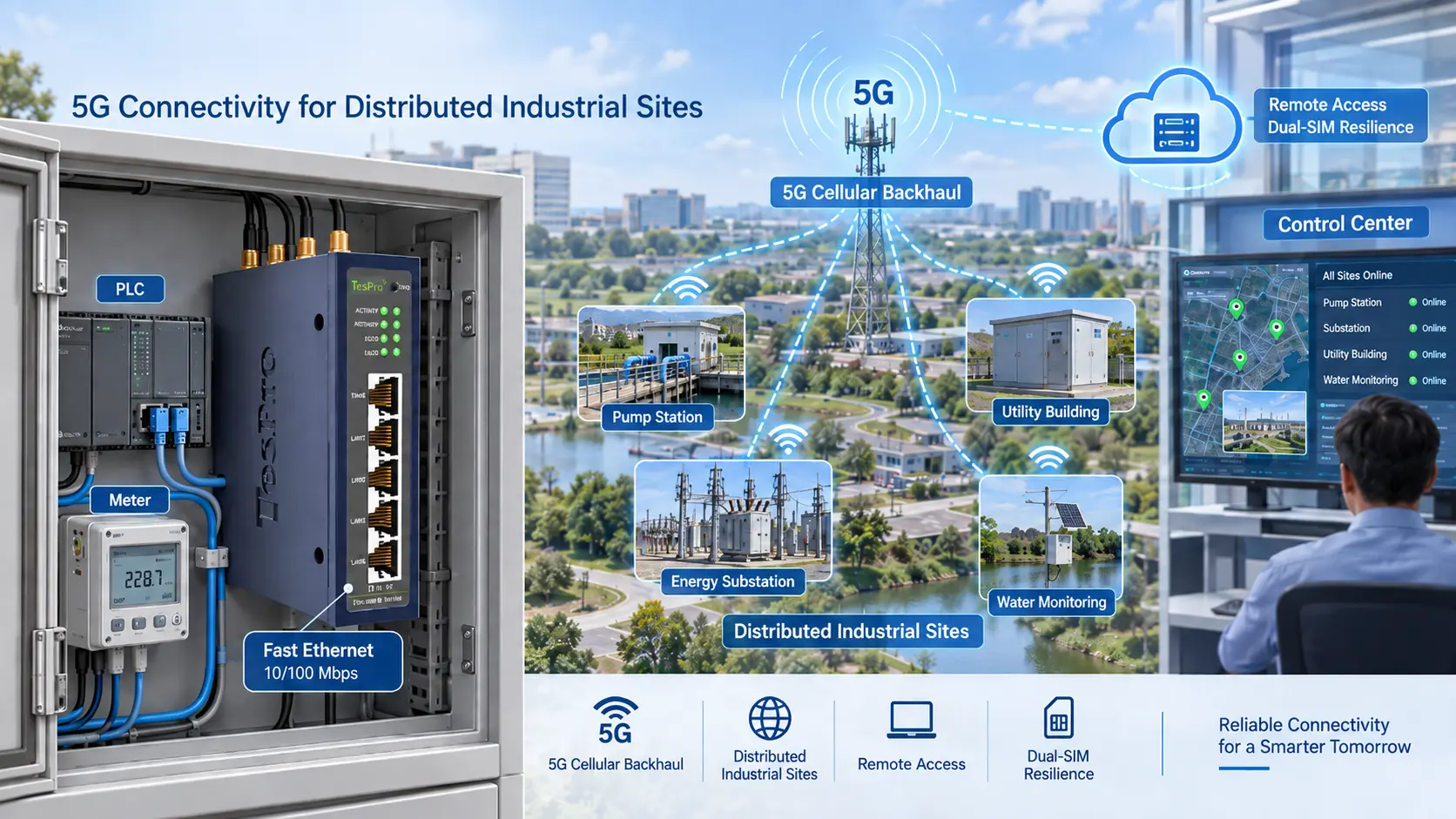
Dual SIM, link monitoring, automatic reconnection, VPN recovery and backup paths are key at unattended sites. Tespro positions dual SIM, failover, VPN and remote management as core router capabilities, so pilot tests should include SIM switching, outages, reboots and tunnel recovery.
Separate sustained traffic from peak traffic
A short speed test does not describe an industrial workload. Periodic telemetry may use very little bandwidth, while engineering access, log downloads, video playback or fleet firmware updates can create short peaks. Estimate sustained traffic, peak traffic, concurrent clients and acceptable latency separately before deciding whether 5G, Gigabit Ethernet or Wi-Fi 6 is justified.
Applications and Technical Boundaries
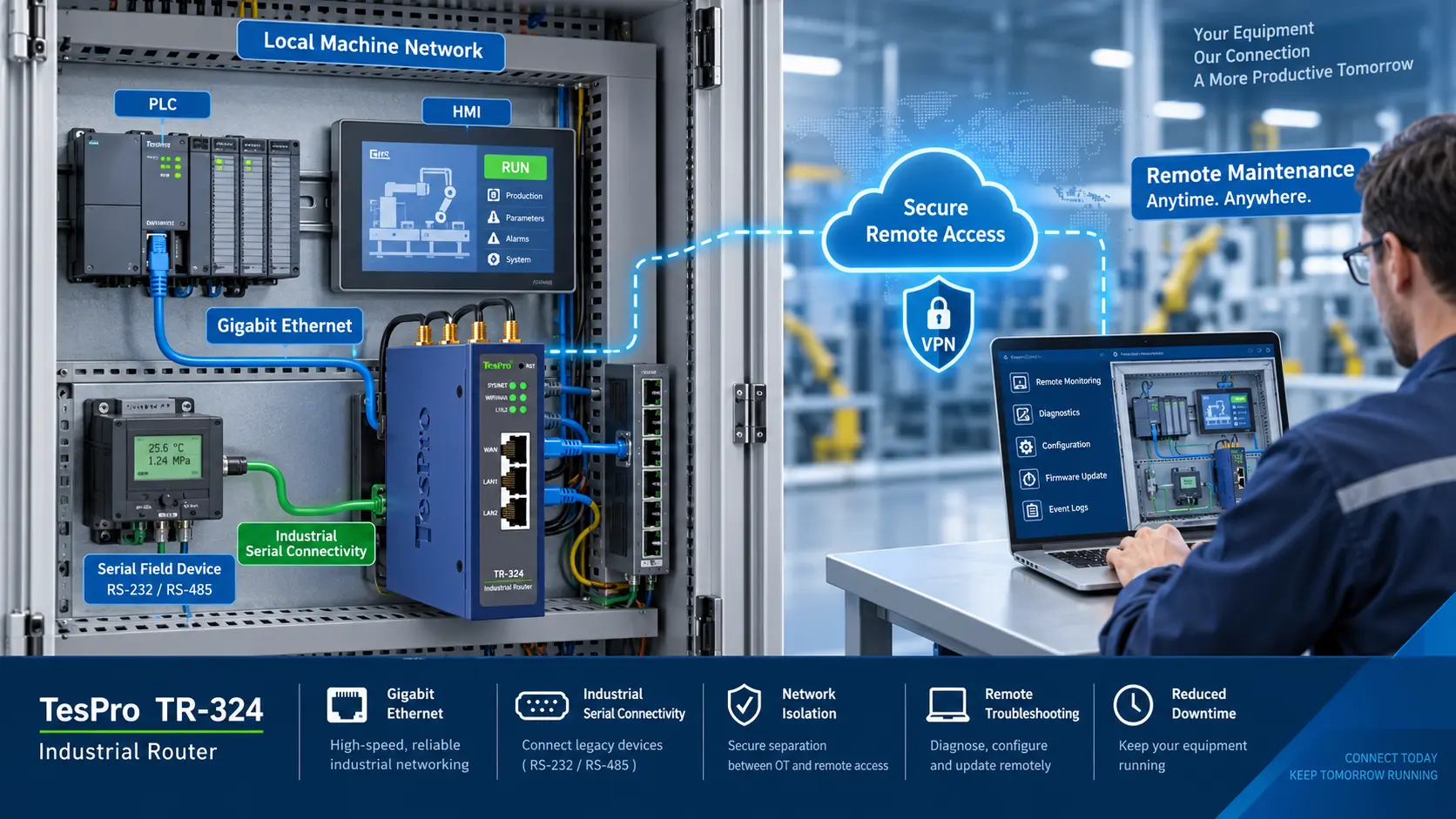
Better suited to an industrial router: The main task is 4G/5G connectivity, VPN remote access, dual-SIM redundancy and Ethernet/Wi-Fi backhaul—for example remote PLC maintenance, distributed-site networking, CCTV backhaul or AMI sites that already have a data concentrator.
When a router should not carry the whole job: If the site needs extensive protocol parsing, tag mapping, local buffering/rules or AI inference, evaluate a Tespro TG gateway. If the job is only simple serial-to-server transport, a TD-DTU may be the leaner architecture.
Tespro TR focuses on industrial connectivity that remains manageable over time
Tespro’s current TR portfolio is not built around a single cellular generation. Different combinations of cellular connectivity, Ethernet, Wi-Fi, dual SIM and remote operations address different site conditions. That reflects a practical industrial-network principle: keep the site connected and manageable first, then optimize bandwidth, interfaces and local-network experience.
Frequently Asked Questions
Q: Does every industrial router project need 5G?
A: No. Metering, PLC status and alarms are usually low-bandwidth. Evaluate 5G when concurrency, video, large files, latency targets or customer network policy justify it.
Q: Does dual SIM combine the speed of two SIM cards?
A: Usually not. Dual SIM is commonly used for failover and carrier redundancy. Load balancing or simultaneous cellular links must be confirmed by model and firmware.
Q: Which current Tespro routers use Gigabit Ethernet?
A: The current website lists TR-324/325, TR-344/345 and TR-424 as Gigabit-Ethernet router options, with different LAN-port counts and cellular configurations.
Q: Does remote access through an industrial router always require a public IP?
A: No. The requirement depends on the VPN, cloud-management method, private APN or central network design. Define which side initiates the connection and the security boundary before deciding on public IP addressing.