-1791966549842.webp)





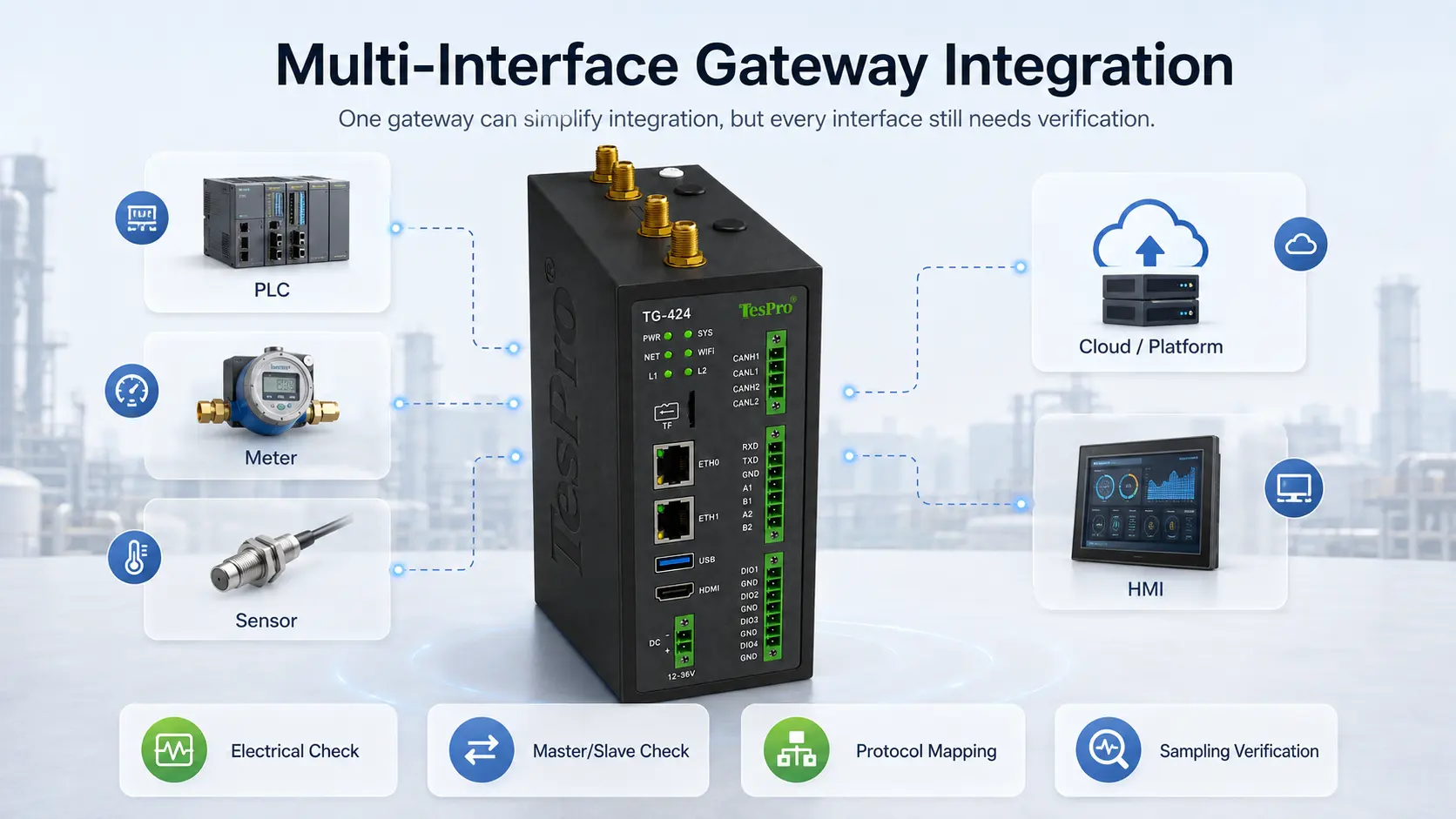

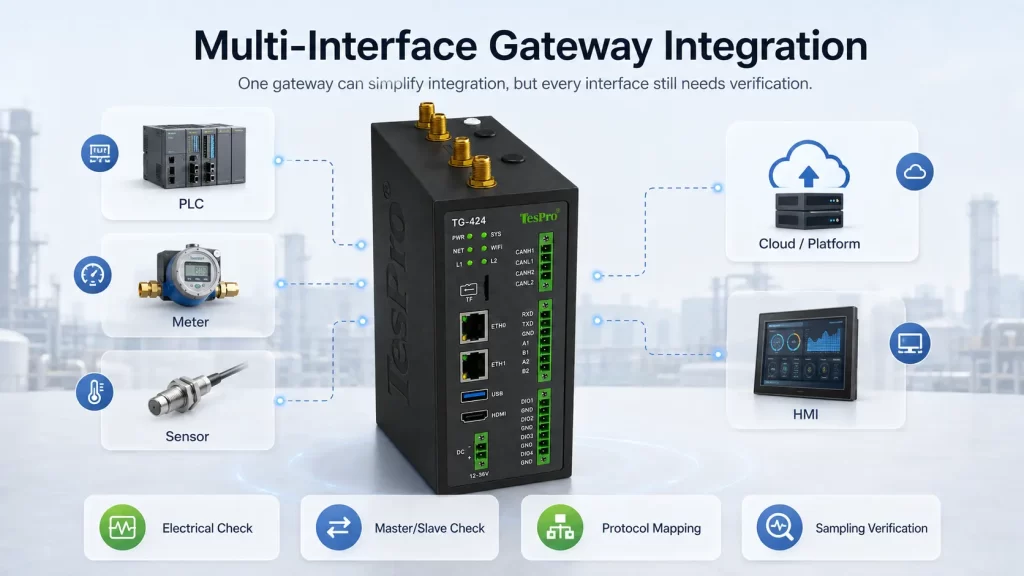
A multi-interface gateway can reduce separate converters and collectors, but one hardware platform does not mean every device connects automatically. Each interface still requires electrical, master/slave, protocol, point-map and sampling verification.
Key Takeaways
- RS232 is generally point-to-point
- RS485 supports multidrop buses
- CAN and digital I/O require frame, rate or electrical-state definition
Why Do These Projects Commonly Fail?
A multi-interface gateway can reduce separate converters and collectors, but one hardware platform does not mean every device connects automatically. Each interface still requires electrical, master/slave, protocol, point-map and sampling verification. In a real project, rs232 is generally point-to-point and rs485 supports multidrop buses must be considered in the same architecture. Begin with the workload, field devices and operating model rather than one marketing specification.
A practical sequence is to confirm device wiring and levels and termination, then verify protocol documents and master/slave roles, and finally test can and digital i/o require frame, rate or electrical-state definition with the real equipment. Record pass criteria so the design can be repeated across sites.
What Should the Pilot Cover?
Correct wiring with the wrong protocol role can still produce no data or bus conflicts. Public content and project documents should therefore state model, firmware, regional network, options and environmental conditions and avoid unverifiable claims such as 'works for every project' or 'absolute reliability'.
How Tespro Fits
Tespro TG-424 material lists 1×RS232, 2×RS485, 2×CAN and digital I/O, plus Ethernet, USB and MicroSD. Confirm terminal definitions and software drivers by datasheet.
Decision and Verification Table
| Decision factor | What to verify |
| RS232 is generally point-to-point | Confirm against device wiring and document pass/fail criteria in the pilot or site test. |
| RS485 supports multidrop buses | Confirm against levels and termination and document pass/fail criteria in the pilot or site test. |
| CAN and digital I/O require frame, rate or electrical-state definition | Confirm against protocol documents and document pass/fail criteria in the pilot or site test. |
Compatibility and Selection Checklist
- ✓ Device wiring
- ✓ Levels and termination
- ✓ Protocol documents
- ✓ Master/slave roles
- ✓ Point count/sample rate
- ✓ Isolation and grounding
Frequently Asked Questions
Q: Can the CAN port read every BMS directly?
A: No. BMS CAN frames, IDs, scaling and handshakes usually require a vendor protocol.
Q: Can digital I/O collect analog signals?
A: No. DI/DO and AI/AO are different interfaces and must be confirmed from the datasheet.
Q: Can multiple interfaces affect each other?
A: Concurrent tasks share CPU, buses and storage, so test the target workload.