-1791966549842.webp)





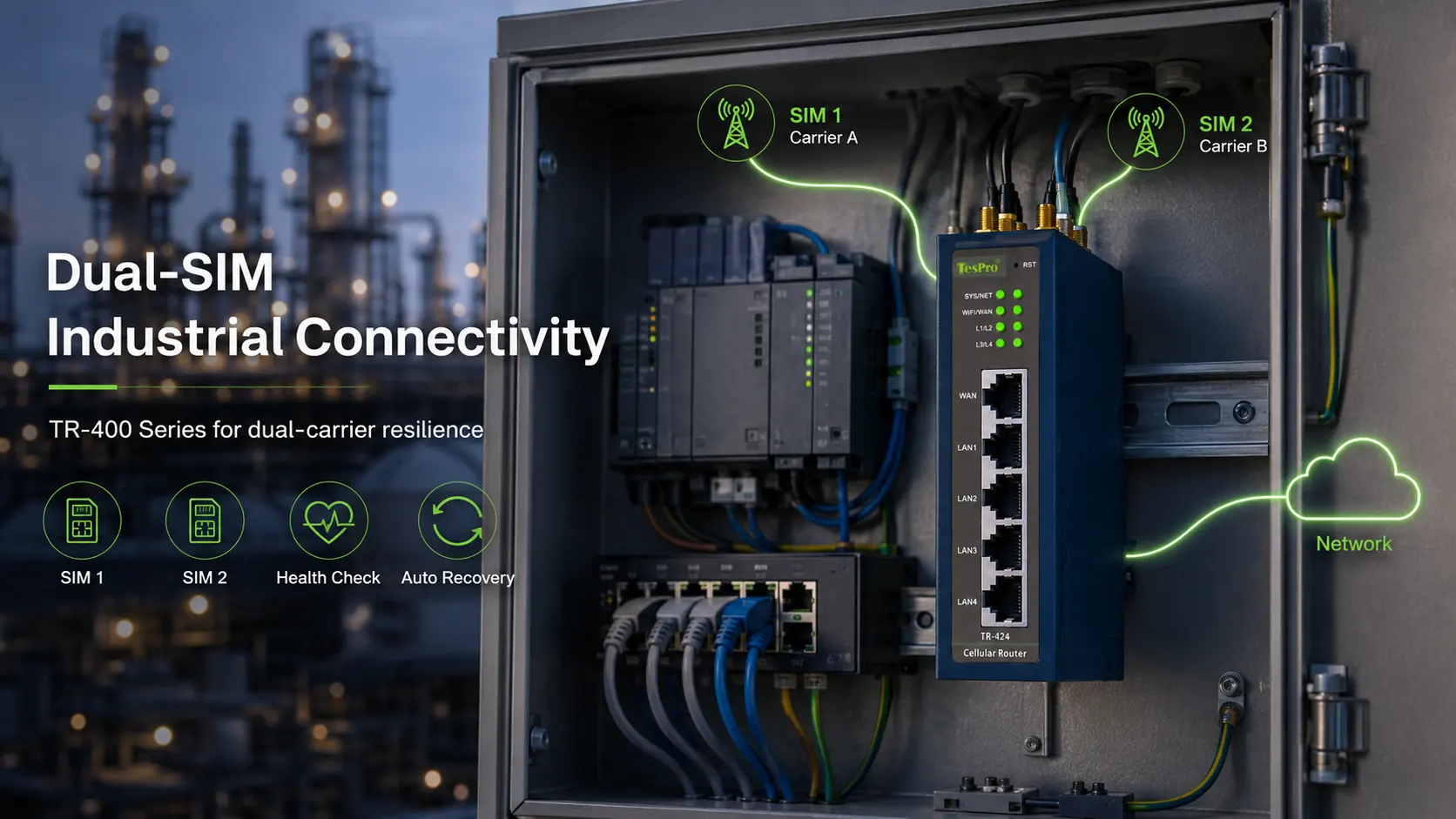

Dual SIM becomes real redundancy only when carriers, triggers and recovery policies are designed correctly. Test weak signal, registration failure, data-path failure and primary recovery—not just removing a SIM.
Key Takeaways
- Two SIMs should avoid the same failure domain where possible
- Triggers should check data reachability, not signal alone
- Recovery must avoid repeated flapping
How Does the Feature Work?
Dual SIM becomes real redundancy only when carriers, triggers and recovery policies are designed correctly. Test weak signal, registration failure, data-path failure and primary recovery—not just removing a SIM. In a real project, two sims should avoid the same failure domain where possible and triggers should check data reachability, not signal alone must be considered in the same architecture. Begin with the workload, field devices and operating model rather than one marketing specification.
Which Configuration Conditions Matter Most?
A practical sequence is to confirm sim carriers and apn and authentication, then verify health-check target and switch threshold, and finally test recovery must avoid repeated flapping with the real equipment. Record pass criteria so the design can be repeated across sites.
Testing, Limits and Failure Cases
Dual SIM does not protect against antenna failure, power loss, co-located base-station failure or an unavailable server. Public content and project documents should therefore state model, firmware, regional network, options and environmental conditions and avoid unverifiable claims such as 'works for every project' or 'absolute reliability'.
How Tespro Fits
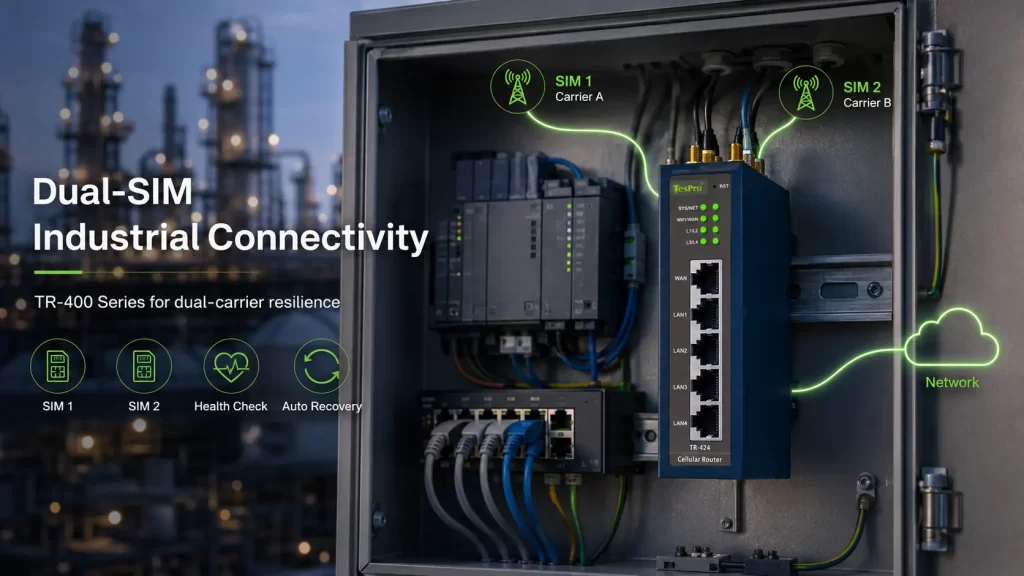
Tespro TR-400 Series supports dual-SIM industrial connectivity for dual-carrier designs. Confirm switching logic, health-check targets and recovery behavior for the selected firmware.
Decision and Verification Table
| Decision factor | What to verify |
| Two SIMs should avoid the same failure domain where possible | Confirm against sim carriers and document pass/fail criteria in the pilot or site test. |
| Triggers should check data reachability, not signal alone | Confirm against apn and authentication and document pass/fail criteria in the pilot or site test. |
| Recovery must avoid repeated flapping | Confirm against health-check target and document pass/fail criteria in the pilot or site test. |
Compatibility and Selection Checklist
- ✓ SIM carriers
- ✓ APN and authentication
- ✓ Health-check target
- ✓ Switch threshold
- ✓ Primary recovery delay
- ✓ Alarms and logs
Frequently Asked Questions
Q: Do two SIMs from one carrier provide redundancy?
A: They help with a SIM-specific issue but offer limited isolation from carrier-core or regional radio failures.
Q: Should the router switch immediately when signal drops?
A: Not always. Short fluctuations can cause flapping; combine signal with data reachability and duration.
Q: How should failover be validated?
A: Record switch time, service interruption, VPN rebuild, IP change, logs and primary-link recovery.