-1791966549842.webp)





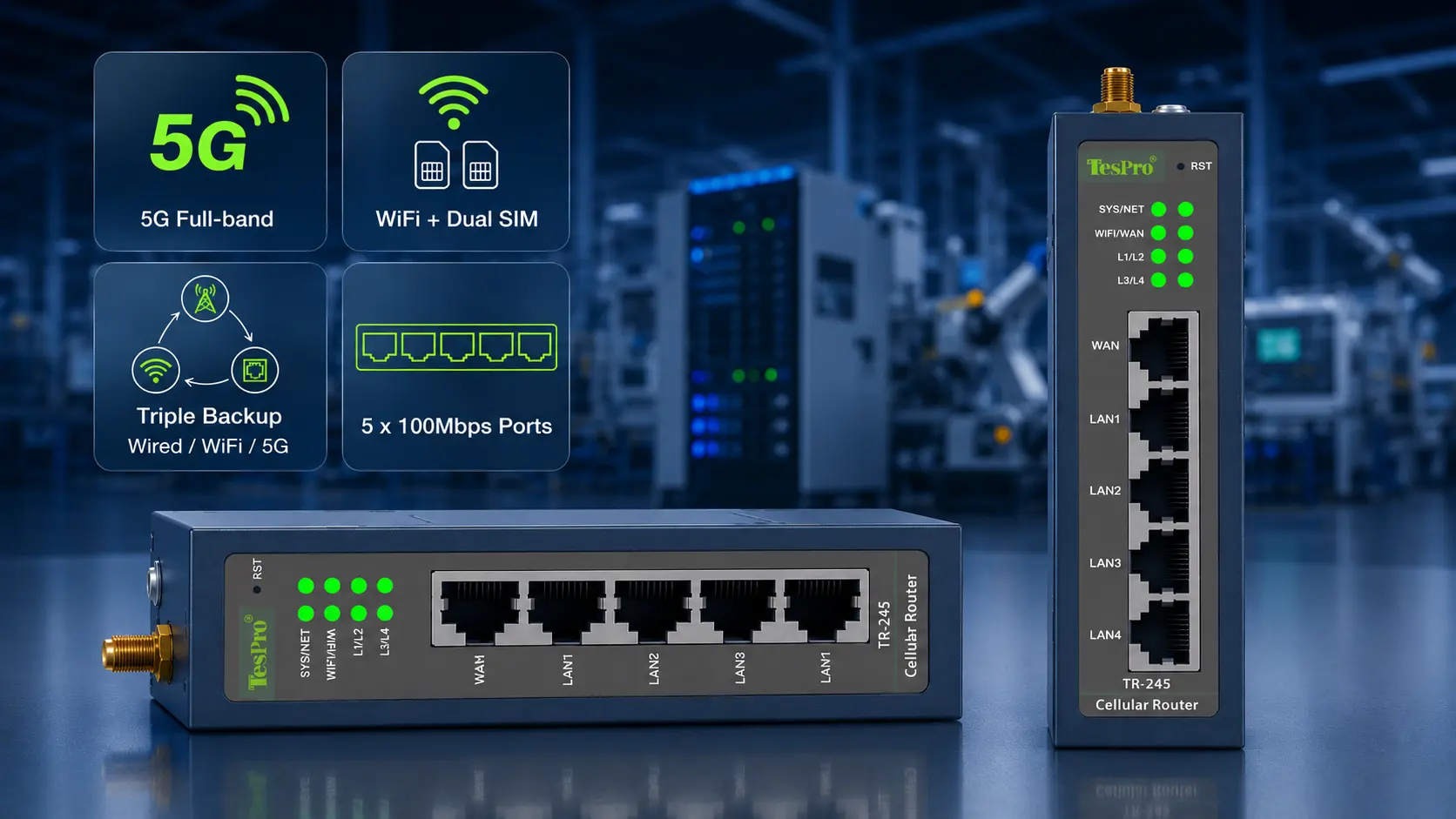

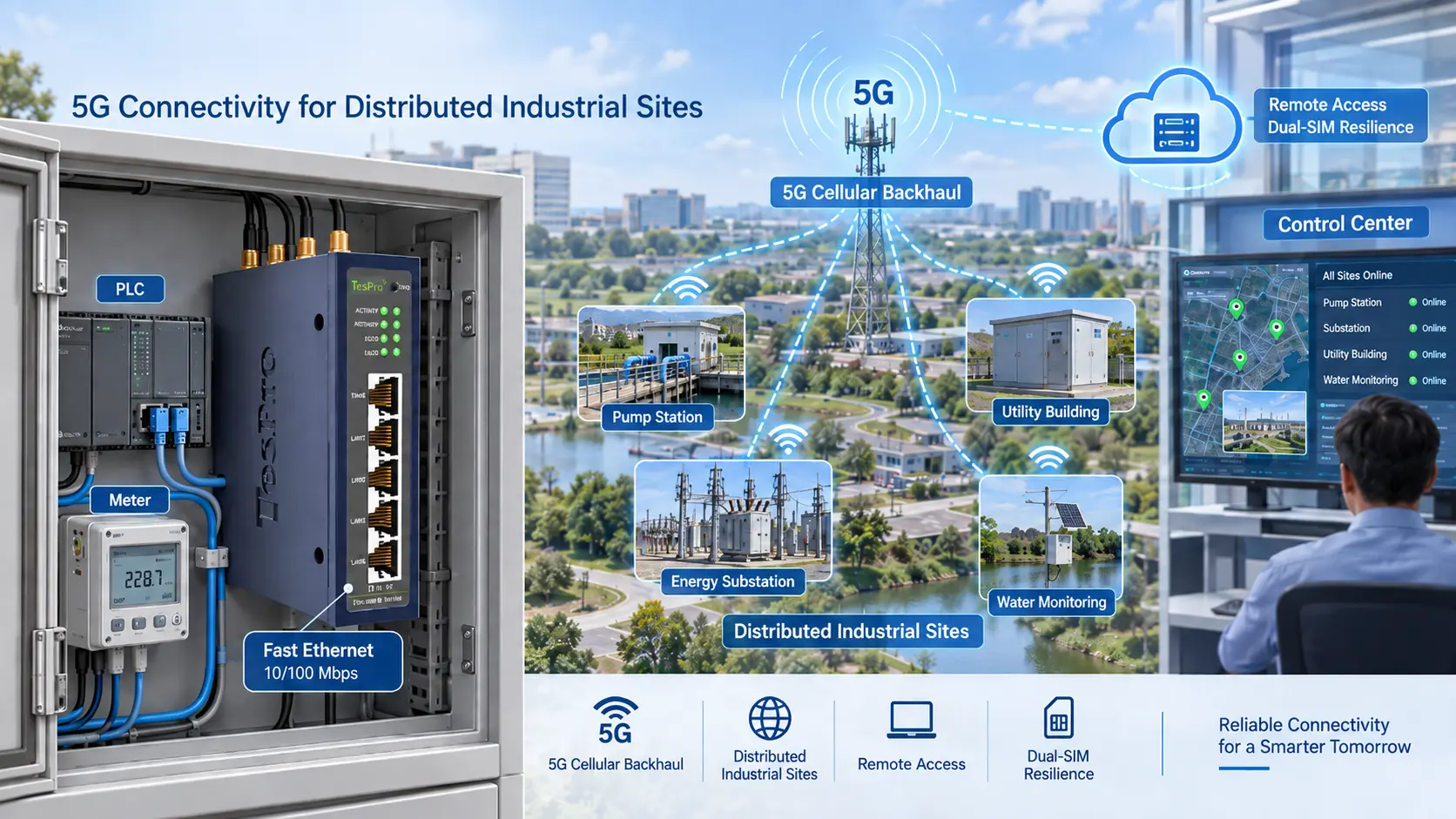
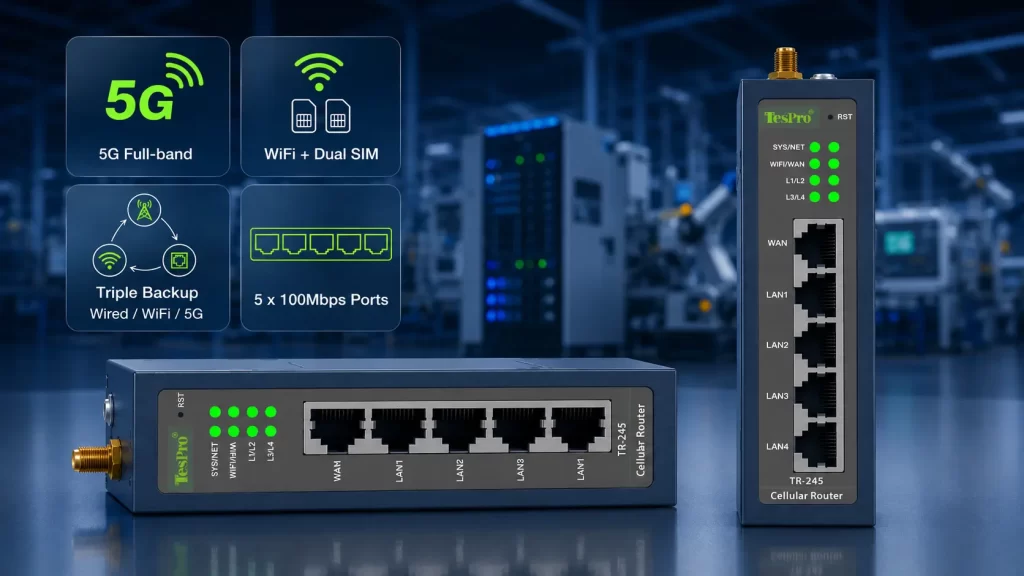
Video, AGV and robotics projects should not select a router only because it supports 5G. Video needs sustained uplink capacity, AGVs need coverage and reconnection while moving, and robot service needs stable low-jitter and secure access. Evaluate bitrate, device count, routes, ports, Wi-Fi, antennas and VPN in one topology. Current Tespro TR Series 5G configurations can provide high-bandwidth backhaul, with TG edge gateways added for protocol conversion or local processing. Confirm the exact 5G model in the current datasheet.
Calculate upstream video traffic
Resolution, frame rate, codec and scene complexity affect bitrate. Size for maximum concurrent streams and reserve capacity for clips, snapshots and variation. Edge storage can reduce cellular traffic.
Test mobile coverage for AGVs
Metal, corners and handover zones affect continuity. Validate antenna position, mounting, carrier and task recovery after a drop.
Combining Tespro TR and TG
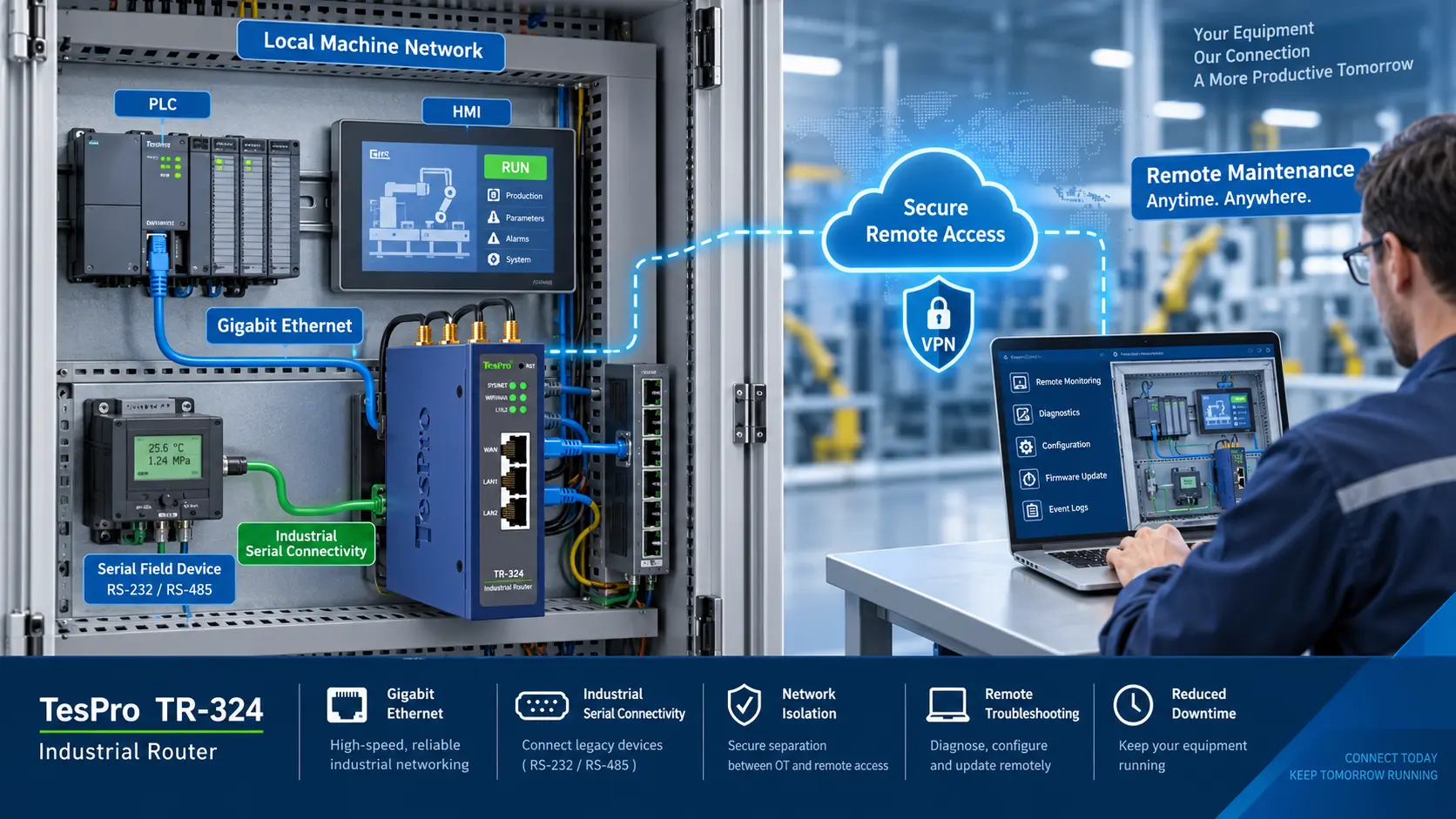
Current Tespro TR Series 5G configurations can be evaluated for multi-channel video, vehicles, AGVs, robots and high-bandwidth inspection. Add a TG Series edge gateway when PLC acquisition, protocol conversion, buffering or local applications are required. Do not describe TR-100 as a 5G model unless the valid datasheet confirms that exact configuration.
Selection and RFQ checklist
✓ Total upstream bitrate
✓ AGV route coverage
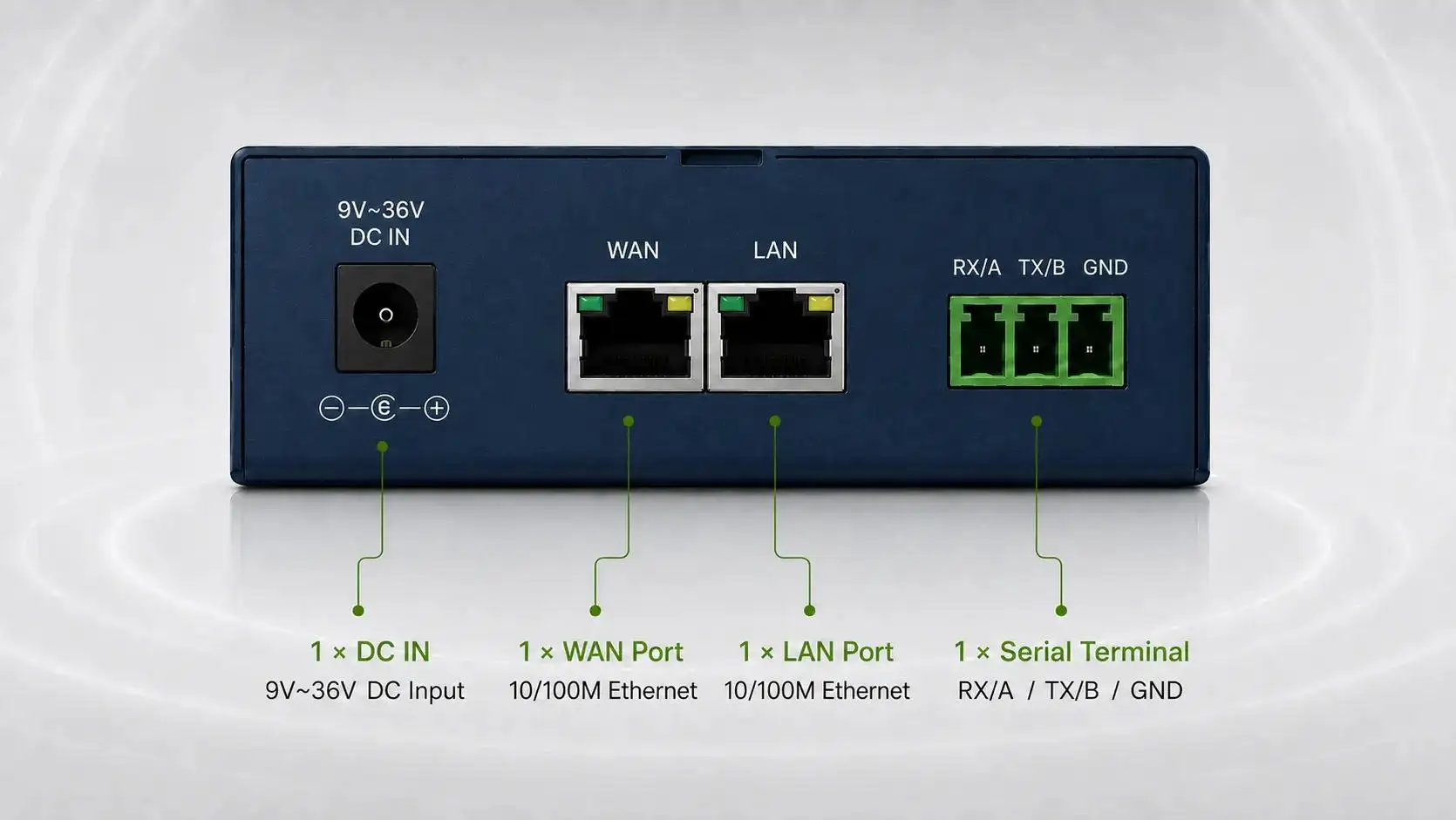
✓ Ports and PoE plan
✓ Wi-Fi and antennas
✓ Dual SIM and 4G fallback
✓ Local storage and edge processing
Frequently asked questions
Q: Which Tespro products fit video surveillance, AGV, or robot-connectivity projects?
A: Current 5G-enabled configurations in the Tespro TR Series can be evaluated for high-bandwidth wireless backhaul. A TG Series edge gateway can be added for PLC acquisition, industrial-protocol conversion, or local processing. Confirm the exact 5G model and local bands from the current datasheet.
Q: How much 5G uplink bandwidth is required for multiple cameras?
A: Calculate camera count, bitrate per stream, codec, frame rate, simultaneous-use ratio, and protocol overhead, then reserve peak capacity. Focus on measured uplink performance rather than advertised downlink speed.
Q: Can a 5G industrial router power IP cameras directly?
A: Only a model with specified PoE output can do so. Otherwise use a PoE switch or separate power supply, and verify the total power budget, cable distance, surge protection, and enclosure cooling.
Q: Must an AGV use a public 5G network?
A: No. Public 5G, a private cellular network, Wi-Fi, or a hybrid design may be selected according to coverage, roaming, latency, security, and cost. Test handover, packet loss, and recovery along the real route.