-1791966549842.webp)






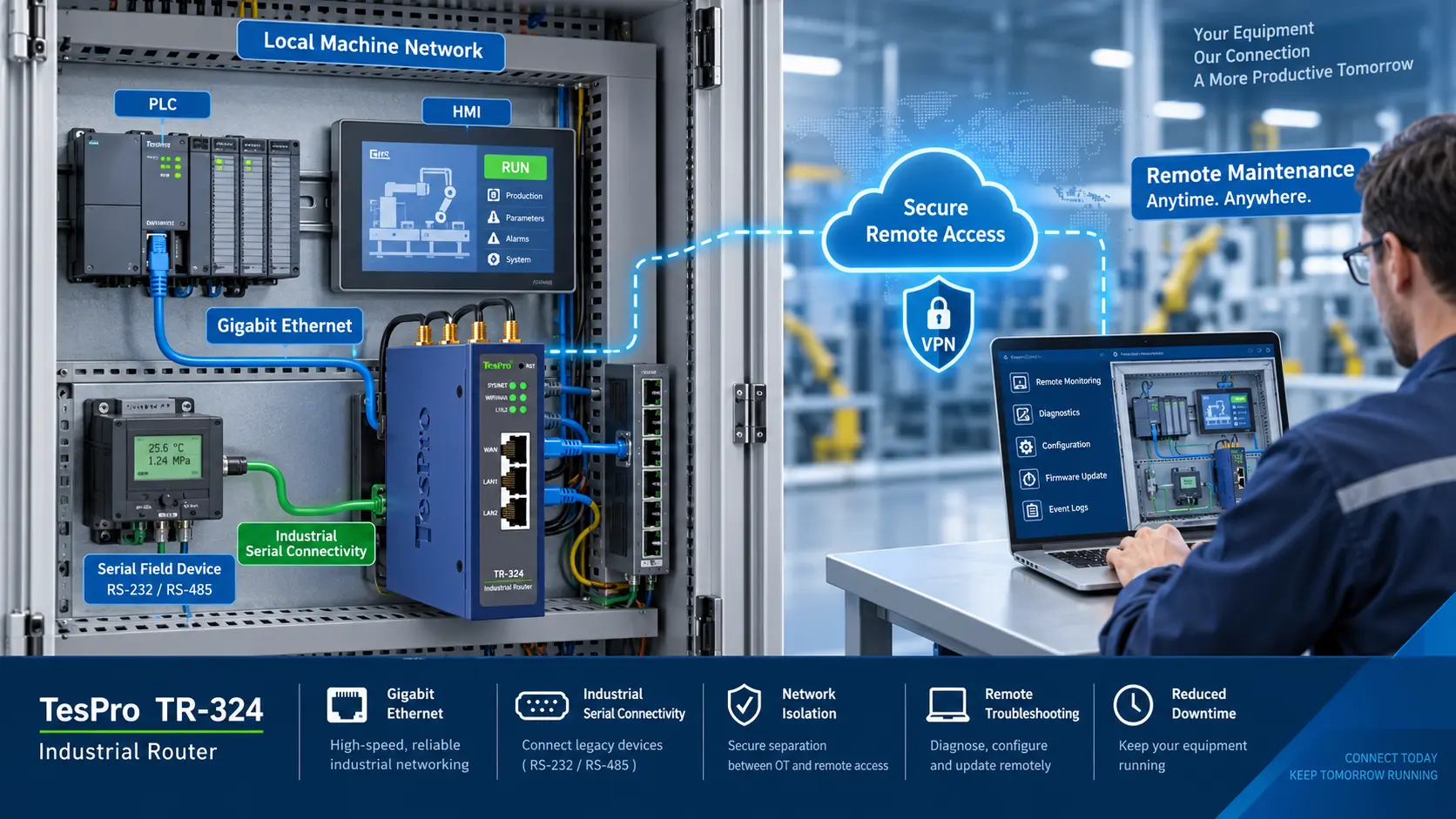
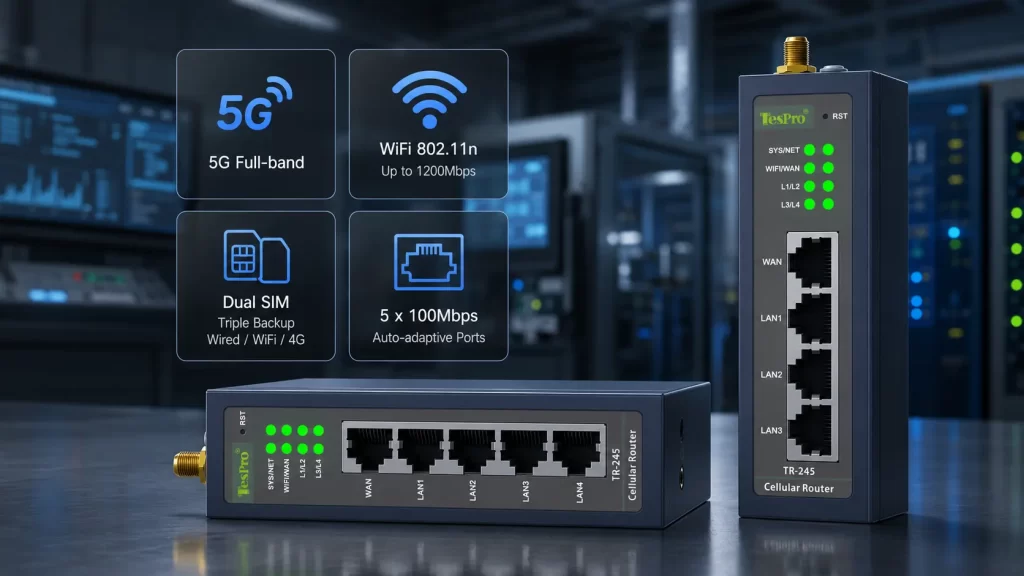
Neither 4G nor 5G is automatically the better industrial-router choice. Meter readings, PLC status and alarms often fit 4G, while multi-channel video, AGVs, large files or defined latency targets may justify 5G. Calculate uplink traffic, concurrency and local coverage before comparing equipment, SIM, antenna and operating costs. Tespro TR Series 4G and 5G configurations should be verified separately; do not assume TR-100 is a 5G model without the current datasheet.
Match the network to the data
Meter and PLC telemetry uses small packets; video, machine vision and logs consume sustained upstream capacity. Calculate average and peak rates, concurrency and buffered retransmission.
Coverage and fallback matter
5G coverage and bands vary by carrier and site. Confirm 4G fallback, wired or Wi-Fi backup and recovery under weak signal rather than relying on theoretical speed.
Matching Tespro 4G and 5G Options
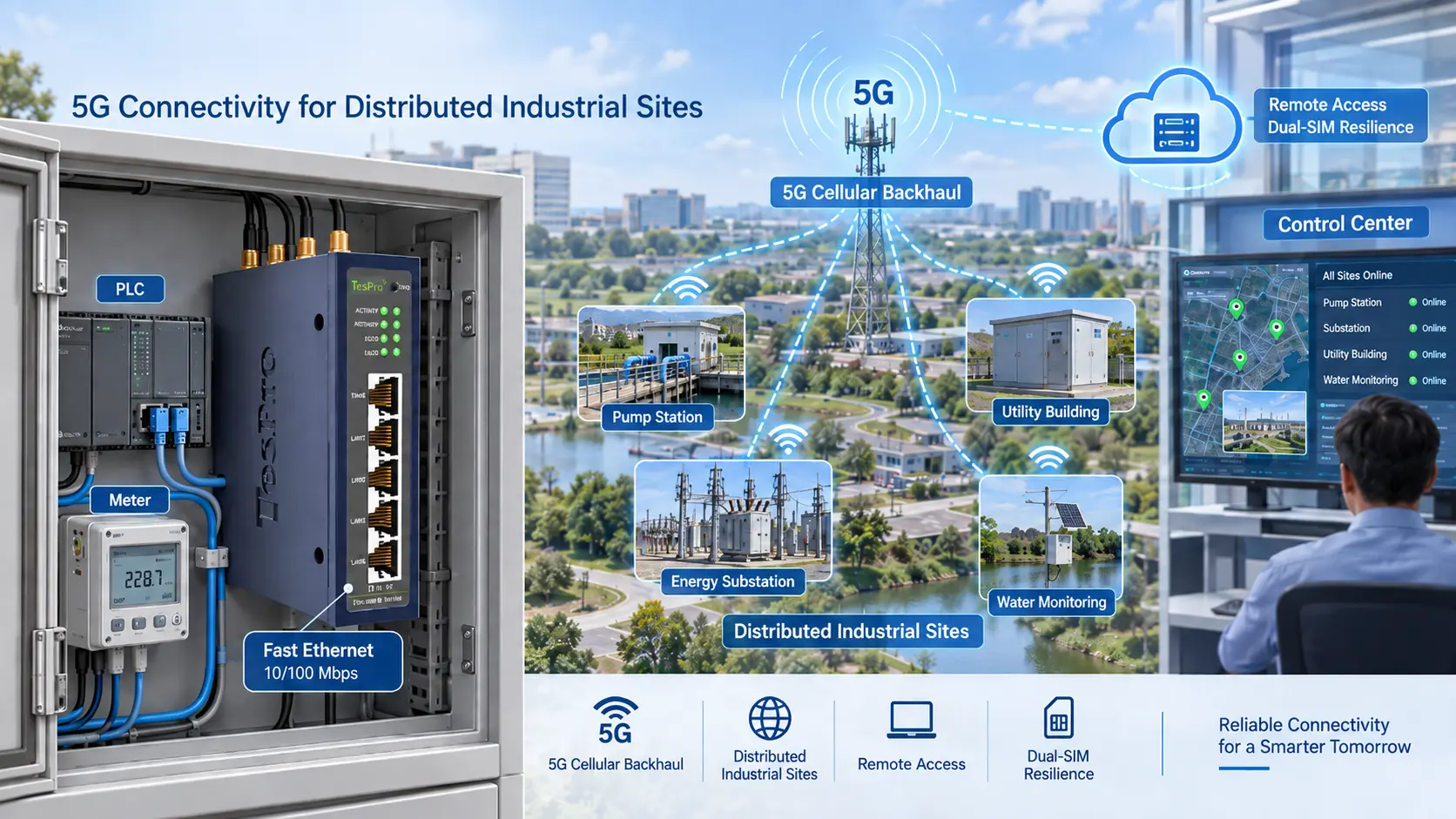
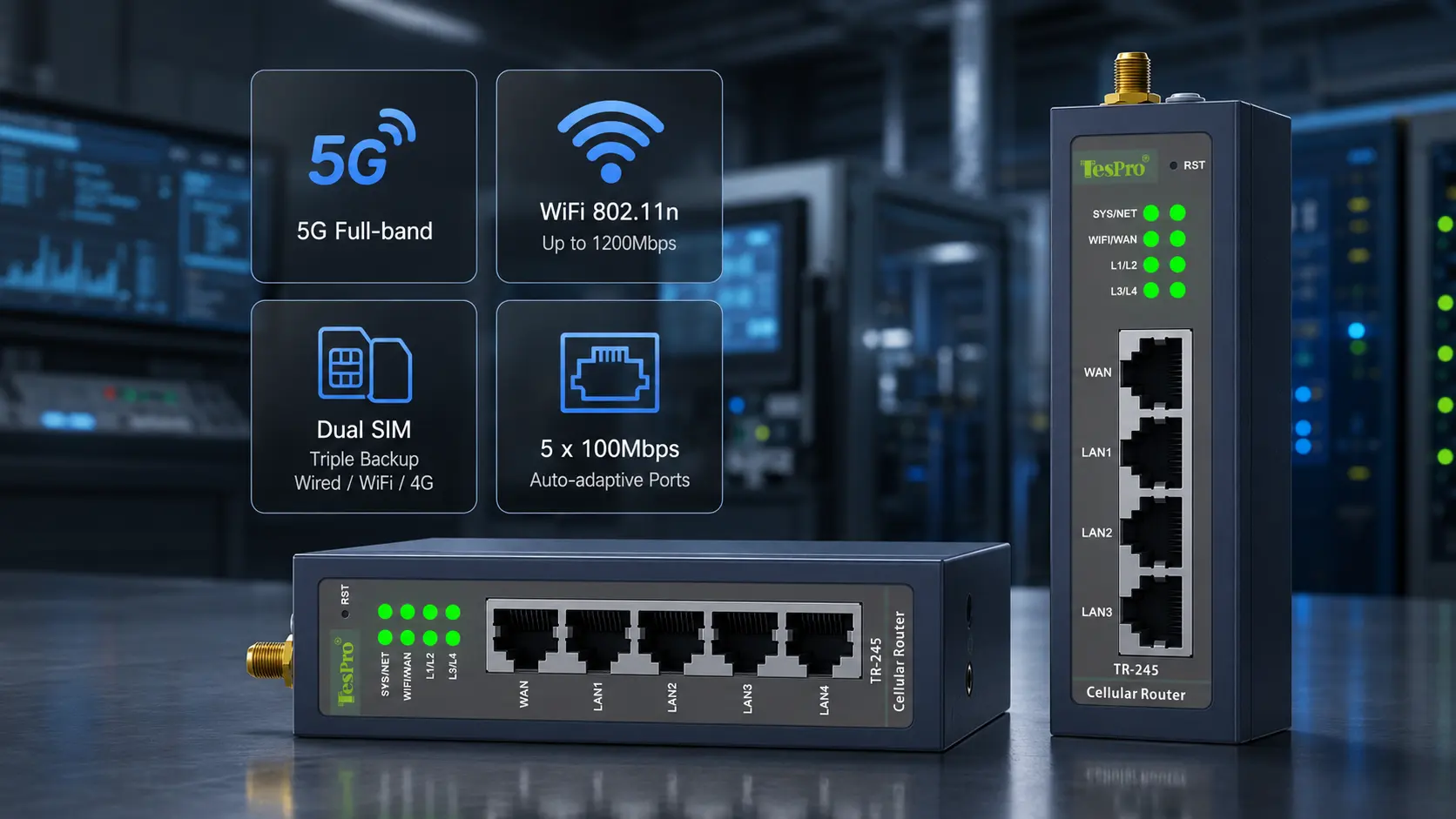
Tespro TR Series 4G configurations can fit metering, pump stations, energy monitoring and routine SCADA backhaul. Current 5G configurations may fit video, AGVs, robots and high-bandwidth inspection. Select Ethernet, Wi-Fi, dual SIM, VPN, 4G fallback and local bands together rather than choosing only by cellular generation.
Selection and RFQ checklist
✓ Average and peak upstream bandwidth
✓ 5G coverage and 4G fallback
✓ Monthly data cost
✓ Video bitrate and buffering
✓ Ethernet and Wi-Fi
✓ Dual SIM, VPN and management
Frequently asked questions
Q: How should a project choose between Tespro 4G and 5G industrial routers?
A: 4G is often sufficient for PLC telemetry, smart metering, and low-frequency status reporting. Multi-channel video, AGVs, large-file transfer, or high concurrency may justify a 5G-enabled Tespro TR Series configuration. Confirm the exact model, local bands, coverage, fallback, and current datasheet.
Q: Does PLC data transmission always require 5G?
A: Usually not. PLC status, alarms, and control data are normally low bandwidth. The value of 5G becomes clearer when the project includes high device concurrency, large files, video, or a defined latency requirement.
Q: Can a 5G industrial router operate where 5G coverage is weak?
A: It depends on the modem, firmware, supported bands, and 4G fallback design. Test 5G-to-4G fallback, redial time, and VPN recovery on the target carrier rather than relying only on the advertised cellular generation.
Q: Which costs should be compared between 4G and 5G?
A: Compare the router, antennas, SIM and traffic plans, private-network or VPN services, cloud platform, installation, commissioning, and long-term maintenance. A pilot should record real traffic, coverage, and failover performance.