-1791966549842.webp)





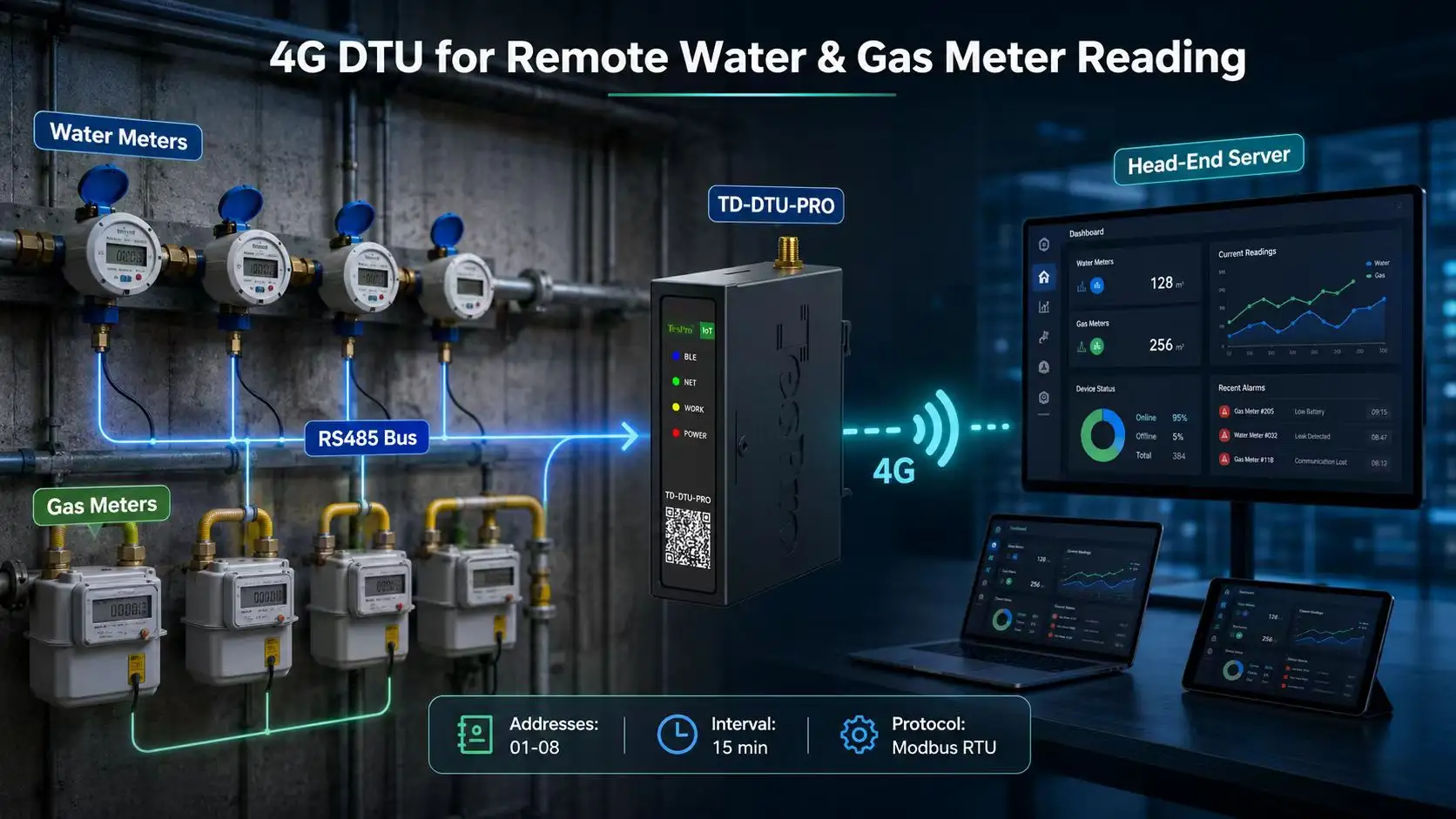

A 4G DTU can send data from RS232/RS485 water meters, gas meters or collectors to a head-end system over cellular. Direct connection depends on meter interface, protocol, power and platform parsing. Use a DTU when the platform parses a simple protocol; use a gateway for multiple protocols, tag mapping or advanced local buffering.
Key Takeaways
• First confirm that the meter exposes a usable communication interface.
• Bus capacity depends on collection cycle and response time, not a fixed number.
• Gas applications must also follow site safety and equipment-certification requirements.
Start with the meter and collector architecture
Some meters expose RS485 directly, while others require a collector or pulse-conversion device. Confirm protocol, address, baud, power and installation.
Cloud-side versus field-side parsing is the boundary
When the head end parses raw frames, the DTU handles communications. Use a gateway when the field must normalize tags, units, timestamps or multiple protocols.
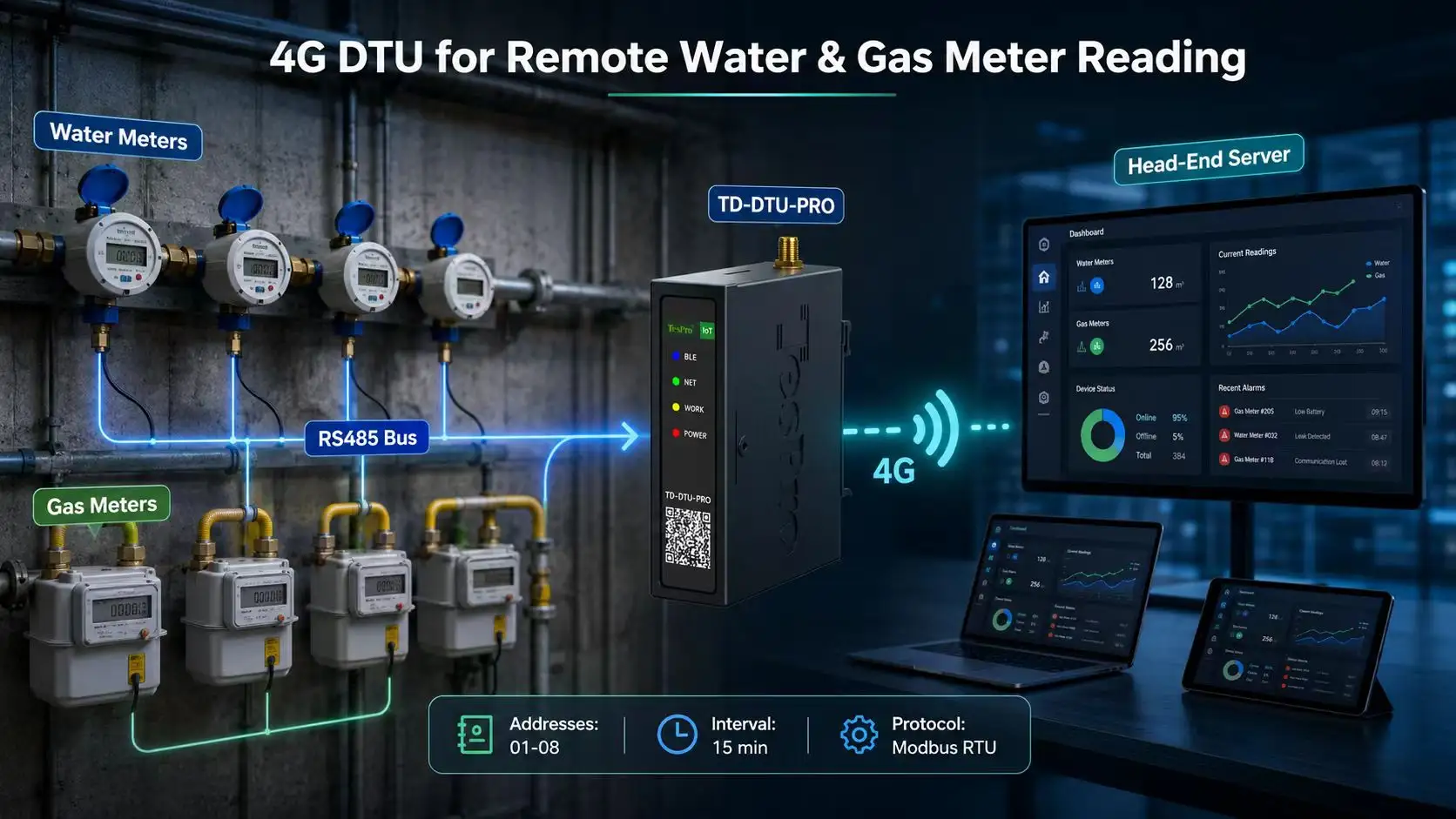
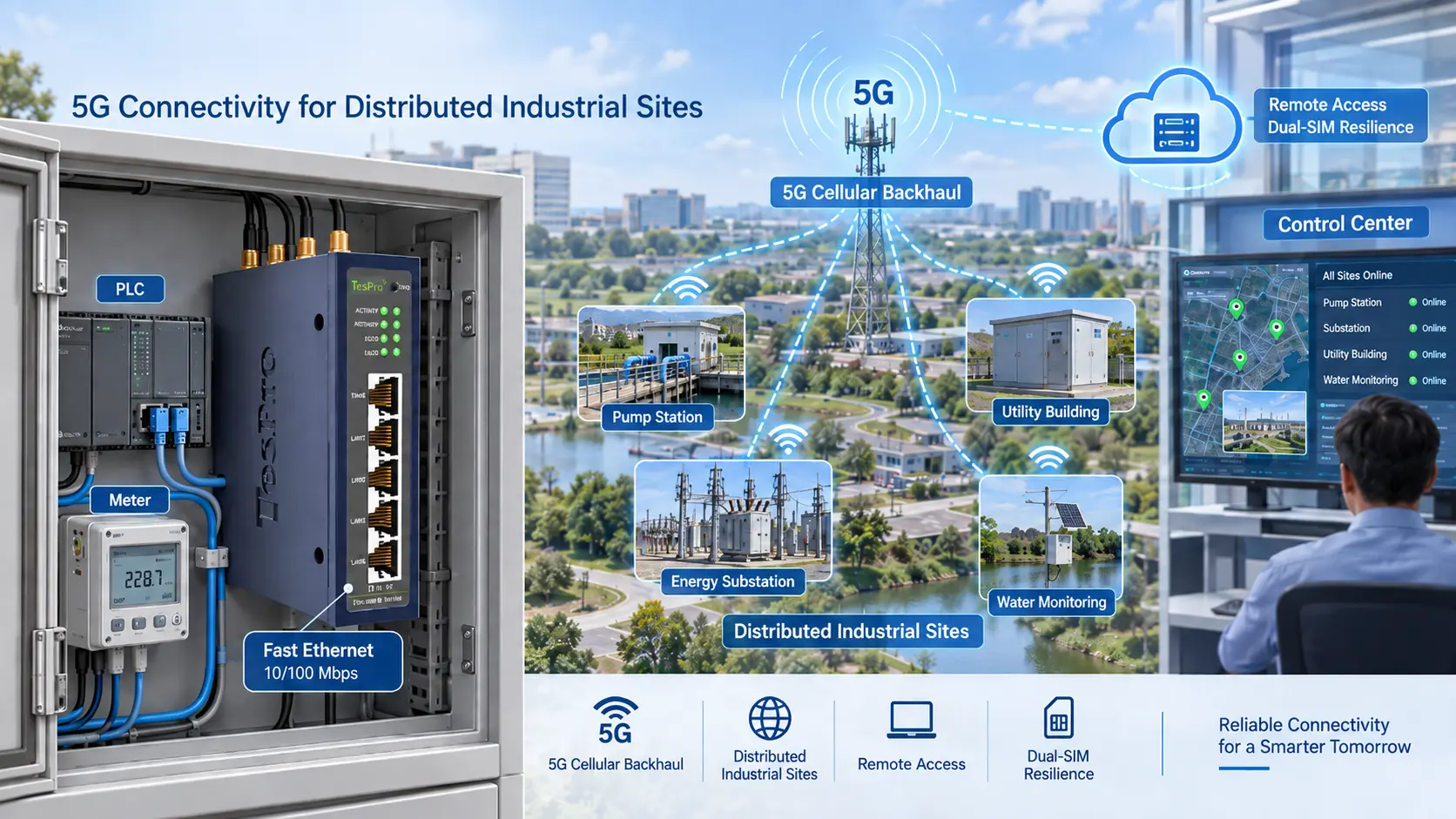
Distributed sites need fleet operations
Large deployments also require SIM, APN, device identity, parameter templates, remote restart, traffic and replacement procedures.
How Tespro Fits
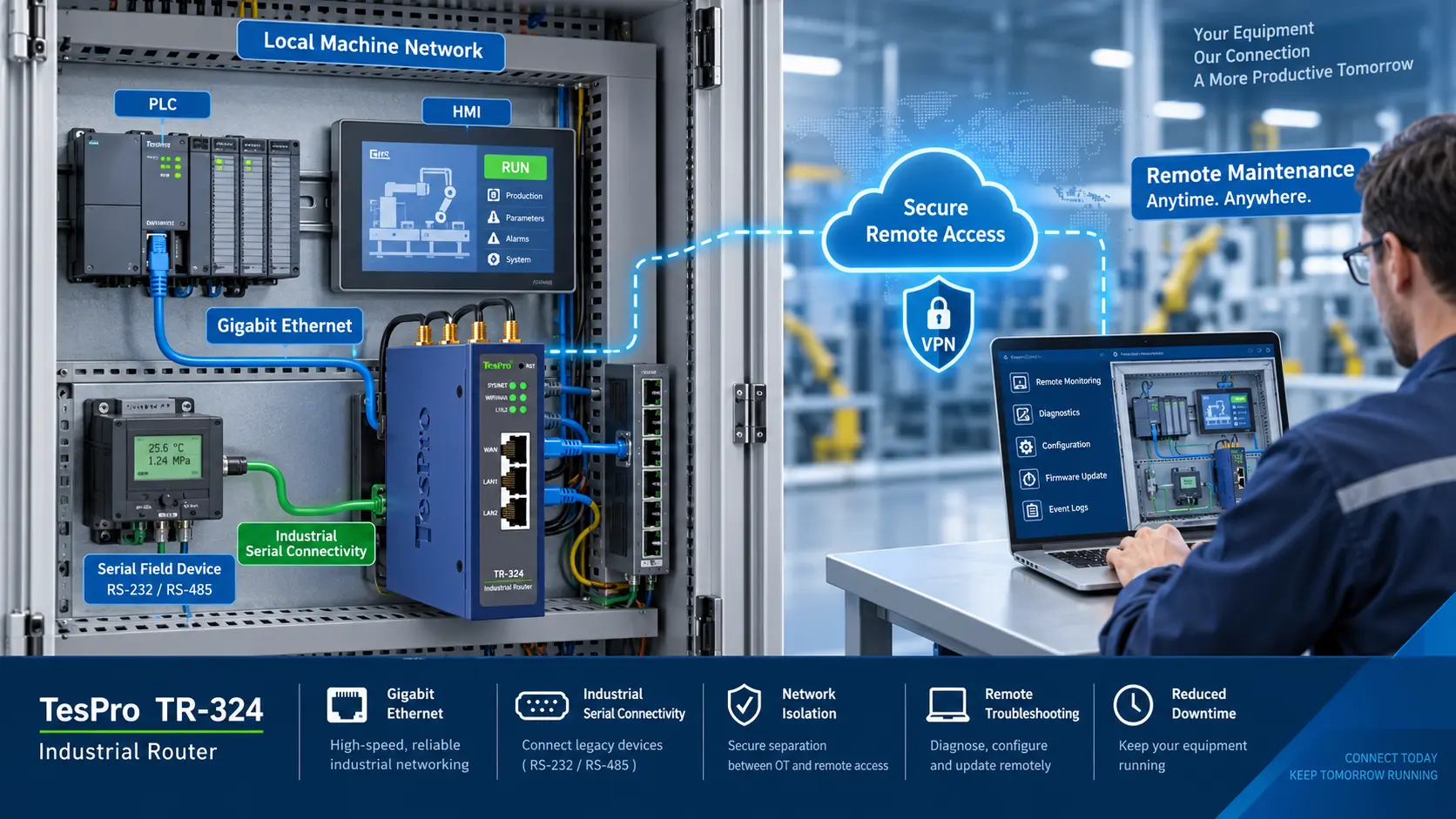
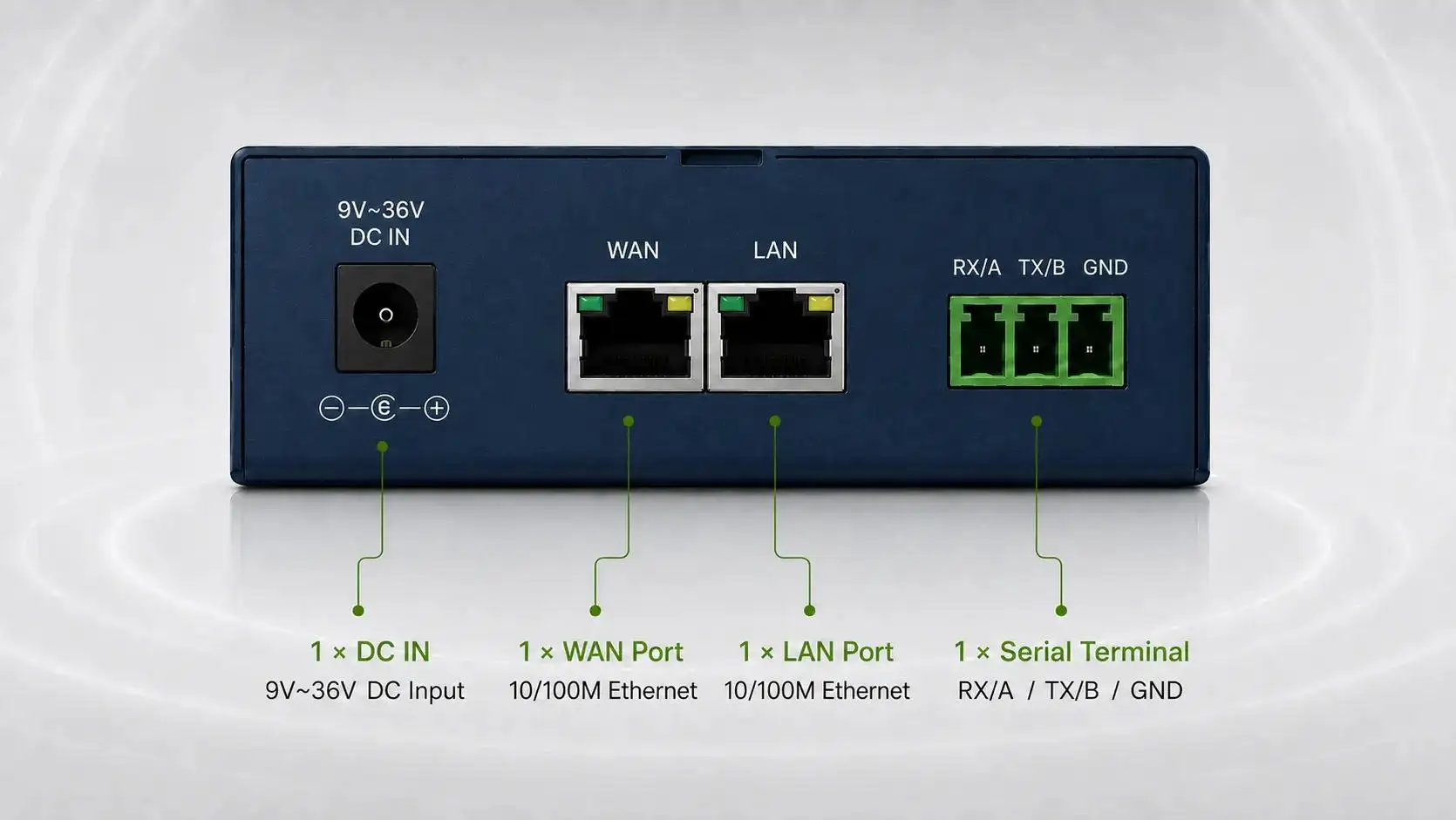
Tespro TD-DTU-SE, TD-DTU-PRO and TD-DTU-PLUS can be evaluated for remote serial-meter communications. Confirm interfaces, cellular generation, GNSS and battery options by model. Multi-protocol or complex data-processing projects can combine the TG Series and SEMS.
Compatibility and Selection Checklist
✓ Meter brand, model, interface and protocol
✓ Address, baud, wiring and power
✓ Meters per site and collection interval
✓ Platform parsing, commands and timestamps
✓ Buffer, reconnect and replay requirements
✓ Safety, certification, SIM and quantity
Frequently Asked Questions
Q: Can a gas meter connect directly to a DTU?
A: Only when the meter provides a compatible serial interface and protocol and the site safety requirements are satisfied.
Q: How many meters can one DTU support?
A: Calculate and test from RS485 bus, baud, response, frame length and collection interval.
Q: Does a water-meter project always require SEMS?
A: No. It may connect to the customer head end; SEMS is an optional data-management platform to evaluate.