-1791966549842.webp)





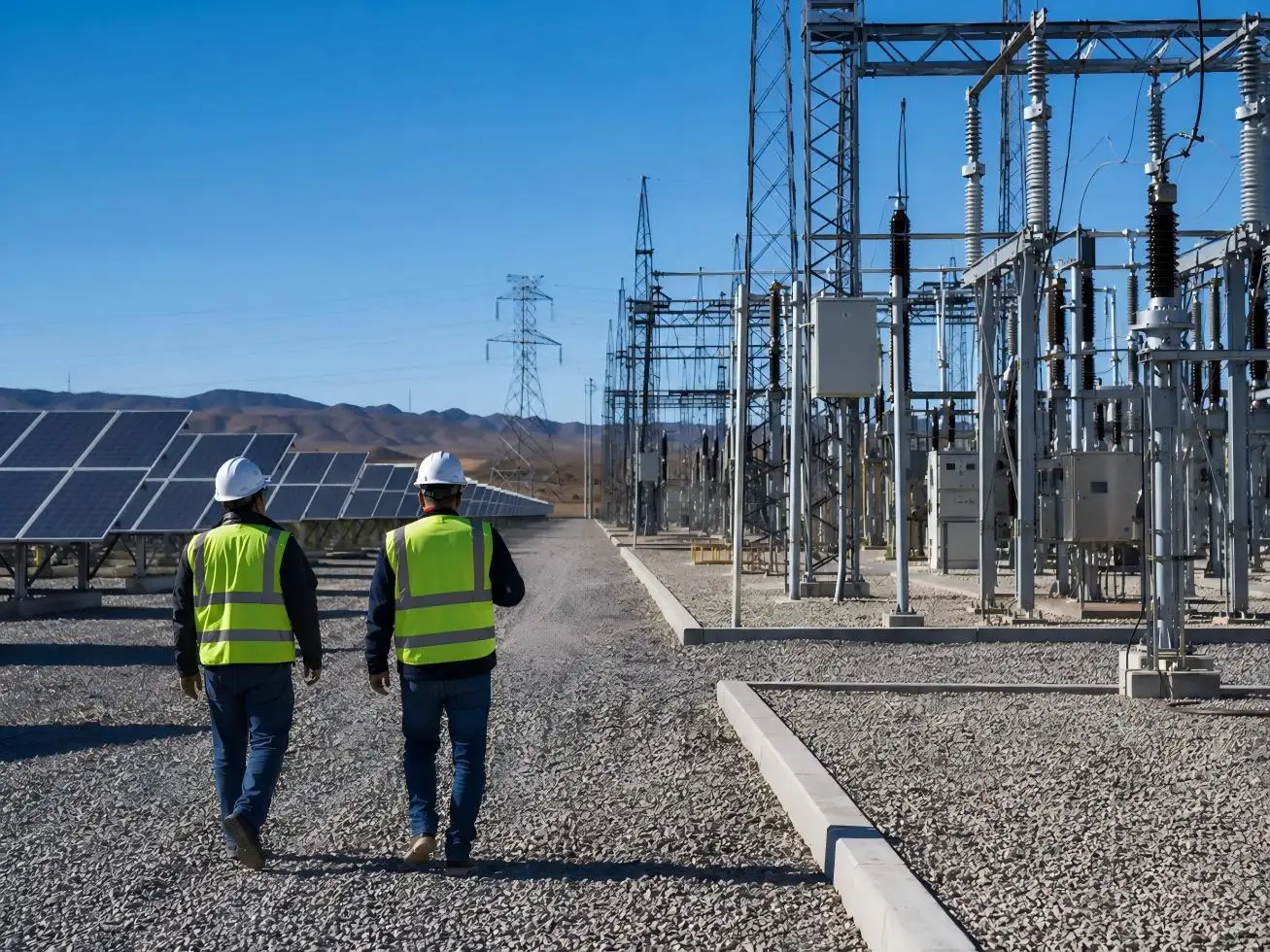

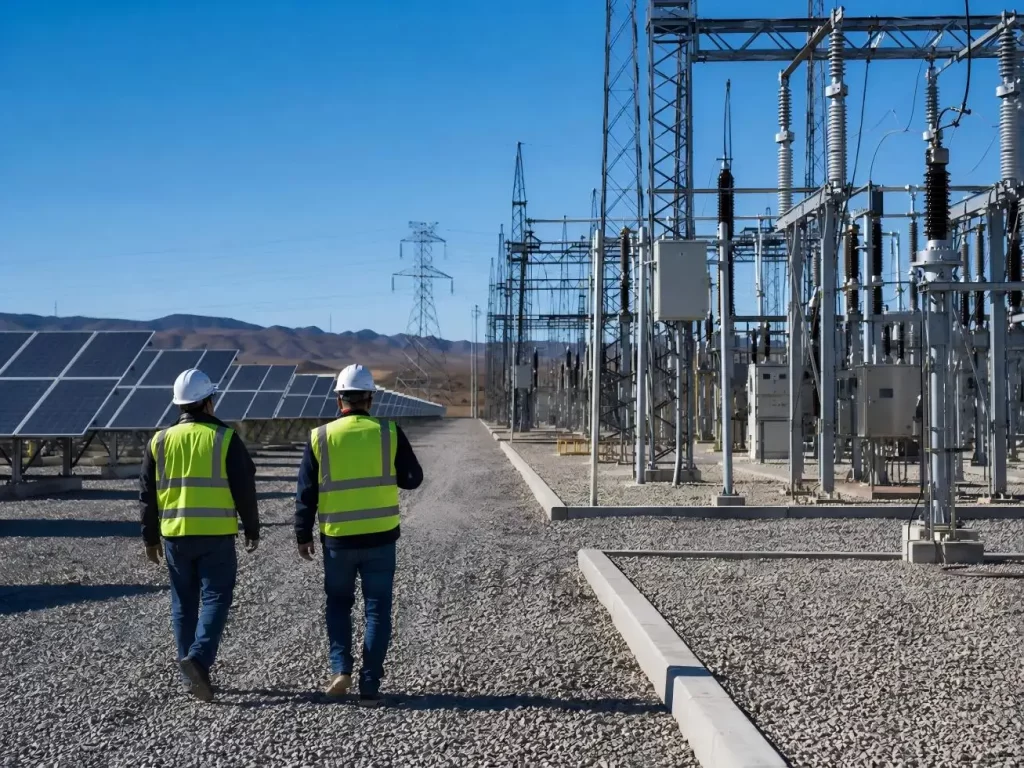
Wireless Sensor Data Collection links meters, sensors, controllers, and other field devices with remote monitoring platforms.
MQTT is often used because it is a lightweight publish-and-subscribe protocol suited to constrained devices and unstable networks. It does not replace sensors or industrial interfaces. Instead, it organizes data exchange between field devices, brokers, and applications.
What is MQTT?
MQTT enables systems to use a communications broker to separate producers and consumers of data.
•Publisher: Data is sent to a specific topic via some proprietary data gateways or data transceivers.
•Broker: The broker receives the published messages and delivers them to the subscribers.
•Subscriber: Dashboards, databases, alarm systems, and a plethora of other cloud services subscribe to the data of interest.
•Topic: The address that is used to locate the site, device, or type of measurement can take on many different formats.
How MQTT Supports Wireless Sensor Data Collection
A typical flow of Wireless Sensor Data Collection looks like this:
Sensor or meter → RS232/RS485 → data transmission unit → 4G → MQTT broker → cloud services
More specifically, the typical flow involves these common steps:
•Data acquisition: The communication unit polls the data from an attached meter, PLC or sensor.
•Data formatting: The measurement is encapsulated in the communication unit in the agreed format (e.g., JSON or binary).
•Topic assignment: A topic is assigned that describes the source and type of the data.
•Wireless messaging: Data is sent through available cellular or Internet Protocol (IP) networks.
•Cloud services: This service allows for storage of data within a dedicated server. It may also provide data processing, visualization, or even analysis services which can send notifications.
Benefits of MQTT
There are many benefits of using MQTT for Wireless Sensor Data Collection.
•Reduced overhead: This system can help to limit expensive data collection over a cellular network, even when the collection of data happens at a high frequency.
•Loose coupling: The publishers have no knowledge about the consumers of the data.
•Flexible Organization: Through the use of topics, data collection devices can be organized in a hierarchical system based on geographical location, on-site collection, type of device, or on the type of measurement.
•Delivery Options: Different levels of Quality of Service (QoS) dictate the style of message delivery and provide many options for the users.
•Connection Monitoring: Keep-alive behavior depends on client and broker settings to check if the connection is still maintained.
•Bidirectional Messaging: The data upload and the controlled downlink messages use the same architecture.
Understanding MQTT Quality of Service
MQTT provides three Quality of Service, or QoS, levels.
| Level | Delivery Behavior | Typical Use |
| QoS 0 | Sent once without confirmation | Frequent, non-critical sensor readings |
| QoS 1 | Retried until acknowledged and may be duplicated | Meter data, status updates, and alarms |
| QoS 2 | Uses a multi-step exchange to limit duplicate delivery | Selected transactions needing tighter message handling |
Higher QoS levels add traffic and processing. The appropriate setting can be determined based on the significance of the data, the quality of the network, and if the application on the receiving end can handle duplicate messages.
MQTT and Other Communication Methods
MQTT has routing, management, session, and delivery control features, but communicates over a TCP connection.
Raw TCP is suitable for custom protocols, but the application layer typically needs to define its own message framing, topic or channel structure, session management, acknowledgments, retry mechanisms, and reconnection behavior. UDP introduces less connection and protocol overhead, making it useful for low-latency or lightweight communication, but it does not guarantee packet delivery, ordering, or duplicate prevention. HTTP is widely supported and easy to integrate, although its headers and request-response structure may add unnecessary overhead when transmitting frequent small payloads.
Protocols for Collecting Wireless Sensor Data should consider:
•Frequency of data messages: Higher control features of protocols can support higher frequency reporting.
•Payloads: Small payloads (i.e. sensor messages) have different requirements than large payloads (i.e. images).
•Reliability: Some systems require acknowledgment and controlled message delivery for critical alarms.
•Latency: Some control applications require shorter delivery times.
•Architecture of the selected platforms: The protocol must integrate with the broker and cloud services selected.
•Security: Systems require a full complement of design controls (i.e. access control) that include encryption and authentication.
Security Considerations
MQTT implementations require additional controls to manage the risks that accompany deployment of the protocol over public or shared networks.
•Transport Security: For the transmission of field data over the internet, SSL/TLS can be used to protect data between the field device and the MQTT broker.
•Device Security: Unique credentials or certificates for each device can prevent unauthorized access to field devices.
•Topic Security: Restrictions can be imposed on which MQTT topics field devices are allowed to publish to or subscribe from.
•Credential Security: A security policy is a requirement for the management of credentials (i.e., passwords, keys, certificates) used for the authentication of devices, or for publishing to the MQTT topics.
With the support of MQTT, no implementation of a system can be considered secure. Security also depends on broker configuration, firmware maintenance, account permissions, and network design.
A Data Transmission Unit Example
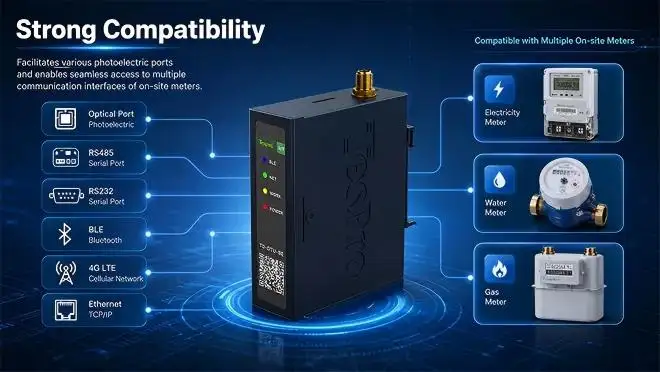
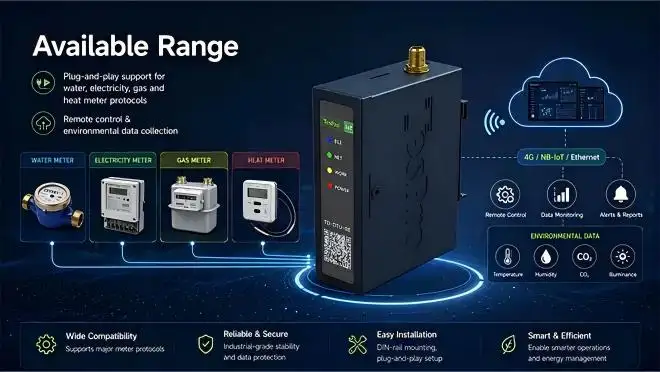
Tespro's TD-DTU-SE Data Transmission Unit is designed for remote acquisition and transmission in Wireless Sensor Data Collection and smart metering systems. It combines serial interfaces, cellular connectivity, MQTT client operation, and optional GNSS positioning, depending on configuration.
| Capability | TD-DTU-SE Specification |
| Field interfaces | 1 × RS232 and 1 × RS485, usable simultaneously |
| Wireless connectivity | 4G Cat-1 with 2G/4G support and Bluetooth |
| Network protocols | TCP, UDP, and MQTT |
| Encryption | SSL supported |
| Baud rate | 300–115200 bps |
| Power input | 9–36 VDC |
| Operating temperature | -40°C to +75°C |
| GNSS | GPS, GLONASS, BeiDou, Galileo, and optional QZSS |
The Mini-PCIe-based communication module allows regional frequency-band options to be selected. Local carrier bands, certifications, and SIM requirements should still be checked before deployment.
The unit is intended to communicate with water, electricity, gas, and heat meters through supported interfaces and protocols. Because meter implementations vary between manufacturers and markets, exact protocol compatibility should be confirmed for each model.
Conventional Use Cases
Numerous applications for MQTT based Wireless Sensor Data Collection exist.
•Smart Metering: Utility measurements are communicated to systems for invoicing, monitoring, or analytics.
•Environment Monitoring: Data from the collection of stations for temperature, humidity, air quality, precipitation, and water level can be communicated.
•Utility Assets: Status and alarm information of dispersed assets (pumps, substations, pipelines) can be communicated.
•Monitoring of industrial systems: Legacy devices using RS232 and RS485 can be linked to cloud systems.
•Data collection based on location: GNSS data can be used to record data at the location of mobile assets or at the location of inspections designated for a specific purpose.

Factors Involved in the Design
In addition to MQTT compatibility, there are other design factors of Wireless Sensor Data Collection that need to be considered.
•Sampling frequency: The variable of interest should be observed at a frequency that considers the rate of change of the variable in question.
•Topic naming: Topic names should be consistent and scalable across devices and systems.
•Functioning in the offline mode: The rules that define how data is temporarily stored and the conditions under which data can be transmitted after the cellular connection is restored should be specified.
•Data volume: The size of each message, the frequency, and the level of service agreed upon affect cost and load on the server that supports the application.
Final Words
MQTT supports Wireless Sensor Data Collection by simplifying the design of the communication interface between a field sensor and a cloud application.
By integrating the different design components of the Tespro TD-DTU-SE, examples of this are MQTT, 4G Cat-1, serial communication, GNSS, and design components for industrial applications. Each project will define the architecture that reflects the connected sensors, network conditions, security, and the other design components to meet the goals of each project.
FAQs
Q1. What is Wireless Sensor Data Collection?
Wireless Sensor Data Collection is the collection of data from sensors and its transmission to a remote system for storage or processing.
Q2. What is the role of MQTT in Wireless Sensor Data Collection?
In Wireless Sensor Data collection, MQTT plays a role because of its lightweight messaging which is useful for numerous small messages that need to be transmitted frequently.
Q3. Does MQTT work on cellular networks?
Yes, It works on 2G, 4G, and 5G networks as well as any IP based networks.
Q4. What is an MQTT broker?
An MQTT broker is a server that receives messages and sends them to the clients that have requested to receive them.
Q5. Can MQTT be used to transmit data from RS485 sensors?
Yes, it can be used to transmit data from RS485 sensors by first collecting the data in a gateway or DTU and then publishing the data using MQTT.