-1791966549842.webp)





Shifting to wireless data collection with smart devices is changing how sectors like utilities, farming, smart manufacturing, and environmental monitoring operate. Sensors, meters, and control devices are able to utilize cellular networks to collect and send operations data, eliminating the use of wired systems and manual data collection.
This collection innovation offers both benefits and challenges, particularly as the data traverse communications networks.
The two challenges that we must address include:
• The requirement to maintain the privacy of the data in transit
• The requirement to maintain the integrity of the data in transit
This research provides an overview of systems that rely on SSL/TLS to maintain the privacy and the integrity of data in wireless collection systems. In particular, we examine how the TLS protection is built into an industrial device, the Tespro TD-DTU-PLUS, in an actual deployment.
1. Security Requirements in Wireless Data Collection for Smart Devices
In the industrial IoT and telemetry systems, the data that is communicated wirelessly will impact billing, control, and system operations. There are a number of critical risks that will be introduced with wireless communications.
1.1 Risk of Eavesdropping
Interception of a wireless communication is possible in a number of scenarios. Some of the potentially intercepted data include:
•Meter and sensor data values
•Sensor readings and environmental metrics
•Remote control commands
1.2 Risk of Data Alteration
Data sent over communications networks may be altered for potentially illicit and injured purposes, resulting in:
•Validating erroneous billing
•Making erroneous operational control decisions
•Creating erroneous operations within control systems.
1.3 Risk of Device Authentication
In the absence of authentication, an attacker can introduce a rogue device into the network and the device may provide erroneous data.
To ensure wireless data collection for smart devices, the systems must enforce both the confidentiality and integrity of the data.
2. SSL/TLS Encryption: Creating a Secure Communication Channel
SSL and TLS serve the same basic purpose in the design of secure data communications over untrusted networks. Today, TLS is the standard in use, while SSL is the term used for the legacy version.
2.1 Secure Handshake and Authentication
The TLS handshake provides for the following:
•The identifying information of the server is verified by the device via a digital certificate.
•The device and server agree upon a secure session encryption key.
•Communication is made secure via encryption.
This process prevents a man-in-the-middle attack, as well as ensuring the authenticity of the endpoints.
2.2 Data Encryption in Transit
Once the secure channel has been established:
•All telemetry data passes via the channel which is encrypted using symmetric encryption.
•Packets which have been intercepted appear as unreadable ciphertext.
•Communication in both the uplink and downlink directions is secure.
2.3 Compatibility of Protocols
Commonly used IoT communications protocols can be secured using TLS, including:
•MQTT over TLS
•TCP over TLS
•HTTP/HTTPS
This means that existing IoT frameworks can begin to use encryption without needing to redesign the application logic.
3. Maintaining Data Integrity in Wireless Data Collection Systems
When designing secure wireless data collection systems, the principle concern is confidentiality. However, it is equally important to ensure that the data is accurate and has not been tampered with. The best wireless data collection systems integrate transport-layer encryption with application-layer integrity controls.
3.1 Sequence Control and Replay Protection
The identification of each message usually has the following elements:
•Sequence number
•Timestamp
This enables the detection of:
•Packet loss
•Replay attacks
•Duplicate transmissions
3.2 Hashing and Checksum Verification
The integrity of the message payload is verified using a cryptographic hash function (i.e., a SHA-based digest) and a checksum, which is embedded in a message frame. Any modification to the message during transmission will result in a failure to verify the message.
3.3 Store-and-Forward Mechanism
In unstable connectivity situations, such as many industrial applications, the following occurs:
•Data is stored temporarily on the edge device.
•Transmission is re-initiated on the edge device.
Restoring the network will allow for the transfer of data and maintain data integrity and continuous flow for billing and analytics.
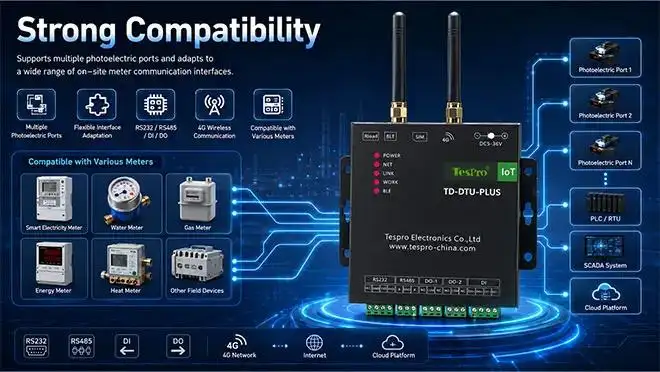
4. Industrial Implementation: Tespro TD-DTU-PLUS
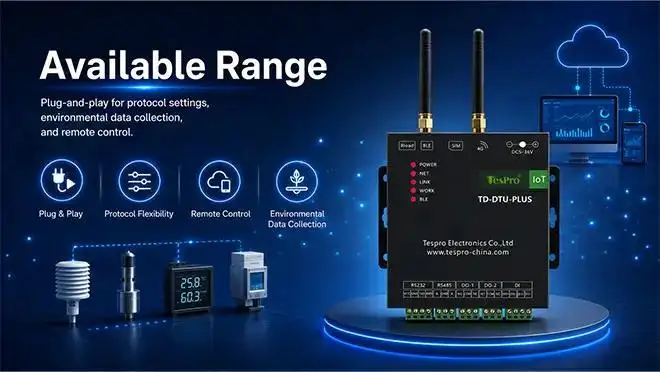
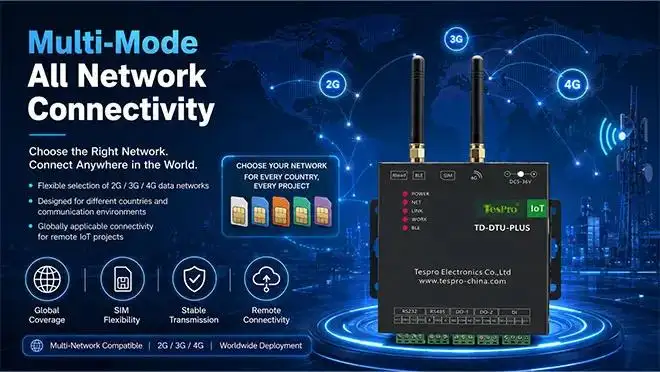
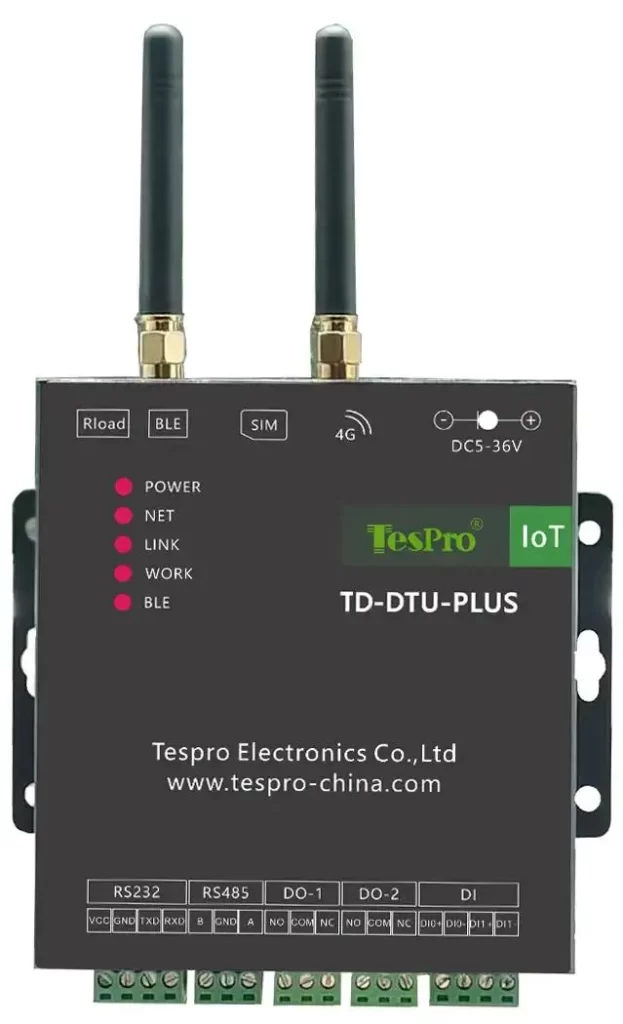
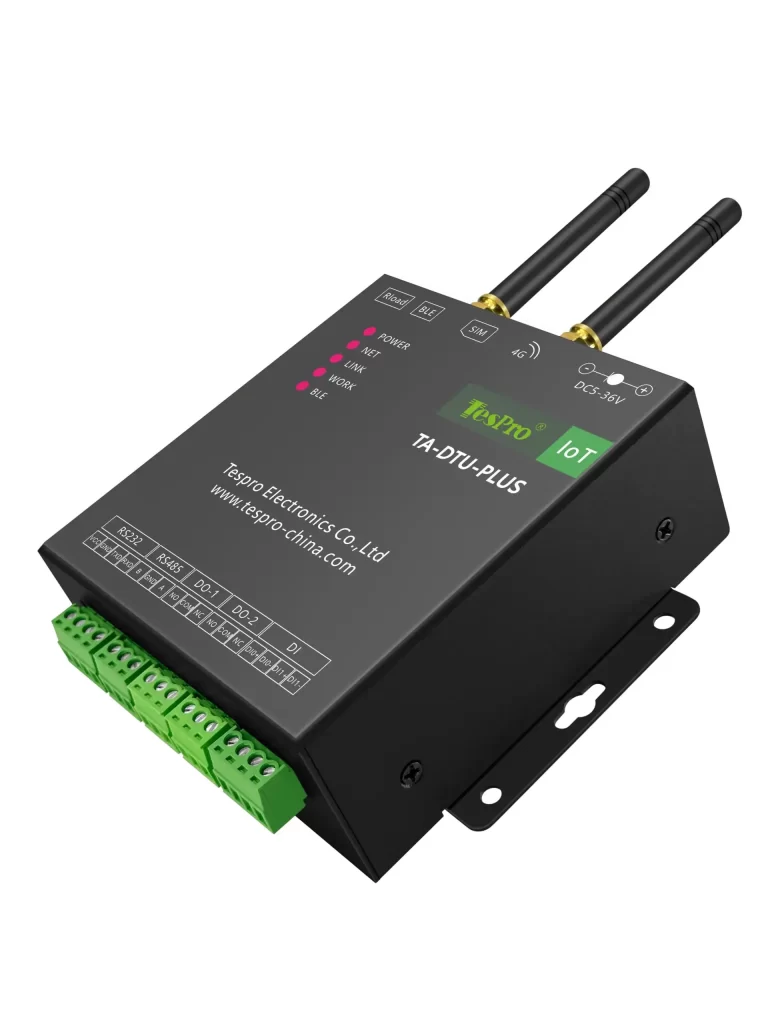
The Tespro TD-DTU-PLUS is an industrial 4G data transmission unit aimed at the collection of wireless data from smart devices in remote or poorly developed locations.
It embeds several communication and security features to ensure reliable telemetry transmissions.
4.1 Security and Communication Features
•TLS/SSL Encryption Support
Creates secure channels in the communication between the field devices and the cloud.
•Multi Protocol Connectivity (MQTT, TCP, UDP)
Ensures compatibility with the major IoT and SCADA systems.
•Encrypted Cloud Communication
Guarantees security for the metering and control data in transit.
4.2 Data Reliability Mechanisms
• Local Data Buffering
Data is stored in the presence of communication failure and is sent when communication is re-established.
• Continuous Data Acquisition
Eliminates gaps in data due to poor communication.
4.3 Industrial-Grade Hardware Protection
•Reverse Polarity Protection
•Surge Protection
•Overvoltage Protection
•Overcurrent Protection
These features improve the robustness of the equipment for open and industrial applications.
•Operating temperature: -20 to 60 °C
5. Security and Integrity Feature Summary
| Feature | Role in System Security |
| TLS/SSL Encryption | Data confidentiality is maintained |
| MQTT/TCP over TLS | Security of the IoT frameworks |
| Local Data Buffering | Data is secure even with communication outages |
| Sequence & Timestamp Control | Detection of replay and lost packets |
| Hash/Checksum Validation | Security of the data integrity |
| Industrial Power Protection | Hardware is secure and data is continuous |
6. Application Scenario: Remote Utility Metering
For rural utility metering, whether for water or electricity, there are multiple infrastructural constraints, including:
•Rural areas often have limited availability
•Poor or no mobile network
•Costly manual meter reading
The deployment of 4G DTUs with SSL will allow utilities to have:
•Real-time secure meter data transmission
•Continuous data collection through local storage
•Auto-sync when the network is available again
•Prevention of unauthorized access of the billing data
Due to local storage, data is not lost and will be sent after the network is available again.
Conclusion: Building Trustworthy Wireless Data Collection Systems
There is no single solution to remove all of the security threats pertaining to the Internet of Things. A combination of several methods, such as:
•TLS/SSL
•Authentication of devices
•Data integrity
•Local storage with a fail-safe
... provides a solid framework for the secure industrial Internet of Things.
The Tespro TD-DTU-PLUS is an excellent example of embedding such methods so that secure and reliable data collection and transmission in a wireless and Internet of Things environment is possible.
As the Internet of Things expands, careful evaluation regarding the security of the architecture and the integrity of the data collection will be necessary in order to sustain and trust systems in the long term.
FAQs: Wireless Data Collection for Smart Devices
Q1. What do SSL and TLS mean for Wireless Data Collection Systems?
SSL and TLS are standards for securing data in transmission and preventing interception.
Q2. Why is it critical to maintain data integrity in IoT systems?
Data integrity is critical because data should not be lost, altered, or duplicated in transmission.
Q3. Is confidentiality the only concern when talking about data security?
Definitely not. Besides confidentiality, data integrity and authentication should be in place.
Q4. What is the implication of poor wireless connectivity?
Data is saved in the device and sent when connectivity is restored.
Q5. What does a DTU do to reliability of data systems?
A DTU provides a buffering capability, manages data transmission, and ensures that data is delivered.