-1791966549842.webp)





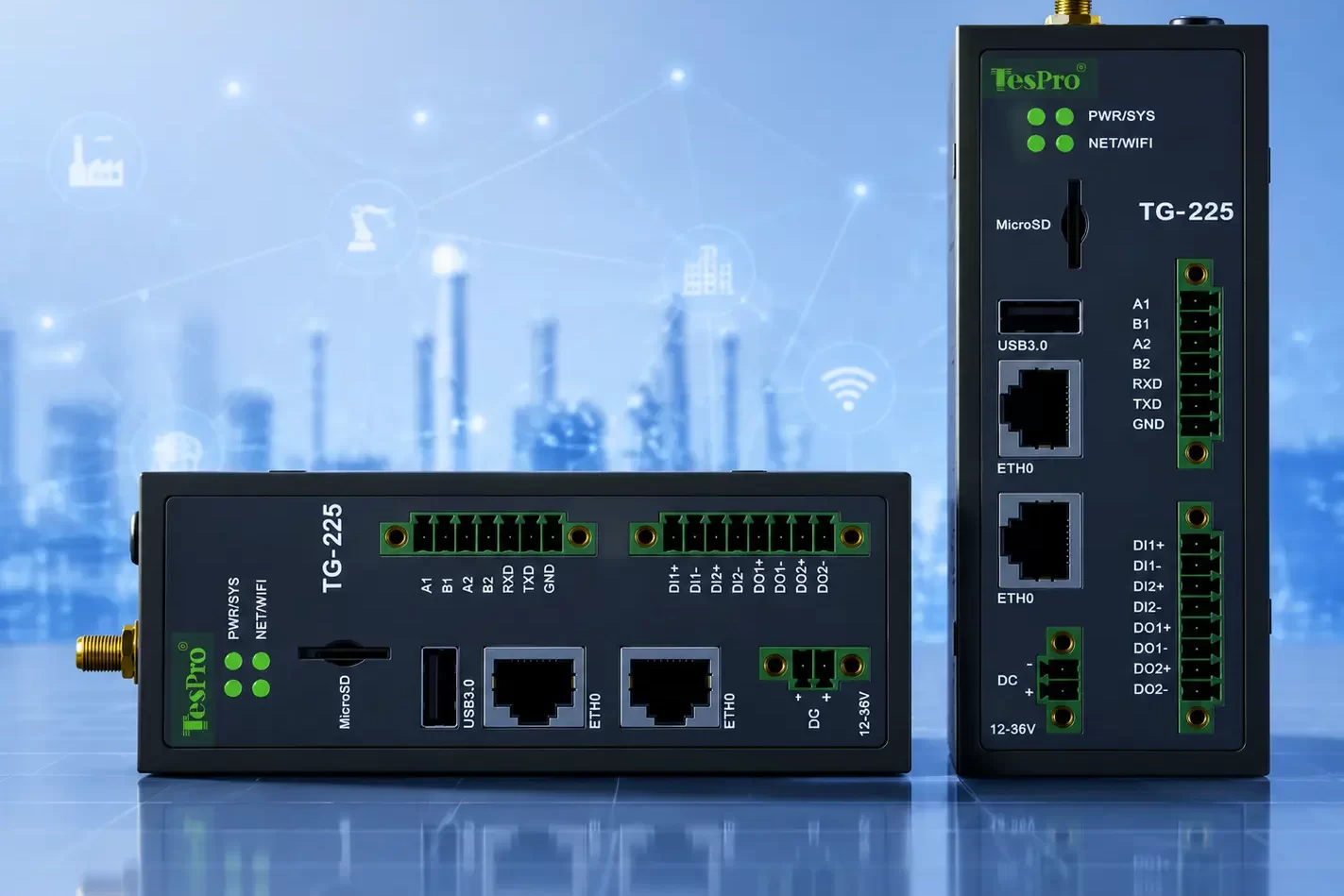
The core purpose of an industrial gateway is to enable devices of different ages, different brands, and different protocols to work together in one system. But in different industries, it solves different specific problems.
Many projects focus only on whether devices can connect to the internet during the planning stage. But after deployment, they find that devices not understanding each other is the biggest obstacle. The industrial gateway was designed to solve this problem.
I. Solving the Problem of Incompatibility Between Old and New Devices
This is the most essential value of the industrial gateway.
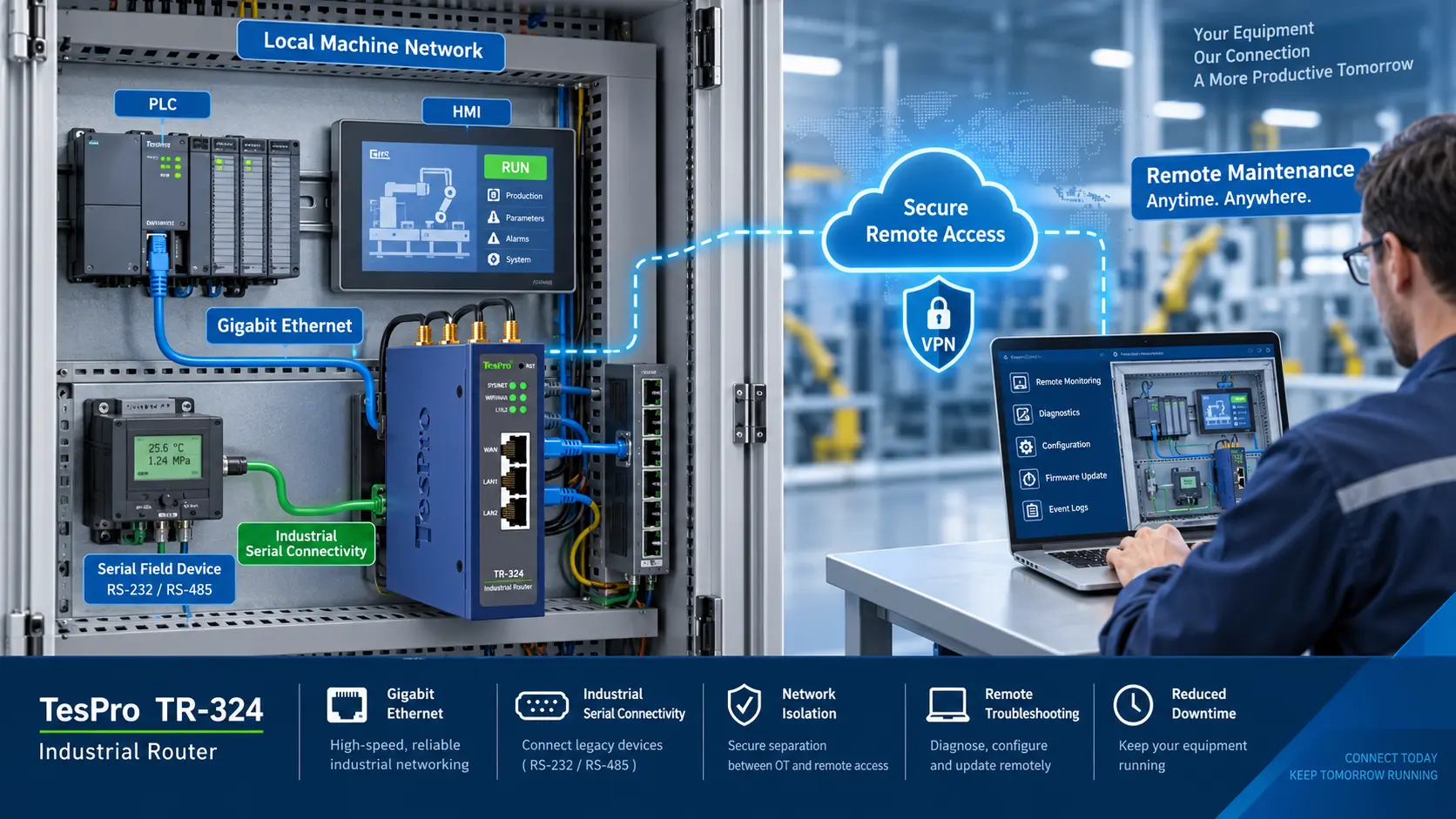
Factories often have devices from different eras coexisting. The newest devices support Ethernet and standard protocols, but ten-year-old equipment may only have RS232 serial ports and proprietary protocols. Replacing all this old equipment would be extremely costly. Leaving them untouched means their data remains in isolated islands.
The industrial gateway solves this problem by connecting to old equipment via serial ports, reading proprietary protocol data, converting it, and outputting it in standard protocols. New devices and cloud platforms see unified data and are completely unaware of the existence of the old equipment. The old equipment continues to serve, and the new system gets complete data.
In a real case, an automotive parts factory had over thirty injection molding machines of different ages and brands. After deploying industrial gateways, data from these machines was collected uniformly and integrated into the MES system. The factory achieved real-time production progress monitoring without replacing any old equipment.
II. Solving the Problem of Inconsistent Protocols
Even when devices are from similar eras, inconsistent protocols are a common phenomenon. In the PLC world, Siemens uses the S7 protocol, Mitsubishi uses the MC protocol, Omron uses the FINS protocol, and Rockwell uses the CIP protocol. In the instrument world, electricity meters use DL/T645, water meters use CJ/T188, and sensors use Modbus. These protocols are not compatible with each other, and devices cannot communicate directly.
Industrial gateways have built-in parsing capabilities for these protocols. You only need to tell the gateway what device is connected and what protocol it uses, and the gateway will automatically handle the protocol conversion. The collected data is output in a unified format, such as MQTT or OPC UA, which can be used directly by the cloud platform or MES system.
At one water treatment plant, there were PLCs, instruments, and variable frequency drives from five different suppliers. They were originally running independently, and operators had to switch between multiple screens. After deploying an industrial gateway, all data was integrated into a single monitoring screen, greatly improving operational efficiency.『
III. Solving the Problem of Slow Cloud Response
Sending all raw data to the cloud for processing is not feasible in many scenarios. Consider a high-speed production line that needs to detect anomalies and respond within milliseconds. If data has to go to the cloud and back, the delay could be hundreds of milliseconds or even seconds. By then, the production line would already have problems.
The edge computing capability of industrial gateways solves this problem. The gateway runs control logic locally and processes data in real time. Only when long-term storage or cross-system analysis is needed is the data sent to the cloud. This ensures real-time response while reducing cloud load and bandwidth costs.
One packaging line originally used a cloud solution for quality inspection. Each product inspection took several hundred milliseconds, which could not keep up with the line speed. After switching to a local industrial gateway for inspection, the inspection time per product dropped to tens of milliseconds, fully meeting the line requirements.
IV. Solving the Problem of Messy Data Formats
Even when using the same protocol, different devices may express data in completely different ways. For temperature, one device may use Celsius while another uses Fahrenheit. For status codes, one device may use numbers while another uses English strings. For timestamps, one device may use Unix timestamps while another uses year-month-day hour-minute-second format.
The industrial gateway is responsible for shielding these differences. You can configure the gateway to convert all temperature data to Celsius, map all status codes to standard encodings, and unify all timestamps into one format. The upper-layer system receives clean, consistent data and does not need additional cleaning and conversion.
One multinational manufacturing company needed to aggregate production data from over a dozen factories around the world to its headquarters platform. Each factory had different equipment and data formats. After deploying an industrial gateway at each factory, the gateway was responsible for converting local data into the unified format required by the headquarters platform. The data processing time for the entire project was reduced by about seventy percent.
V. Solving the Problem of Unstable Networks in Remote Areas
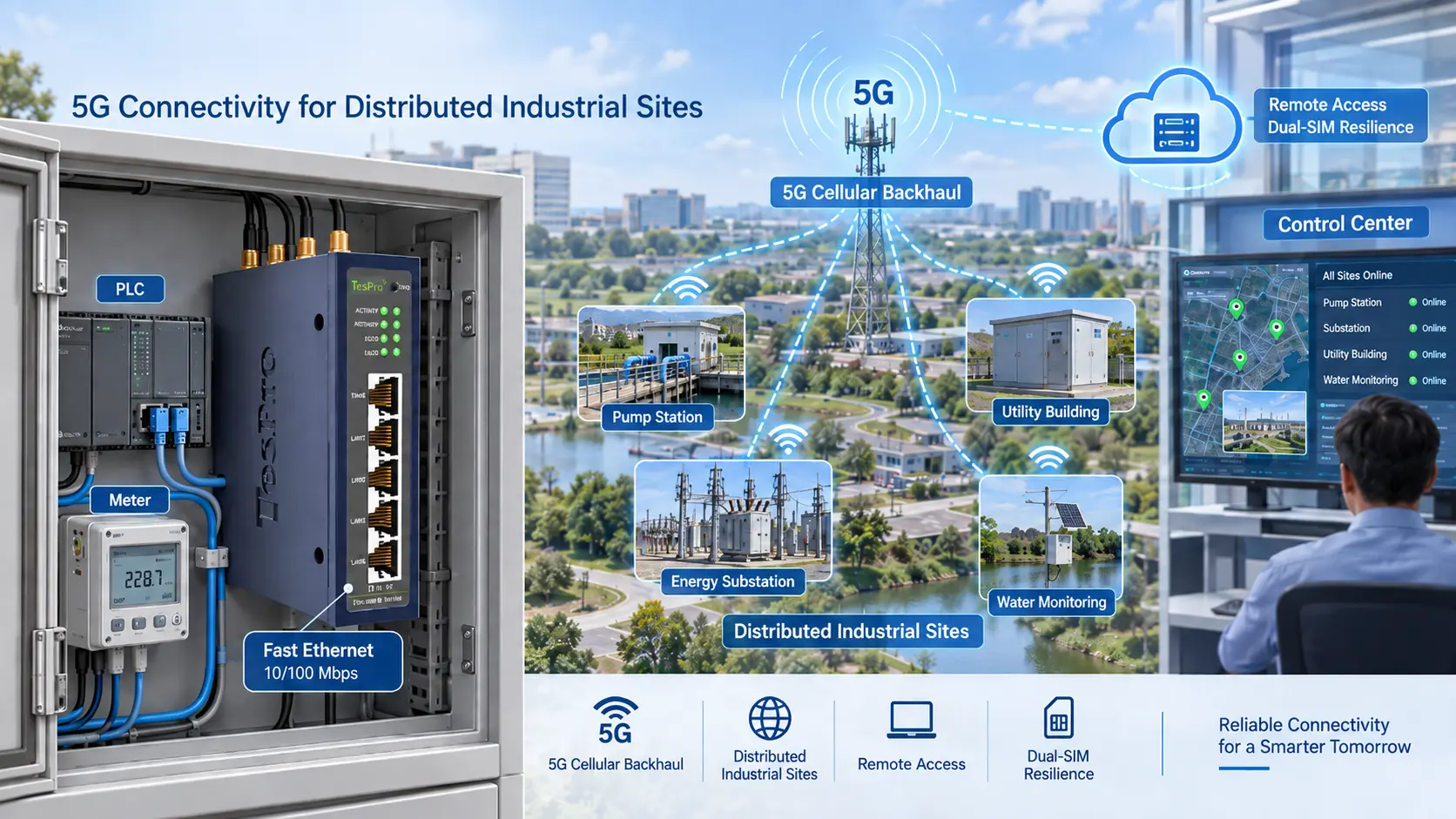
Like industrial routers, industrial gateways also support offline caching and automatic retransmission. This is very important for remote scenarios such as wind power, photovoltaics, oil and gas, and water utilities.
The gateway writes collected data to local storage first. When the network is normal, it is uploaded in real time. When the network is interrupted, it is stored locally. When the network is restored, it is automatically retransmitted in chronological order. Even when the network is intermittent, no data is lost.
A wind farm had dozens of wind turbines, each in a remote location. After deploying industrial gateways, even when network faults occurred, turbine data was stored intact locally and automatically retransmitted to the central control center when the network was restored, achieving truly unattended operation.
VI. Conclusion
The uses of an industrial gateway can be summarized in five areas. First, connecting old and new devices, allowing old equipment to continue serving while integrating into new systems. Second, unifying different protocols, enabling devices from different manufacturers to communicate with each other. Third, edge computing, processing data locally for millisecond-level response. Fourth, data cleaning and format unification, outputting clean and consistent data to upper-layer platforms. Fifth, offline caching, ensuring no data loss in remote and unstable network environments. If your project involves multiple devices, multiple protocols, real-time control requirements, or distributed remote locations, the industrial gateway is the key device to solve these problems.