-1791966549842.webp)





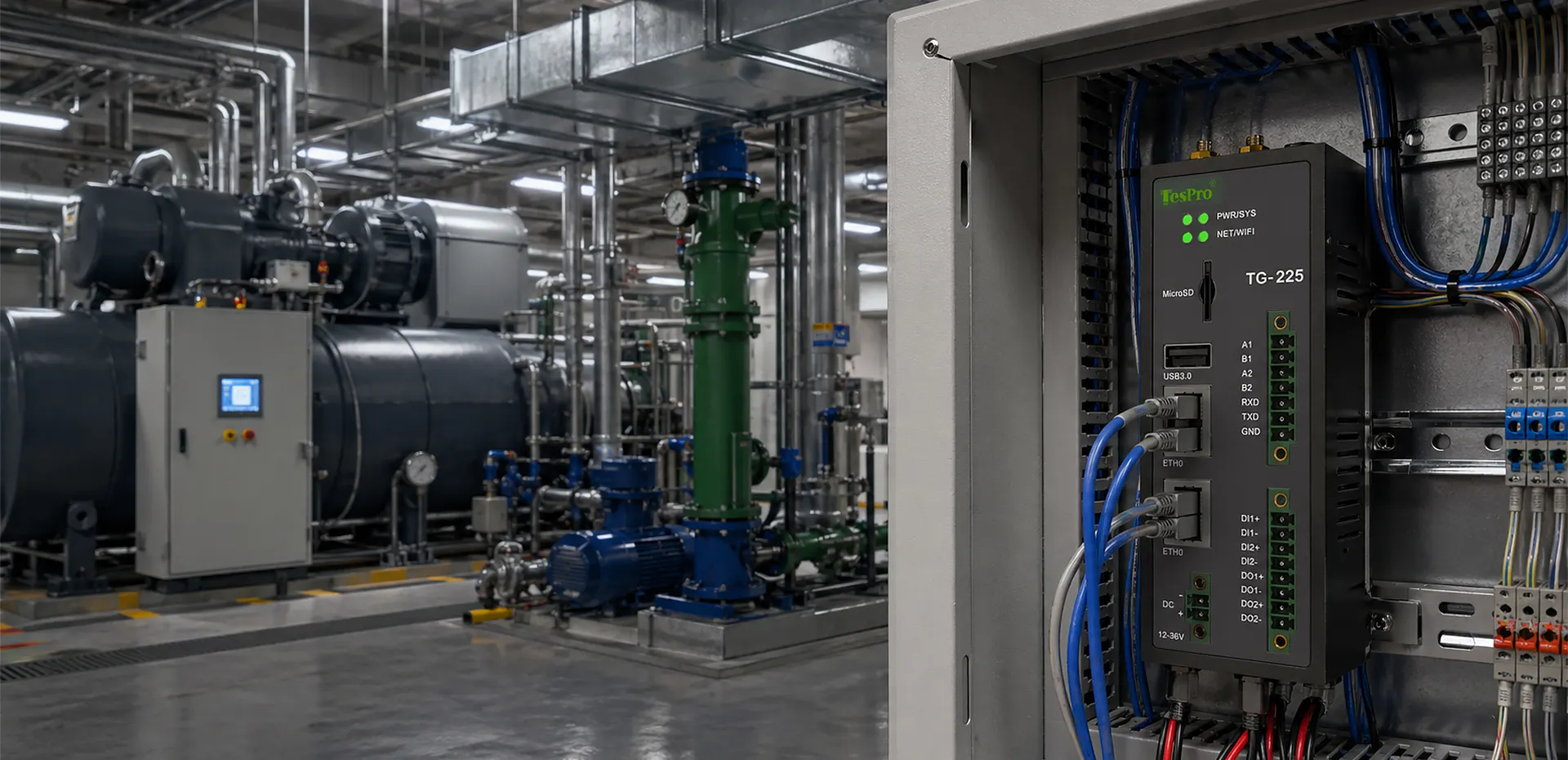

Industrial gateway is not a magnified version of a router. It is an intelligent edge device responsible for protocol conversion, data processing, and system integration.
When many people first encounter an industrial gateway, they ask: is this not just an industrial router that can connect to the internet? The answer is that the functions overlap, but the positioning is completely different.
I. The Definition of an Industrial Gateway
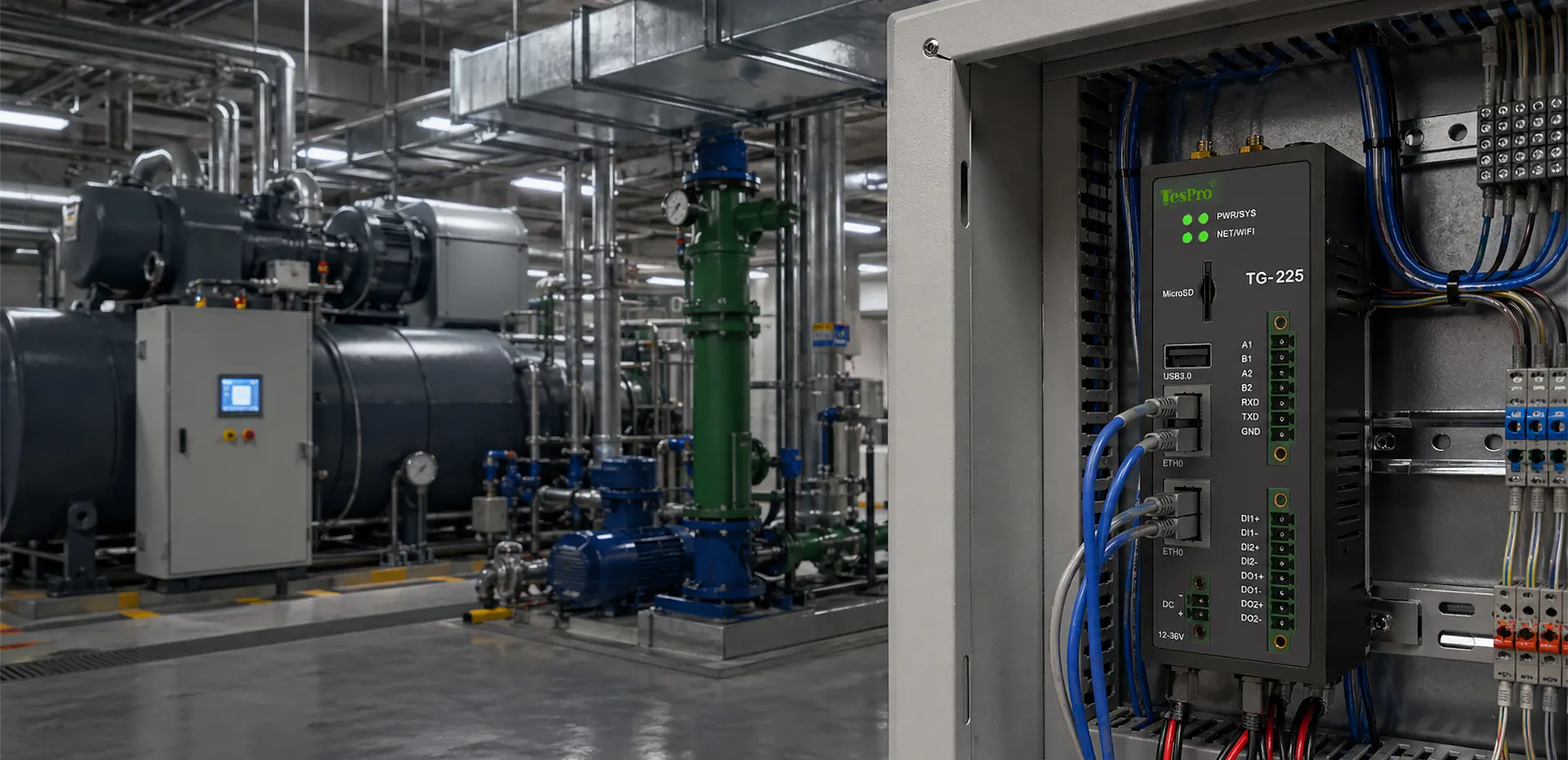
An industrial gateway is a device designed to connect different communication protocols, different network types, and different data formats. It sits between field devices and upper-layer platforms. Its core responsibilities are threefold.
First, protocol conversion. It converts various industrial protocols used by field devices into a unified format that the platform can recognize.
Second, data preprocessing. It filters, aggregates, and calculates data locally, sending only valuable information to the cloud.
Third, system integration. It integrates data from different sources such as PLCs, sensors, meters, and controllers into a unified system.
You can think of a gateway as a translator plus a data manager. The translator allows devices speaking different languages to understand each other. The data manager organizes and filters noise from data before uploading it.
II. The Difference Between an Industrial Gateway and an Industrial Router
Many people cannot tell the difference between an industrial gateway and an industrial router. Here is the simplest explanation.
The core task of an industrial router is to establish network connectivity. It cares about signal strength, network speed, and automatic switching when the network drops. It is like a courier that only delivers data packets from point A to point B, without caring what is inside the packets.
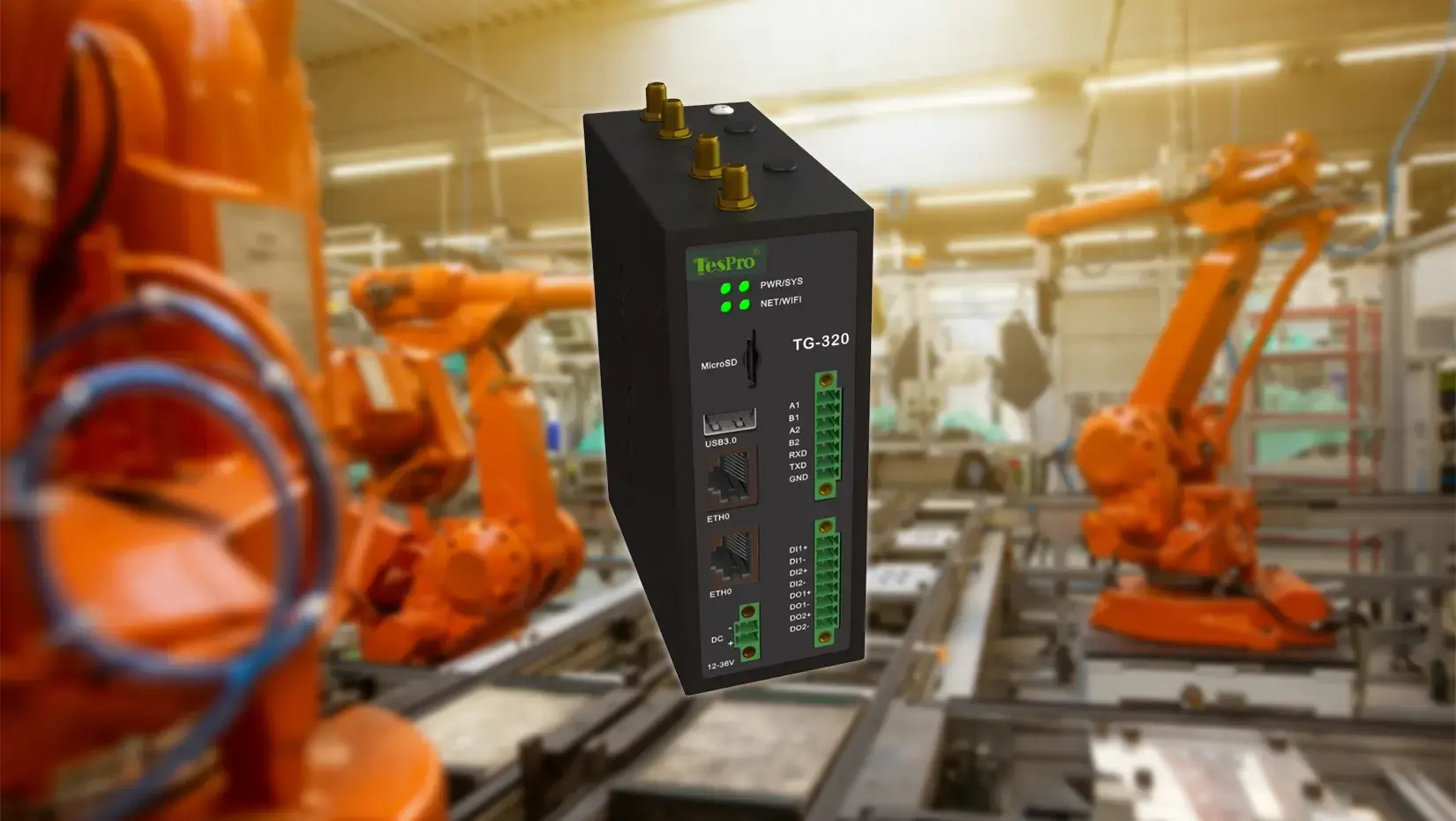
The core task of an industrial gateway is to process the data itself. It cares about whether the protocol can be understood, whether the data format can be converted, and whether local processing is needed before uploading. It is like a translator and an editor, not only understanding different languages but also organizing the content before sending it out.
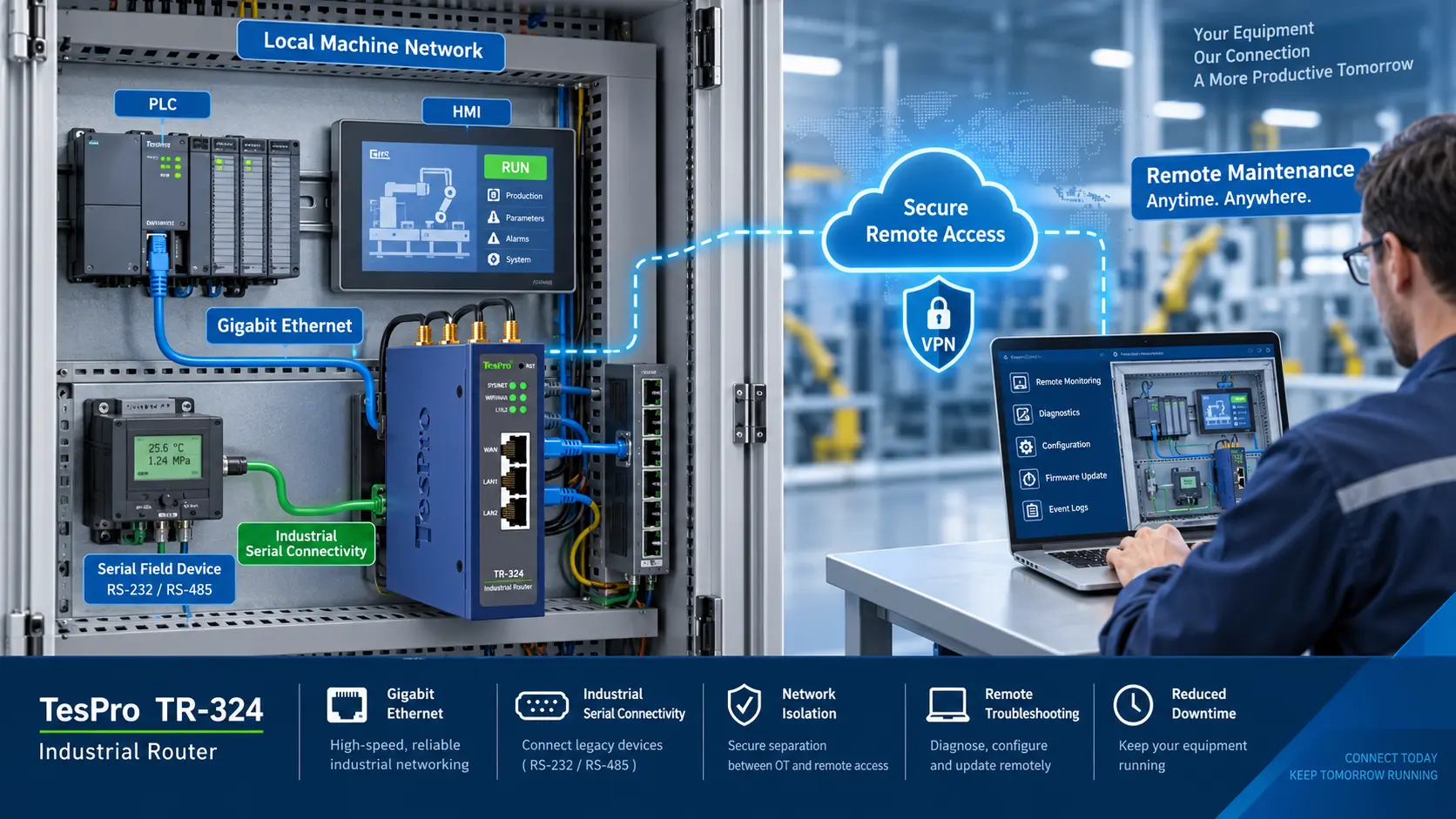
In real projects, these two types of devices often work together. The gateway collects and organizes data, and the router sends the organized data to the cloud. Some high-end devices integrate both functions, acting as both gateway and router.
III. Core Capabilities of an Industrial Gateway
The industrial gateway has become the core device of the industrial IoT because it has several capabilities that ordinary routers do not have.
First, multi-protocol support. Field devices use a wide variety of communication protocols. PLCs commonly use proprietary protocols from Siemens, Mitsubishi, Omron, Rockwell, and others. Electricity meters commonly use DL/T645 or Modbus. Sensors commonly use Modbus RTU or CAN bus. Industrial gateways have built-in parsing capabilities for these protocols, allowing them to connect multiple device types simultaneously and output data from different protocols in a unified format.
Second, edge computing capability. The traditional approach of sending all raw data to the cloud for processing has two problems. One is data volume. Network bandwidth and cloud storage costs become high. The other is response speed. Round-trip data travel to the cloud and back takes time and cannot meet real-time control requirements. Industrial gateways can filter, aggregate, and calculate data locally. For example, they can aggregate temperature data collected once per second into a per-minute average before uploading. They can also determine locally whether a temperature threshold has been exceeded and trigger an alarm immediately, without waiting for a cloud command.
Third, protocol conversion and data mapping. Different devices may express the same physical quantity in completely different ways. One device may use Celsius for temperature while another uses Fahrenheit. One device may use hexadecimal for status codes while another uses strings. The industrial gateway is responsible for shielding these differences and outputting unified data to the upper-layer platform.
Fourth, offline caching and automatic retransmission. Like industrial routers, industrial gateways also support local data caching. When the network is interrupted, the gateway stores data in local storage and automatically retransmits it when the network is restored. This is very important for remote areas or scenarios with unstable networks.
IV. Where Is an Industrial Gateway Used
Industrial gateways are used in a wide range of applications, including the following main categories.
The first category is factory automation and smart manufacturing. Production lines have PLCs, robots, vision systems, and barcode scanners from different manufacturers using different protocols. The industrial gateway connects these devices and uploads unified data to the MES system or cloud platform, enabling production process transparency and traceability.
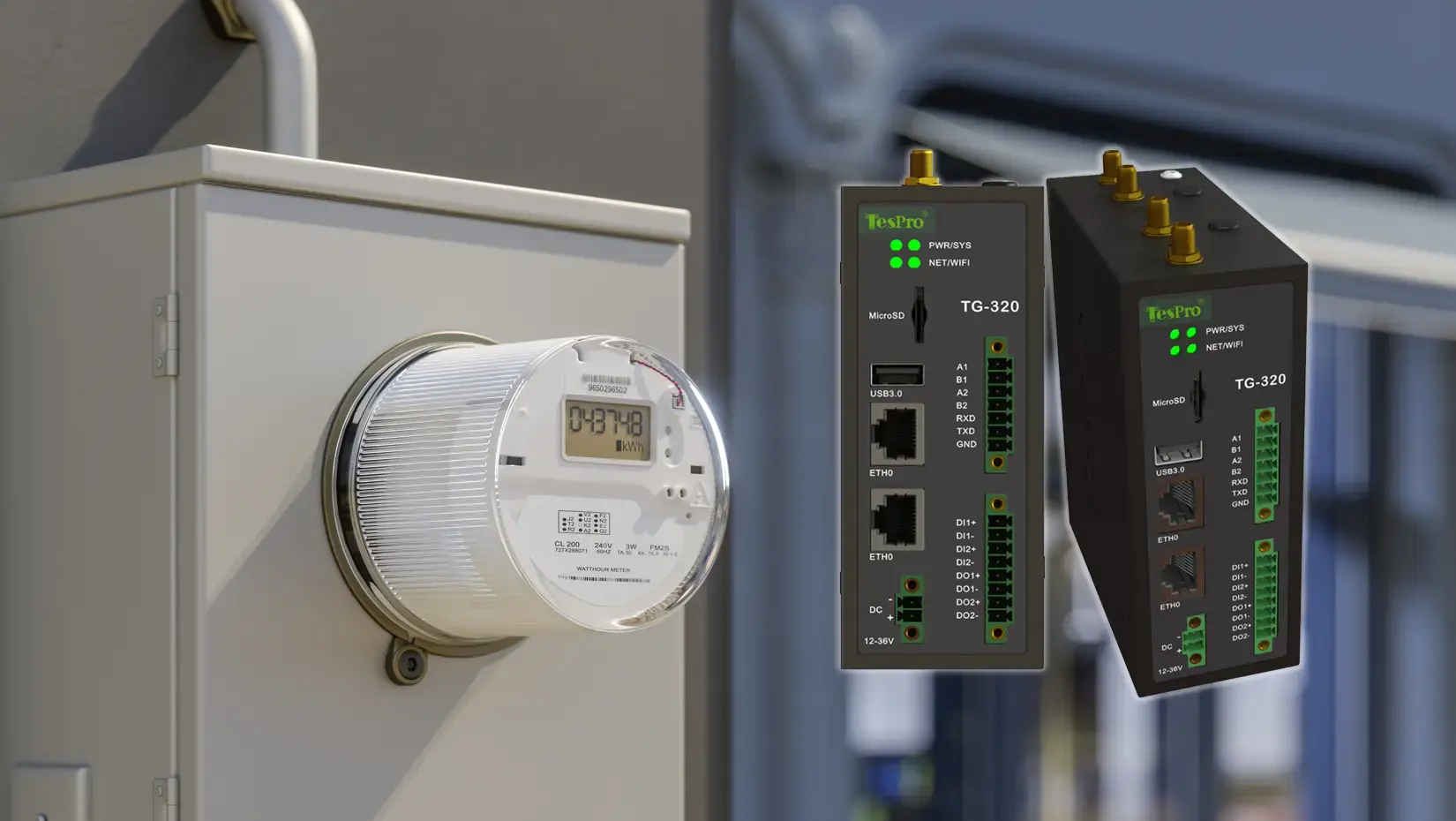
The second category is energy management and smart grids. Substations, distribution rooms, photovoltaic power stations, and wind farms have numerous power meters and protection devices. The industrial gateway collects voltage, current, power, and energy data, processes it locally, and uploads it to the energy management platform to support load forecasting, line loss analysis, and fault location.
The third category is building automation and smart parks. Heating, ventilation, air conditioning, lighting, elevators, access control, and fire protection systems within a building are often independent of each other. The industrial gateway integrates them together to achieve centralized monitoring and coordinated control.
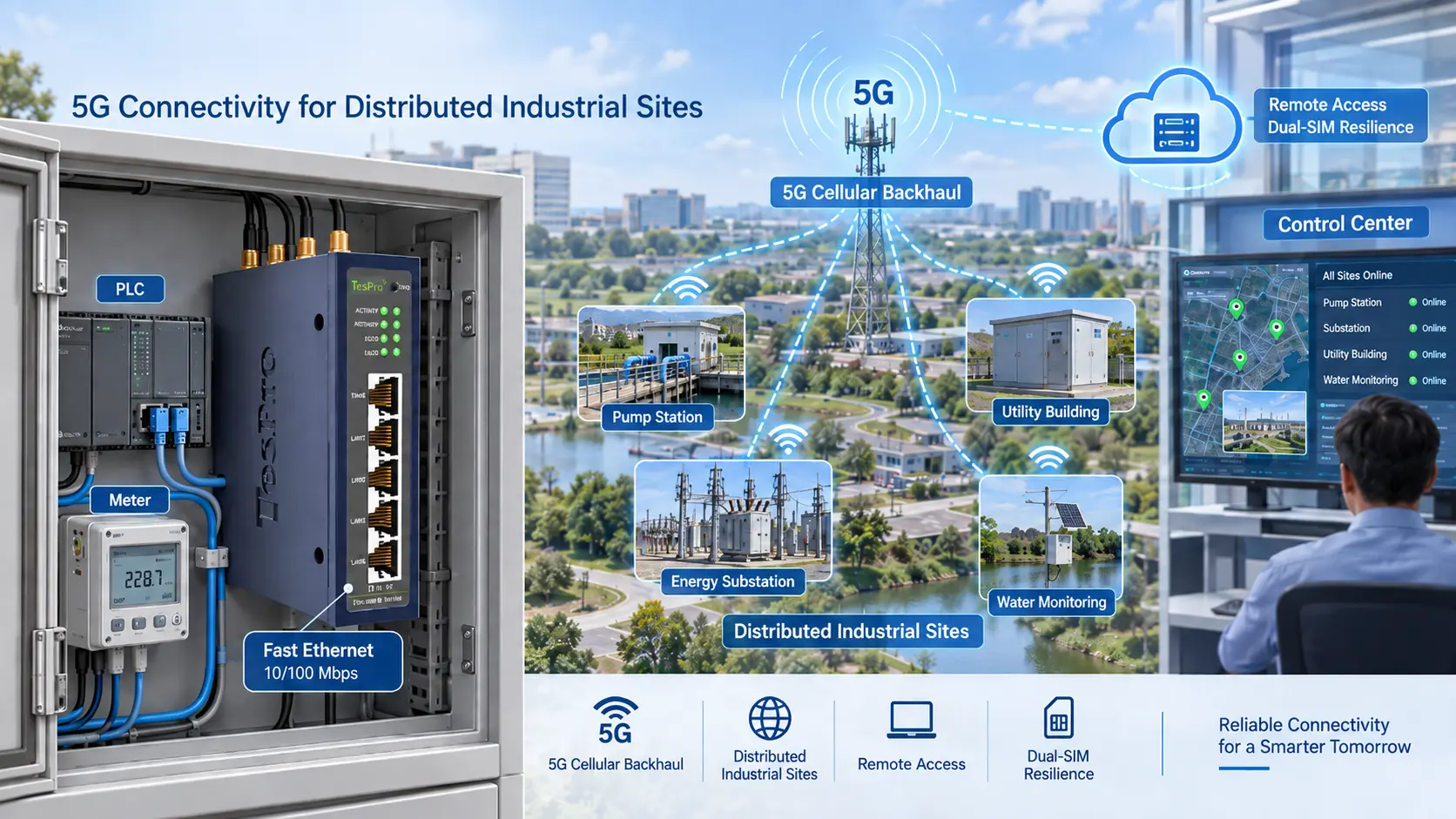
The fourth category is remote equipment monitoring. Air compressors, boilers, generators, and pumps distributed across different locations are connected to the cloud via industrial gateways. Maintenance personnel can remotely view equipment status, receive alarms, and even modify parameters remotely.
The fifth category is connected vehicles and intelligent transportation. Protocol conversion and data fusion between traffic signal controllers, roadside units, and vehicle equipment require industrial gateways.
V. Conclusion
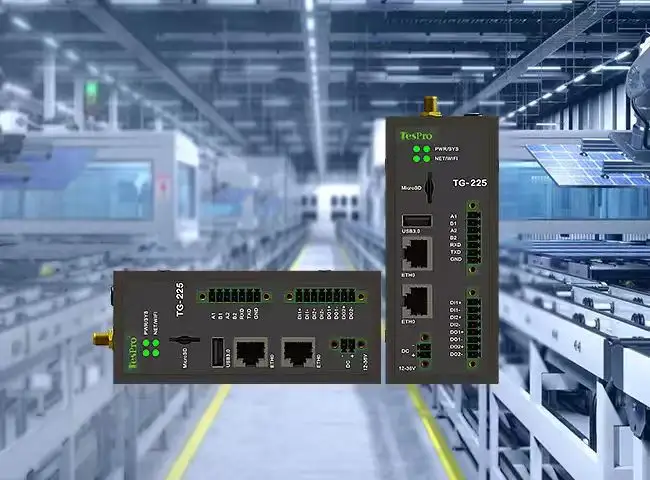
An industrial gateway is not an upgraded version of a router. It is a device专门 designed to solve data integration problems. Its core value lies in enabling devices of different brands, different protocols, and different ages to communicate with each other, processing data locally before uploading to the cloud, and making the entire industrial IoT system more flexible and scalable. If your project involves multiple devices, multiple protocols, or requires local data processing capability, the industrial gateway is an indispensable core device.