-1791966549842.webp)





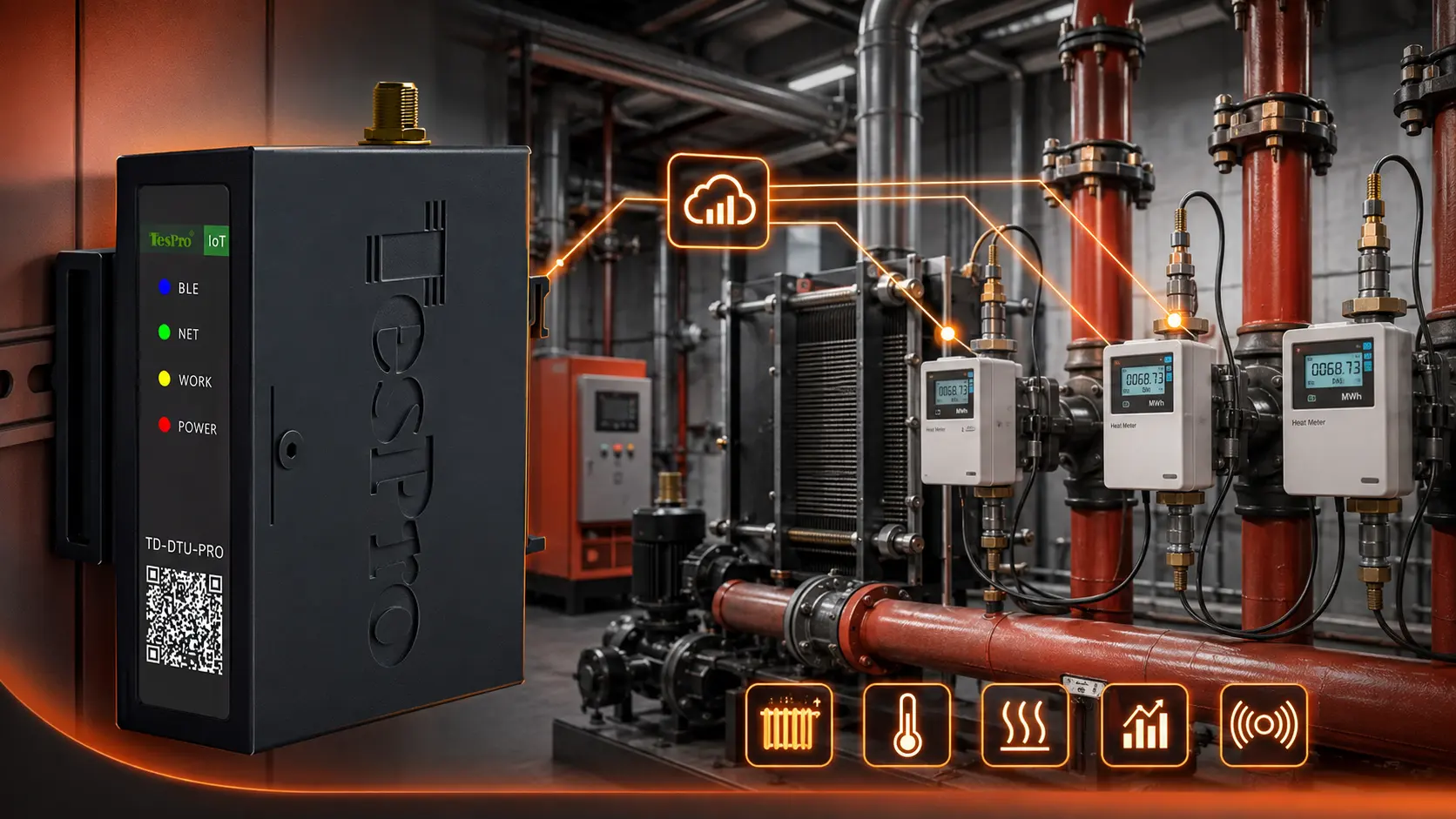

An industrial cellular router is not a ruggedized version of a home router. It is an intelligent network device designed for harsh environments and mission-critical tasks.
When many people first hear about industrial cellular routers, they ask: is this not just a router that can take a SIM card? The answer is that it is much more than that.
I. The Definition of an Industrial Cellular Router
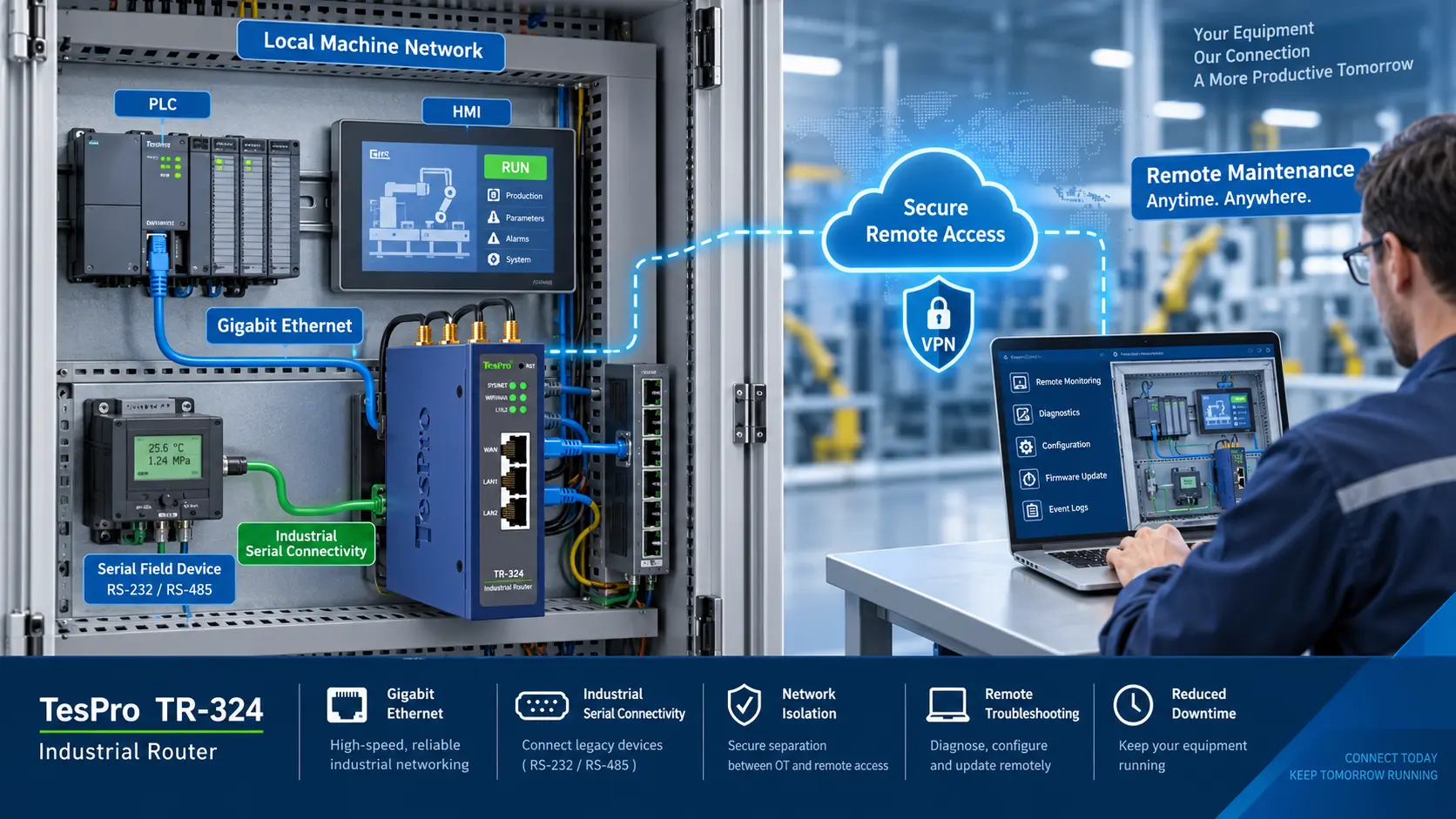
An industrial cellular router is a network device designed for industrial environments. It connects field devices, sensors, meters, and controllers to cloud platforms or control centers via cellular networks such as 4G or 5G. Unlike home routers, it must deal with harsh conditions such as high temperatures, humidity, vibration, unstable voltage, and signal fluctuations.
Its core responsibilities are threefold. First, providing reliable network connectivity for field devices. Second, automatically switching to backup links when the primary network fails. Third, supporting remote management and security encryption to ensure data is not intercepted or tampered with during transmission.
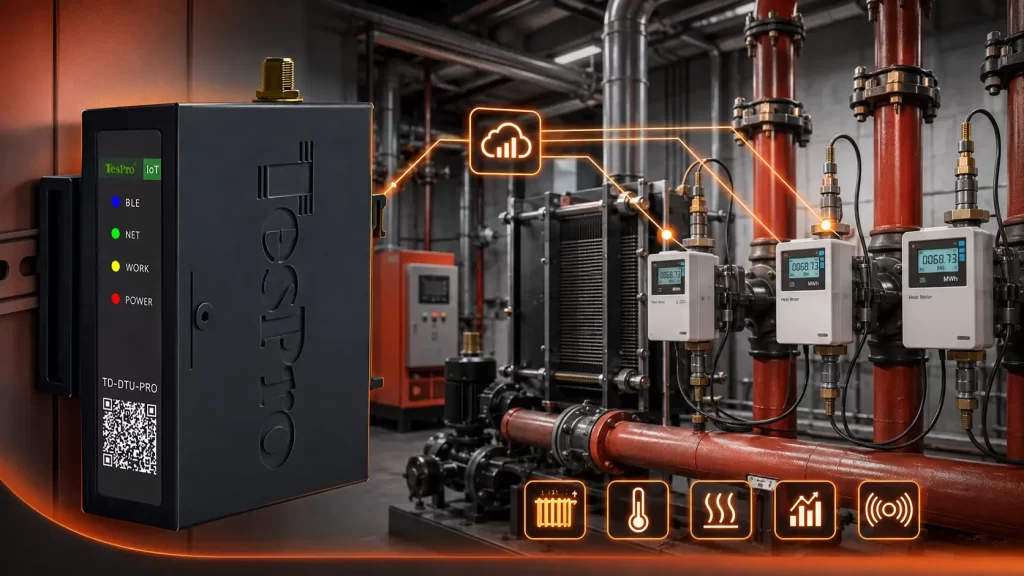
II. The Difference Between an Industrial Cellular Router and a Regular Router
A regular home router is designed for indoor, climate-controlled, stable power, attended environments. It typically has only Ethernet ports, relies on wired broadband, has no automatic failover capability when the network drops, and has no industrial-grade protection.
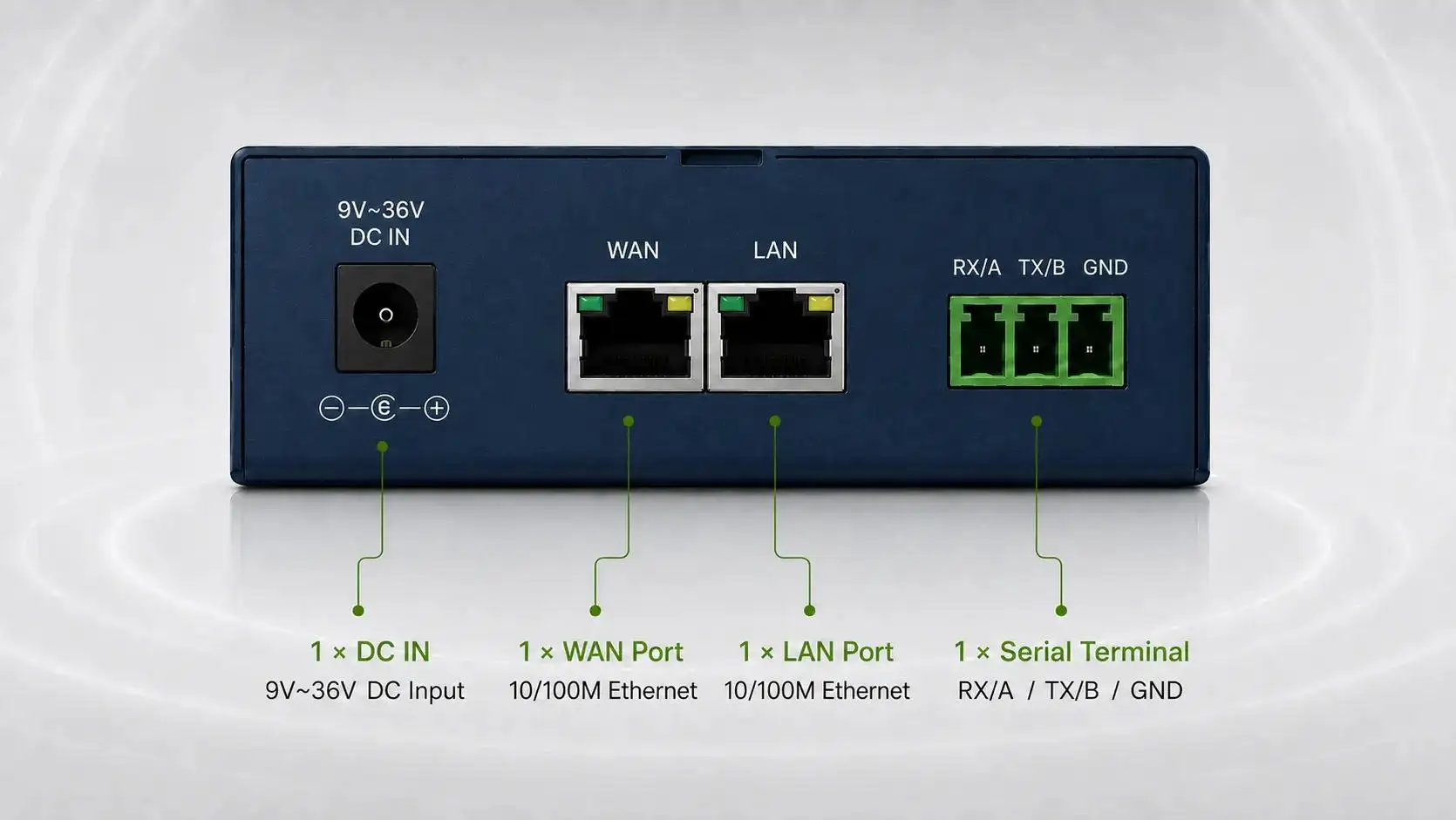
An industrial cellular router is completely different. It supports 4G or 5G cellular networks and can work where wired broadband is not available. It has dual SIM automatic failover, switching to another carrier when one carrier's network fails. It supports wide voltage input and operates stably during voltage fluctuations. It has a fanless design, metal housing, and DIN rail mounting, and can operate in temperatures ranging from negative twenty degrees to seventy degrees Celsius. It also supports VPN encryption and cloud-based remote management.
In simple terms, a regular router is designed for comfortable environments, while an industrial cellular router is designed for complex field sites.
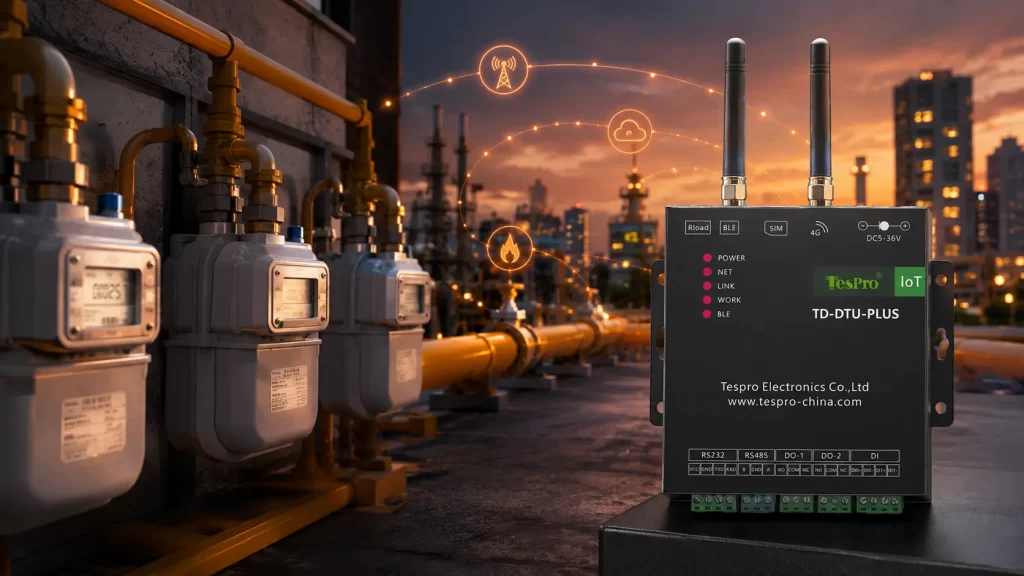
III. Where Is an Industrial Cellular Router Used
Typical applications of industrial cellular routers include the following categories.
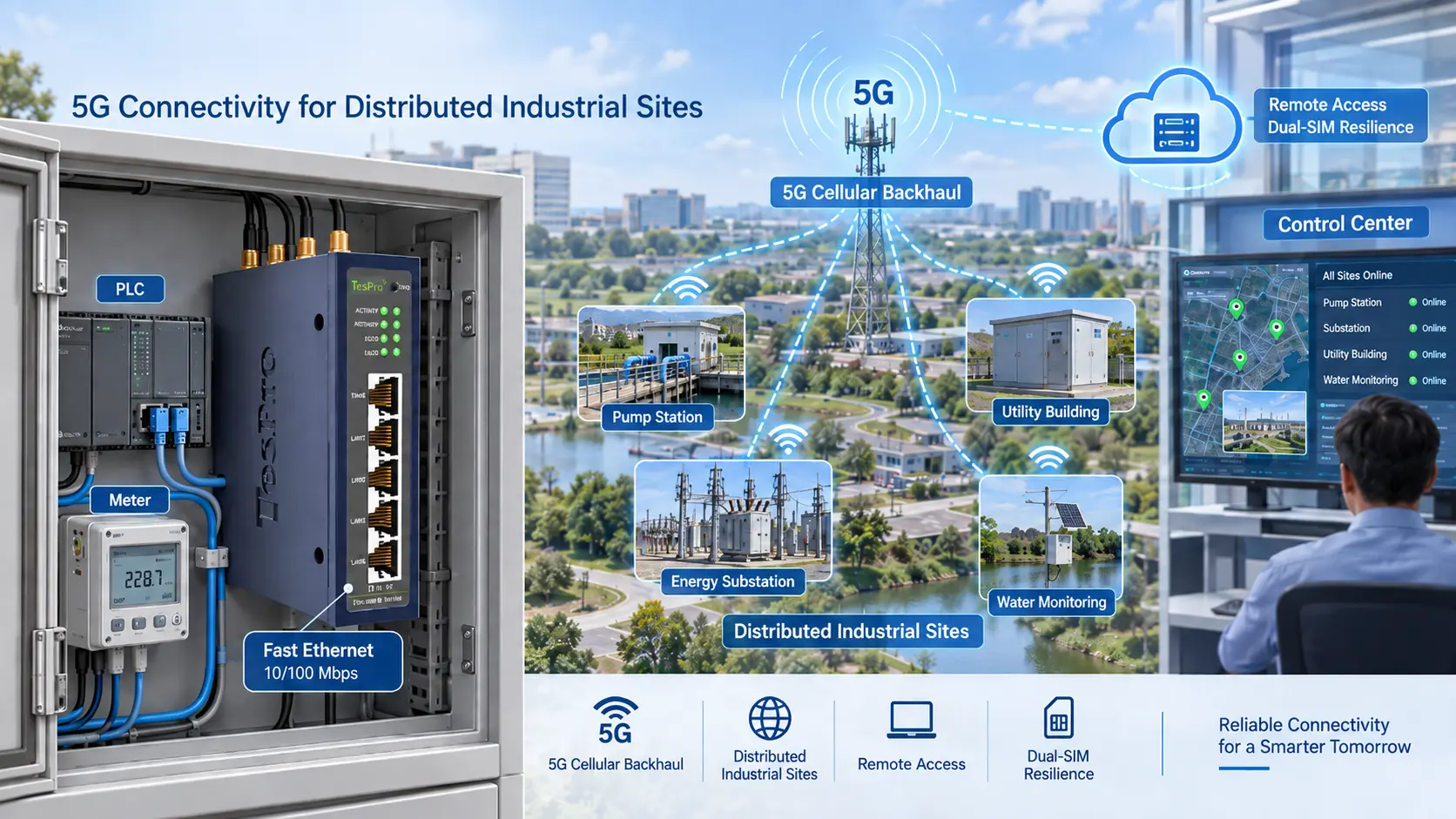
The first category is the power industry. Substations, distribution cabinets, and charging stations are often widely distributed with no wired network coverage. Industrial cellular routers upload power data to dispatch centers via 4G or 5G, supporting remote meter reading, line loss analysis, and fault location.
The second category is the water industry. Pump stations, water treatment plants, and pipeline monitoring points are often located in remote areas. Routers collect flow, pressure, and water quality data and upload it via cellular networks, helping water utilities achieve remote monitoring and leak management.
The third category is smart cities. Traffic signals, roadside parking meters, environmental monitoring stations, and smart streetlights all need reliable network connectivity. Industrial cellular routers provide communication support for these devices.
The fourth category is factory automation. AGVs, robots, and remote IO modules need wireless connectivity. Industrial cellular routers provide low-latency, high-reliability network assurance.
The fifth category is oil, gas, and mining. These environments have extremely high requirements for equipment safety and reliability. Industrial cellular routers have explosion-proof certifications and wide-temperature designs to work in extreme conditions.
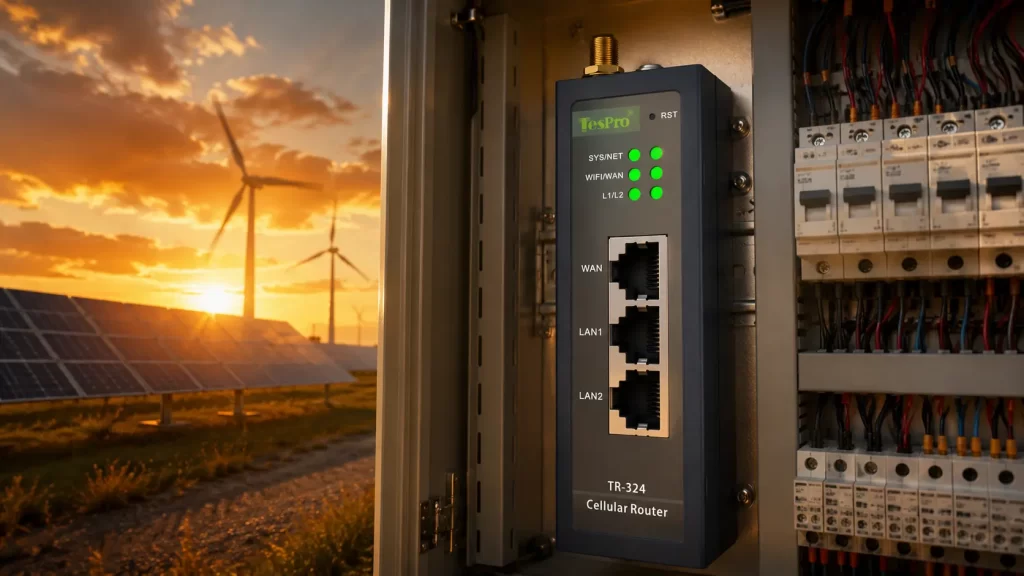
IV. Why Industrial Environments Need Specialized Routers
Industrial environments have three characteristics that make regular routers unsuitable.
First, network conditions are uncontrollable. Industrial sites may be in remote mountainous areas, basements, or moving vehicles where fiber broadband is not available. Only cellular networks are possible. Regular routers have no SIM card slot and cannot work at all.
Second, power conditions are uncontrollable. Industrial power supply often experiences voltage fluctuations, transient interruptions, and surges. Regular router power supplies cannot withstand these changes and are prone to damage or restart. Industrial routers use wide voltage input and power protection circuits, operating stably over a wide voltage range.
Third, maintenance conditions are uncontrollable. Industrial equipment is often distributed in locations that are difficult for technicians to reach quickly. When the network drops, sending someone to the site to restart is costly. Industrial routers support remote management and automatic fault recovery, greatly reducing on-site maintenance requirements.
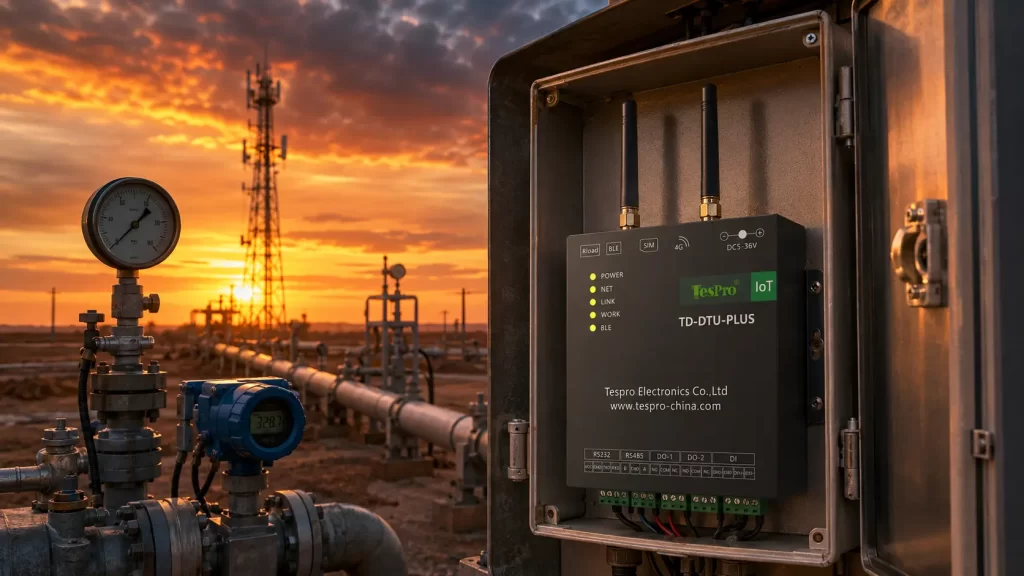
V. Conclusion
An industrial cellular router is not an more expensive, ruggedized home router. It is a device tailored for industrial field sites. Its core value lies in providing network connectivity where wired broadband is unavailable, automatically switching to backup links when the primary network fails, operating stably in harsh environments, and supporting remote management and security encryption. If your deployment project involves remote locations, mobile devices, harsh environments, or mission-critical tasks, the industrial cellular router is an indispensable piece of infrastructure