-1791966549842.webp)





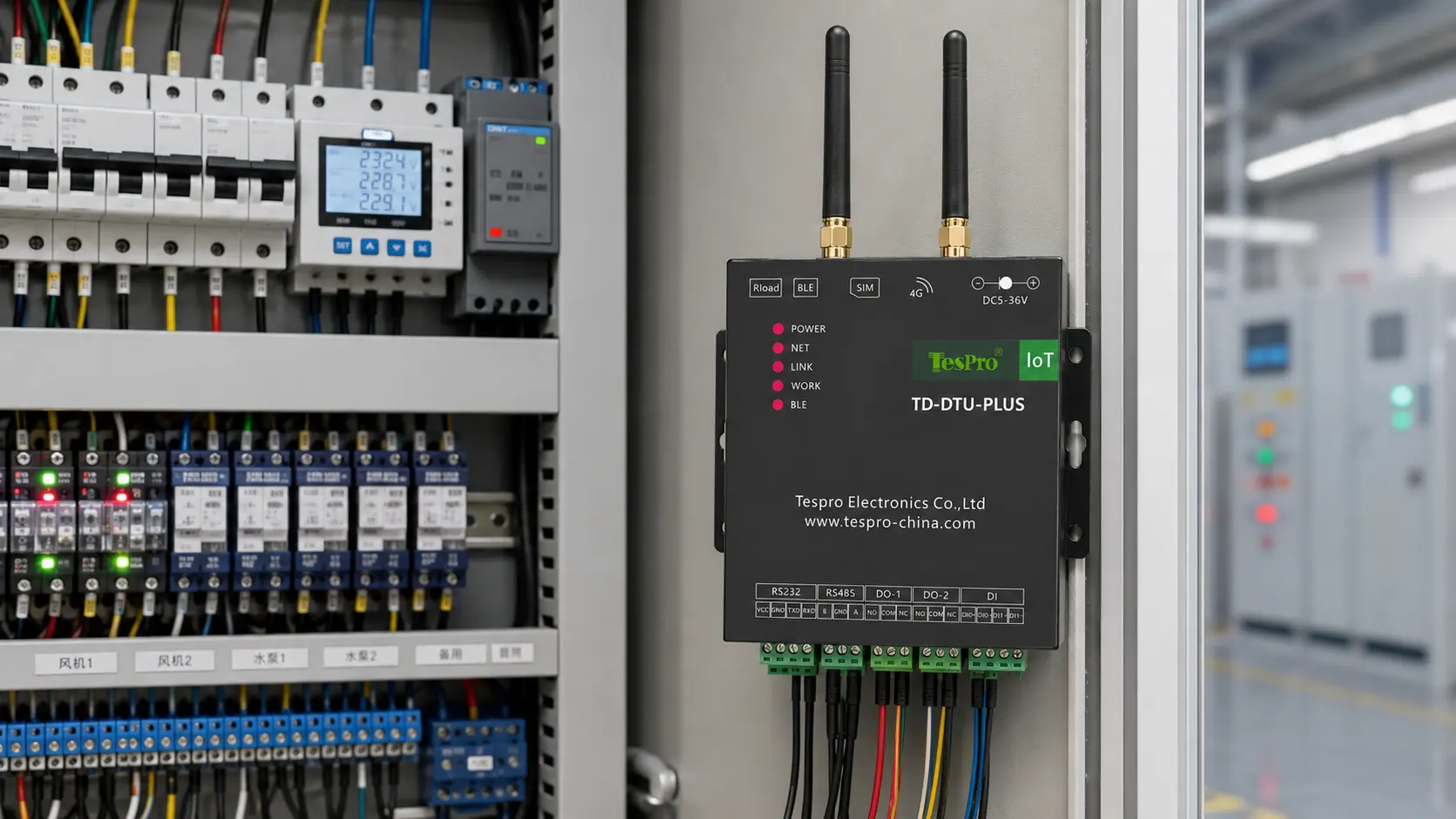

The core purpose of DTU is to let you get stable meter data without going to the site. But in different industries, it solves different specific problems.
When many people first encounter a DTU, they ask: is this not just a box that connects to the internet? Why do you need a separate device? The answer is that a DTU is not an ordinary communication module. It solves the most difficult part of on-site engineering, which is exactly where most time and money are spent.
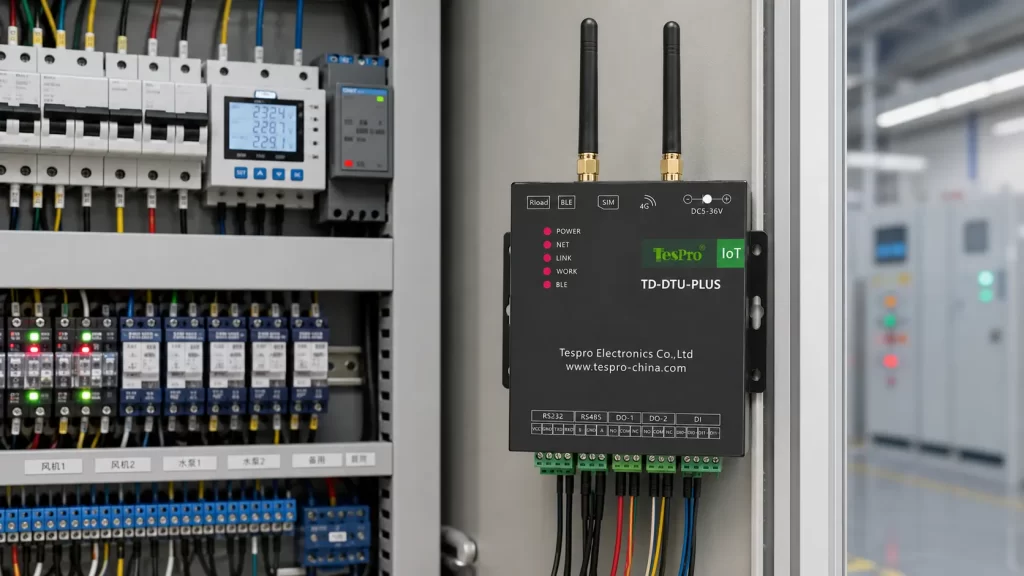
I. In the Electricity Metering Industry
In centralized meter reading for residential communities, the traditional method requires meter readers to visit the site building by building every month. With a DTU, one unit is installed per building, connected via RS485 to all electricity meters in that building, and data is collected and uploaded on a scheduled basis. A single meter reader can read at most three hundred meters per day, but with a DTU, thirty thousand meters can be read in one morning. DTUs are also used for line loss analysis and load forecasting. After a provincial power company deployed DTUs across three thousand transformer zones, labor costs for meter reading dropped by about two-thirds, and the time to detect line loss anomalies was reduced from five days to four hours.
II. In the Water Industry
The pain points in the water industry are that meters are more dispersed, leaks are harder to detect, and on-site power supply is more difficult. In centralized meter reading for residential water meters, meters are located in underground pits, stairwells, and remote villages. Manual reading is extremely inefficient. The DTU solution involves adding a pulse or optical reading module to each water meter, connecting it to a DTU, and uploading data via 4G to the water utility platform. Reading costs drop by about seventy percent. For leak detection, using district metering, DTUs collect flow data at the inlet and outlet of each zone. Leak detection time is reduced from days to hours. After a medium-sized water utility deployed DTUs across five thousand customer points, the non-revenue water rate dropped from eighteen percent to thirteen percent, saving over two million yuan per year in water loss.
III. In the Gas Industry
The special challenges in the gas industry are high safety requirements and difficult signal penetration. For remote reading of residential gas meters, traditional in-home reading requires appointments and has a low success rate. With a DTU, data is uploaded via low-frequency signals that penetrate buildings better. In-home visits are reduced by more than eighty percent. For abnormal usage alerts, the DTU monitors instantaneous flow in real time and triggers an automatic alarm when abnormal fluctuations are detected. Response time is shortened from two days to minutes. Gas sites have strict explosion-proof requirements for electrical equipment, so DTU models with explosion-proof enclosure certification are needed. After one gas company deployed DTUs, the number of on-site meter readers was reduced from forty to eight.
IV. In the Heating Industry
Heat metering is essential in northern China. For demand-based heating, the traditional approach is to keep the heating temperature almost constant regardless of weather conditions. DTUs collect return water temperature, indoor temperature, and other data, allowing the heating platform to adjust based on actual demand. The overall energy saving reaches ten to fifteen percent. For heat cost allocation, each apartment is equipped with a heat allocator, and a DTU collects the data and applies an allocation algorithm. Billing becomes fairer. After a northern heating company deployed DTUs across one hundred and fifty heat exchange stations, it saved over three million yuan per year in gas costs.
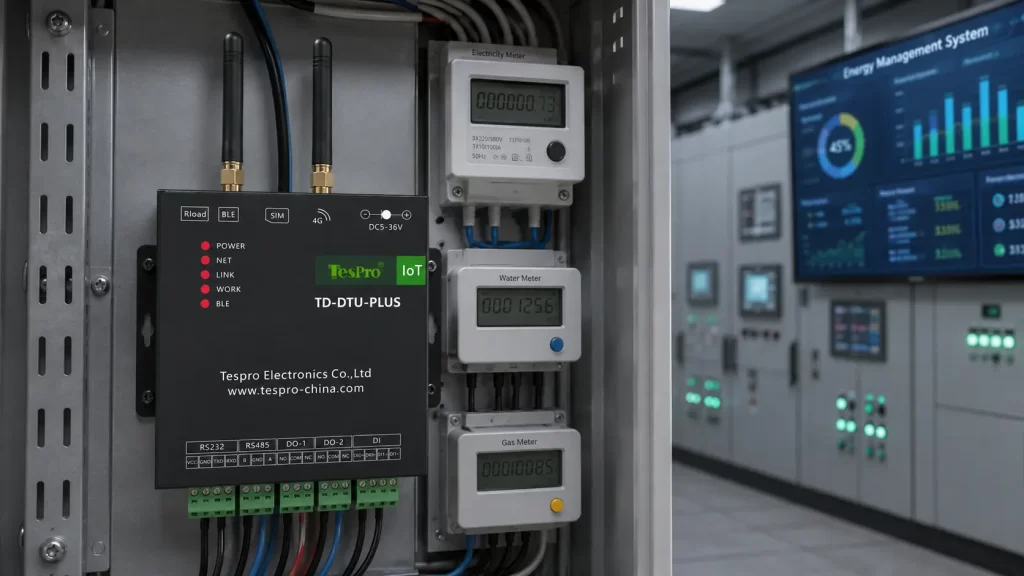
V. In Smart Parks and Smart Factories
In park-level energy monitoring, DTUs collect data from lighting, air conditioning, elevators, and production equipment to identify the largest energy consumers and implement targeted savings. For predictive maintenance, DTUs collect real-time operating parameters of air compressors, boilers, and other equipment, providing early warnings of abnormal trends and reducing unplanned downtime by more than half. After an economic development zone deployed DTUs across sixty enterprises, overall park energy consumption dropped by eight percent.
VI. Special Application Scenarios
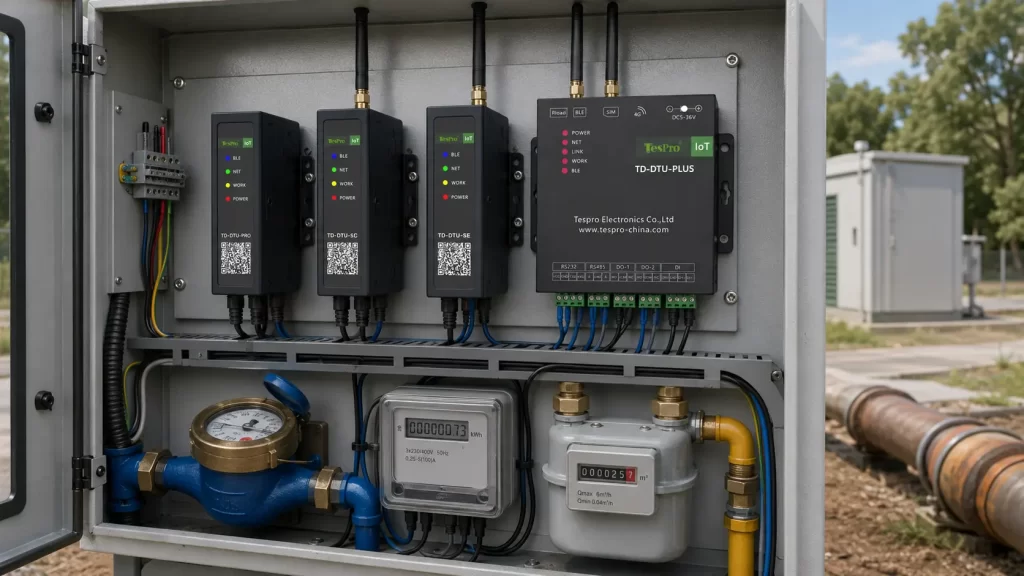
In remote areas such as mountain water source monitoring, DTUs with low power consumption and battery operation can work for months or even a year at a time, and offline caching ensures no data loss. For temporary projects such as construction site power monitoring, DTUs can be deployed quickly and reused after the project ends. For overseas projects such as multi-country factory energy management for multinational corporations, a DTU's multi-network support allows one hardware SKU to work across multiple countries, and flexible heartbeat and registration packets adapt to different countries' IoT platforms.
VII. What a DTU Cannot Do
DTUs also have limitations. If you need complex local control, such as closing a valve when the flow exceeds a threshold, what you need is an RTU, not a DTU. If the on-site meter has only a mechanical dial and no digital output interface, a DTU cannot read it. If there is no cellular network signal at all at the site, a DTU's offline caching can only handle temporary interruptions, it cannot replace network coverage.
VIII. Conclusion
DTU is the most reliable bridge between field meters and remote platforms. In the electricity industry, it is used for centralized reading and line loss analysis, reducing labor costs by sixty to seventy percent. In the water industry, it is used for decentralized reading and leak detection, reducing non-revenue water by three to five percentage points. In the gas industry, it is used to replace in-home reading and provide abnormal usage alerts, reducing in-home visits by more than eighty percent. In the heating industry, it is used for demand-based heating, achieving ten to fifteen percent energy savings. In smart parks, it is used for sub-metering and predictive maintenance, reducing energy consumption by five to ten percent. A DTU is not a universal solution, but for remote data acquisition, multi-protocol adaptation, offline tolerance, and cloud-based maintenance, it is currently one of the most cost-effective solutions available.