-1791966549842.webp)






Tespro provides industrial metering, connectivity, and energy data solutions for utility teams, AMI/AMR project teams, industrial IoT integrators, automation engineers, SCADA teams, procurement managers, distributors, and OEM/ODM buyers. When selecting an industrial IoT gateway, buyers should confirm field interfaces, industrial protocols, network backhaul, cloud or platform integration, edge processing needs, security requirements, and deployment conditions before requesting a quote.
An IoT gateway is needed when the project requires more than basic internet access. A router mainly provides network connectivity. A DTU often supports data transmission between field devices and a server. A gateway can sit between meters, PLCs, sensors, controllers, or I/O devices and help convert, organize, buffer, or send data to software platforms, SCADA systems, or cloud endpoints.
This checklist helps buyers prepare a practical shortlist before contacting Tespro for gateway selection, datasheet review, sample discussion, demo planning, or quotation support.
When Do You Need an Industrial IoT Gateway Instead of a Router or DTU?
Choose an industrial gateway when your project needs device-to-platform integration, not only network access. This is common in smart metering, energy monitoring, factory automation, smart grid, remote monitoring, and industrial IoT projects.
A gateway is usually the better fit when you need to:
- Connect meters, PLCs, sensors, I/O devices, or controllers
- Convert data from field protocols to platform-ready formats
- Collect data from RS485, RS232, Ethernet, or other field interfaces
- Send data to SCADA, AMI/AMR software, an energy platform, or a cloud endpoint
- Use MQTT, REST API, Modbus TCP, OPC UA, or another integration method
- Buffer or log data when the network is unstable
- Support remote configuration, firmware planning, or device maintenance workflows
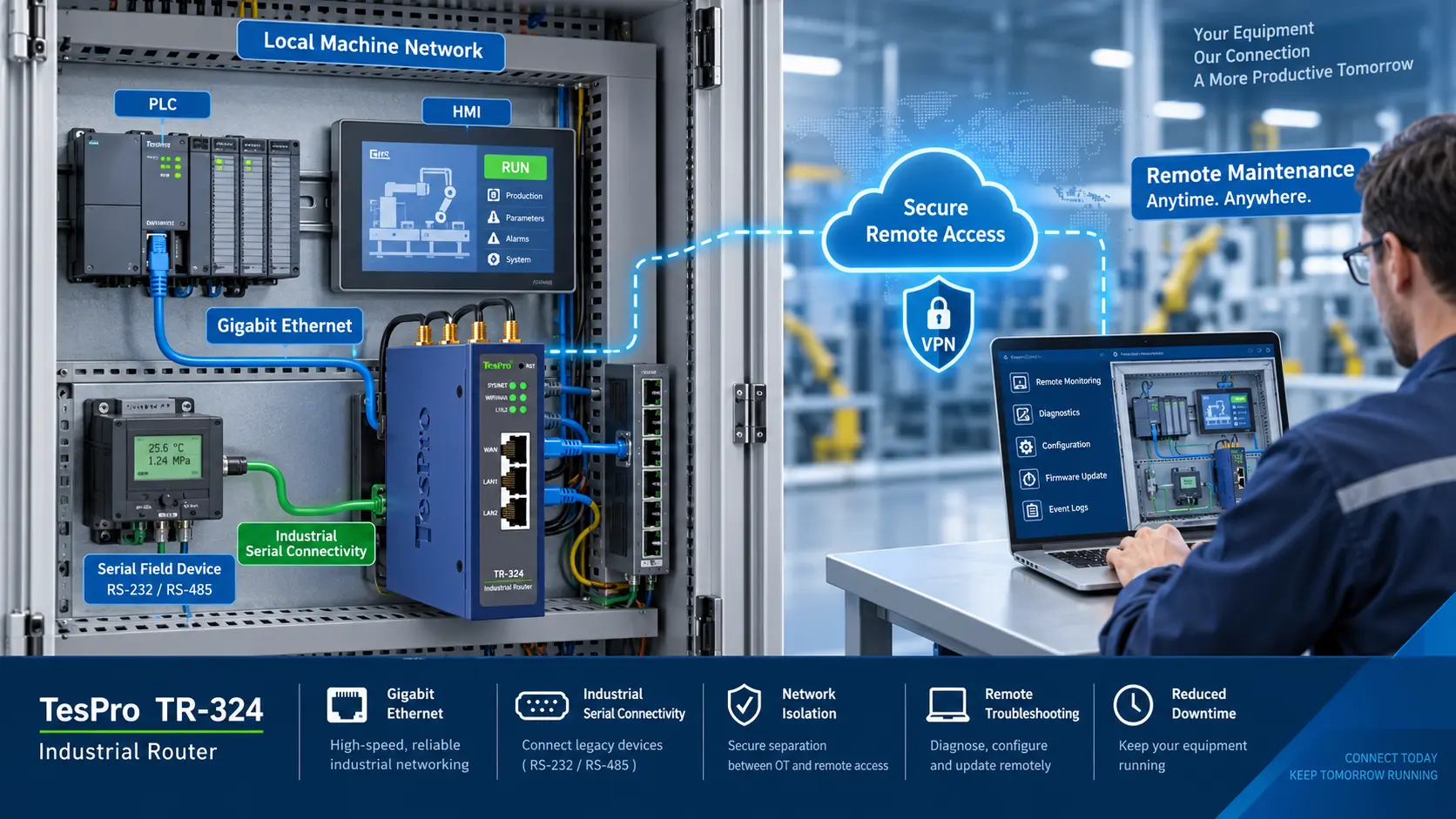
If the project only needs secure internet access for an existing controller, an industrial router may be enough. For advanced router specifications such as edge features, IPv6, SNMP, and remote monitoring, see Tespro’s guide on industrial router edge, IPv6, and SNMP specs.
Industrial IoT Gateway Shortlist Scorecard
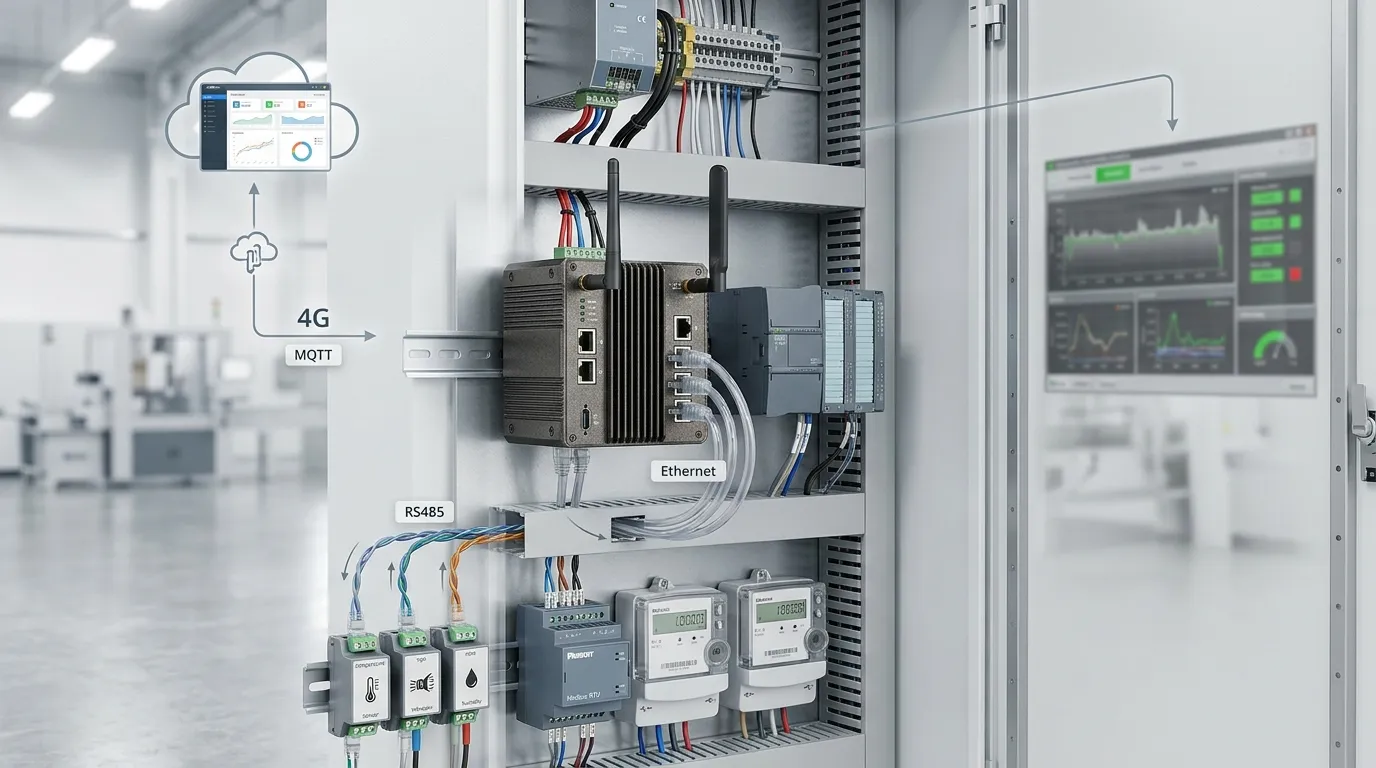
Before choosing a gateway, buyers should map the project from field device to software platform. The table below can help engineering and procurement teams prepare a quote-ready shortlist.
| Buyer requirement | What to confirm | Why it matters for selection | RFQ note for Tespro |
|---|---|---|---|
| Field device type | Meter, PLC, sensor, RTU, controller, I/O module | Defines interface, protocol, and data structure | Share device model or datasheet if available |
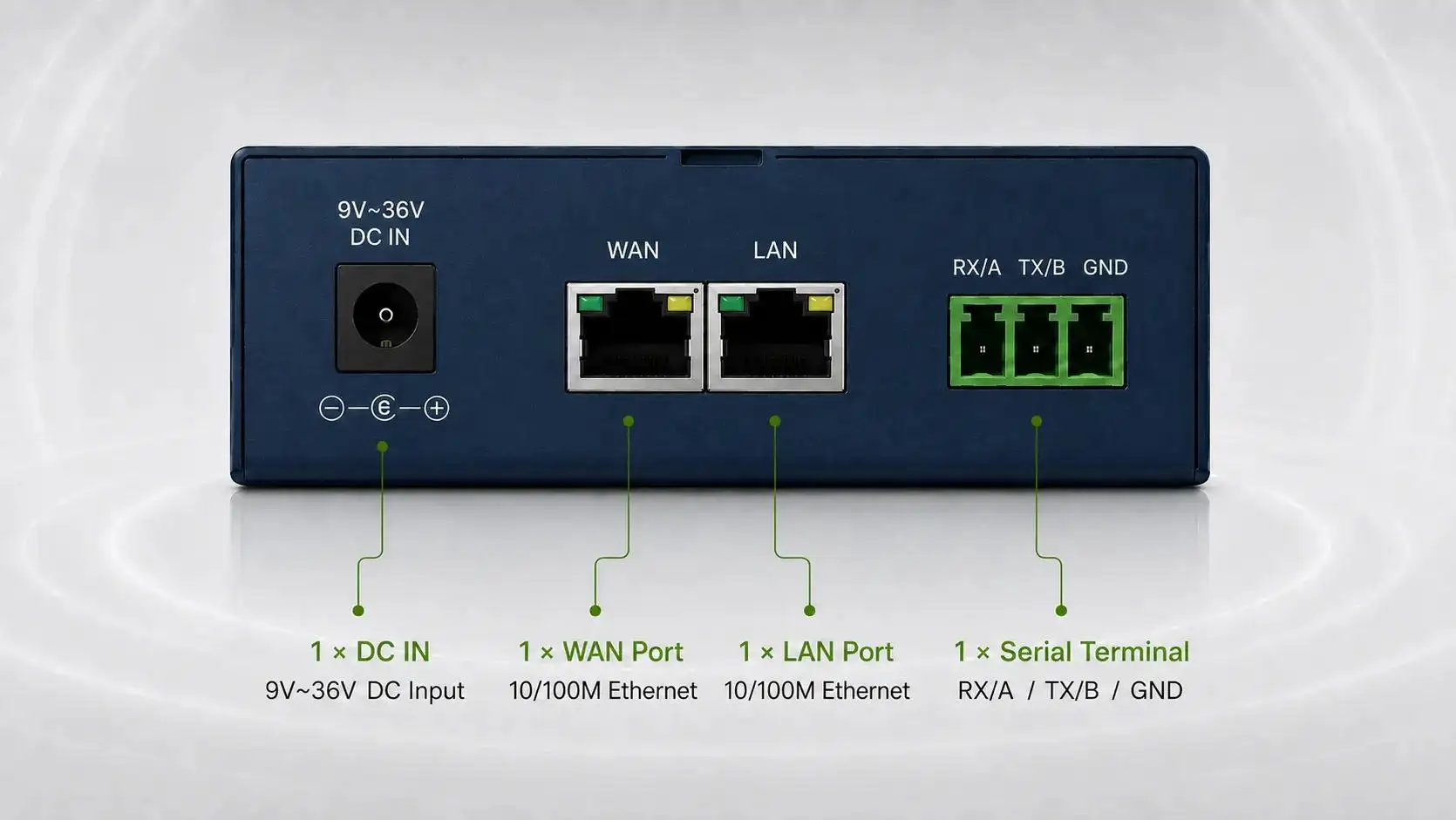
| Physical interface | RS485, RS232, Ethernet, USB, DI/DO, antenna connector | Wrong port selection can block installation | List required ports and quantity |
| Field protocol | Modbus RTU, Modbus TCP, TCP/IP, metering protocol, PLC protocol | Confirms whether data can be collected correctly | Separate field-side and platform-side protocols |
| Network backhaul | Ethernet, Wi-Fi, 4G, 5G, private network | Affects site access, stability, and installation cost | State available network at site |
| Cellular setup | SIM, APN, static IP, VPN, antenna, carrier plan | Critical for remote sites and SCADA access | Include SIM/APN/static IP/VPN needs |
| Edge function | Data filtering, buffering, local rules, timestamping, logging | Prevents data loss and reduces platform load | Explain required local processing |
| Platform integration | MQTT, REST API, SCADA, cloud endpoint, energy platform | Determines how data reaches software | Share API, broker, or server requirements |
| Security | VPN, access control, encryption, firewall, credential policy | Protects remote assets and data flow | List security requirements from IT team |
| Deployment site | Cabinet, DIN rail, outdoor box, temperature, power, grounding | Affects enclosure and installation planning | Share site photos or drawings if possible |
| Support need | Datasheet, sample, demo, OEM/ODM, configuration help | Helps select the right commercial path | State whether you need quote, datasheet, or consultation |
Which Ports and Interfaces Should Buyers Confirm?
Gateway selection should start with the field device connection. Many integration problems happen because the buyer chooses a device with the wrong port type or too few physical interfaces.
Common interface details to confirm include:
- RS485 for Modbus RTU or multi-drop field device networks
- RS232 for legacy meters, controllers, or industrial equipment
- Ethernet for Modbus TCP, PLCs, local servers, or LAN devices
- DI/DO if the project needs status input or control output
- USB if required for configuration or device connection
- Antenna connector and installation space for 4G or wireless use
- DIN rail or panel mounting for industrial cabinets
Procurement teams should not only count ports. They should also confirm how many devices will connect, how often data will be collected, and whether future expansion is expected.
Which Protocols Should Be Checked Before Purchase?
An industrial IoT gateway must match both sides of the system. The field side may use one protocol, while the platform side may require another format.
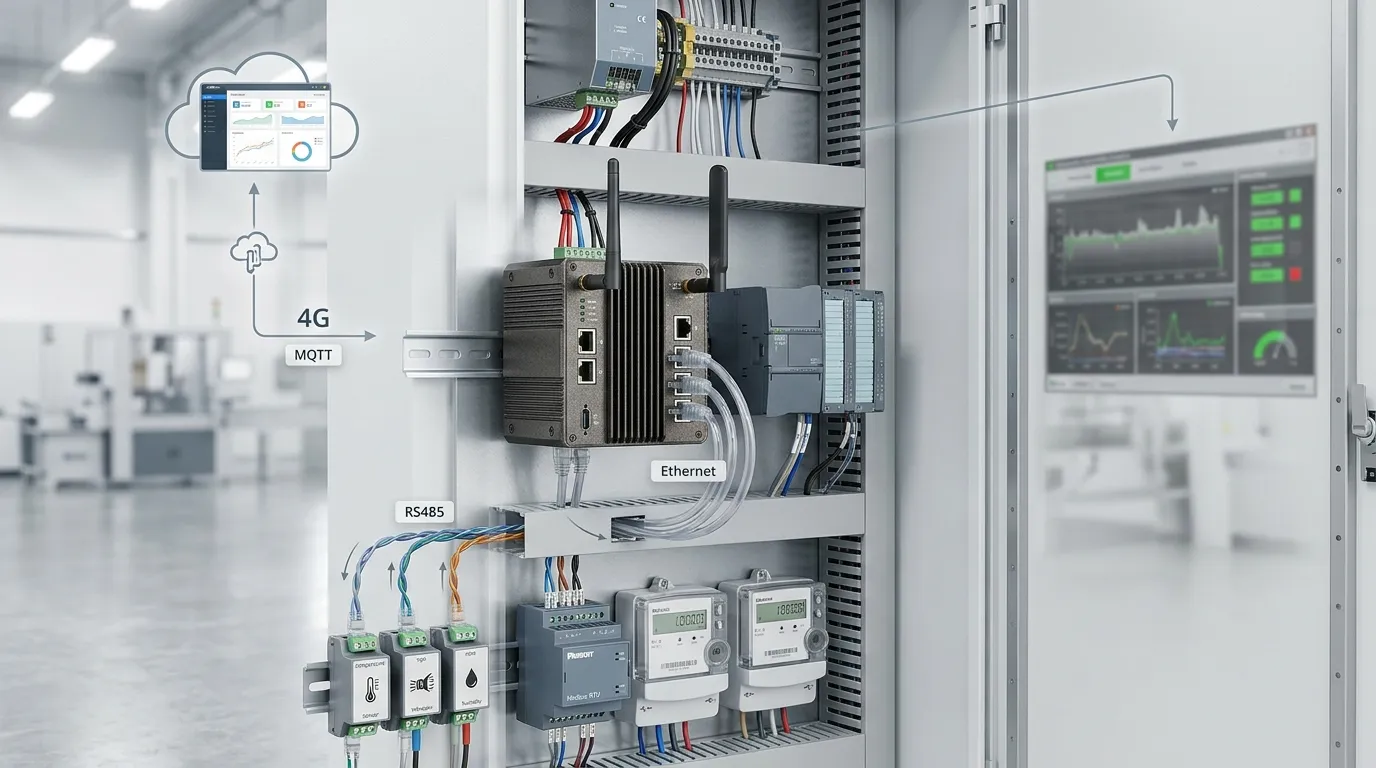
For example, a project may collect data from Modbus RTU devices over RS485 and send selected data to a cloud platform through MQTT. Another project may use Ethernet devices locally and forward data to a private server or SCADA system.
Before shortlisting a gateway, confirm:
- Field-side protocol from meters, PLCs, sensors, or controllers
- Platform-side protocol required by software or cloud systems
- Data format required by the receiving platform
- Polling interval or reporting frequency
- Number of data points or tags
- Whether timestamping, buffering, or retry logic is needed
- Whether the gateway must support local configuration or remote updates
Do not assume that “Modbus support” or “MQTT support” means the device fits every workflow. Ask how the data is collected, mapped, transmitted, secured, and maintained.
When Is a 4G Industrial Gateway the Right Choice?
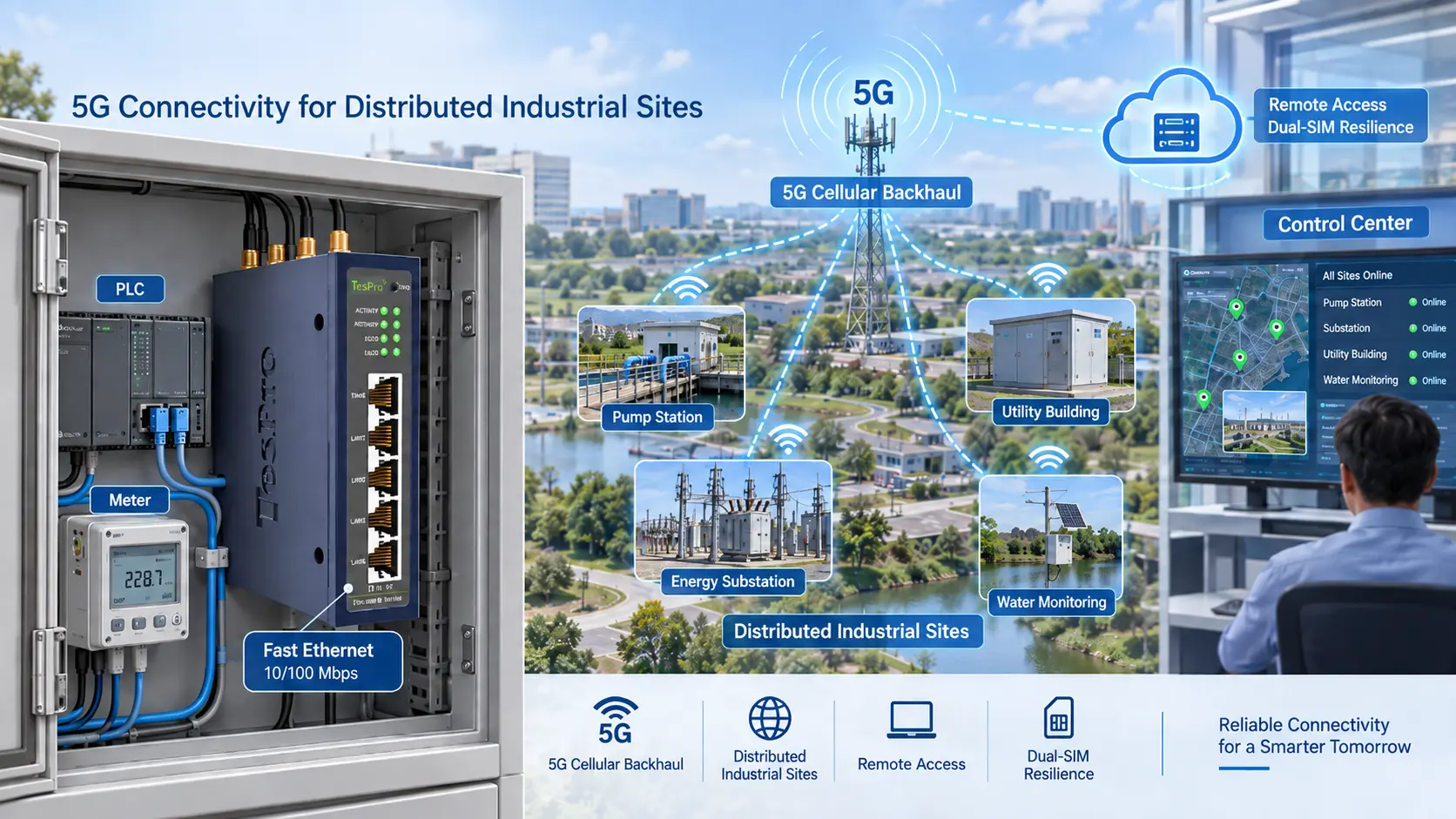
A 4G industrial gateway is useful when wired internet is unavailable, unstable, expensive, or impractical. It is common in substations, remote meter reading sites, distributed energy assets, smart city cabinets, temporary field systems, and industrial locations without reliable LAN access.
Before choosing 4G, confirm these details:
- Is the site covered by a stable cellular signal?
- Will the gateway use one SIM or require backup connectivity?
- Does the project need APN, static IP, VPN, or private network access?
- Where will the antenna be installed?
- Is the device inside a metal cabinet or outdoor enclosure?
- How much data will be transmitted each day?
- Does the project require remote access to meters, PLCs, or SCADA equipment?
For SCADA and wireless field deployment planning, buyers can also review Tespro’s industrial wireless router SCADA buying checklist.
Edge Processing, Buffering, and Device Management
Some projects only need simple data forwarding. Others need local processing before data reaches a platform. This difference affects gateway selection.
Edge processing may be useful when the project needs to filter noisy data, reduce bandwidth, apply simple local rules, store data during network downtime, or send alarms before cloud processing. In remote monitoring and energy projects, buffering is especially important because network interruptions can happen at field sites.
Buyers should confirm whether the gateway must support:
- Local data logging
- Data filtering or mapping
- Store-and-forward behavior
- Scheduled upload
- Local alarm rules
- Remote configuration planning
- Firmware or configuration maintenance workflow
- User access control for field teams
Avoid overbuying if the project only needs basic protocol conversion. Also avoid underbuying if the site has weak connectivity or requires reliable data continuity.
Software, Cloud, and Platform Integration Requirements
A gateway should be evaluated as part of the full data workflow, not as a standalone box. The buyer should know where the data will go after collection.
For smart metering and AMI/AMR projects, the gateway may need to support meter data collection, scheduled reading, remote monitoring, alarms, and platform export. For factory automation, it may need to connect PLCs, sensors, and machines to a local server or cloud dashboard. For energy management, the gateway may need to feed data into a monitoring or reporting platform.
Before requesting a quote, confirm:
- Target software or platform
- MQTT broker, API endpoint, private server, or SCADA system
- Required data format
- Alarm or event requirements
- User role and access requirements
- Remote configuration needs
- Data export or reporting workflow
- Cybersecurity requirements from the buyer’s IT team
If platform requirements are unclear, share the system architecture with Tespro. A simple diagram can help identify whether the project needs a gateway, router, DTU, or a combined solution.
Deployment Details That Affect Gateway Selection
Industrial gateway projects often fail because site conditions were not checked early. A gateway that works in a test bench may need different installation planning in a cabinet, substation, factory, or outdoor field box.
Confirm these deployment details before ordering:
- Power supply voltage and backup power plan
- Cabinet size and mounting method
- DIN rail or panel installation requirement
- Indoor or outdoor installation
- Antenna route and signal test result
- Grounding and surge protection requirements
- Temperature, humidity, dust, vibration, or electrical noise
- Technician access for setup and maintenance
- Distance between gateway and field devices
- Cable length and wiring path
- Local IT or network approval process
For remote or distributed projects, also confirm how the gateway will be monitored after installation. Remote troubleshooting can reduce site visits if the project is planned correctly.
Common Buying Mistakes to Avoid
Many buyers search for an IoT gateway and compare only price, cellular type, or port count. That is risky for industrial projects.
Avoid these mistakes before selecting a model:
- Choosing a gateway without checking field protocol compatibility
- Confusing router, DTU, and gateway functions
- Ignoring SIM, APN, VPN, or static IP requirements
- Not checking cloud or software integration needs
- Underestimating data volume or polling frequency
- Forgetting antenna placement in metal cabinets
- Ignoring power, grounding, and enclosure limitations
- Requesting a quote without device models or protocol details
- Assuming every gateway supports every platform or protocol
A better approach is to prepare the interface, protocol, network, platform, and deployment details first. Then the supplier can recommend a more suitable device or configuration.
What to Send Tespro for a Gateway Quote
To help Tespro review your project faster, prepare a clear RFQ or technical request. The more complete the information, the easier it is to shortlist the correct gateway, datasheet, sample, demo, or OEM/ODM discussion path.
Send these details when possible:
- Product or device type required
- Quantity
- Application or project type
- Meter, PLC, sensor, controller, or equipment model
- Required interfaces and port count
- Field-side protocol
- Platform-side protocol
- Ethernet, Wi-Fi, 4G, 5G, or other network requirement
- SIM, APN, VPN, or static IP requirement
- Cloud, SCADA, MQTT, API, or software platform requirement
- Data reporting interval and data point volume
- Edge processing, buffering, or logging requirement
- Power supply
- Cabinet, DIN rail, enclosure, or installation constraint
- Operating environment
- Security or remote management requirement
- Datasheet, sample, demo, or consultation need
- Delivery destination
- Site drawing, system diagram, or written specification
Why Work With Tespro for Gateway Selection?
Tespro supports buyers working on industrial metering, smart meter communication, connectivity, remote monitoring, energy data, and industrial IoT projects. Our product scope includes metering optical probes, DTUs, industrial routers, industrial gateways, meter test equipment, calibrators, and software/platform-related solutions.
This broader project view is useful when buyers are not sure whether they need a gateway, router, DTU, optical probe, software workflow, or a combined system. Tespro can review the application, interface, protocol, network, and quotation details before buyers commit to a device path.
For procurement teams, this helps reduce the risk of buying hardware that does not match the field device, site condition, or software integration requirement.
Frequently Asked Questions
What is the difference between an industrial gateway and a router?
A router mainly provides network connectivity. An industrial gateway can also collect field data, convert protocols, buffer data, and support device-to-platform integration. Choose a gateway when your project needs data handling, not only internet access.
When should I choose a gateway instead of a DTU?
A DTU is often used for data transmission. A gateway is better when the project needs protocol conversion, edge processing, cloud connection, local logging, or integration with software platforms.
Which protocols should I confirm before requesting a quote?
Confirm both field-side and platform-side protocols. Common examples include Modbus RTU, Modbus TCP, TCP/IP, MQTT, REST API, OPC UA, and project-specific metering or PLC protocols.
Do I need a 4G industrial gateway?
Choose 4G when wired internet is not available or reliable. Confirm signal strength, SIM plan, APN, VPN, static IP, antenna position, data volume, and remote access requirements before selecting a model.
Can one gateway connect multiple meters or PLCs?
It depends on port count, protocol, device quantity, polling interval, data volume, and gateway capacity. Share your device list and data collection plan before quotation.
What should I send for a gateway RFQ?
Send device models, quantity, interfaces, protocols, network type, SIM/APN/VPN/static IP needs, cloud or API requirements, power supply, installation conditions, security needs, and any site diagram or written specification.
To shortlist the right industrial IoT gateway for your project, contact Tespro with your device list, protocol requirements, interface needs, network plan, software or cloud endpoint, power supply, deployment environment, security requirements, quantity, delivery destination, and any drawings or system diagrams. Tespro can review your requirements and support the next step with a quotation, datasheet, sample discussion, demo request, consultation, or OEM/ODM solution planning.