-1791966549842.webp)





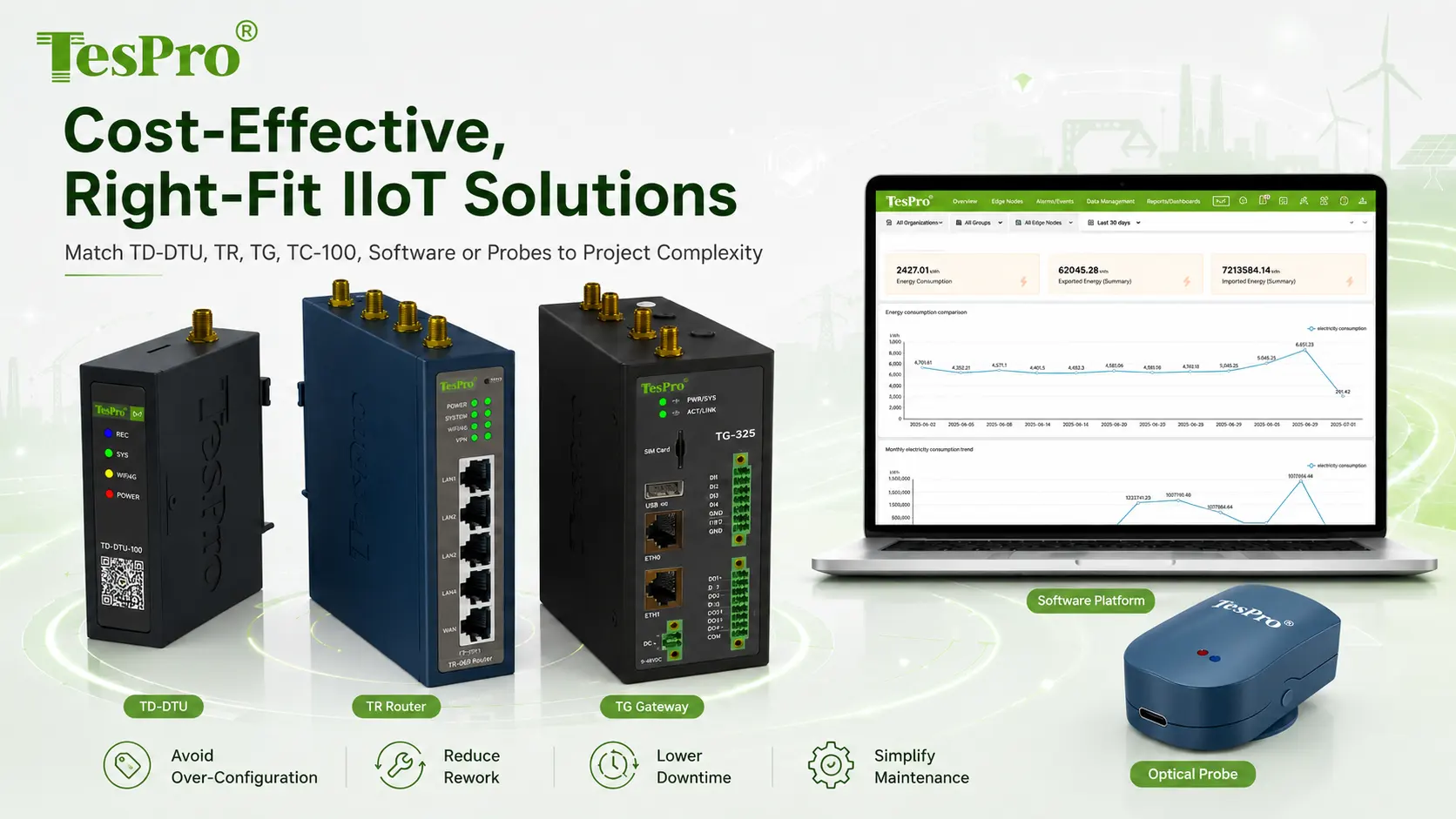

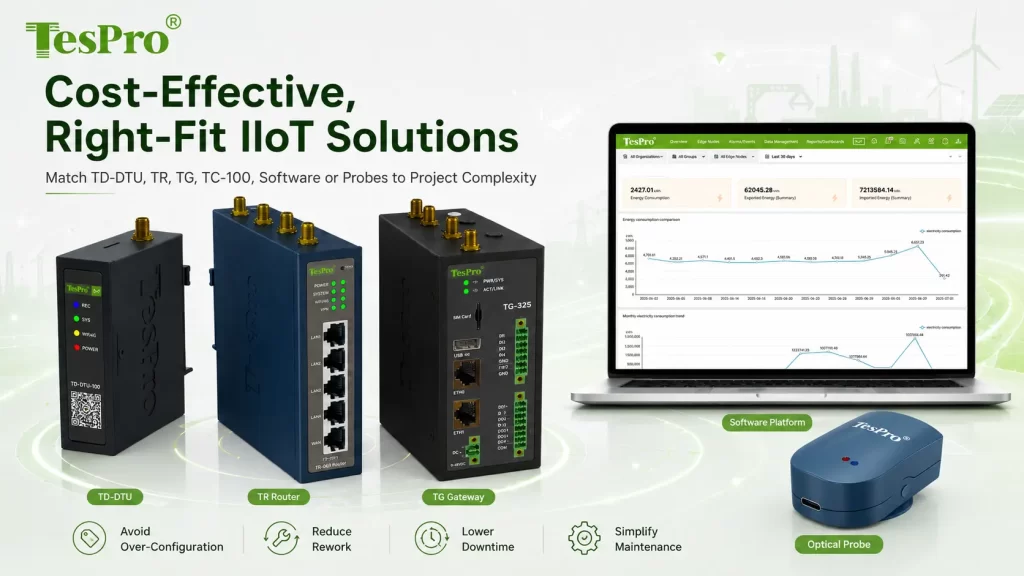
Cost-effective does not mean buying the cheapest device. It means meeting the required function at a reasonable total cost while reducing development, rework, downtime and maintenance. Tespro can match TD-DTU, TR routers, TG gateways, TC-100 or optical probes to project complexity, avoiding both over-configuration and underpowered designs.
Calculate total cost of ownership
Beyond unit price, include engineering, commissioning, SIM traffic, antennas, power, enclosure installation, platform fees, field service, spares, upgrades and downtime. A low-cost device can become expensive if it requires heavy customization or repeated site work.
Use product layers to control budget
A single serial device may fit TD-DTU. Multiple networked devices without parsing may fit TR. Multi-protocol mapping, buffering and edge processing may require TG. Focused BACnet, Modbus or OPC UA bridging can be evaluated with TC-100.
Match scalability to a real plan
There is no need to buy the highest configuration for an uncertain future. Preserve the interfaces, resources, APIs and replacement path that correspond to realistic growth. Samples, small projects and volume phases can validate both cost and scalability.
Project evaluation checklist
✓ Device price and required functions
✓ Engineering, testing and integration
✓ SIM, platform, installation and service
✓ Downtime, rework and compatibility risk
✓ Future sites, points and volume
Frequently asked questions
Q: Is a more expensive industrial gateway always better value?
A: No. Gateway functions create value when the project needs parsing, edge processing, buffering or multiple platforms. A DTU may be more economical for simple passthrough.
Q: How should total cost be compared across suppliers?
A: Use the same requirements and acceptance criteria, then compare hardware, accessories, engineering, certification, platform, data plans, installation, support, updates and lifecycle.
Q: Can Tespro support a sample-to-volume approach?
A: Standard products can normally begin with samples or a small project and expand with validated demand. Custom products require separate agreement on engineering cost, minimum quantity and production conditions.
Q: How can over-purchasing for future expansion be avoided?
A: Separate confirmed needs, probable needs and long-term ideas. Reserve interfaces or resources only for likely growth and keep a practical replacement path in the architecture.
Next step: Build a total-cost sheet covering hardware, engineering, installation, network, platform, maintenance and downtime, then compare Tespro product layers under the same requirements.