-1791966549842.webp)





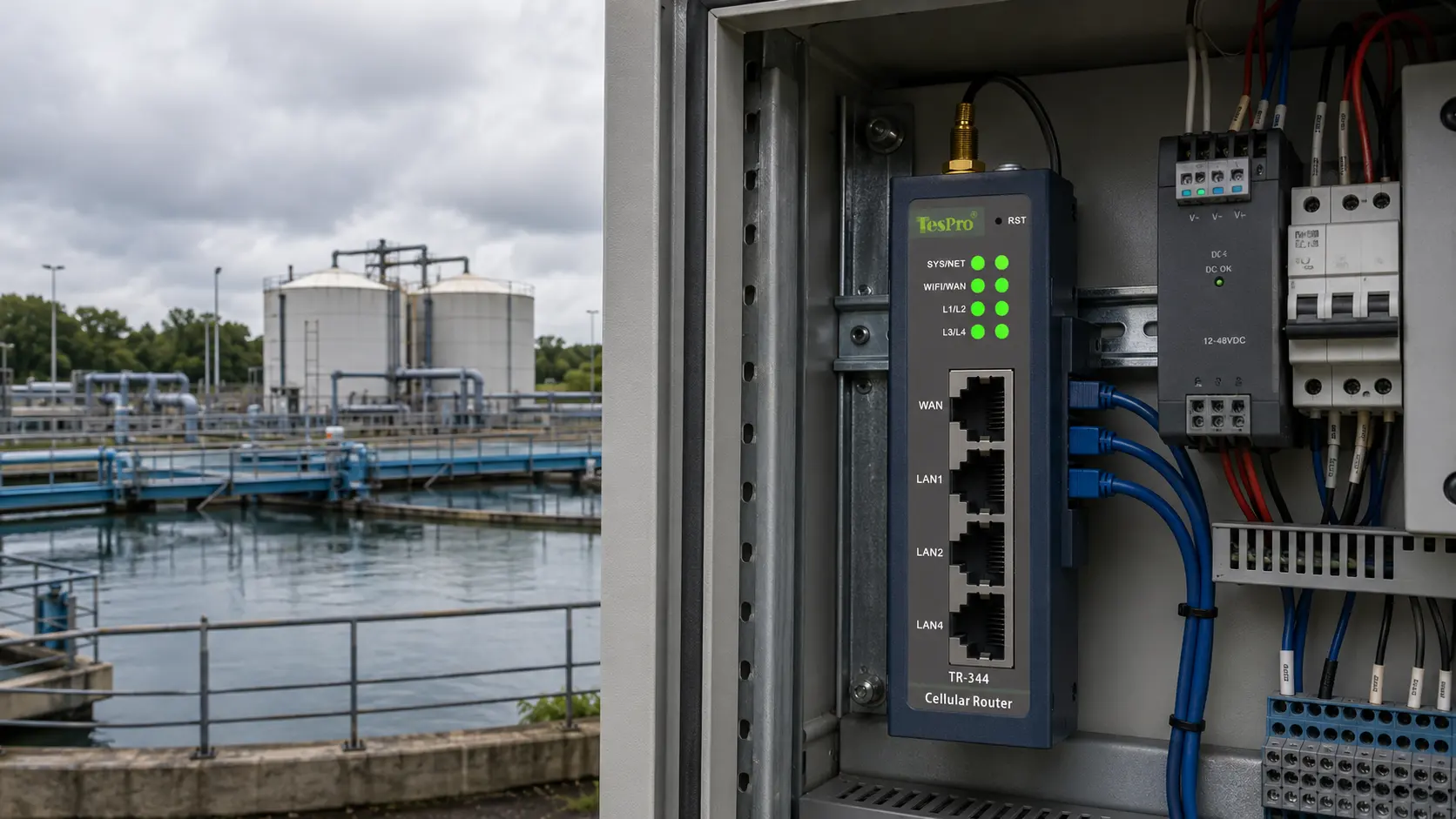

By 2026, procurement teams will demand more from industrial routers than simple Modbus TCP forwarding. Three major shifts are already visible:
1. 5G as a Standard, Not an Upgrade
Many carriers are shutting down 3G and reducing 4G investment. For a longer service life, choose an Industrial Router Modbus TCP with 5G (e.g., Tespro TR-225, TR-245, TR-325, TR-345). 5G offers lower latency, higher device density, and better performance in congested RF environments – ideal for large installations with hundreds of routers.
2. Edge Computing for Local Intelligence
Future Modbus TCP routers will perform edge-based computing: filtering data locally, creating alarms, and reducing unnecessary Modbus polling. This cuts cellular data costs and improves system response time. For example, instead of polling every 10 seconds, the router can send only change-of-value reports.
3. Cybersecurity Built‑In
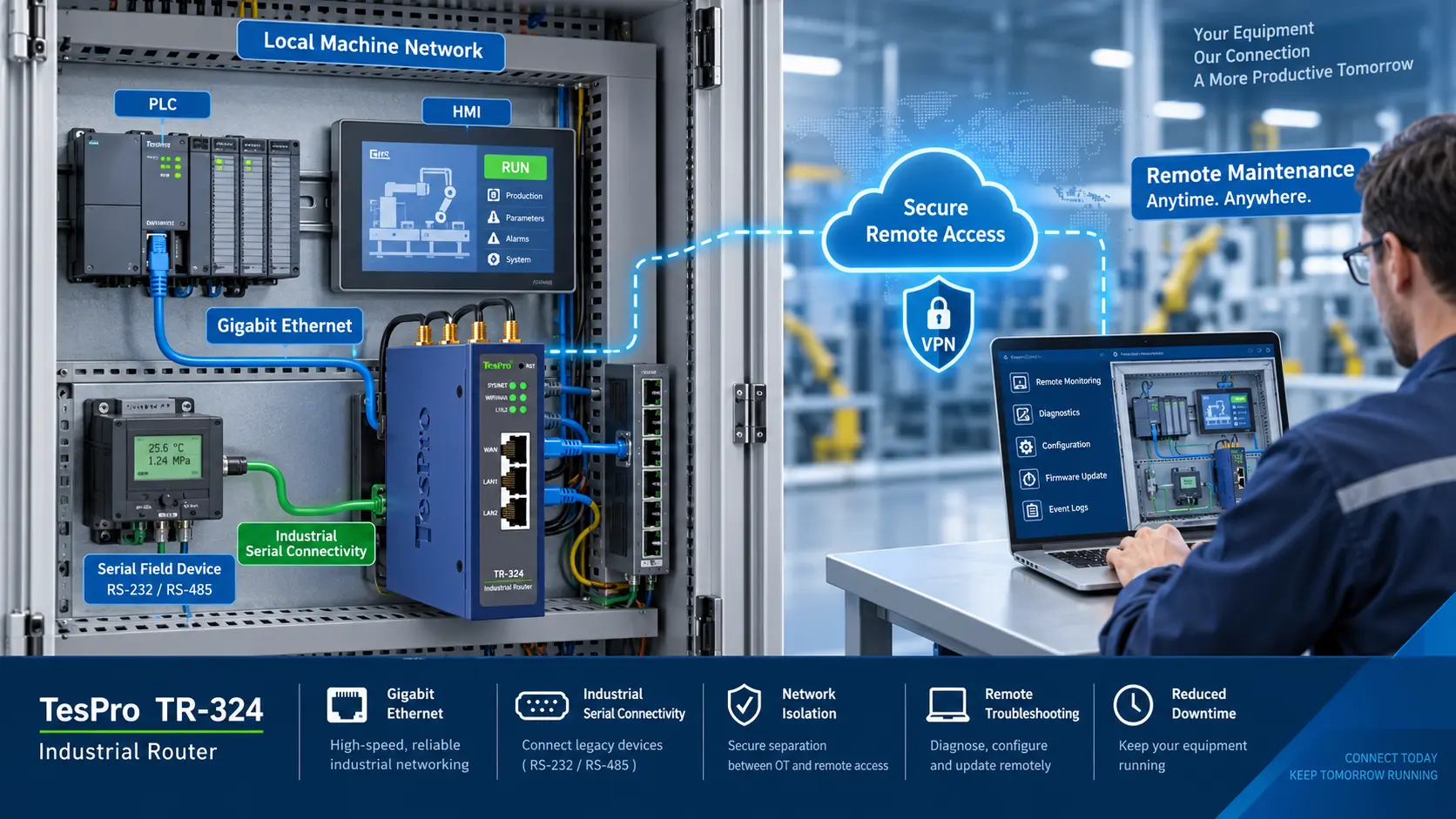
Modbus TCP has no native security – it sends plain text. By 2026, industrial routers will include embedded firewalls, VPN (IPsec/OpenVPN), access control lists, and deep packet inspection as standard features. This protects field devices from unauthorized access and data interception.
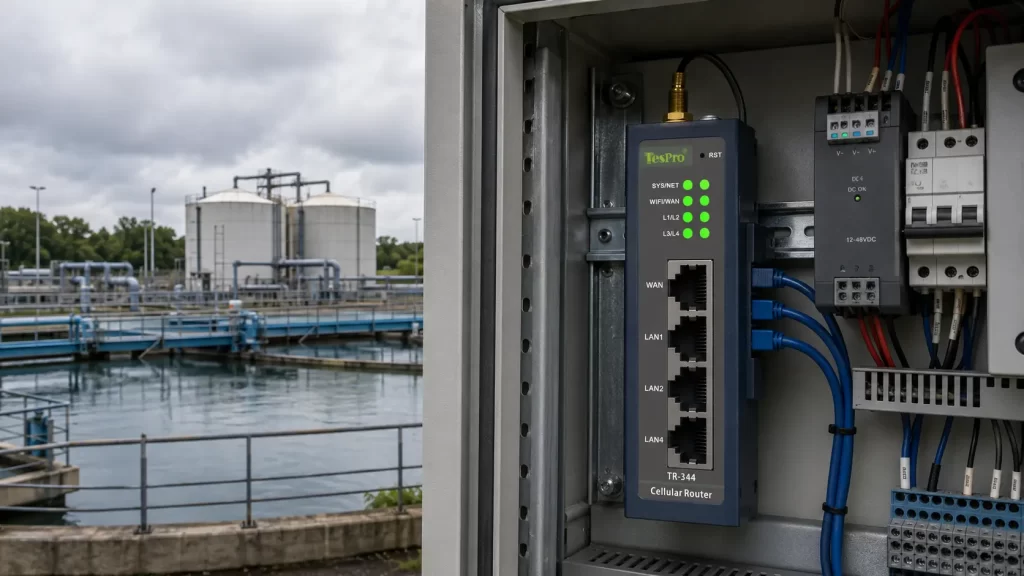
Additional Must-Have Capabilities (Already Available in Tespro Routers)
- Protocol transparency – Routers forward Modbus TCP frames without modification, ensuring compatibility with any vendor’s devices.
- Serial-to-Ethernet conversion – Built-in RS485 ports convert Modbus RTU to TCP on the fly.
- Dual SIM with automatic switching – If the primary cellular network fails, the router instantly swaps to the second SIM – no downtime for Modbus polling.
- Multi-link redundancy – Supports wired (Ethernet), WiFi, and cellular in one device with configurable priorities. Tespro calls this “triple backup switching”.
- Wide-voltage dual power input – Two independent power inputs keep the router alive on unstable DC supplies.
Q&A
- Q: In Germany, 3G has been shut down. Will a 4G router suffice until 2030?
A: For most Modbus polling, 4G is sufficient today. However, 5G routers are recommended for new deployments because carriers are investing less in 4G. A 5G router will remain supported longer – future-proofing your investment. - Q: Our Australian remote site needs edge filtering to reduce cellular costs. Can the router send only alarm-based data?
A: Yes. Modern industrial routers with edge computing capabilities (like Tespro’s TR-345) can be configured to poll locally, apply thresholds, and transmit only when values change or alarms trigger. This can cut data volume by 80–90%. - Q: In Brazil, we worry about cyberattacks on our Modbus TCP network. Does the router include VPN?
A: Tespro industrial routers come with IPsec and OpenVPN support, plus firewall and access control lists. All Modbus traffic between your remote site and central SCADA can be encrypted, preventing eavesdropping and tampering.
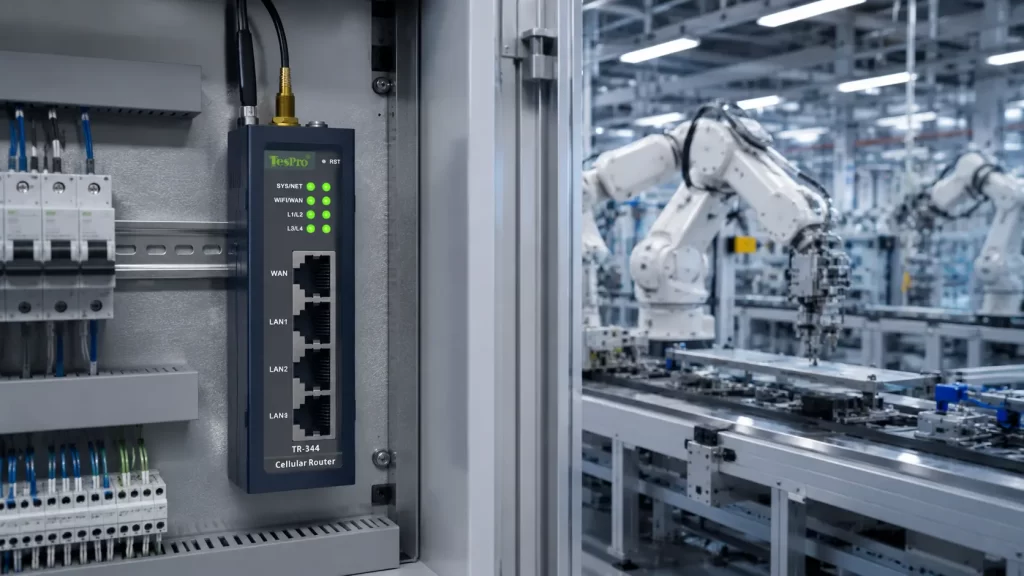
The industrial router of 2026 is no longer a simple bridge – it is a smart edge device with 5G, local analytics, and enterprise-grade security. Tespro’s router family already delivers these features, ensuring your Modbus TCP infrastructure remains reliable, cost-effective, and secure. To discuss your 5G migration strategy or request a cybersecurity configuration guide, contact Tespro’s engineering team.