-1791966549842.webp)






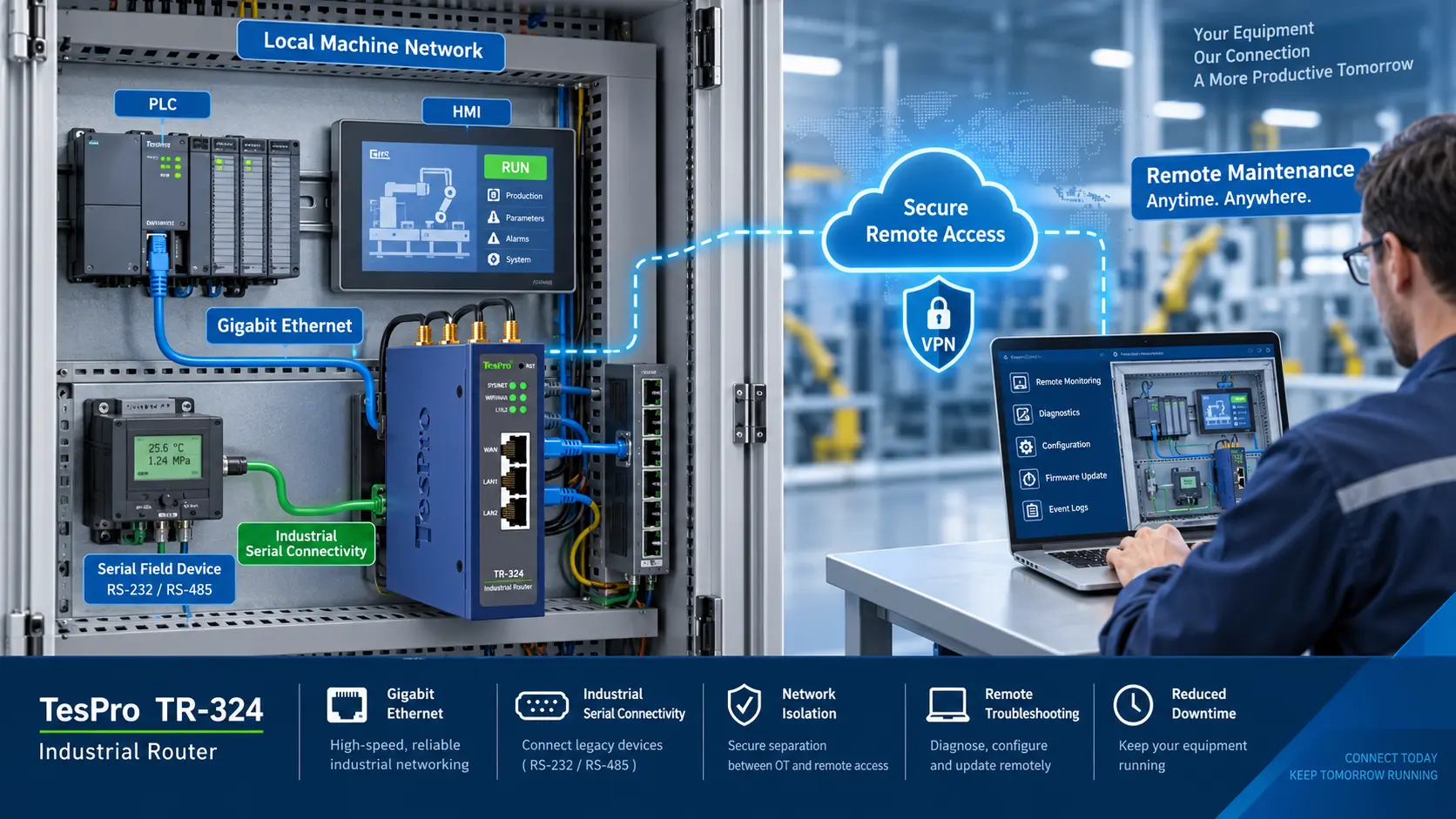
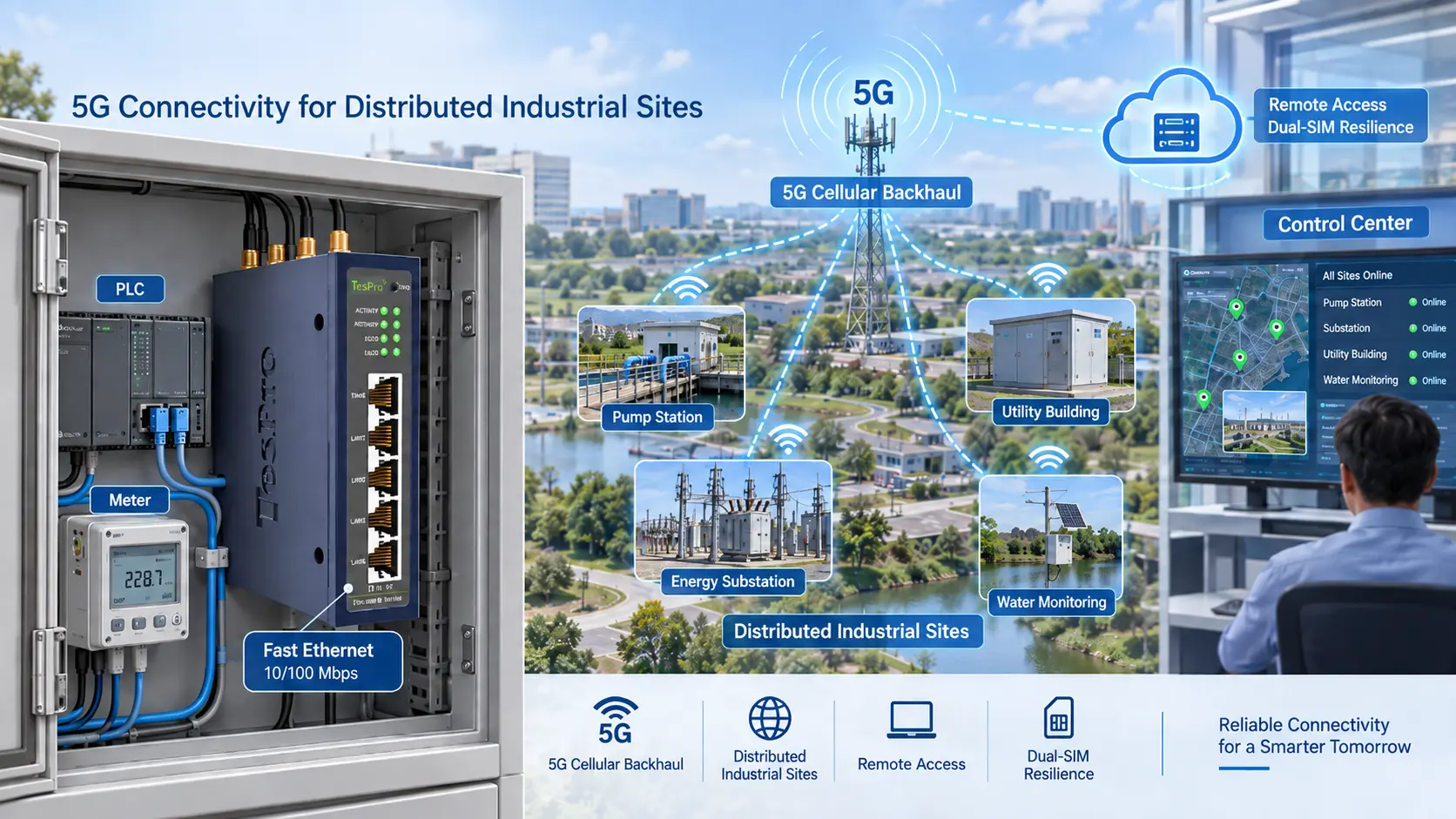
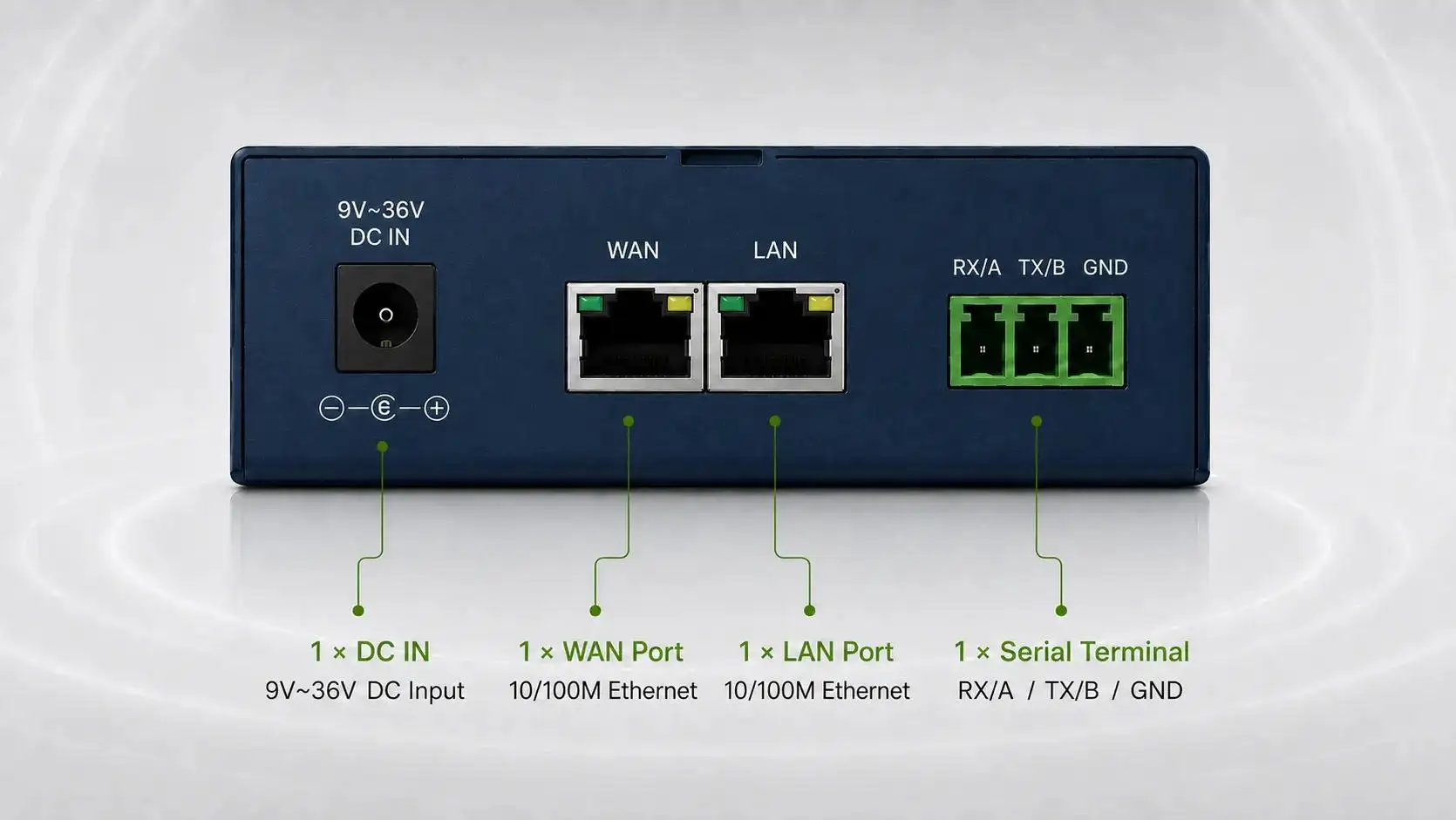
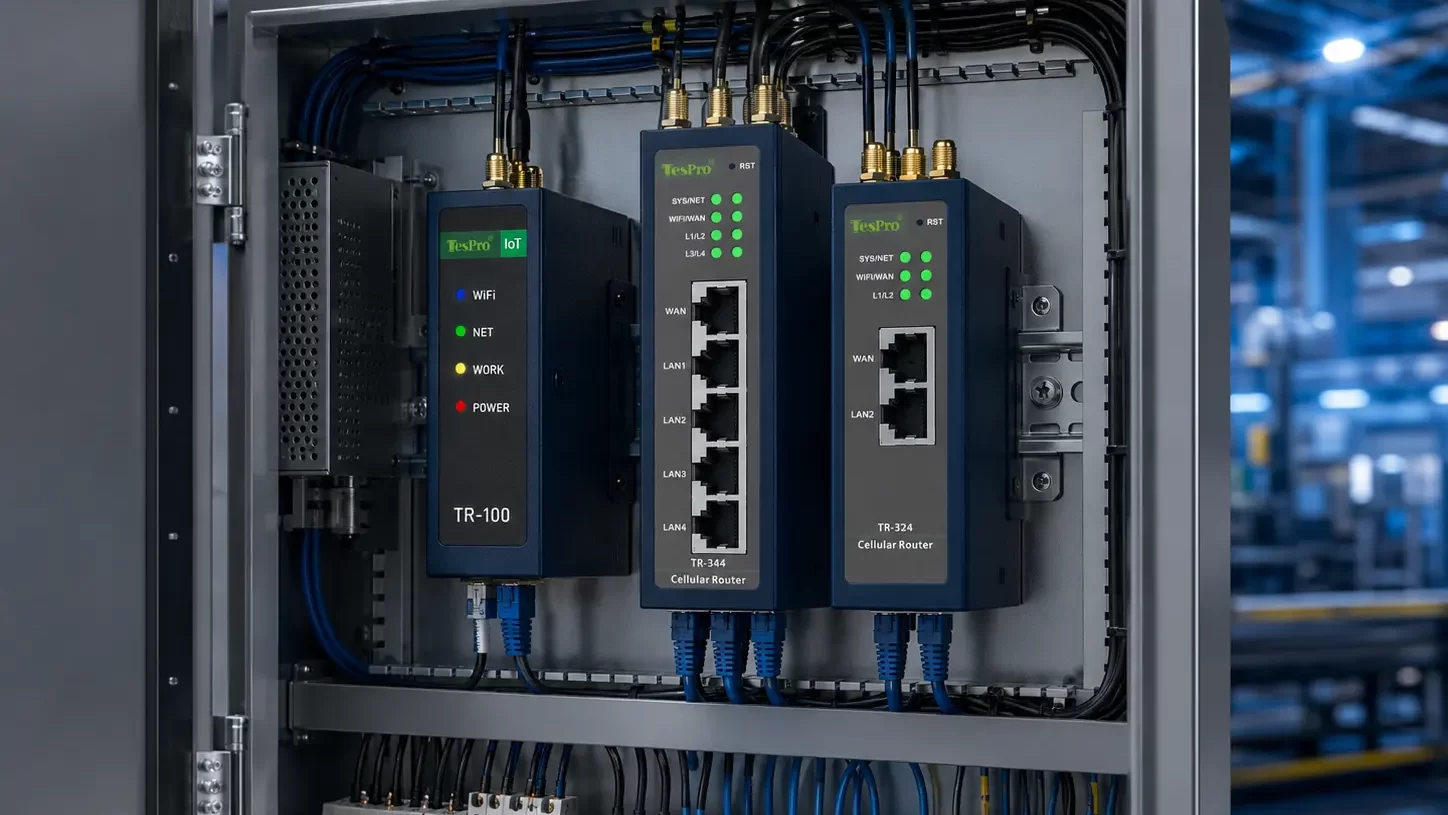
In AMI and AMR projects, the industrial router carries data from concentrators, terminals or gateways to the head-end system. Per-site traffic is often modest, so coverage, reconnection, fleet management, time synchronization and secure onboarding matter more than peak speed. Tespro TR Series can provide backhaul, TD-DTU can fit simple serial meters, TG gateways can handle multi-protocol sites, and SEMS can manage energy data.
Separate meter and backhaul layers
The router does not replace meter acquisition. Meters may connect to a concentrator over RS485, M-Bus or PLC before backhaul. Protocol parsing may require a DTU or gateway.
Reliability for distributed sites
Evaluate weak-signal behavior, redial, dual SIM, buffering, remote restart and fleet configuration, plus certificates, allowlists and alarms.
Tespro Product Roles in AMI/AMR
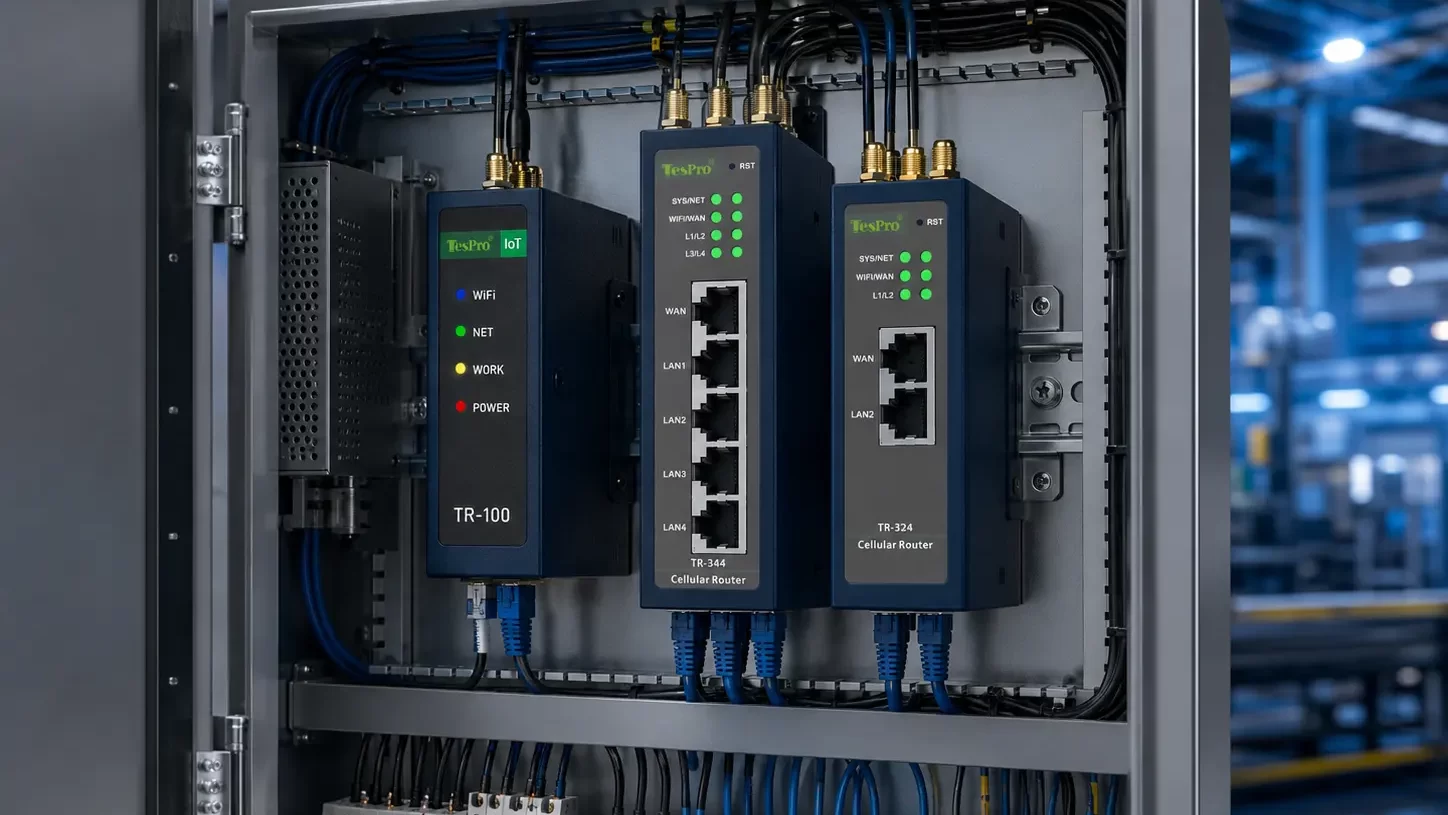
Use the TR Series when a concentrator mainly needs network backhaul, TD-DTU for one or a few serial meters, and TG gateways for protocol parsing, tag mapping, local buffering or multiple systems. TR-100 can be evaluated as a representative router, but the final combination should follow the meter topology and head-end interface.
Selection and RFQ checklist
✓ Meter topology
✓ Concentrator interfaces
✓ Reporting and buffering
✓ Bands, signal and antenna
✓ VPN, certificates and allowlists
✓ Fleet management and API
Frequently asked questions
Q: How can Tespro routers, DTUs, and gateways be combined in an AMI or AMR project?
A: Tespro TD-DTU Series devices can fit simple serial-meter links, TG Series gateways can serve multi-protocol or edge-processing sites, TR Series routers provide stable backhaul and VPN access, and SEMS can support energy-data management.
Q: Does a smart-metering project always need a 5G industrial router?
A: Usually not. Meter packets are generally small, and 4G often supports periodic reads and alarms. Evaluate 5G when the same site carries video, very high device concurrency, frequent file transfer, or a customer-mandated network design.
Q: Can an industrial router read every brand of electricity meter directly?
A: Not necessarily. A router mainly provides IP connectivity. Meter acquisition may require a DTU, concentrator, or industrial gateway configured for the actual protocol and data map, such as IEC 62056-21, DL/T 645, or Modbus.
Q: What should be validated in an AMI or AMR pilot?
A: Validate meter compatibility, read success rate, collection interval, outage buffering and recovery, cellular coverage, VPN recovery, time synchronization, remote upgrade, platform data completeness, and long-term traffic cost.