-1791966549842.webp)







Industrial Gateway selection is no longer only about getting devices online. For overseas buyers in utilities, manufacturing, transportation, buildings, and remote infrastructure, the bigger question is whether a gateway can support the next stage of industrial connectivity without forcing another round of redesign a few years later.
That is why "future-ready" has become a practical buying standard. Industrial networks are moving toward wider 5G coverage, stronger edge computing, more cloud coordination, and tighter OT security requirements. At the same time, buyers still need to connect legacy assets, serial devices, field controllers, and site networks that were never designed to work as one system. OPC Foundation describes OPC UA as infrastructure for interoperability across the enterprise, while GSMA continues to frame private 5G and connected manufacturing as core building blocks of modern industrial operations. NIST also emphasizes that OT systems must be secured with performance, reliability, and safety in mind, not with IT assumptions alone.
The Industry Challenge Has Changed
A few years ago, many projects judged gateway hardware mainly by basic connectivity and interface count. Today, that is not enough.
The real challenge is this:
How do you build an industrial network that works now, but is also ready for 5G, edge intelligence, and multi-system integration later?
For procurement teams, this challenge usually appears in several forms:
• Legacy devices still need to stay in service
• New platforms expect cleaner, faster, and more structured data
• Remote sites need more flexible network access
• Cloud systems need reliable upstream communication
• OT environments need stronger security discipline
When these needs are handled with separate devices and extra middleware, complexity rises fast. Deployment takes longer. Maintenance becomes heavier. Expansion becomes harder to control. That is exactly why the gateway is becoming a strategic device rather than a simple communications accessory.
Why 5G Changes the Gateway Conversation
5G matters because industrial users increasingly want more than a fixed wired architecture. They want flexible deployment, lower latency, better responsiveness, and a network layer that can support distributed assets more efficiently. GSMA's connected manufacturing work highlights how private 5G is being used to transform smart production environments, and recent GSMA research also points to private networks being tailored more often for edge AI and other advanced industrial workloads.
For buyers, that does not mean every project must become a pure 5G project immediately. It means a gateway should be able to fit into the direction the market is already taking.
A future-ready Industrial Gateway should therefore support:
• Current deployment needs, not just future marketing claims
• Migration from older network environments to 4G and 5G
• Reliable communication between field assets and cloud platforms
• Local processing at the edge to reduce unnecessary data traffic
• Integration across mixed OT and IT environments
This is where the product story becomes more commercially relevant. A gateway that supports only today's topology may solve one project. A gateway that can adapt to tomorrow's network architecture can support a broader roadmap.
Tespro's Stronger Selling Point Is Future-Ready Architecture
For this topic, the most compelling Tespro angle is not raw speed alone. It is the combination of 5G-ready connectivity, edge computing, and multi-interface integration.
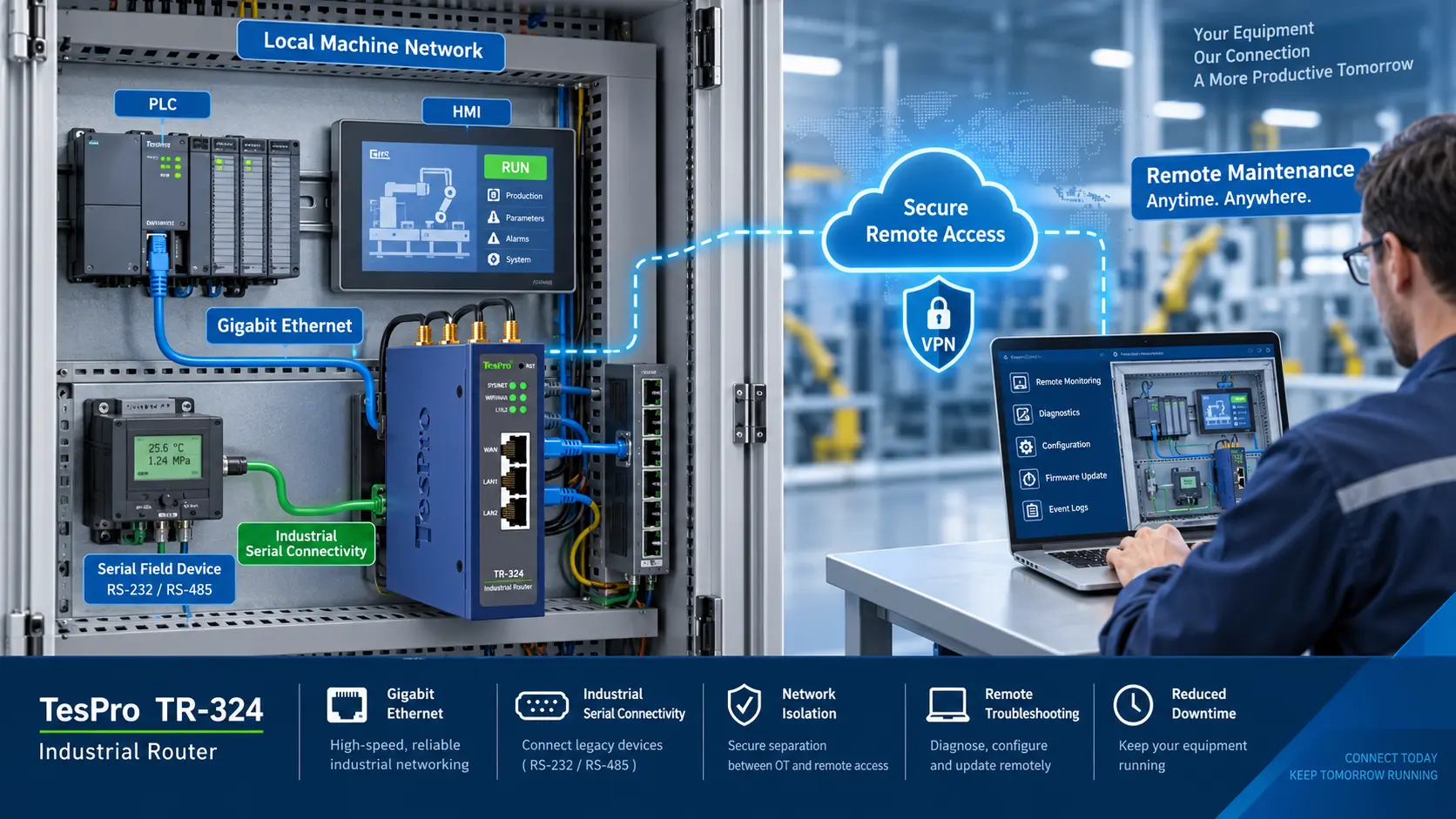
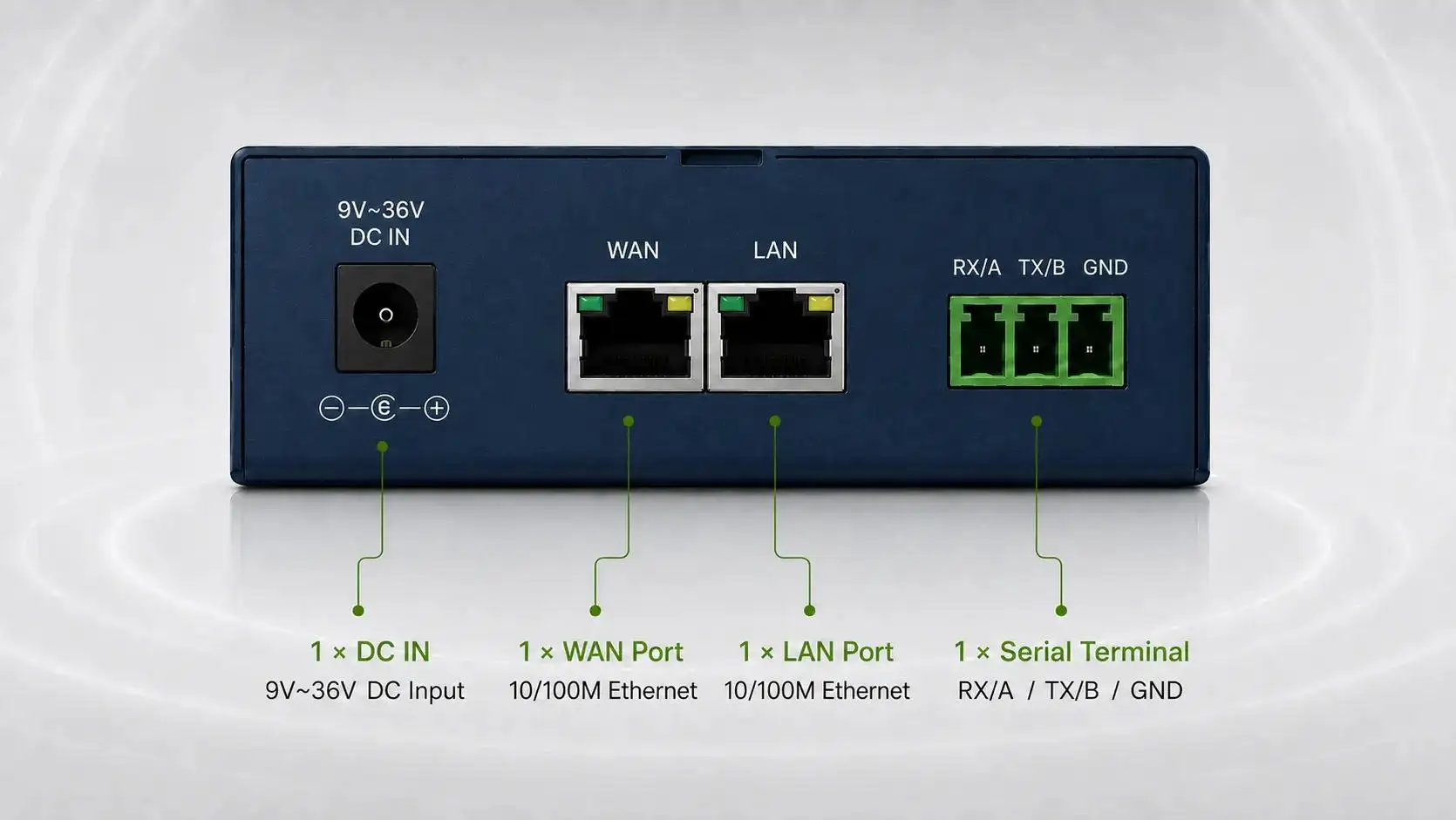
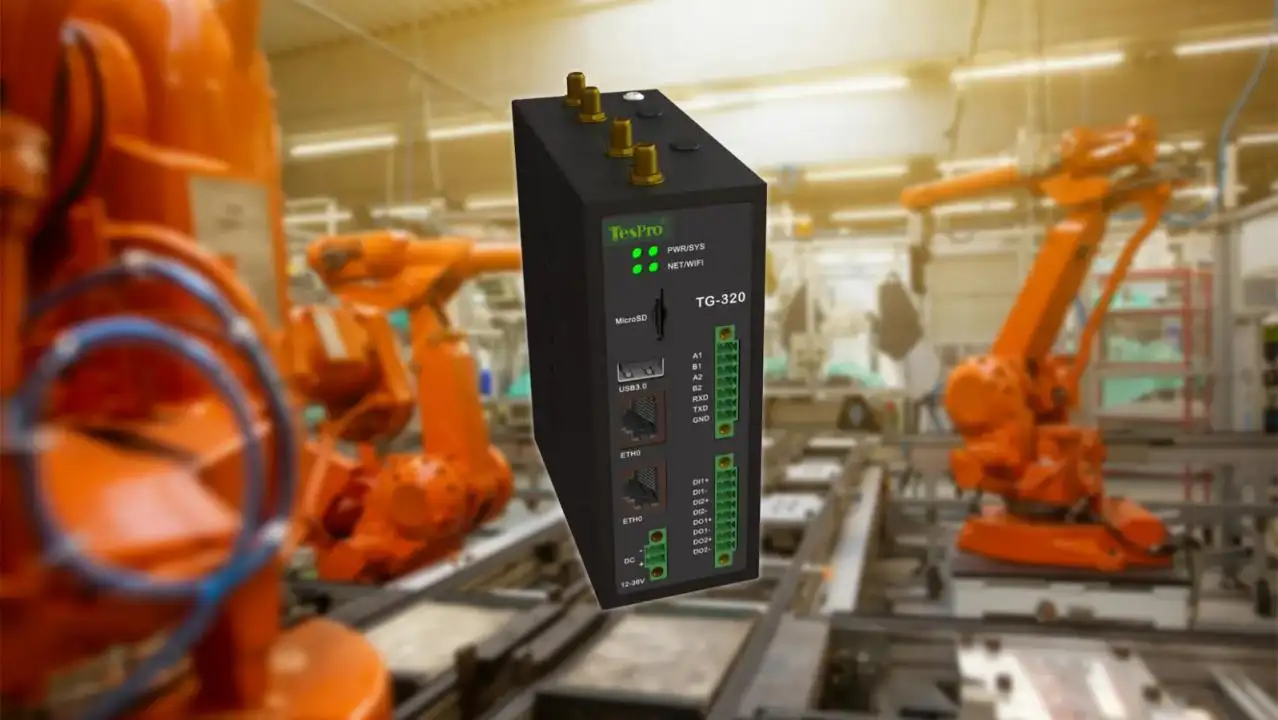
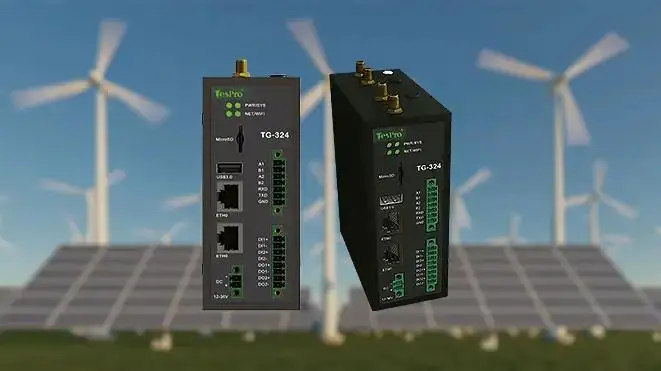
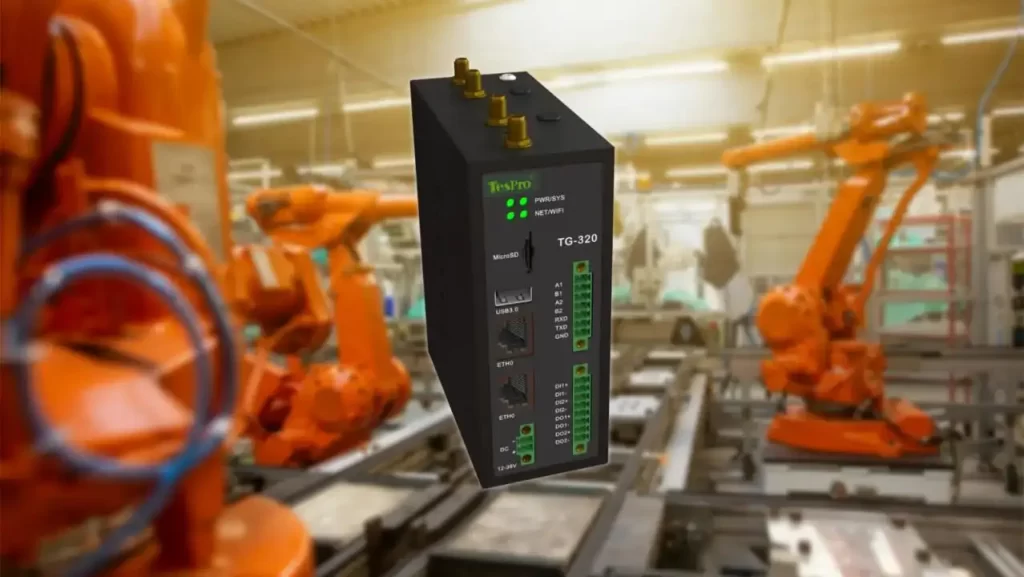
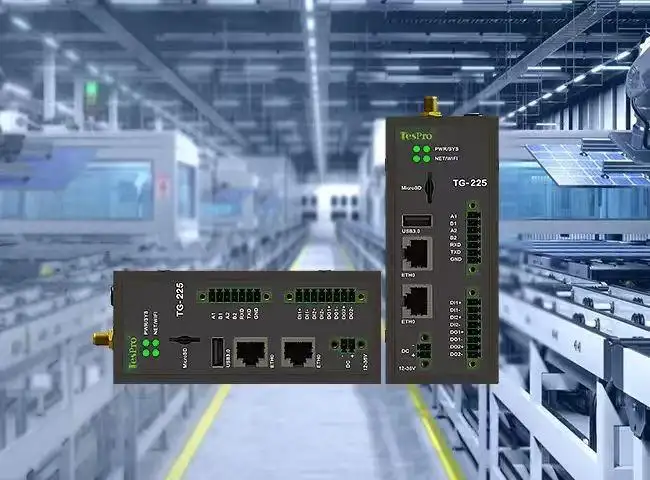
Tespro's industrial IoT edge gateways, including the TG-324 and TG-225, are industrial-grade devices built around 2G, 3G, 4G, and 5G support, edge computing, and multi-interface connectivity for IoT environments. Tespro also describes these gateways as designed to reduce system complexity while supporting secure and real-time cloud transmission. Its broader product archive further shows industrial deployment features such as RS485, RS232, multiple LAN ports, and operating ranges down to -40°C and up to 75°C on related models.
That matters to overseas buyers because it matches how real projects are built:
• Some assets still communicate through serial interfaces
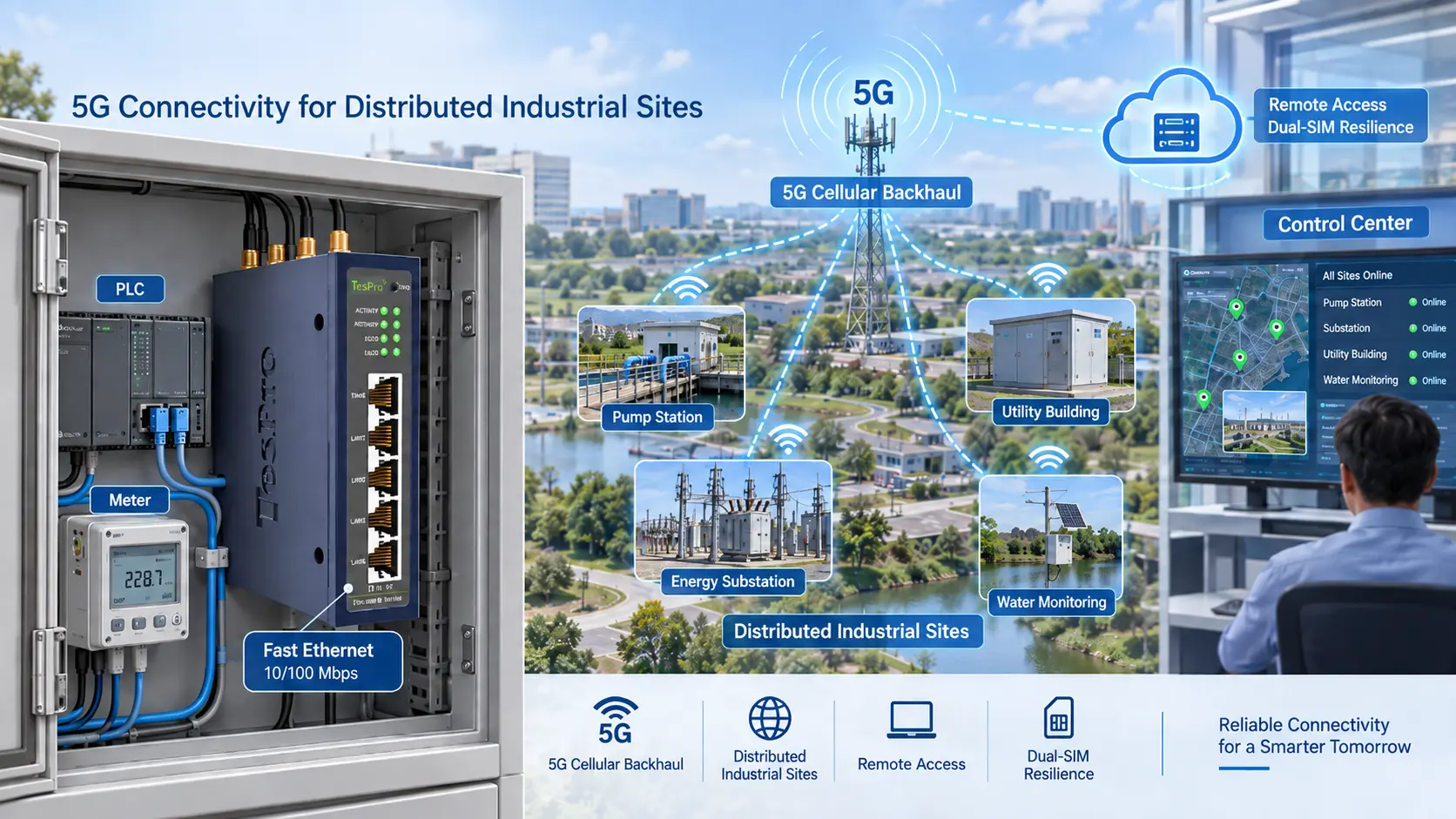
• Some sites need wireless backhaul instead of fixed lines
• Some applications benefit from local processing before data moves upstream
• Some deployments require one device to manage several communication paths
In practical terms, Tespro is aligning its gateway design with the mixed and evolving nature of industrial infrastructure. That is a stronger position than offering a device that performs well only in a narrow or static network model.
Edge Computing Makes the Gateway More Valuable
Another reason this theme works well is that future-ready connectivity is not just about wireless access. It is also about where data gets processed.
OPC Foundation's cloud and edge work notes that OPC UA is established not only in on-premises OT environments but also in industrial edge applications. That reflects a broader shift: industrial networks increasingly benefit when some filtering, processing, and control logic happen locally rather than sending everything upstream first.
For buyers, edge capability can support:
• Faster local response
• Lower backhaul burden
• Better handling of intermittent connectivity
• Cleaner upstream data flows
• More scalable multi-site architectures
Tespro's edge-computing gateway positioning fits this trend well. It supports the idea that the gateway should not only move data, but also help organize, process, and prepare it for wider system use. That makes the device more relevant in smart industrial networks where bandwidth, timing, and data quality all matter.
How does Tespro industrial gateway handle legacy device integration while preparing for 5G?
Tespro industrial gateway, such as TG-324 and TG-225, supports legacy serial interfaces (RS485/RS232) alongside 4G/5G connectivity. This allows factories to keep existing PLCs and sensors in service while building a smooth migration path toward private 5G and edge computing architectures without forklift upgrades.
What edge computing capabilities does Tespro industrial gateway offer to reduce cloud dependency?
Tespro gateways process data locally at the edge—filtering, aggregating, and running control logic before sending only essential information to the cloud. This reduces backhaul costs, lowers latency, and ensures reliable operation even when WAN connections are intermittent, which is critical for remote infrastructure and smart manufacturing.
Security and Reliability Still Decide Long-Term Value
No future-ready story is complete without security and reliability. NIST SP 800-82 Rev. 3 makes clear that OT environments have unique requirements around safety, reliability, and performance. In industrial projects, a gateway is part of that risk picture because it often sits between field assets, local networks, and external systems.
That means buyers should not evaluate an Industrial Gateway only by throughput or radio support. They should also ask:
• Can it fit a secure OT architecture?
• Can it support reliable site-to-cloud communications?
• Can it reduce integration sprawl?
• Can it remain useful as network strategies evolve?
• Can it help standardize deployment across multiple sites?
These questions are closer to how experienced procurement teams actually buy. They are looking at lifecycle value, not just launch-day specifications.
What This Means for Buyers
For overseas buyers, the stronger conclusion is straightforward. A modern Industrial Gateway should help connect today's field assets while preparing the network for 5G, edge intelligence, and more structured industrial interoperability.
Tespro's published gateway direction supports that expectation well. Its emphasis on 5G readiness, edge computing, multi-protocol connectivity, and industrial-grade deployment shows a product strategy that follows where industrial connectivity is going, not where it was five years ago. For buyers planning long-term digital infrastructure, that is the kind of technical positioning that can reduce reinvestment risk and support smarter network expansion.
FAQ
- What Is An Industrial Gateway Used For?
An Industrial Gateway is used to connect field devices, controllers, sensors, and legacy equipment with modern industrial networks, cloud platforms, and management systems. It helps transfer, convert, and organize data between different communication environments.
- Why Is 5G Important For An Industrial Gateway?
5G gives an Industrial Gateway more flexibility in remote deployment, faster communication, and better support for distributed industrial sites. It is especially useful when wired infrastructure is limited or when projects need future-ready wireless connectivity.
- Can An Industrial Gateway Connect Legacy Devices To Modern Platforms?
Yes. One of the main advantages of an Industrial Gateway is its ability to bridge legacy serial devices, PLCs, and industrial controllers with newer IP-based platforms, cloud systems, and smart industrial networks.
- How Does Edge Computing Improve Industrial Gateway Performance?
Edge computing allows the Industrial Gateway to process part of the data locally before sending it upstream. This can reduce latency, lower bandwidth pressure, improve response speed, and make the overall system more efficient.
- What Features Should Buyers Look For In An Industrial Gateway?
Buyers usually look for multi-protocol support, 4G or 5G connectivity, edge computing capability, industrial-grade reliability, wide interface compatibility, and secure data transmission. These features help support long-term deployment value.