-1791966549842.webp)





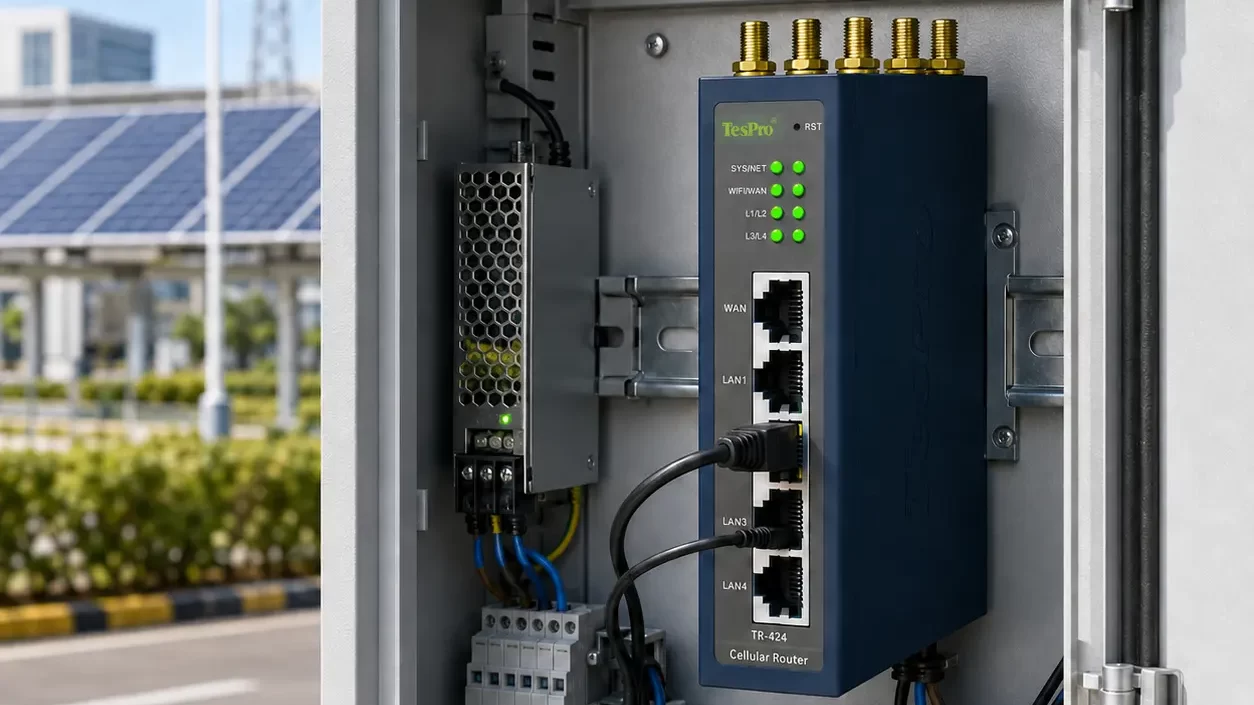

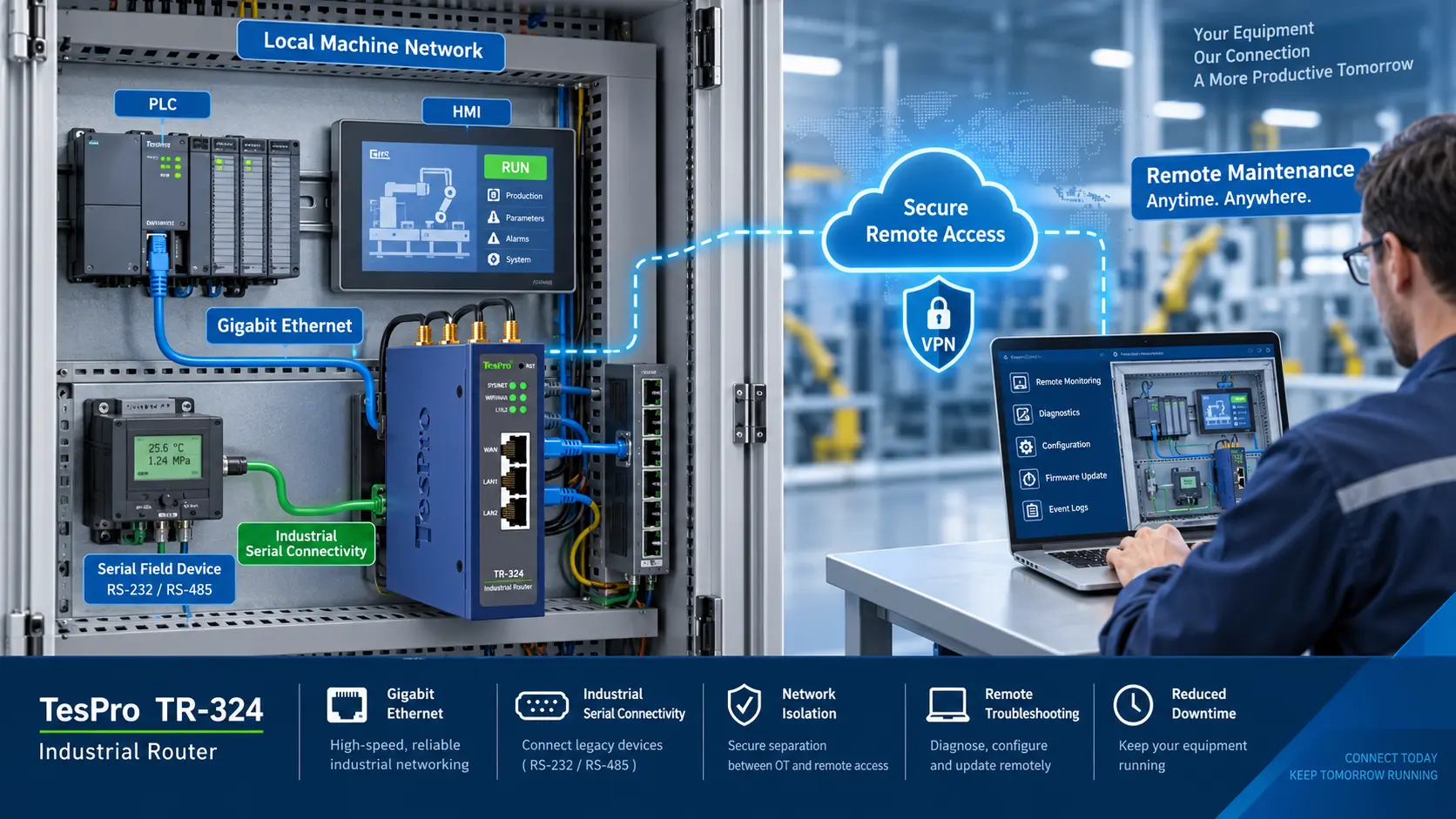
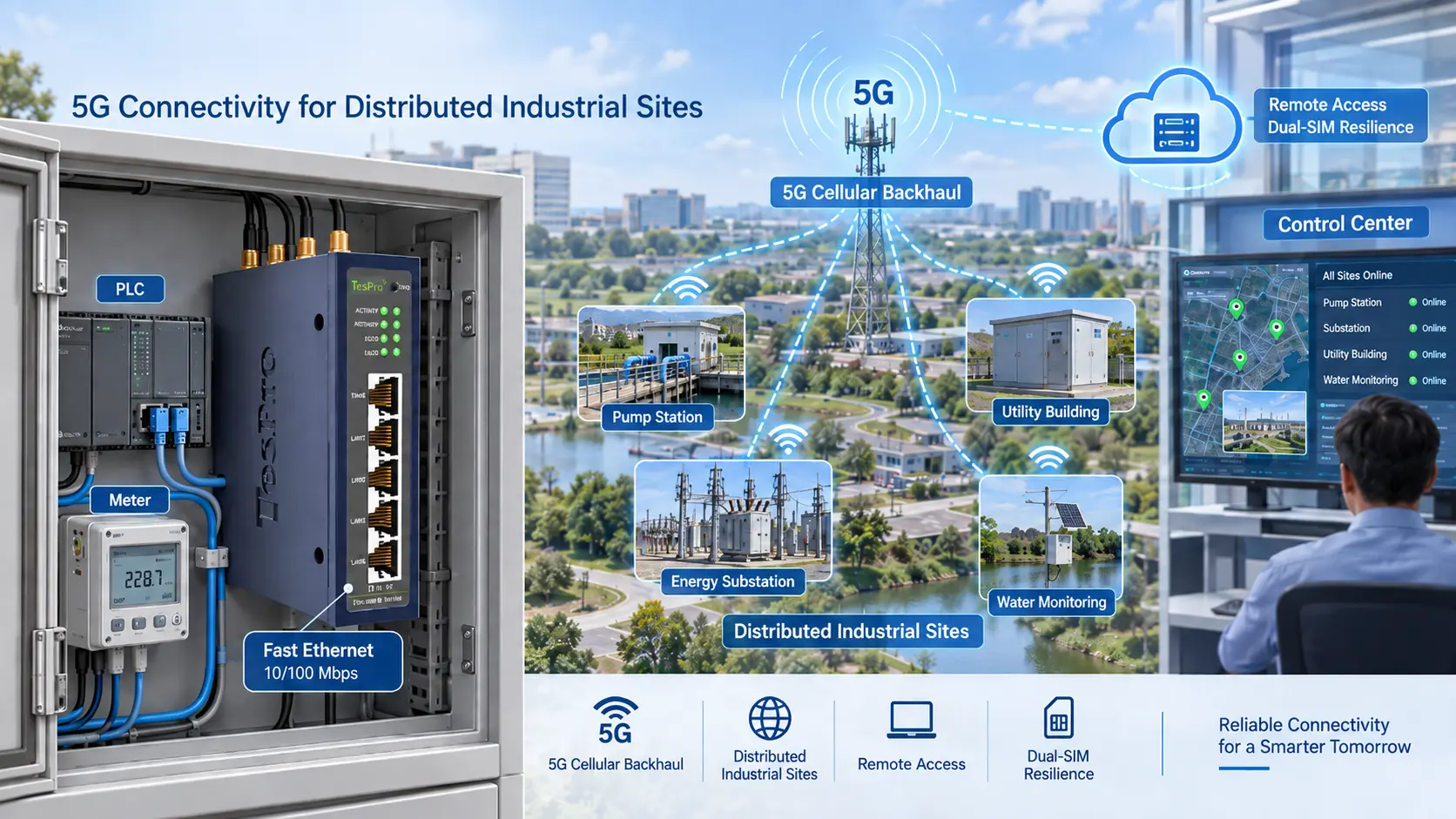
An industrial router primarily solves how devices connect to networks, while an industrial gateway also addresses how device data is acquired, interpreted, converted and processed. Tespro’s TR series emphasizes cellular connectivity, dual SIM, VPN and remote management; TG gateways add industrial protocols, serial I/O, acquisition and edge processing.
Key Points
- Use TR first for network-layer problems and TG for data-layer requirements.
- Some higher-end TR models also include protocol functions, so selection should follow complexity rather than product names alone.
- Interfaces, protocols, point count and local processing should decide the architecture.
Use a router when backhaul is the main task
If a PLC, concentrator or edge controller already handles the data logic, the router can focus on 4G/5G, Ethernet, Wi-Fi, VPN and link redundancy, keeping the architecture clear.
A gateway is more natural for protocol conversion
TG-100, TG-325 and TG-424 all position multi-protocol integration and data acquisition as core functions. Multiple RS485 meters, Modbus registers, BACnet objects or MQTT/OPC UA publishing require field-side data modeling and workflow.
Edge processing further separates the gateway role
TG-325 supports local logic and application development, while TG-424 adds RK3576-based AI/edge computing. Gateways are therefore a better location for offline processing, alarms, filtering or AI inference.
Ask two questions first: who owns the network, and who owns the data?
If a PLC, IPC or server already performs protocol parsing and data logic, the network layer may only need a reliable TR router. If field devices expose Modbus registers, BACnet objects, DLMS data or vendor protocols while the cloud expects structured MQTT/OPC UA/HTTP data, a TG gateway is needed to understand and transform the data.
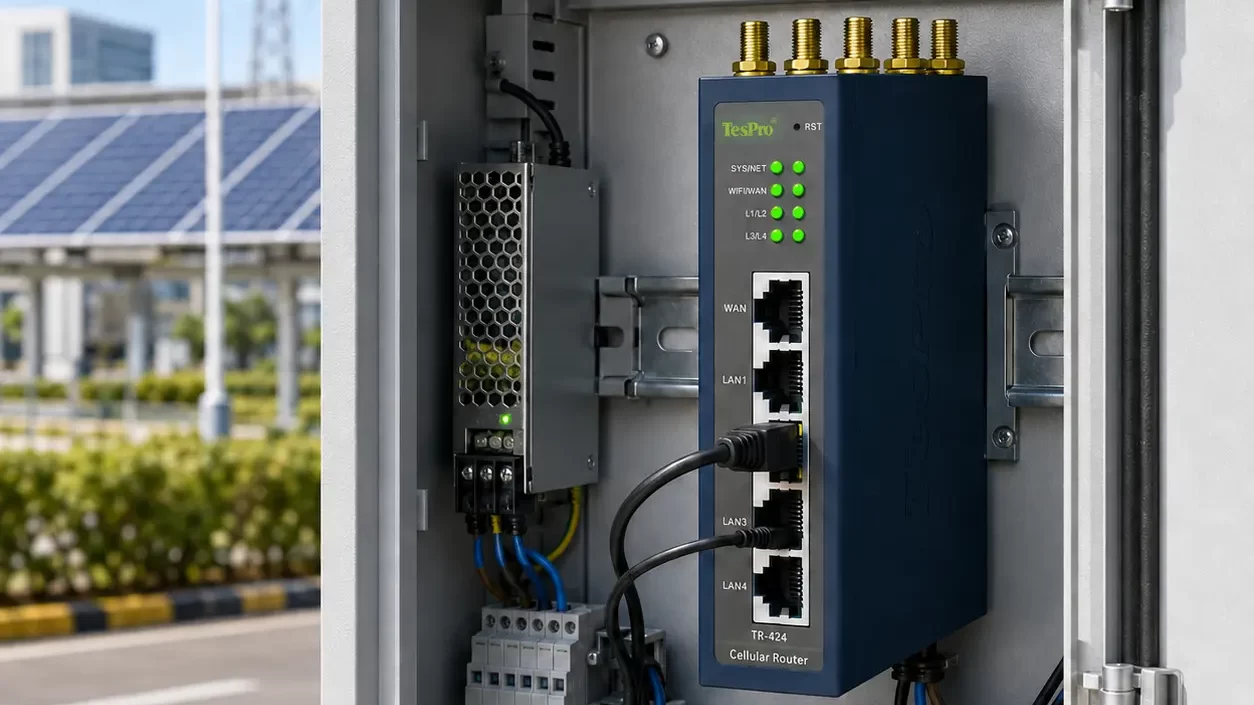
Routers and gateways can also be layered
Larger systems often place a TR router at the network boundary for cellular/VPN/firewall functions and a TG gateway near the devices for protocol, buffering and edge logic. Network policy and data logic can then be maintained separately, reducing the impact when one layer is upgraded or replaced. Whether two devices are justified depends on segmentation, throughput, ports and O&M complexity.
Applications and Technical Boundaries
When a TR router alone is the cleaner choice: Data is already processed by a PLC/concentrator/IPC and the site mainly lacks secure, reliable cellular/VPN backhaul.
When to prioritize a TG or TR+TG architecture: Protocol parsing, normalization, buffering/alarms/rules, multiple serial buses or AI inference are required. Strict security segmentation can also justify separating network and data layers.
The Tespro TR/TG boundary reflects a network-layer and data-layer split
The Tespro TR and TG families emphasize different responsibilities: TR on network connectivity and TG on data processing. That boundary makes system integration clearer. A TR can serve as the cellular/VPN access boundary, while a TG handles protocol parsing, normalization, buffering and edge logic. They can work independently or as layers of the same system.
Frequently Asked Questions
Q: Can a gateway replace a router?
A: Some gateways include cellular and Ethernet connectivity, but whether they should replace a dedicated router depends on security architecture, ports, performance and system layering.
Q: Can a router perform Modbus-to-MQTT?
A: Some higher-end TR models such as TR-424 list related functions, but complex protocol integration should still be evaluated by point count and local logic.
Q: When should an industrial gateway be strongly considered?
A: When the project needs multi-protocol parsing, tag mapping, local buffering/rules, multiple serial devices or edge computing.
Q: If a TG gateway already has cellular connectivity, why add a TR router?
A: Some projects can use the TG alone. TR+TG becomes useful when network security, multiple carriers/WANs, a separate firewall boundary or organizational O&M policy calls for clearer layer separation.