-1791966549842.webp)






As manufacturing plants, utilities, and infrastructural systems increasingly adopt new digital technologies, there is a growing need to bridge the gap between factory floor IT systems and the machine, sensor and control systems. In this regard, the industrial gateway solution is the most important building block of a secure and extendable IIoT system.
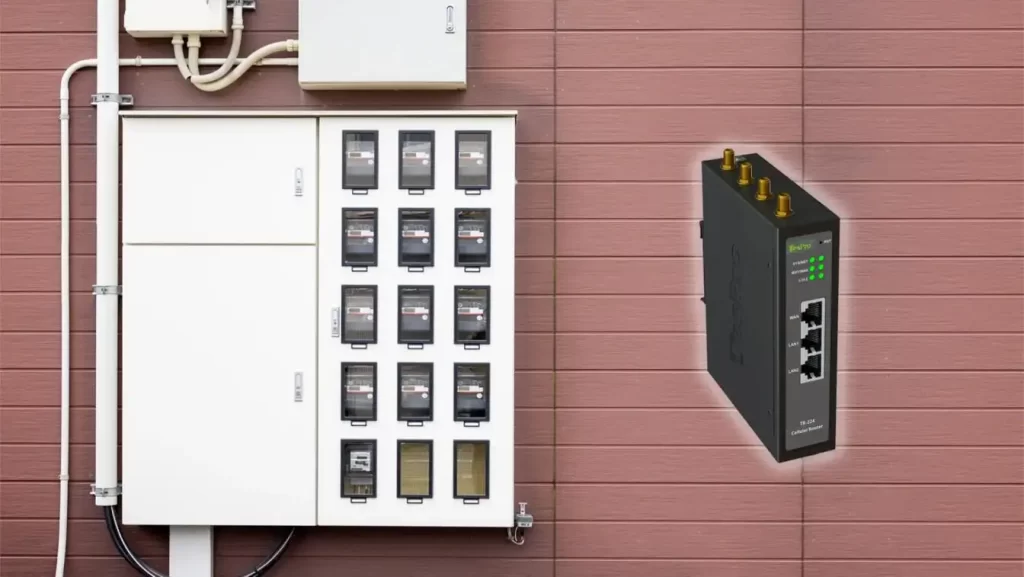
This article presents an in-depth analysis of a gateway solution, its association with other systems, modularity and extensibility, as well as the significance of these features for industrial applications.
The Industrial Gateway Solution Explained
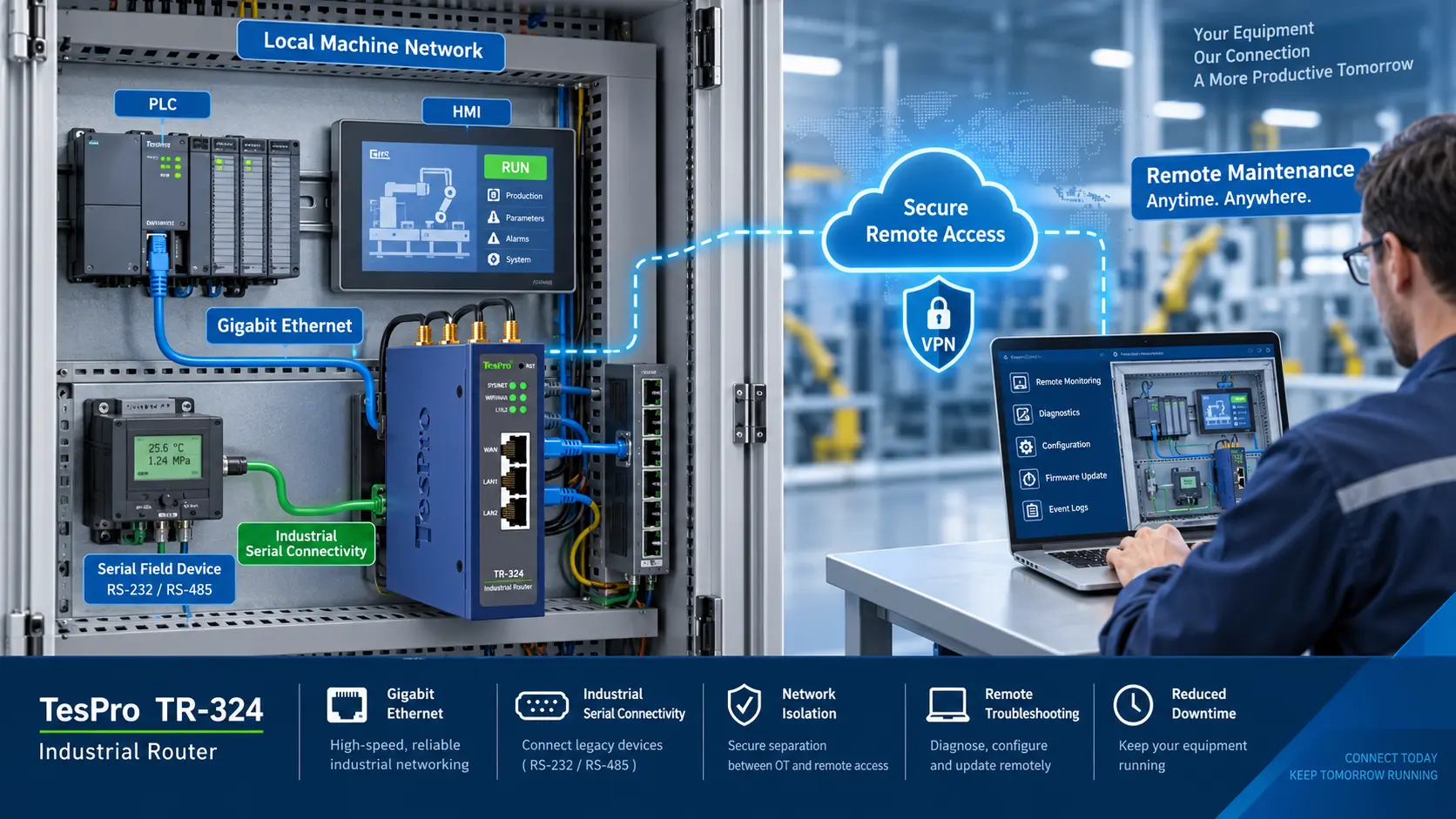
An Industrial gateway solution combines hardware and some proprietary software to connect disparate industrial systems to corporate networks, as well as cloud services. Unlike a standard office router, an industrial gateway solution is designed for the factory floor or field locations, and more rugged environments, supporting different communication protocols and real-time data processing.
In this sense, you should picture an industrial gateway as an edge computing device for gateway network infrastructure, and for packet shaping and prioritization purposes.
Key features include
•Rugged construction to withstand extreme vibrations, and dust, and an electromagnetic environment including rugged cabling.
•Flexibility in the way it connects to Cellular/NB-IoT, Wi-Fi, Ethernet, and more.
•Lots of industrial gateways use quad-core Arm-based processors to manage cyber security, protocol translation, and local analytics.
Primary Components of an Industrial Gateway Solution
There are lots of ways to integrate operational technology with information technology through Industrial Gateways. Here are a few.
•Data Aggregation - Compiles data from different sensors, meters, and industrial controllers at a single site.
•Protocol - Modbus RTU/TCP, PROFINET, EtherCAT and OPC UA are changed to either MQTT, HTTP, or some other cloud-friendly formats.
•Edge Processing - Data aggregation, filtering, and compression occur on the edge which reduces the load on cloud computing and saves bandwidth.
•Secure Communication - The combination of authentication, encryption, and firewalls ensures the security of industrial networks, especially at the boundary of Operational Technology and IT, or when networks are disconnected from the internet.
•Data Storage and Forwarding - Data is stored temporarily in the Northbound direction in order to retain data that will otherwise be lost when the connection fails, and the transmission is done automatically when service is restored.
•Device Management - The field devices can be remotely monitored and updated without requiring a site visit.
Key Technologies Underpinning Contemporary Industrial Gateways
Recent developments in technology mean that today's industrial gateways can combine multiple powerful features such as edge computing, support for multiple protocols, built-in security, all in a rugged, field-ready form factor.
1)Multi-Protocol Support
Many industrial communication protocols are in use. They include, but are not limited to, Modbus RTU/TCP, PROFINET, EtherCAT, BACnet, DNP3, OPC UA, and MQTT. A good industrial gateway solution will have the OT-side protocol stacks to connect to a PLC, sensor, or controller, as well as the IT-side stacks to connect to a cloud service or enterprise system. The gateway's worth is in its protocol conversion.
2)Edge Computing and Local Analytics:
Modern gateways are able to perform a certain amount of processing on the device to limit the amount of data sent to the cloud. This is done by edge filtering, where only the data that is significant (meaning the value has changed beyond a certain threshold) is sent. This can reduce the amount of data sent by as much as 90% in several telemetry use cases. Edge computing allows for alerts for operational metrics be triggered and for control actions to be performed without the cloud.
3)Cellular Connectivity Integration:
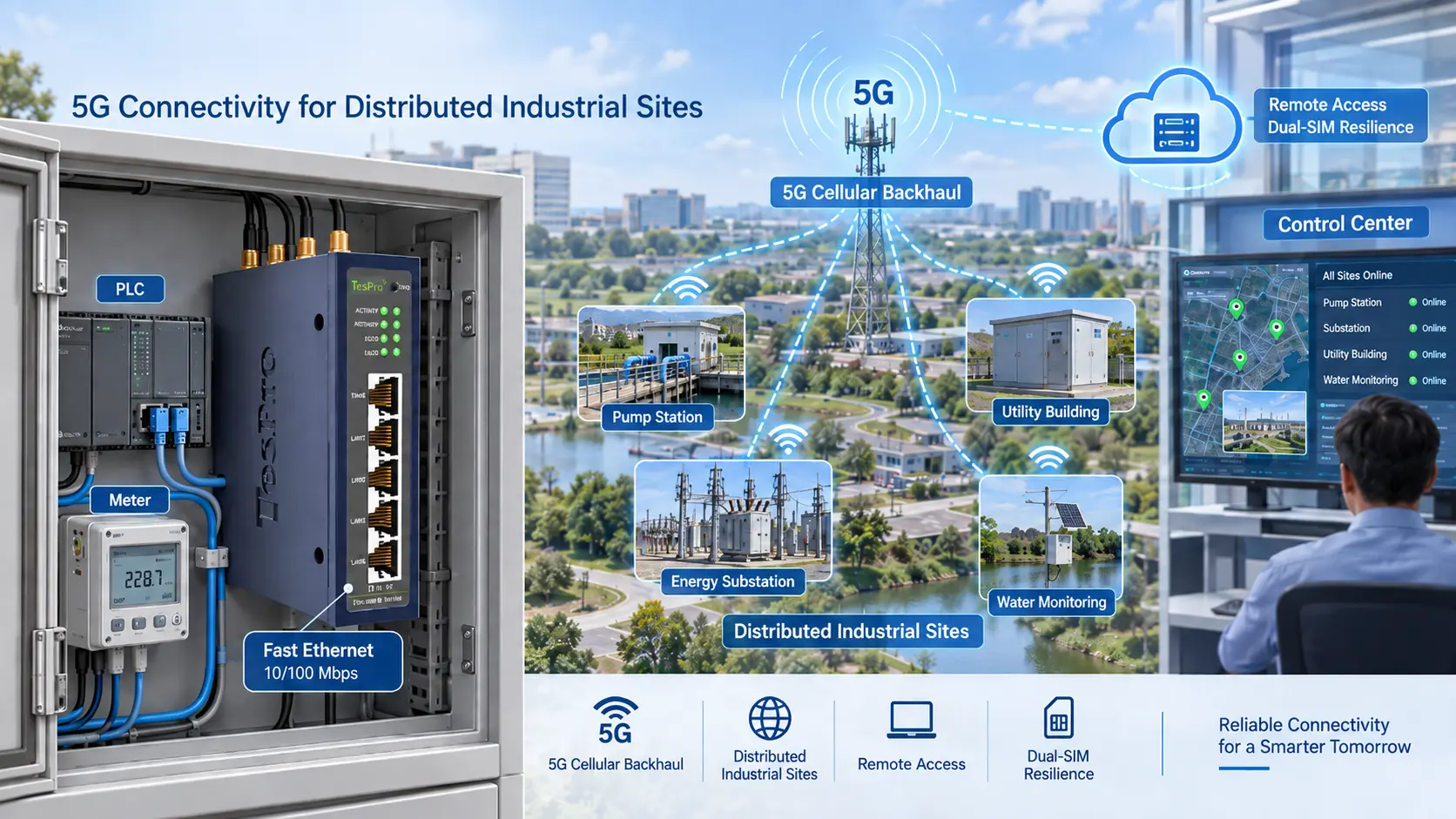
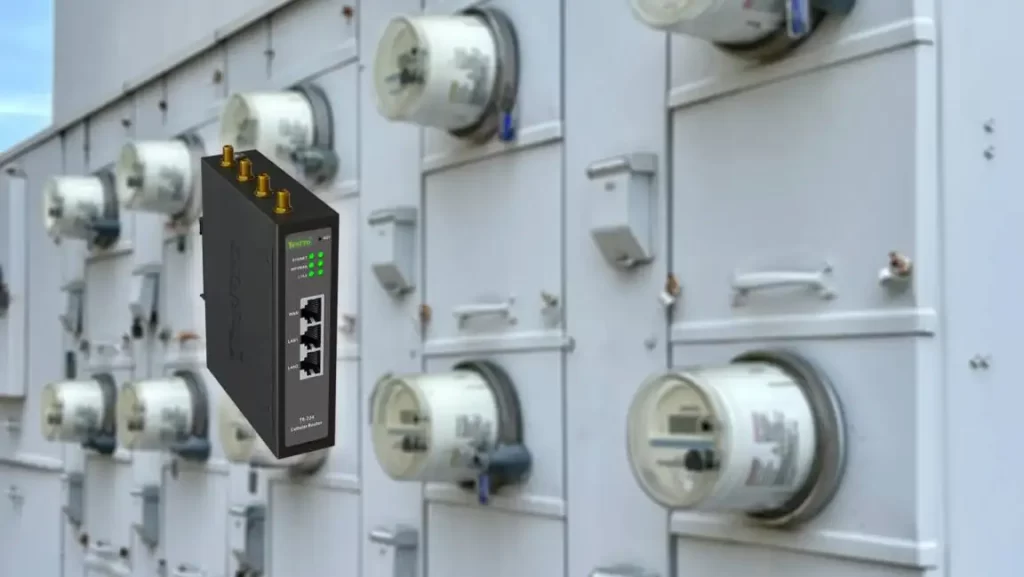
For distributed assets, such as utility meters or remote pumping stations, cellular connectivity is often the most practical solution. Industrial gateways that come with an embedded cellular modem (4G LTE and increasingly 5G) provide useful wide-area connectivity without a fixed-line infrastructure. Features such as dual SIM standby and automatic failover between cellular, Ethernet, and Wi-Fi improve reliability of a gateway.
4)Cybersecurity Features
The increasing interconnection of industrial networks has brought security from the back burner to mainstream design. An industrial gateway solution includes hardware encryption, firewall rules, access control lists, along with VPN support. Advanced solutions also incorporate network segmentation and DPI to segregate critical control networks from more trusted external networks. The design of gateways is also positively correlated with the segmentation and DPI technologies that incorporate a Zero Trust policy in industrial networks, whereby every component is responsible for authenticating and encrypting data.
Trends in the Market and Growth Factors for Industrial Gateway Solutions
The demand for industrial gateway solutions has been rising rapidly. The Industrial IoT Gateway market, for example, is estimated to be valued at $450 billion in 2025 and expected to grow to $647 billion in 2032, at a CAGR of 5.33%. The Industrial Communication Gateways market has a smaller scope and is expected to grow from $2.64 billion in 2025 to $4.35 billion by 2032, at a CAGR of 7.40%.
The following factors spurred the rapid growth of industrial gateway solutions:
• The Adoption of Predictive Maintenance Systems: An industrial gateway solution makes it possible to monitor the condition of machinery and predict failure, thus eliminating unplanned downtimes.
• The Adoption of Industry 4.0 and Smart Factories: In manufacturing facilities that have digitized their operation, the need to connect older equipment with newer IT systems has become more critical. Gateways serve as the automation link in brownfield projects.
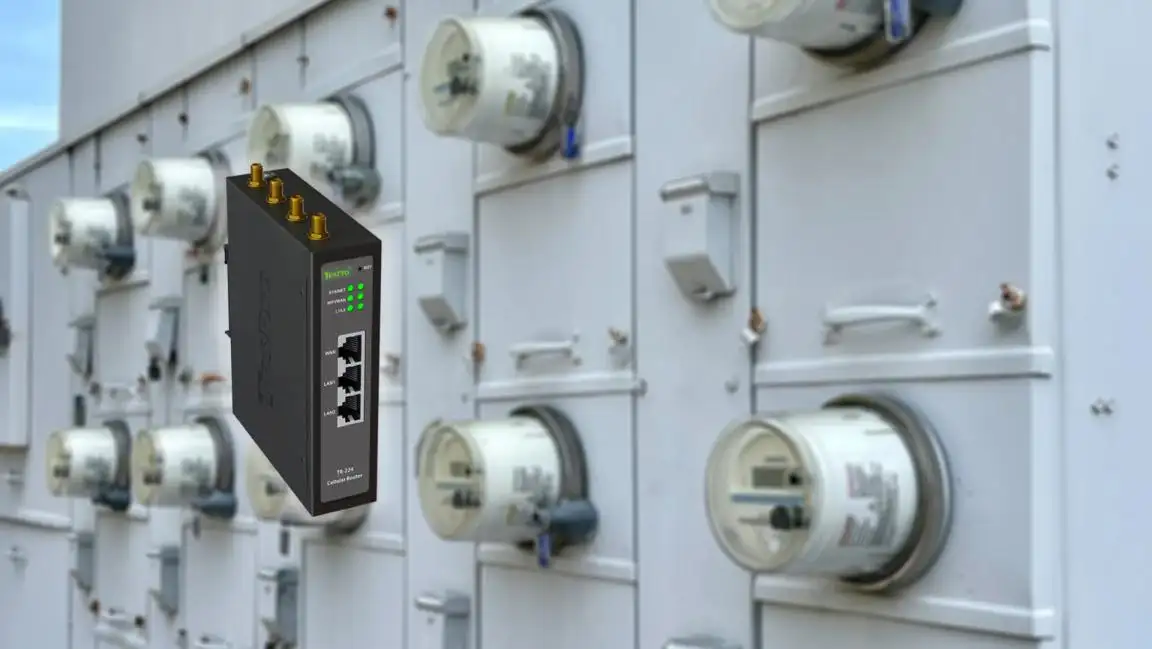
• Expansion of Smart Grid and AMI/AMR Deployments: Advanced Metering Infrastructure (AMI) and Automated Meter Reading (AMR) systems are being deployed at scale by utilities. In these networks, Industrial gateway solutions that combine cellular connectivity with protocol translation (for DLMS/COSEM, Modbus, and other utility protocols) are key network elements.
• Edge AI Integration: A number of industrial gateways include AI inference engines. This means that these gateways can perform analytics functions, such as anomaly detection, directly on the device, and avoid the need to transmit video or sensor streams to the cloud.
Industrial Gateway Solutions and Their Uses
What are the applications of industrial gateway solutions across various industries?
1) Smart Manufacturing
Gateways link programmable logic controllers (PLCs), computer numerically controlled (CNC) machines, robotic devices, and vision systems, either on the shop floor or in the cloud. Gateway solutions offer the ability to perform logic and protocol conversions (for example, PROFINET to MQTT), consolidate shop floor data, and assist with the design of real-time data dashboards to be used by supervisors on their shop floor operations.
2) Utility Grids and Substations
In electrical distribution networks, gateways consolidate data from remote terminal units (RTUs), protective relays, and smart metering devices. They convert IEC 61850, DNP3, or Modbus into secure cloud protocol for the controlled remote monitoring of distributed energy resources.
3) Water and Wastewater Management
Remote pumping stations, treatment plants, and cellular gateways integrate with serial (RS-485 Modbus RTU) interfaces to SCADA systems and report flow, pressure, and chemical levels.
4) Smart Cities
Traffic signal controllers and environmental and noise sensors are examples of devices that manage the distributed nature of city resources. An industrial gateway with 4G and 5G can connect field devices to city management systems.
5) Renewable Energy Sites
Remote Industrial solar and wind farms can use industrial gateways to withstand harsh field conditions. They can easily communicate field data via cellular networks.
Summary
An industrial gateway solution integrates Industrial Equipment with IT systems using data aggregation and protocol transformation, edge computing, and secure connections. It builds the foundation of automation and smart grids and allows a larger industrial automation and predictive maintenance ecosystem. As 5G and Zero Trust Constructs develop, the importance of the gateway is amplified. For engineers and procurement professionals, knowledge of edge processing, protocol support, industrial ruggedness, and the secure industrial environment, is essential to delivering effective and resilient industrial IoT systems.
Frequently Asked Questions
Q: What is the biggest distinction between a standard router and an industrial gateway?
A: A standard router sends IP packets, while industrial gateways convert protocols (like Modbus into MQTT), do processing on the edge, and are built tough for the extreme conditions.
Q: Is it possible to use an industrial gateway on older systems if they have only serial ports?
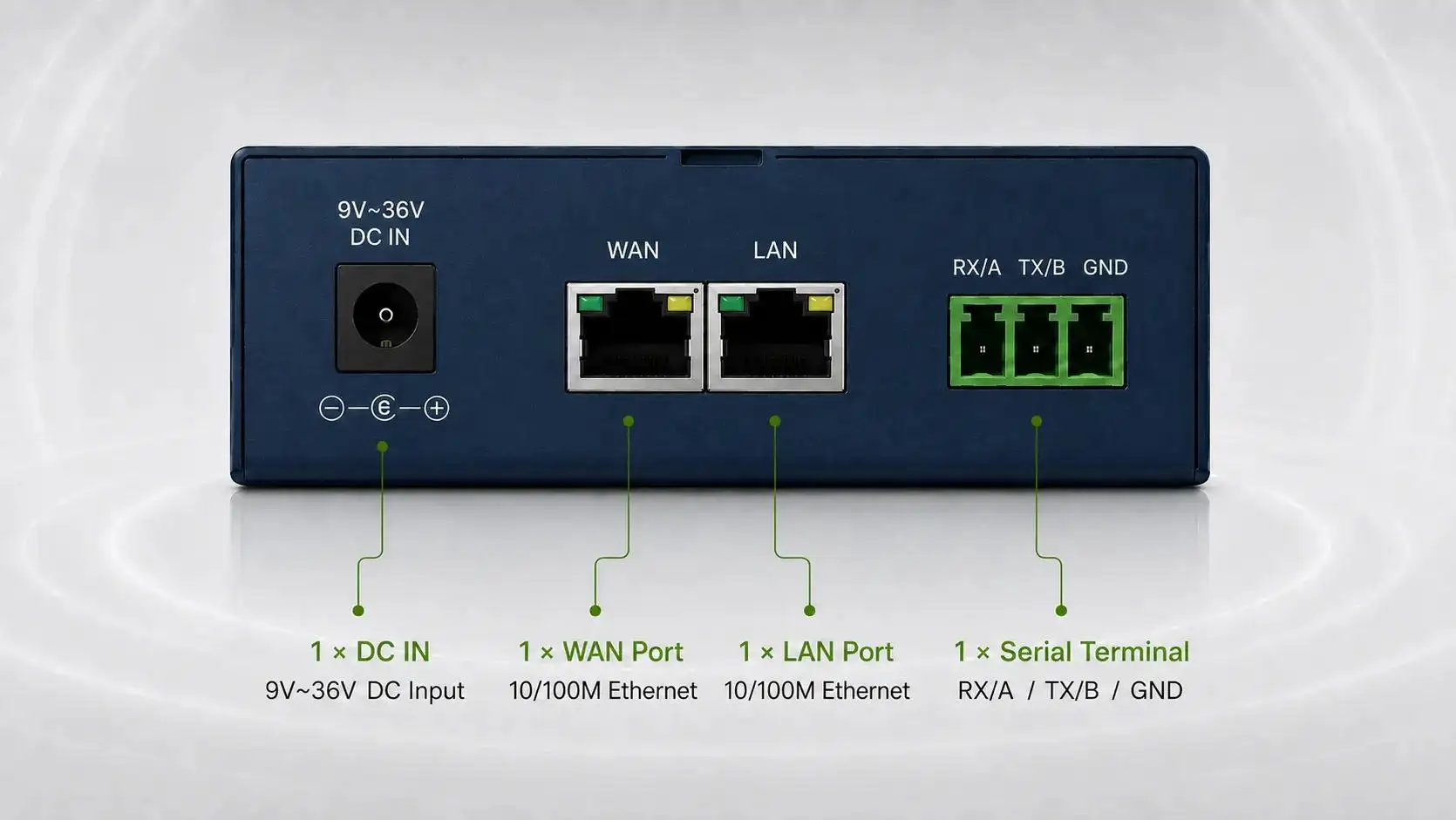
A: Absolutely. Industrial gateways have both RS-232 and RS-485 interfaces for legacy PLCs, meters, controllers and the like.
Q: With an industrial gateway, would I need any additional security products?
A: Typically not. Industrial gateways have firewalls, built-in, VPN with IPsec/OpenVPN, hardware encryption, and access control as a standard feature.
Q: What cellular options are available?
A: Most gateways provide 4G LTE, 5G, and NB-IoT. Several gateways have Dual SIM standby, and failover on cellular, Ethernet, and Wi-Fi is built-in.
Q: What is the maximum reduction in the amount of data transmitted, thanks to edge filtering?
A: In several telemetry applications, just sending the changes that go beyond the defined threshold can reduce the data sent by as much as 90%.