-1791966549842.webp)






Automated Guided Vehicles (AGVs) and Autonomous Mobile Robots (AMRs) are now widely used in smart warehouses, manufacturing lines, and intralogistics systems. These systems depend heavily on continuous wireless communication to transmit navigation commands, sensor data, and task updates in real time.
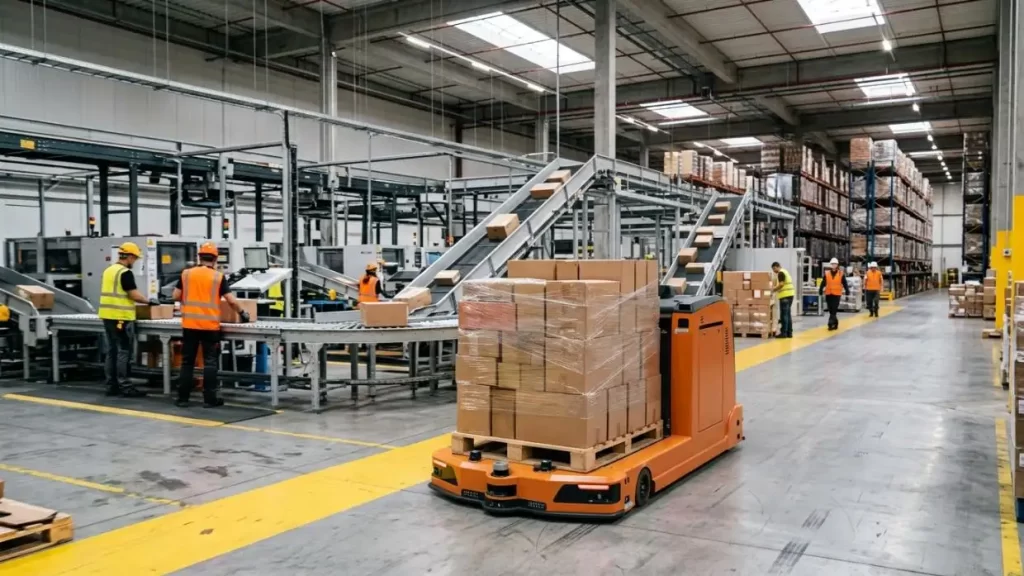
A major concern in these deployments is packet loss. Disruptions of any duration can cause diversions in routes as well as problems with stopping and task synchronization.
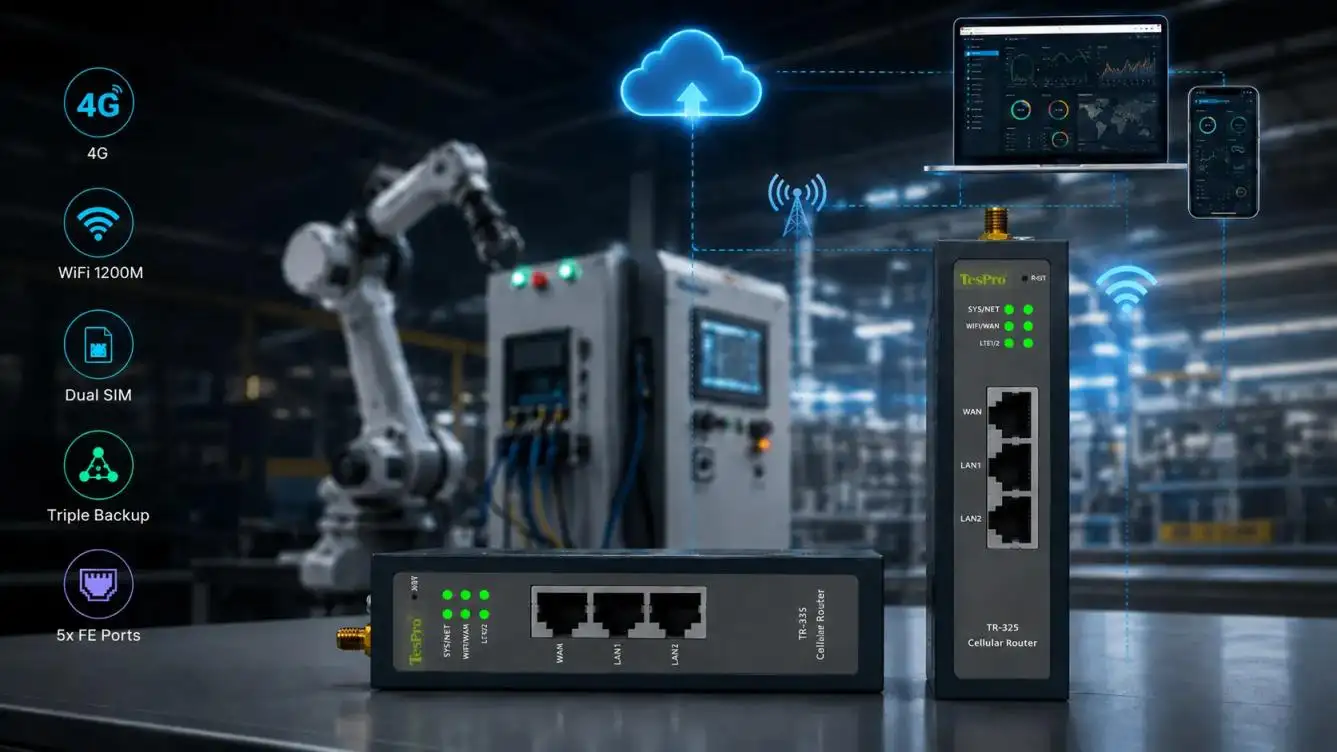
Wi-Fi is the main communication method at several locations. However, the addition of an Industrial 5G Cellular Router strengthens the resiliency of the communications infrastructure. This paper will analyze packet loss in Automated Guided Vehicles (AGVs) and the stabilizing factor of Industrial 5G Cellular Routing (with a specific focus on the Tespro TR-325 Industrial 5G Router).
1. Packet Loss in AGVs
Packet loss in AGV systems is common, but there are few specific instances that explain it. Rather, it is generally caused by a combination of several RF, networking and physical characteristics.
1.1. Wi-Fi Roaming Delay
•Access Point (AP) Handover Delay: Network design can influence a coverage gap of up to 50 – 300 ms.
•Authentication Interruption: During the AP roaming, data flow ceases during the Reassociate step as well as the security handshaking.
•Buffer Overflows: If buffers are managed poorly, packets can be dropped and queued during the roaming process.
1.2. Industrial RF Interference
•Multipath Fading: Machine and rack distortion creates a scattering of Wi-Fi.
•Channel Congestion: Limited Wi-Fi channels will increase the collision of devices.
•Electromagnetic Interference (EMI): Motors, drives and welding tools will introduce noise.
1.3. Linked Network Dependency
•Coverage Gaps: A poorly designed, single-carrier LTE or Wi-Fi system can create dead zones.
•Weak Failover System: A loss of network signal will result in a several-second-long connection-dependent failover.
•Inconsistent Delays: Public networks can experience increased latency and packet loss if heavily loaded.
1.4 Environmental and Power Instability
•Voltage variation: AGV battery systems can reset routers if operating at maximum load.
•Thermal stress: Continuous operation can elevate the temperature of sealed AGV compartments to over 60°C.
•Mechanical vibration: Intermittent disconnection can be due to a poor connection.
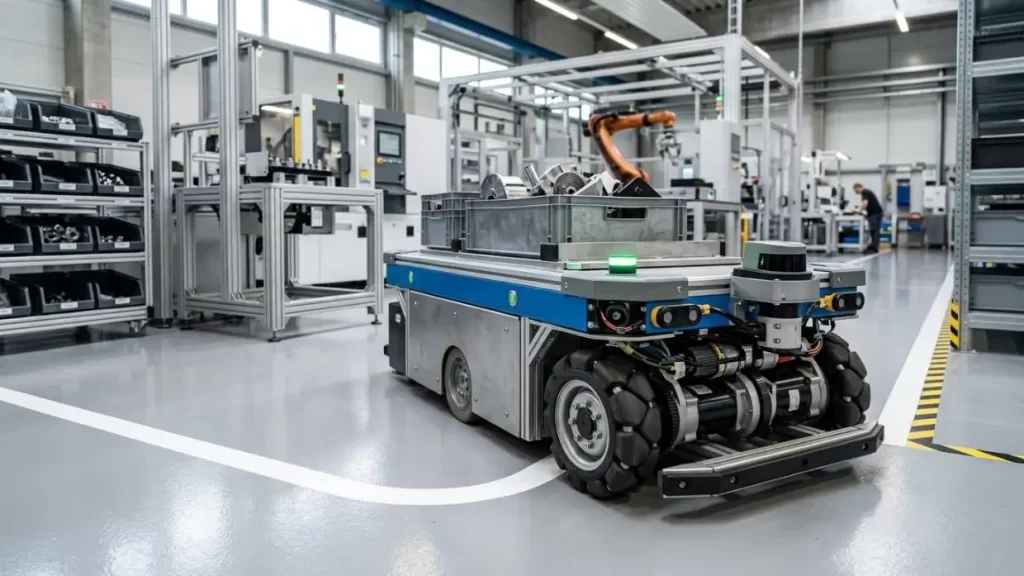
2. Contribution of Industrial 5G Cellular Routers to AGV Networks
Industrial 5G Cellular Routers are designed to maintain connectivity despite the disruption of mobility and the environment.
Traditional systems rely on a single communication channel. By contrast, Industrial 5G Cellular Routers apply various, concurrent modes of communication to minimize the chance of packet loss.
Elements include:
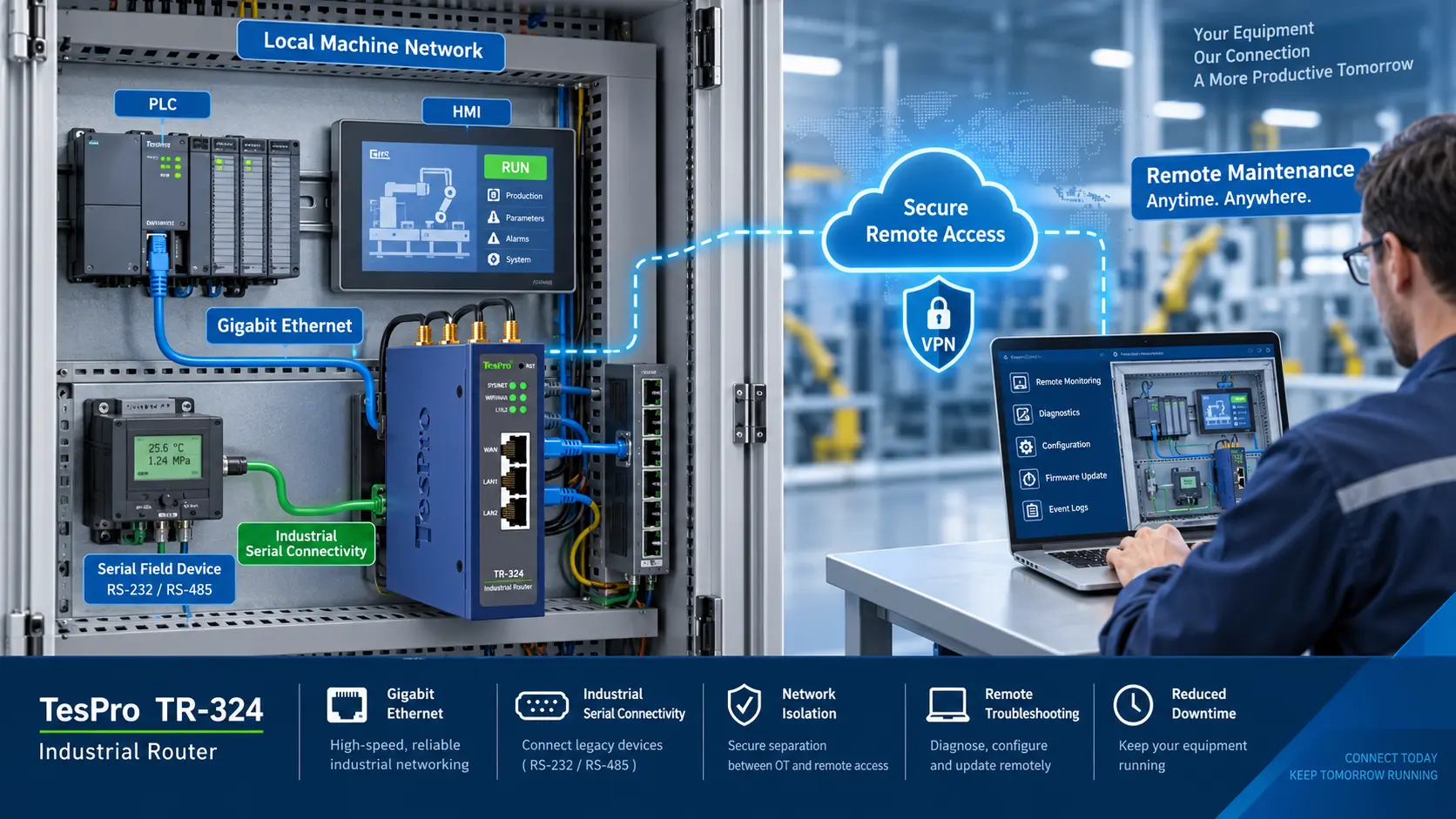
•Integrates 5G, LTE, Wi-Fi, and Ethernet interfaces.
•Gives the ability to switch networks while keeping a logical connection.
•Traffic is routed to a different connection should the current one's quality diminish.
•Allows connection to industrial controllers and sensors.
3. Tespro TR-325 Industrial 5G Router
Designed specifically for AGVs, robotics, and other mobile industrial IoT applications, the Tespro TR-325 Industrial 5G Router is highly suited for the demands of the mobile industrial environment, offering the type of robustness required, while assuming the presence of other challenging conditions, and not offering the typically expected consumer grade throughput.
Core Positioning
•Industrial-grade communication gateways for mobile equipment
•Multi-interface consolidation for automation systems
•Redundant networking for uninterrupted data flow
•Built for resilient factory and logistics environments
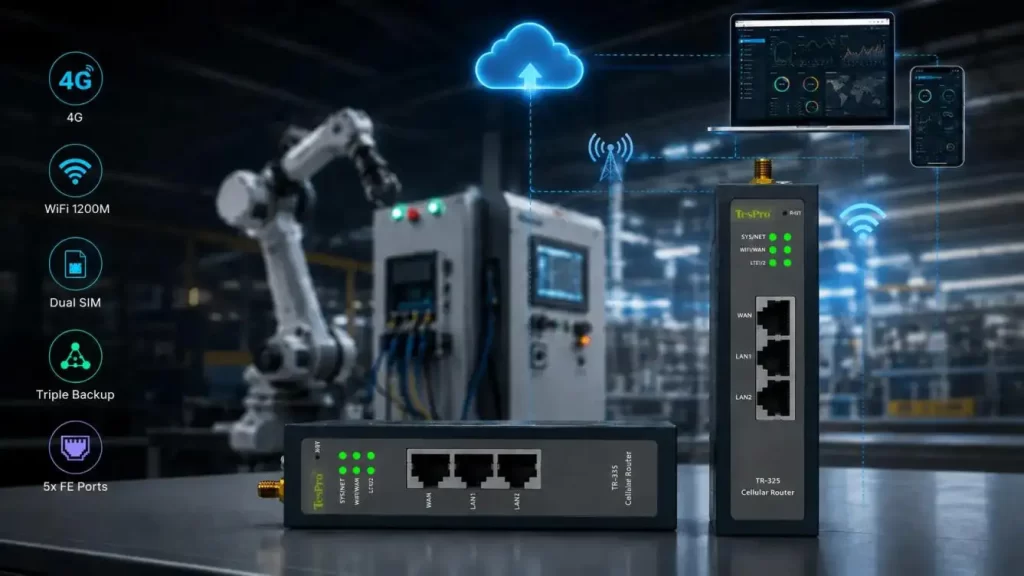
4. Key Technical Features and Capabilities about Reduction of Packet Loss
4.1 Multi-Network Redundancy Design
TR-325's redundancy features include the following:
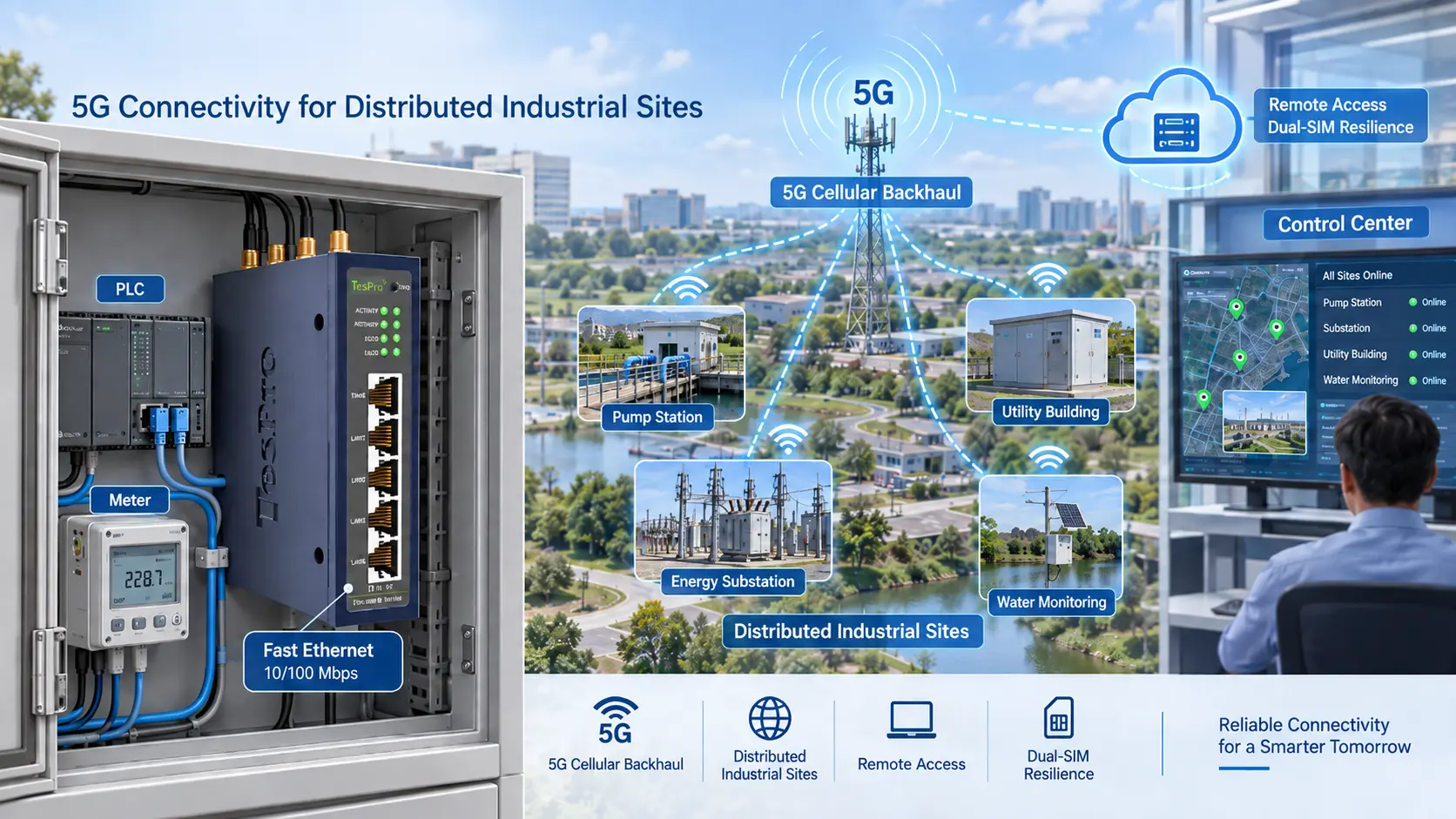
•Dual SIM Cards: Users can switch to a different carrier SIM Card when the signal is poor.
•5G + LTE: Useful in areas that are not fully 5G.
•Wi-Fi and Ethernet Redundancy: Provide a redundancy of networks.
•Adaptive Routing: Path selection based on the situation.
4.2 Integration of Industrial Interfaces
Connection of AGV Systems controllers and sensors cannot be hindered.
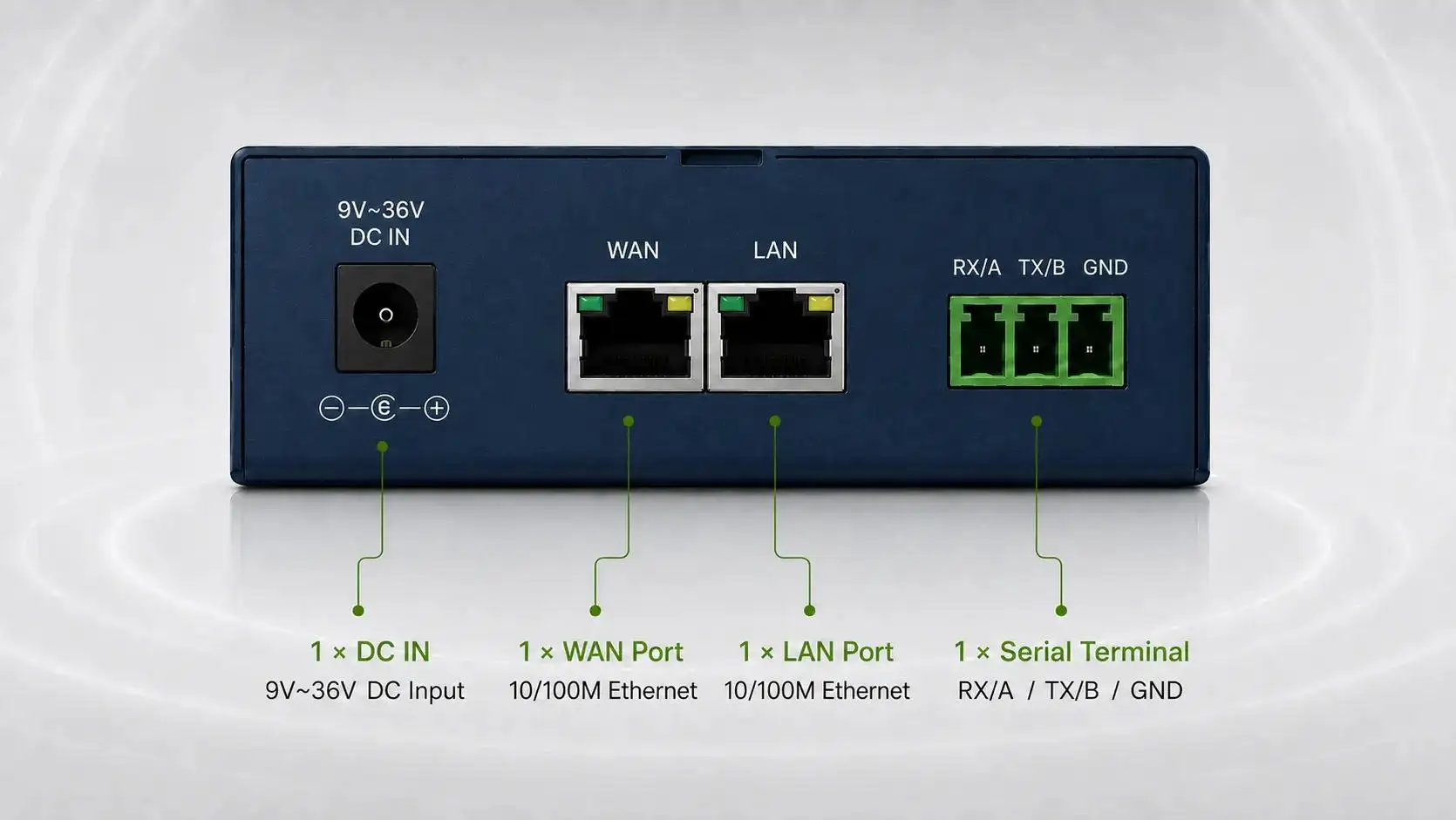
•Ports: RS485 (x2), RS232 (x1)
•Industrial Protocols: MODBUS RTU/TCP, OPC UA, BACnet, M-bus
•Utility Integration: Combination of energy and automation protocols.
4.3 Environmental and Power Stability
Power supply systems must support industrial communications.
•Power Input: 12-36V DC Power Supply of AGV systems.
•Power Consumption: Dec. < 400mA Typical.
•Operating Temp: -40 to 75C for sealed systems.
•Humidity: 5 to 95% Non-Condensing.
Reliable systems experience minimal outages and transmit an even lower amount of lost packets.
4.4 Compact Systems
Designs factor in the physical space of the AGV Systems.
•Dimensions: 116 x 134 x 34 mm.
•Flexible Design: DIN-rail mounting.
•External RF Design: Antenna SMA connectors.
•Room to Design: Modular Design.
5. Feature Mapping: AGV Requirements vs TR-325 Design
| AGV Communication Requirement | TR-325 Capability | Expected Impact on Packet Loss |
| Seamless mobility between zones | 5G + LTE support | Will lower packet loss when moving between base stations |
| Coverage uncertainty in large sites | Dual SIM redundancy | Will lower coverage gaps created by reliance on one operator |
| Power fluctuation in AGVs | 12–36V DC input, low power design | Avoids the disconnection due to restarting |
| Space-constrained installation | Compact industrial enclosure | Will improve flexibility for deployment without thermal concerns |
| Sensor and PLC integration | RS485 / RS232 + industrial protocols | Will avoid gateway conversion delays |
| Link instability | Multi-path failover (5G/Wi-Fi/Ethernet) | Will ensure connection during interference |
6. Deployment Considerations for AGV Systems
Stable system-level design, even with an Industrial 5G Cellular Router, must be considered.
6.1 Antenna Placement Strategy
•Separation distance: Main and diversity antennas are to be separated to minimize correlation loss.
•Metal clearance: Antennas are to be spaced from metal frames or enclosures.
•Vertical positioning: Antennas can be placed in a vertical arrangement for even distribution of multi-path signals.
6.2 Network Architecture Planning
•Private APN or VPDN: Isolation of AGV traffic from the public traffic domain is facilitated.
•5G slicing (if applicable): Guarantees the predictability of latency.
•Hybrid WiFi planning: Must be a secondary layer of the network.
6.3 Mobility Parameter Tuning
•Cell reselection thresholds: Defined by the speed of the AGVs.
•Handover optimization: Reduce the number of unnecessary handovers.
•Frequent firmware updates: Align the modem and routing logic with the demands of the carrier.
6.4 Field Validation Testing
•Route-oriented testing: Testing is done on the actual paths of the AGVs as opposed to testing in a fixed position.
•Packet loss testing: iPerf, ping and other packet loss testers and tools to monitor packet loss.
•Stress testing: Simulates failure to test the switching behavior and link recovery.
7. Industrial Design Value in Connectivity Stability
The resilience of the hardware in industrial design directly impacts the stability of the communication system.
In the case of the TR-325:
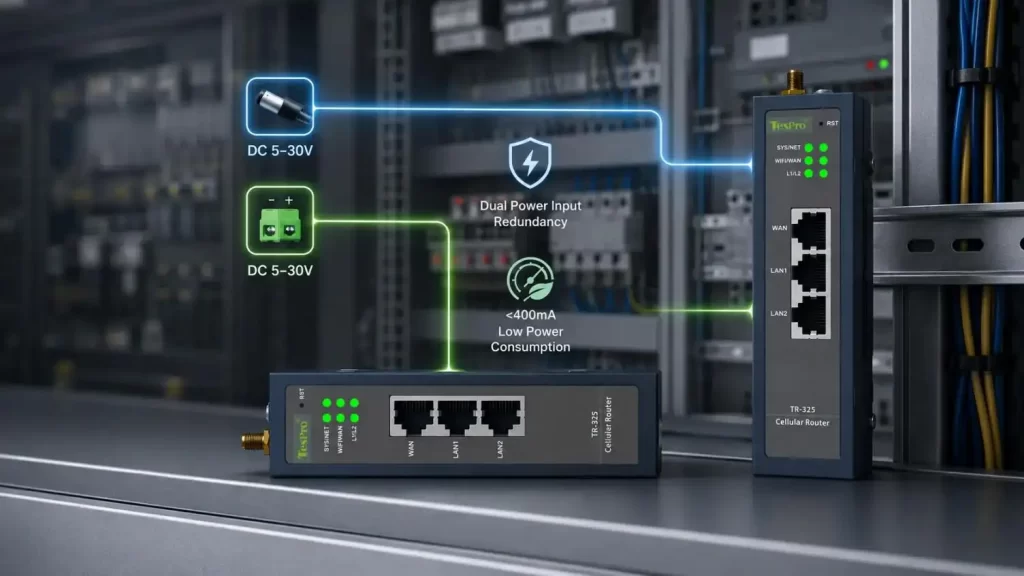
•Routing stability of the AGV could be maintained in an enclosed system with the housing given the wide operating temperature range.
•Designed with Dual power inputs to avoid single point power failure and low power draw for long duration of mobile operation.
•Vibration tolerant industrial housing designed to improve long-term reliability.
These characteristics help mitigate situations of disconnection, which are often noted as packet loss at the system level, even though they do not contribute to increased bandwidth.
Conclusion
At a system level packet loss noted in AGVs is caused by a combination of the interference from the wireless system, roaming behavior, the network design and hardware resilience.
An Industrial 5G Cellular Router enables a methodical system for assessing the effectiveness of major improvements to communication reliability designed to incorporate:
•5G mobility with rapid handover capabilities
•Multi-network redundancy with failover paths
•Industrial-grade power and environmental tolerances
•Direct inclusion of automation protocols
While an all-in-one solution for achieving zero packet loss under all conditions is unattainable, a system such as the Tespro TR-325 Industrial Router will assist in creating the stability required for the implementation of real-world industrial AGV and AMR systems.
FAQs
Q1. What causes the most AGV packet loss?
Mainly, the roaming delay, RF interference, and unstable network connectivity.
Q2. Will AGV packet loss be completely solved with 5G?
No, the packet loss will still remain but will be in a better condition with the right implementations.
Q3. Why is an Industrial 5G Cellular Router better than Wi-Fi only?
It effectively reduces reliance on access points and adds cellular redundancy.
Q4. Will dual SIM improve AGV communication stability?
Yes, it provides the possibility of automatic changes between carriers when the signal weakens.
Q5. What is redundancy in the context of loss of packets?
Redundancy presents alternative pathways when the primary pathway becomes unstable.