-1791966549842.webp)





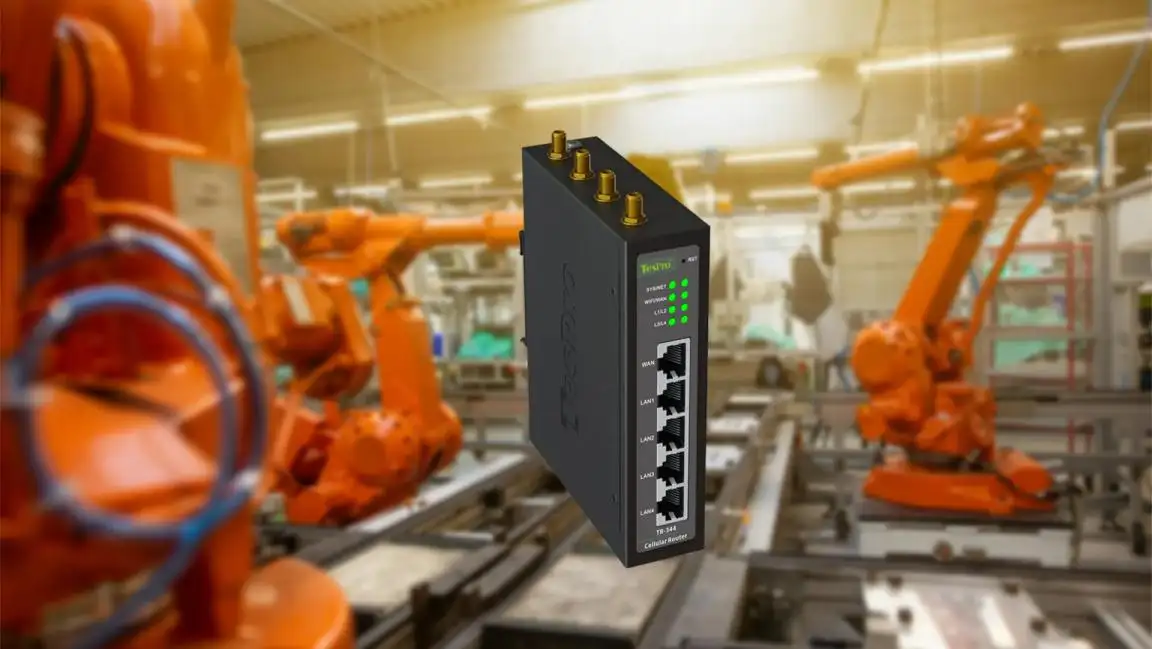

Cellular Router reliability in extreme environments is no longer a luxury but a specification prerequisite for industrial buyers in 2026. When a cellular router is deployed atop an oil drilling rig in North Dakota during winter or inside a desert solar farm in summer, standard commercial-grade electronics often fail within weeks. Tespro addresses this reality through intentional wide-temperature engineering, delivering industrial cellular routers rated from -40°C to 75°C without performance degradation.
Why Wide-Temperature Design Defines Modern Industrial Connectivity
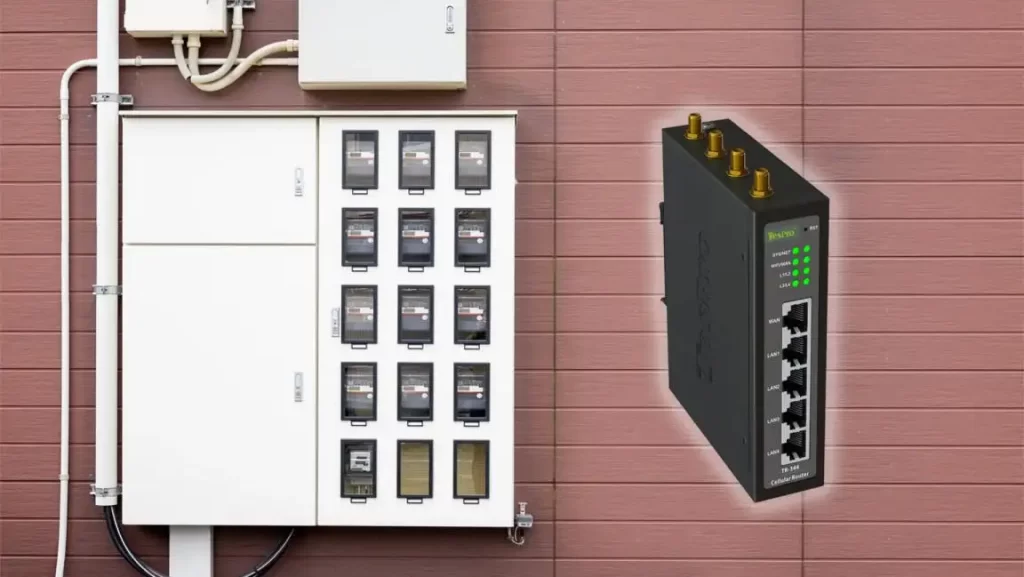
With the exception of the smart substation, the majority of vertical market integrations do not have conditioned environments for their automation equipment. Outdoor cabinets and roadside poles face the seasonal challenges that complicate standard networking equipment. A cellular router deployed in these environments needs to manage the timing of the clock and the transmission of the radio and the processing of packets across a range of 115°C.
Conventional routers are built to freeze and to overheat. On the other hand, Tespro industrial routers have industrial-grade capacitors, wide-temperature memory, and PCB layouts that are thermally optimized. Uptime directly impacts AMI/AMR systems, traffic management, and remote machine monitoring.
Tespro's design addresses the following temperature-related failures:
• Component derating: Resistors, regulators, and oscillators are selected with 20-30% margins beyond the -40°C to 75°C range.
• Thermal management without fans: There are no moving parts in a chassis-based cooling solution. Relative to other thermal management strategies, this approach yields the least device failure in dust-rich and vibrating environments.
• Low-temperature start-up: Special crystal oscillators and power management IC's allow the cellular router to have a usable and reliable start at -40°C.
How Tespro Validates Extreme-Temperature Performance
Thermal performance and design claims become engineering realities when substantiated. Therefore, Tespro components for each of their routers including industrial routers such as the TR-345, and routers such as the TR-224, must each undergo a series of chamber tests. Each test follows the outline below:
• Soaked for 24 hours at -40°C: units must be powered off, then power cycled while the time to boot and the time to obtain a connection to LTE/5G must be logged. Acceptance criteria: 100% success.
• Ramp up to +75°C: Continuous UDP traffic from the cell router runs the temperature at 5°C per minute. Packet loss must be less than 0.1%.
• Thermal Shock: This test runs 20 cycles of a dwell time of 30 minutes at -40°C and 30 minutes at +75°C. This is to simulate the case when a device is transported from the Arctic regions to be stored in the Sun heated enclosures.
Tespro has included these test results in their product datasheets which removes the need to include marketing claims related to "military-grade" certifications.
Dual-Power & Redundancy for Wide-Temp Hardware
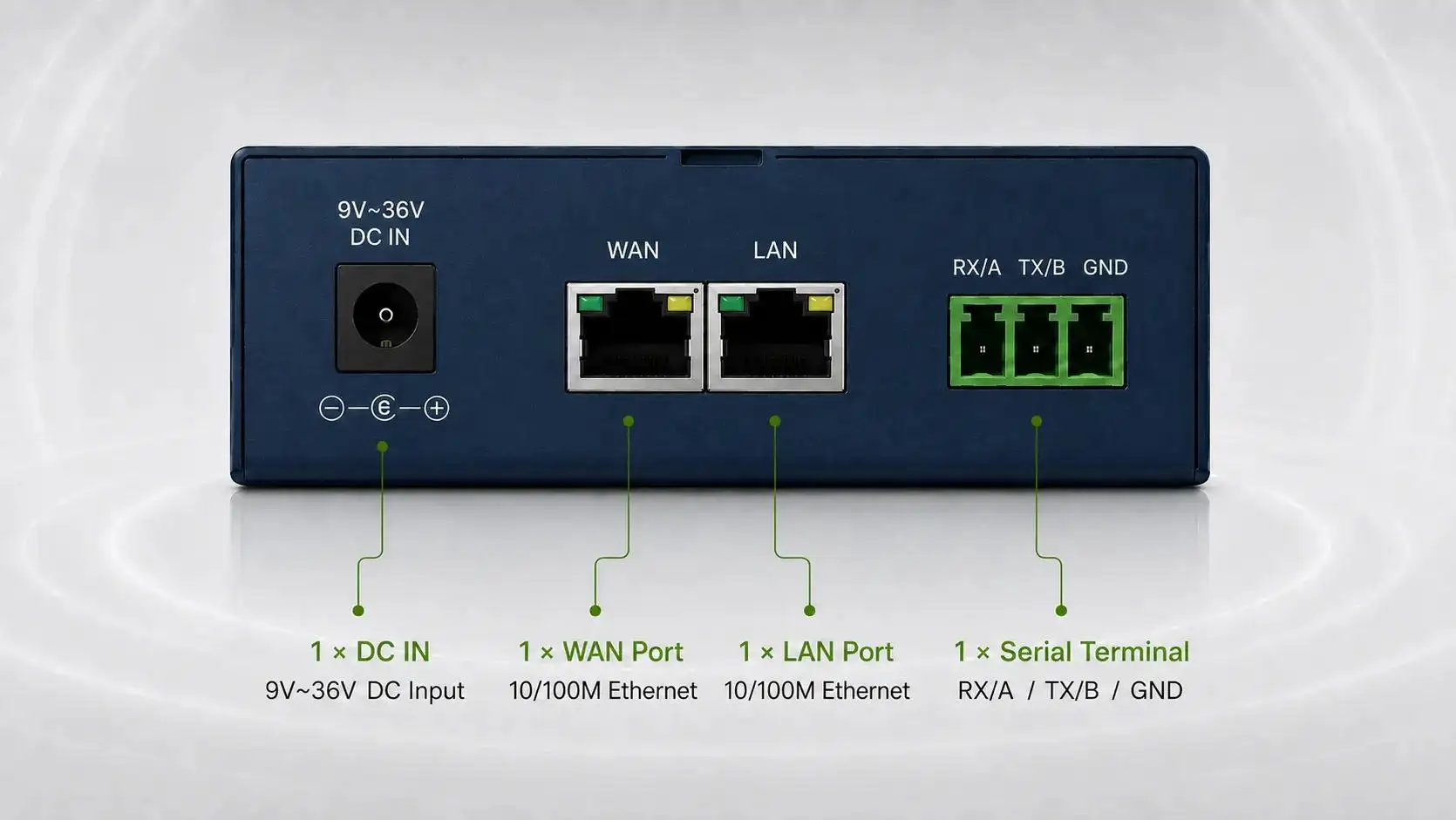
Wider Temperature ranges allow hardware to remain operational across a broader range of ambient temperatures, but does not ensure connectivity. Power flow in an Industry setting may have voltage sags, surges, or brownouts. These can lead to the resetting of a cell router. Tespro uses dual path and wide voltage power supply components (DC 5-30V input) via both DC jacks and terminal blocks. This design:
• HardwareAllows redundant feeds: Two independent power sources (mains + battery backup) connect simultaneously. Should one fail, the cellular router switches without any packet loss.
• HardwareAbsorbs unstable grid behavior: Wide input regulators tolerate ±20% of voltage, so these are common for mining or agricultural sites.
• HardwareReduces heat generation: Efficient switching converters produce less waste heat, easing thermal load inside enclosures at +75°C ambient.
For critical infrastructure, Tespro also offers triple network redundancy: wired Ethernet + WiFi + Cellular (4G/5G) with automatic failover. A cellular router in this configuration can lose two transport layers and still stay cloud connected for SCADA or remote telemetry.
Real World Applications for Cellular Routers Operating at -40°C to 75°C
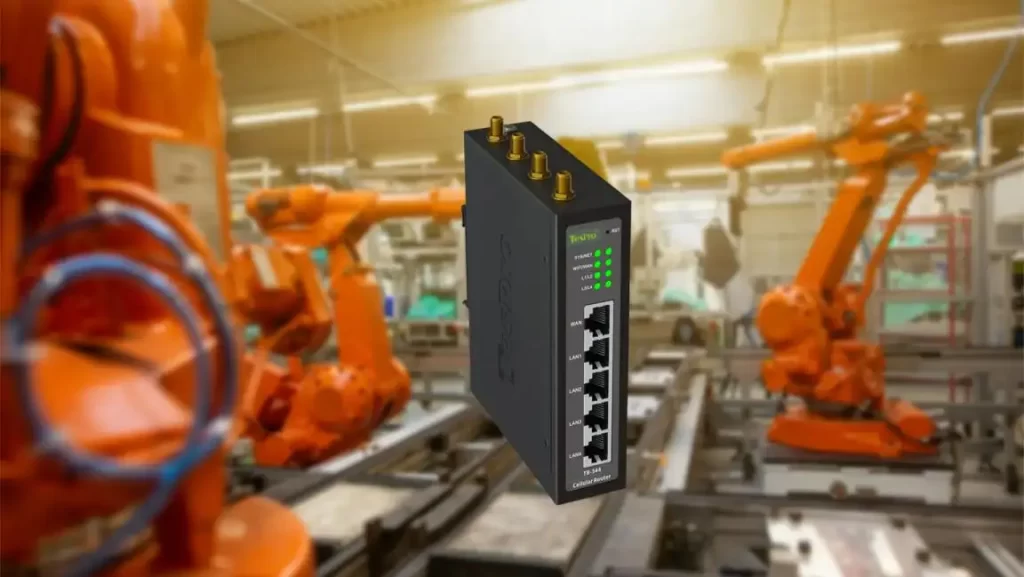
Temperature specifications are critical in multiple industry sectors. Tespro industrial routers are often used in the following cases:
• Cold chain logistics: -30°C warehouses have temperature sensors that need to be monitored. A cellular router that needs to transmit data from freezer aisle sensors cannot freeze its oscillator circuits.
• Solar and wind farms: Outdoor combiner boxes can be at +70°C. The router aggregates the data from the inverters and uses 5G to communicate with the central control.
• Railway trackside signaling: Equipment installed beside the tracks must endure the summer heat as well as the icing winter storm. The Tespro TR-244 works with unheated cabinets.
• Oil and gas wellheads: Remote extraction locations use solar energy combined with battery storage. Wide-temperature cellular routers are used to manage daily charge cycles and significant seasonal temperature changes.
In every case, the focus of the engineering design is the same. Performance must be predictable throughout the entire temperature range, and not just at room temperature.
Choosing Cellular Routers that Match Your Temperature Requirements
Tespro has a range of wide-temperature models, with different levels of ports, Ethernet speeds, and cellular generations. The following guide will help you choose for you use case:
• TR-224: -40°C to 75°C with 2x100Mbps LAN, RS485/RS232. Great for legacy Automatic Meter Reading retrofits and budget constrained projects. Dual-SIM in standby.
• TR-245: 5G LTE with 4x100Mbps LAN and dual serial ports. Ideal for smart factories with sensor networks needing high density and low latency.
• TR-345 (5G LTE, 4x1000Mbps LAN, dual RS485 + RS232): Terabit's speed for machine vision or remote gate video surveillance. Industrial-grade protection and wide voltage range included.
All models share the same wide-temperature certification, simplifying qualification for buyers who deploy across multiple climate zones.
Conclusion: Engineering Without Overpromise
A cellular router rated for -40°C to 75°C does not need hyperbole. It needs proper component selection, rigorous chamber testing, and complementary features like dual-power input and network redundancy. Tespro industrial routers deliver exactly that—no inflated claims, only measurable specifications that procurement engineers can verify. When your next project demands connectivity in a freezer, a furnace, or anywhere in between, start with the temperature datasheet. The right cellular router will work silently, without failure, for years.
For detailed specifications on the TR-224, TR-245, TR-345, and other wide-temperature models, visit Tespro industrial router series.
FAQ
Q: Is the -40°C to 75°C spec for all Tespro cellular router models?
A: Yes. Because the TR-224 and TR-345 series are all certified for extensive temperature spans, choosing a model for different climates overall just became easier.
Q: What is the highest temperature the router can operate at while being classified as ‘fanless'?
A: Yes. The heat dissipation capability is designed passively. The casing and the routing channel copper pours dissipate heat effectively at the rated maximum.
Q: Is there an effect on the cellular transmission speed at extreme temperature?
A: Not within the rated temperature range. The throughput remains stable from -40°C to 75°C. Beyond those extremes, the performance will be degraded, and the device is not specified for such use.
Q: What power input options do support wide-temperature operation?
A: DC 5-30V wide range input via either DC jack or terminal block. There is also a dual-power redundancy that is available where two independent sources can feed the same router.