-1791966549842.webp)





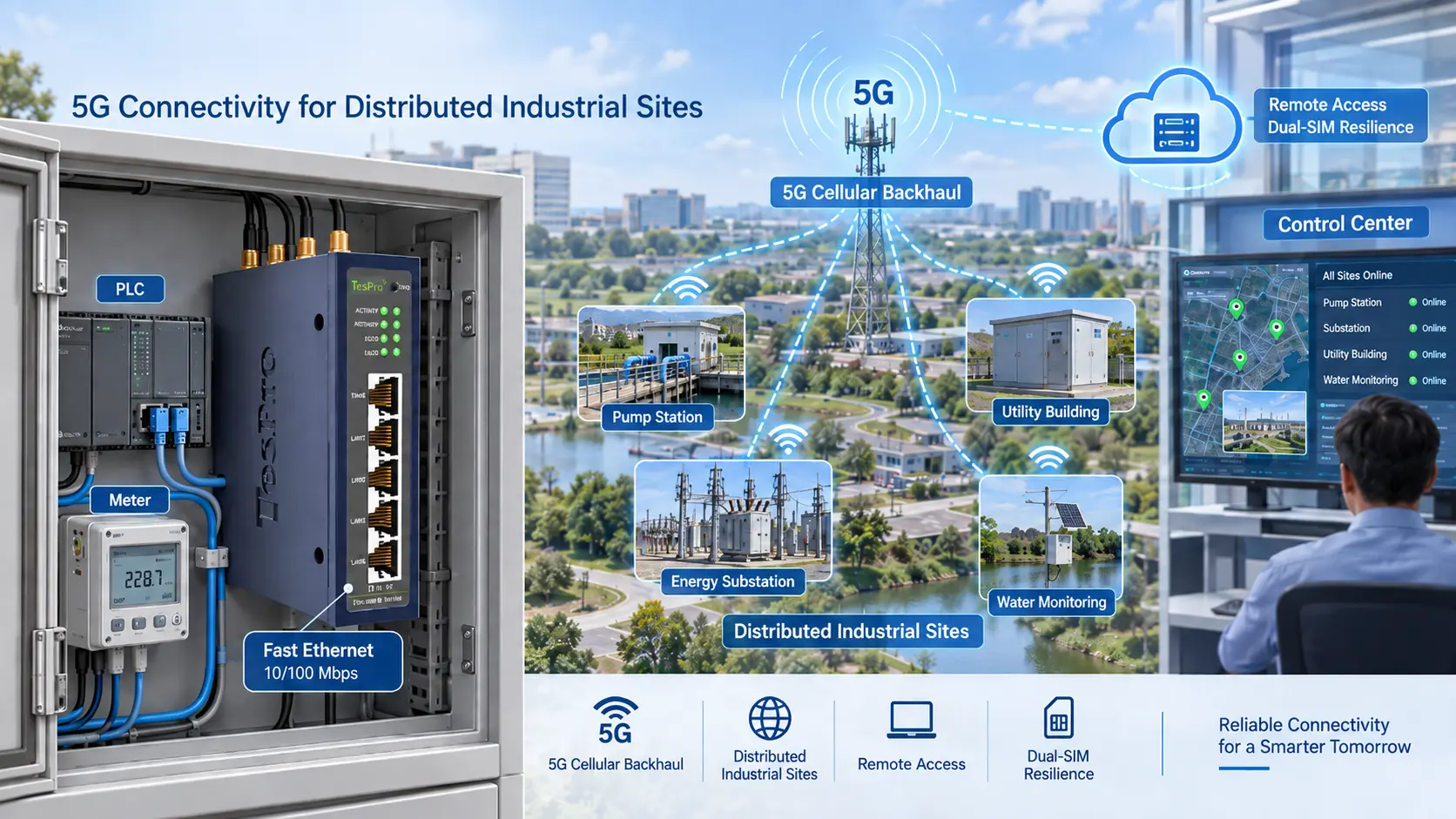
By 2026, the 4G/5G gateway will no longer be just a network connectivity component but更像 the central nervous system of critical smart city infrastructure. Urban environments will require faster response times and denser, more resilient networks. Today's connectivity layer must support the performance needed for applications like AI‑driven traffic robotics and real‑time utility monitoring. The IoT gateway device market is expected to grow from 14.75 billion USD in 2025 to 16.97 billion USD in 2026, a compound annual growth rate of 15 percent. The global 5G cellular IoT gateway market is projected to expand from 4.02 billion USD in 2025 to 30 billion USD by 2035, a compound annual growth rate of 22.3 percent. These data points show that latency and uptime are becoming key requirements alongside connectivity itself.
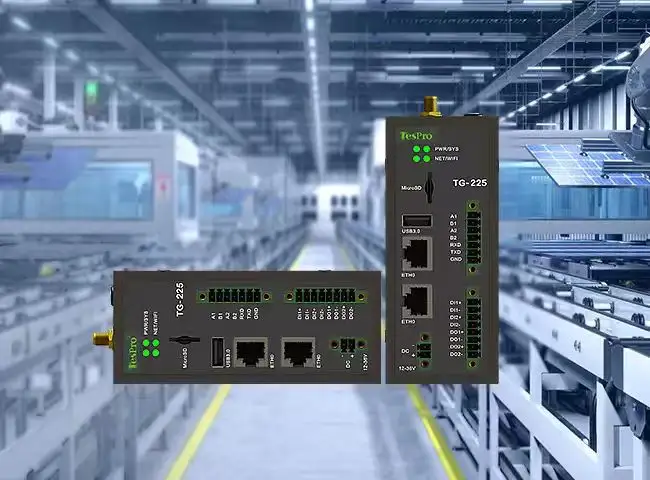
A true smart city, where traffic grids self‑optimize and utilities self‑balance, demands a density of up to one million devices per square kilometer. This scale far exceeds the 2,000 to 4,000 devices per square kilometer that 4G LTE networks can reliably support. Consequently, a purpose‑built 4G/5G gateway must handle massive machine‑type communication, ultra‑reliable low‑latency communication, and enhanced mobile broadband within a single compact chassis. For many smart city services, operational thresholds are measured in milliseconds. In a pilot vehicle‑to‑everything deployment, a 4G network with 100 ms delay caused a vehicle traveling at 80 km/h to cover an extra 2.2 meters before receiving an emergency warning, leaving no room for safe response. At the 2026 Jiangsu Football City League opening ceremony, a 5G‑A network with less than 10 ms latency enabled robot traffic police to perform zero‑error collaborative policing, managing dense pedestrian and vehicle flows at the sports venue. These are not laboratory demonstrations but live implementations that rely entirely on the underlying 4G/5G gateway to bridge edge devices, local processing nodes, and centralized platforms.
Can a 4G/5G gateway work with existing 4G LTE networks?
Yes. Tespro gateways are fully compatible with 4G LTE networks while maintaining backward compatibility with 5G, meaning no previously deployed hardware needs replacement. This design ensures a smooth transition from 4G to 5G, protecting capital investments.
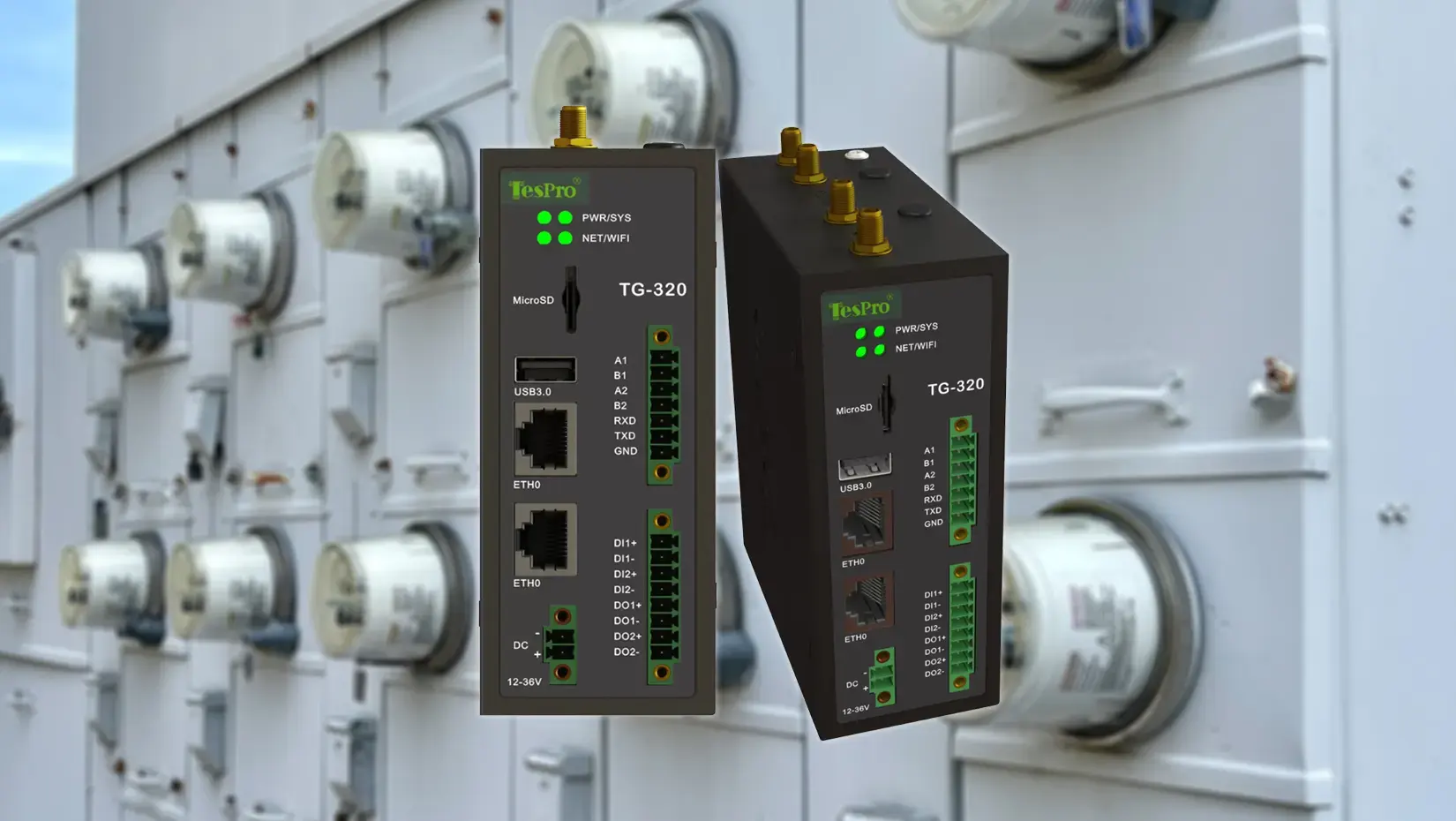
Similarly, connected traffic management and infrastructure monitoring require deterministic wireless communication across large campuses with hundreds or thousands of endpoints. An industrial 4G/5G gateway that supports URLLC capabilities ensures that alarm signals from environmental sensors, surveillance cameras, and utility meters are delivered reliably even under peak loads. Density comes with its own challenges. Thousands of IoT device transmissions risk latency and packet loss on best‑effort public networks. That is why by 2026 the industrial IoT sector will focus on private LTE and 5G networks. A modern 4G/5G gateway tackles density issues with built‑in features: prioritizing key data streams via hardware, supporting more connections without performance impact, resisting extreme temperatures, and showing C1D2, ATEX, and E‑Mark compliance.