-1791966549842.webp)





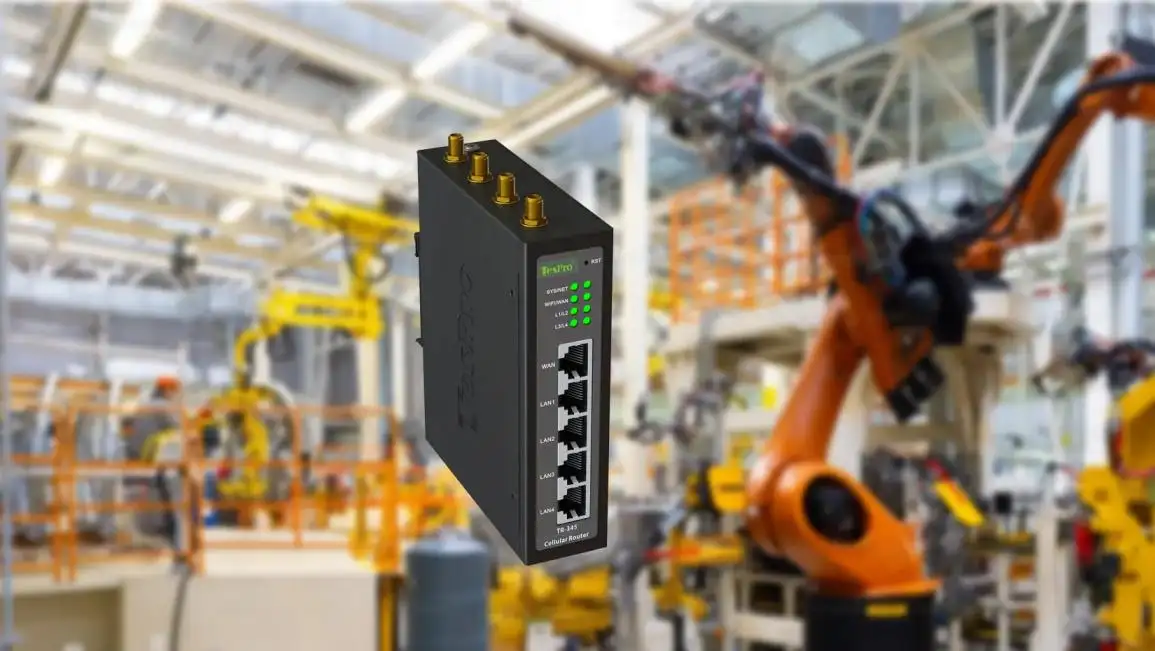

Unplanned downtime costs U.S. manufacturers between $5,000 and $50,000 per hour, with larger facilities losing up to $532,000 per hour. For the world's 500 largest firms, total operational technology (OT) downtime amounts to $1.4 trillion annually. Many of these failures originate from single points of connectivity. An industrial 4G LTE router with multi-link redundancy mitigates this risk because it can automatically switch between multiple routing paths.
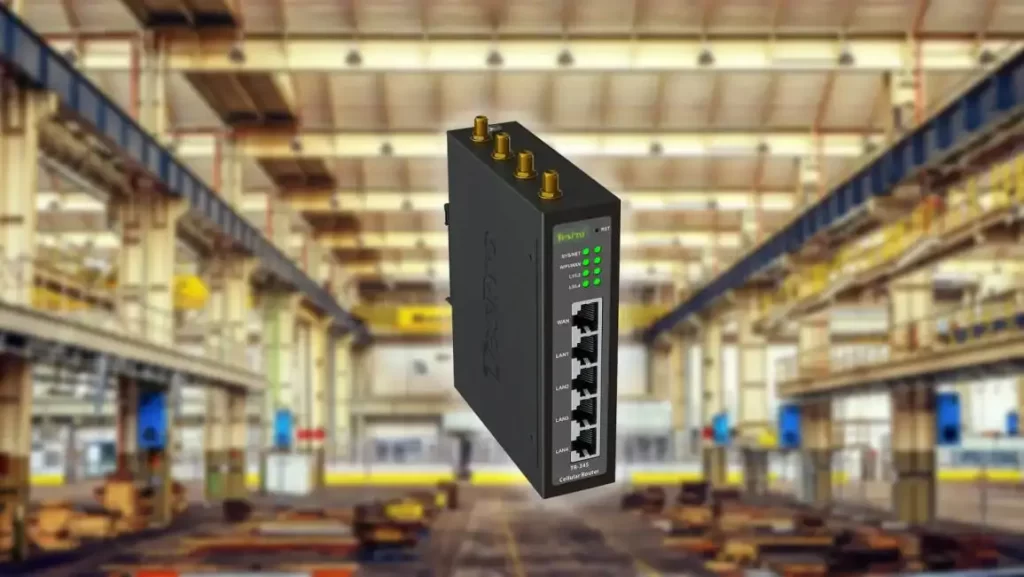
What is Multi-Link Redundancy?
Multi-link redundancy allows a router to get traffic to a destination using multiple different routes. Because the failure of a carrier or a routable network path may affect the operation of the organization concerned, it may say that this capability is crucial. Here's what it means.
•Dual SIM Failover: Two SIM cards of different mobile carriers are used in the router. This means that the router has the capability of automatically switching to another carrier. This feature is used when one of the networks is unreachable, or the signal is weak.
•Triple Link Backup: A router may provide Ethernet, Wi-Fi, and cellular links and simultaneously connect to all three paths. The router regularly checks the status of each link and will switch if necessary.
•Dual-Standby Power Inputs: Because of the redundant connectors that provide power, the router uses a wide range of voltage distribution, ensuring that a loss of power to a distributing connector will not interrupt the router's functionality.
•This approach is straightforward: if carriers and transport media are diversified, the probability of a failure across all paths becomes lesser than the probability of failure of any single path.
Modes of Configuration for Redundancy
Industrial routers with dual SIM redundancy offer two options of operation:
•Load Balancing: Both SIM cards handle data at the same time, splitting data across two separate carrier networks. This design is ideal for applications needing high bandwidth, like HD video surveillance, or for backhauling sensor data from field devices.
When deployed in remote locations, backhaul links use a Link Manager function, which means the backhaul link can change to cellular, Ethernet, or Wi-Fi. Changes are made automatically without the need to visit the site.
Why 4G LTE is the Most Feasible Technology for the Industrial Sector?
5G is the most talked-about technology these days, but look to 2026 and 4G LTE will still be the winner for industrial use cases. More than 60% of all industrial routers with LTE technology use 4G. A 4G LTE technology network is very mature and stable with many options.
As of now, no telecom operator in the USA has a 4G LTE “hard” shutdown policy. Industry experts expect LTE to completely disappear in the 2030s, with low-band LTE may still be available for M2M technologies. Organizations that are investing in 4G LTE technology are making the right decision as they will have a long-term technology solution.
Tespro's Industrial Routers: Redundancy Built for Real-World Environments
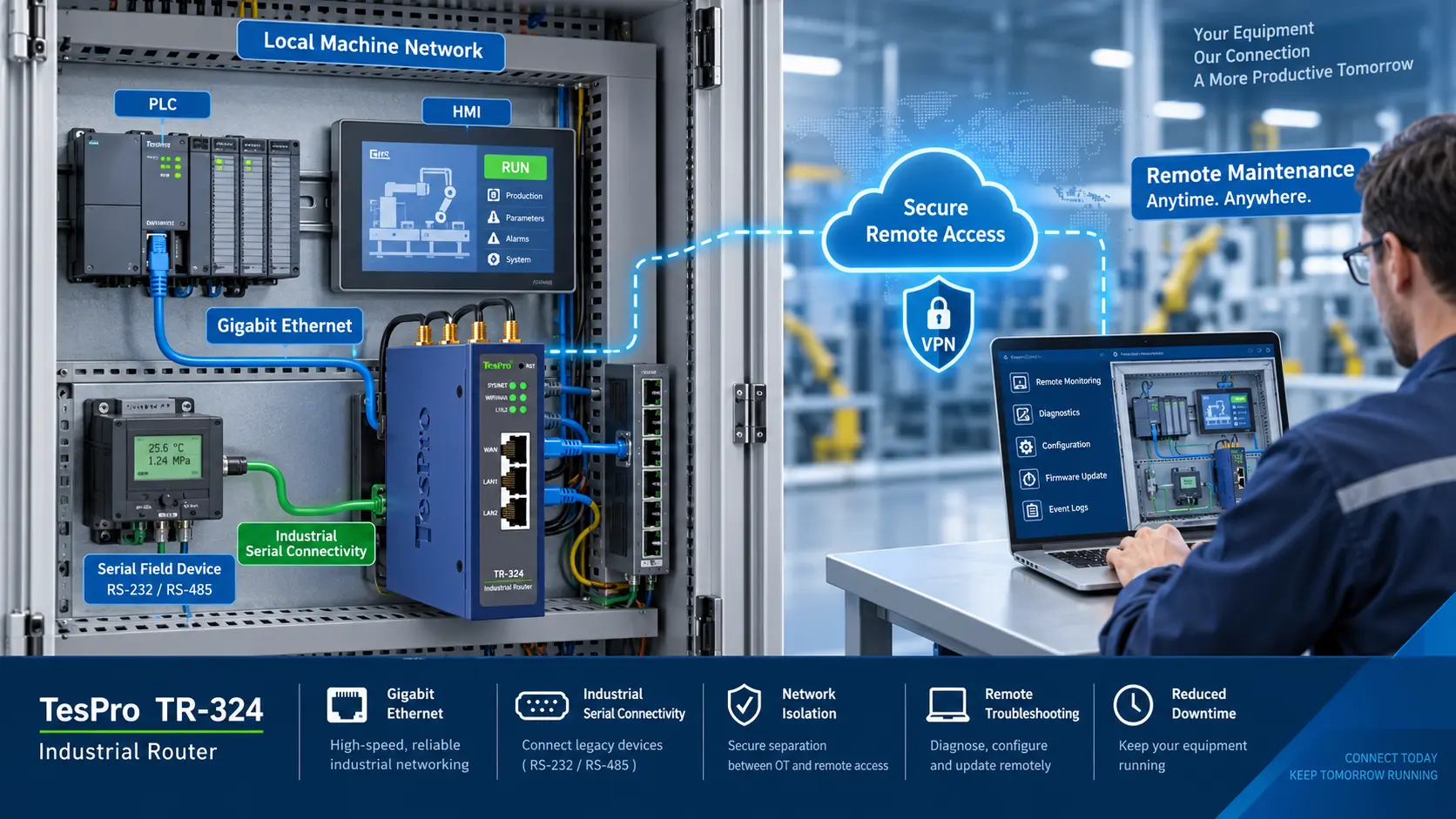
All Tespro's industrial routers are designed with multi-link redundancy built into the core architecture. Our LTE routers have built in 2G and 3G fallback to ensure use in regions with differing levels of technology maturity. Here are some of the impressive features of our routers:
•Dual SIM slots for active carrier failover between two mobile network operators. This design minimizes the risk of a field operations outage due to the failure of a single carrier.
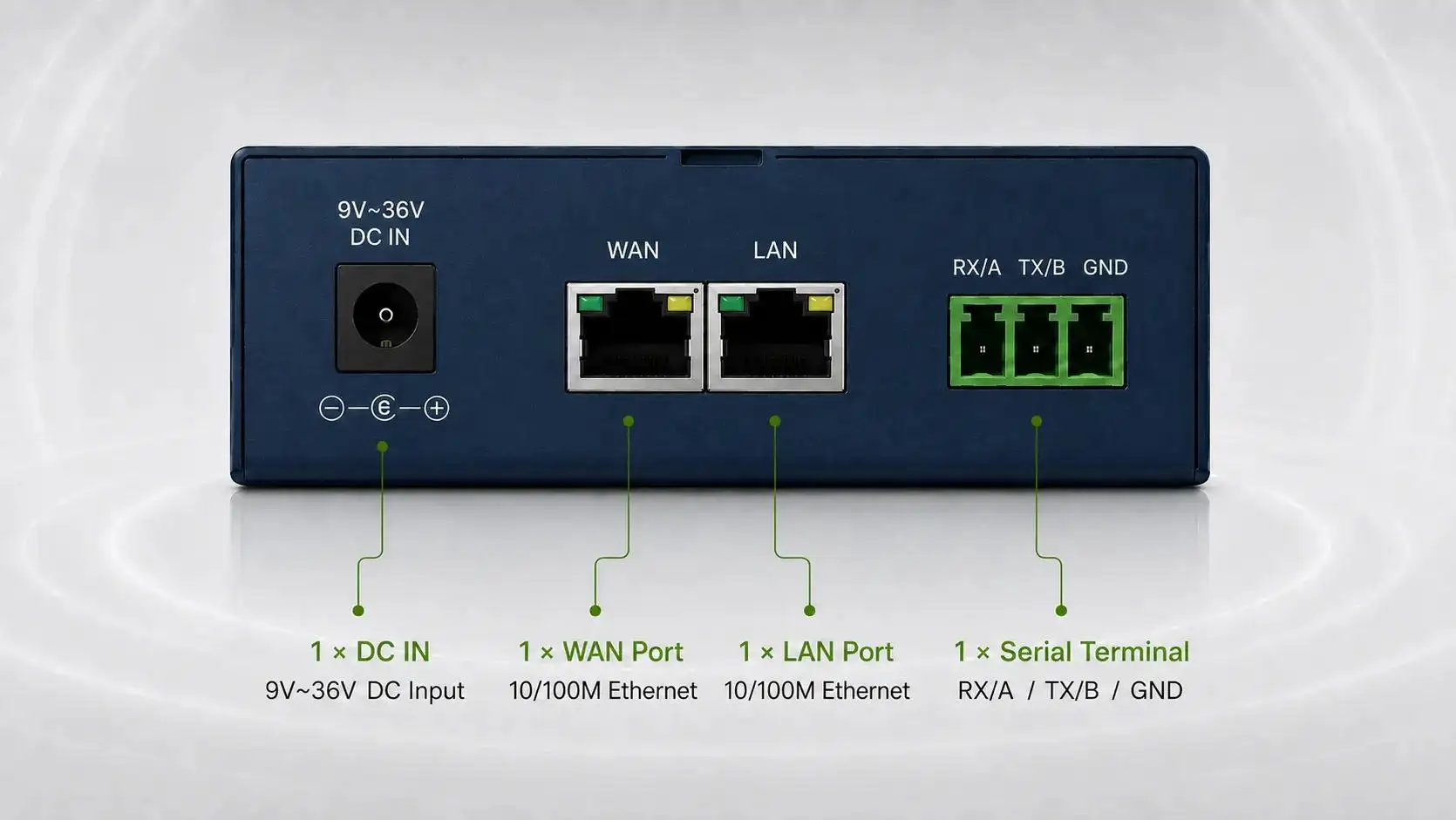
•Four auto-adaptive Ethernet ports, either at 100Mbps or 1000Mbps (either TR-224 or TR-324 series models), support wired backhaul and cellular support.
•RS232 and RS485 serial interfaces provide direct attachment to legacy industrial equipment such as PLCs, sensors, and metering devices.
•Operating range is allowed from -40°C to 75°C allowing use of router in outdoor cabinets, unventilated substations, and manufacturing facilities that do not have controlled active climate.
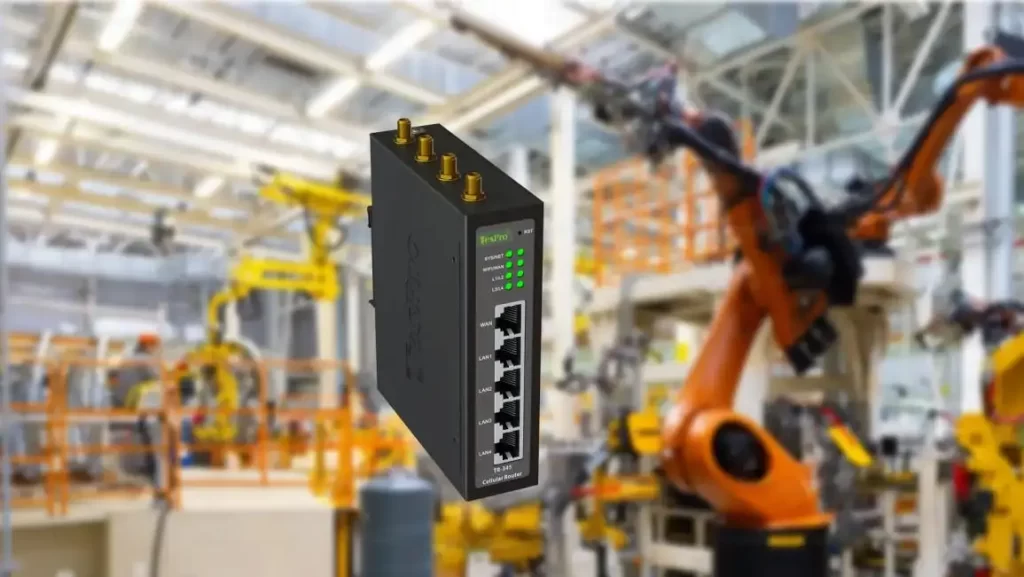
•The wide range DC 5–30V power input uses two different power supply methods; DC power jack or terminal block. This is under 400mA current draw, making it suitable for industrial settings with unstable power.
These routers support smart grid applications, smart city deployments, and campus networks. They provide end-to-end device to cloud connections for secure communications using VPN and tunneling protocols, with IPsec, OpenVPN, and others. The built-in watchdog timer resets the router on a software or connection hang, decreasing the need to do field servicing which is considered expensive.
Key Points
For a successful deployment of an industrial router 4G LTE with multi-link redundancy, some of the following are to be considered.
•Antenna Placement
Position either the router or external antennas where there are few obstructions. These should typically be at least 3 meters in elevation. If antennas are too close to a lot of other dense equipment, this can adversely affect signal.
•Firmware maintenance
Regularly update the router firmware to protect against vulnerabilities and to enhance performance as the device matures and the firmware matures.
•Carriers
Use SIM cards from a carrier known to have good coverage at the deployment site. Avoid using the same carrier long-term. Conduct testing to measure signal strength on different carriers and determine which provides the best failover performance.
•Security Configuration
Deactivate as many unnecessary remote access features as possible, and strengthen password controls. If confidentiality of your working data is your concern, ensure that radio and cellular network data services are encrypted.
If you look at the continual growth of the global market for industrial cellular routers, the market prediction is that the value in 2025-2026 will be between $1.08-1.19 Billion with a growth rate of 9.51% over the next 7 years. This growth is centered around dual SIMs and failover connectivity. As companies build the network infrastructures they require for mission-critical functions, the focus is beginning to target different tiers of redundant network availability.
The same is true for the fast-growing IIoT market. The forecast shows that cell M2M connections will reach $26.9 billion in 2026 with a CAGR of 25.3%. The expansion of available solutions illustrates changing expectations, with reliable connectivity being a core requirement of all industrial deployments.
Conclusion
Network failures from carrier outages, fiber cuts, or signal issues are inevitable. The key question is whether your network can recover without costly interruptions. An industrial router 4G LTE with multi-link redundancy—dual SIM failover, triple backup switching, and redundant power—turns single points of failure into a resilient backbone.
This architecture delivers measurable uptime gains for smart metering, automation, and remote monitoring. Visit www.tespro.com to learn more about Tespro's redundancy features.
Frequently Asked Questions
Q: What does multi-link redundancy mean?
A: That industrial router 4G LTE has the ability to switch between configurations of two SIM cards, wired Ethernet, and Wi-Fi. This occurs whenever one of the available connections fails.
Q: How does dual SIM failover minimize downtime?
A: This industrial router 4G LTE LTE maintain signal strength for two carrier SIM cards. Once one of the primary SIM card loses signal, the second SIM card activates in a matter of seconds in order to maintain system online.
Q: Is Tespro's 4G LTE able to operate for its entire functionality at the extremes of -40 degrees celsius to 75 degrees celsius?
A: Yes, Tespro ensures full operability for its 4G LTE industrial router at the extremes.
Q: Do I need to upgrade my existing systems?
A: Not with Tespro's current iteration of its 4G LTE industrial routers. They contain RS232 and RS485 ports, allowing older PLCs and older sensors and meters to connect right away.
Q: Where can I find more information on the redundancy models from Tespro?
A: You will be able to find data sheets, guides on how to deploy, and support services from the engineers all at the site www.tespro.com.