-1791966549842.webp)







Edge Computing With Industrial Cellular Router is becoming a practical priority for industrial projects that need reliable data flow, lower operational cost, and efficient long-term deployment. For buyers in utilities, smart campuses, transportation, and industrial automation, the focus is shifting beyond transmission speed toward lower power consumption, easier maintenance, and stronger resilience across distributed sites.
As more data is processed closer to the asset, the router becomes more than a cloud gateway. It becomes part of the edge infrastructure that supports uptime, responsiveness, and daily operational stability.
Why Power Efficiency Now Matters at the Edge
In industrial deployments, routers are rarely installed in ideal IT environments. More often, they operate inside roadside cabinets, plant-floor control boxes, utility enclosures, campus equipment rooms, or remote outdoor sites. These locations create a very different set of requirements from those of office networking.
At the edge, buyers often have to think about:
• Limited cabinet space
• Shared or unstable power conditions
• Thermal buildup inside enclosed installations
• Reduced tolerance for service interruptions
• The cost of sending technicians to remote sites
That is why energy-efficient design deserves more attention than it often receives. Lower power operation is not only about reducing electricity usage. It can also support thermal control, ease stress on field power systems, and improve the practicality of long-term deployment across large connected networks.
For overseas procurement teams, this turns power efficiency into a lifecycle issue rather than a minor specification point. In large-scale rollouts, small improvements in power performance can contribute to better operating economics over time.
A More Practical View of Router Value
In many industrial projects, networking decisions are still influenced by headline specifications such as 4G, 5G, or maximum throughput. Those metrics matter, but they do not always reflect how the device performs in real installations.
A more useful evaluation framework looks at whether the router can continue supporting edge operations when conditions are less predictable. That includes power quality, environmental stress, mixed network conditions, and the realities of long-term maintenance.
From that perspective, an industrial router should do more than connect devices. It should help make the overall edge system easier to deploy, easier to manage, and more stable over time.
Where Tespro Fits the Current Market Direction
Tespro's industrial router positioning is relevant because it speaks to this more practical side of industrial connectivity. Based on the product information provided, the company emphasizes not only cellular access, but also the broader features that buyers increasingly expect in edge networking infrastructure.
Tespro's highlights:
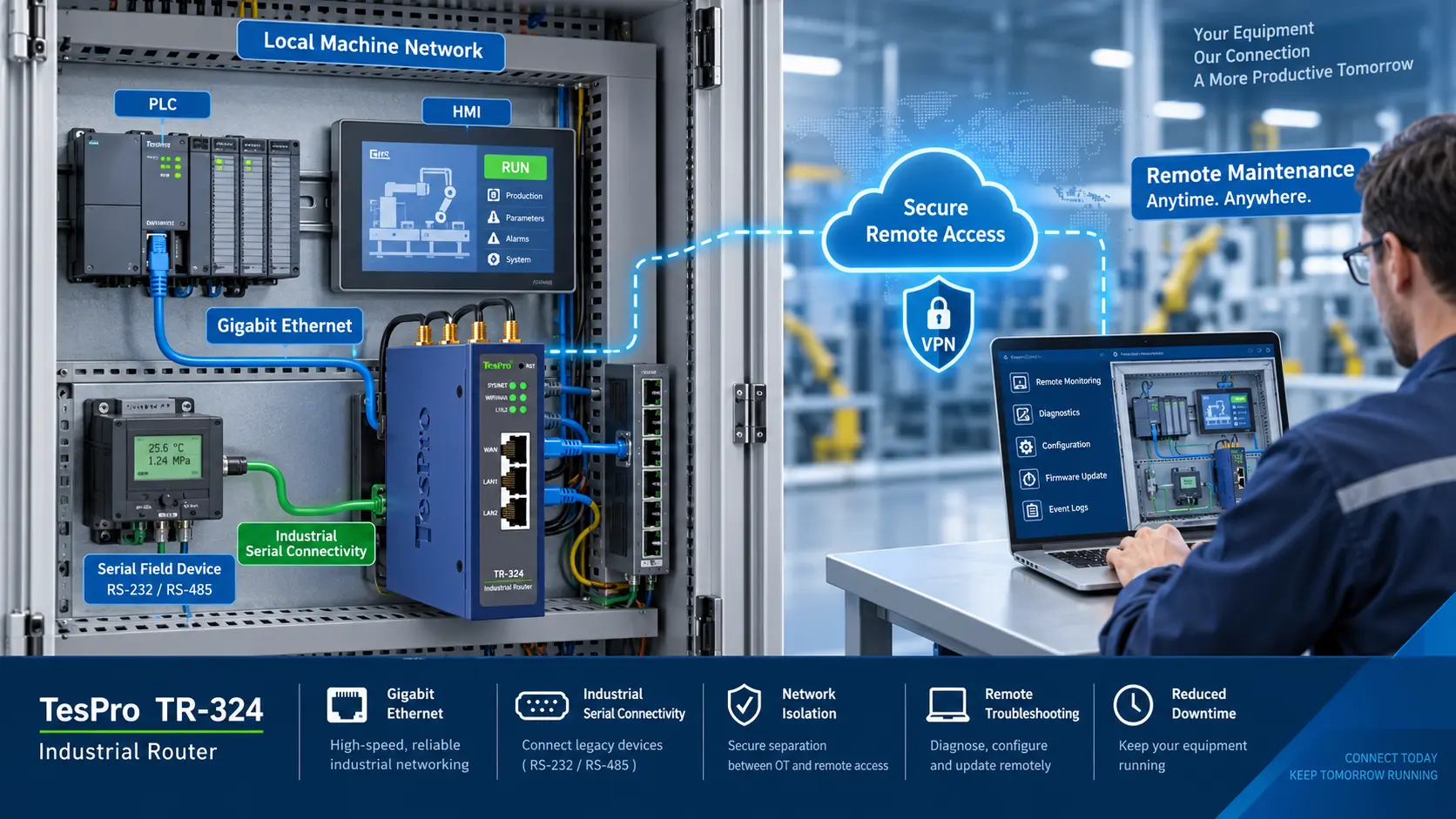
Support for 2G, 3G, 4G, and 5G networks: enables the router to adapt to different stages of network infrastructure development and helps buyers handle both current deployment needs and future upgrades more flexibly.
Field users can combine field devices, local systems, and higher-level network architectures in one deployment environment, thanks to Ethernet and Wi-Fi connections.
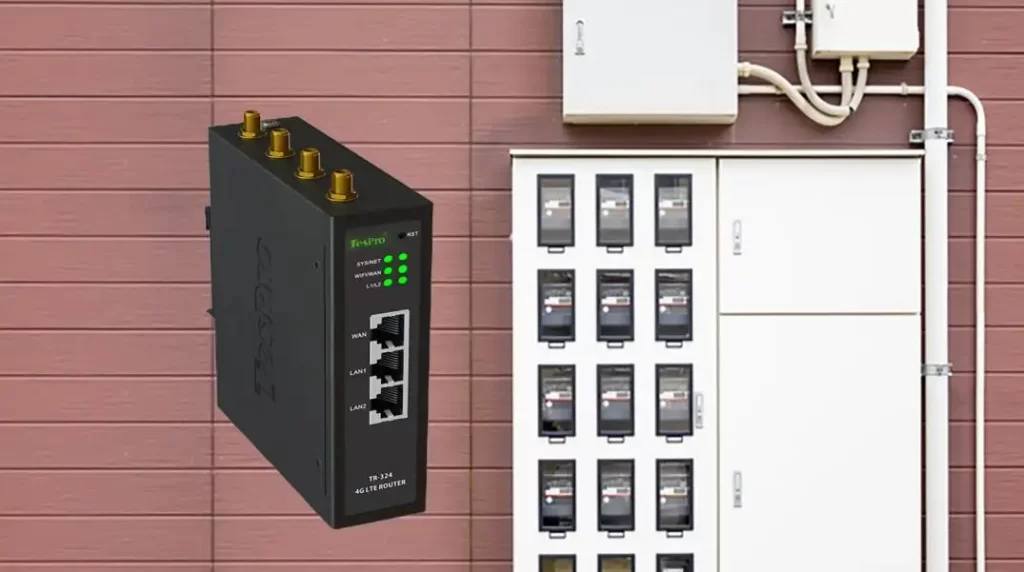
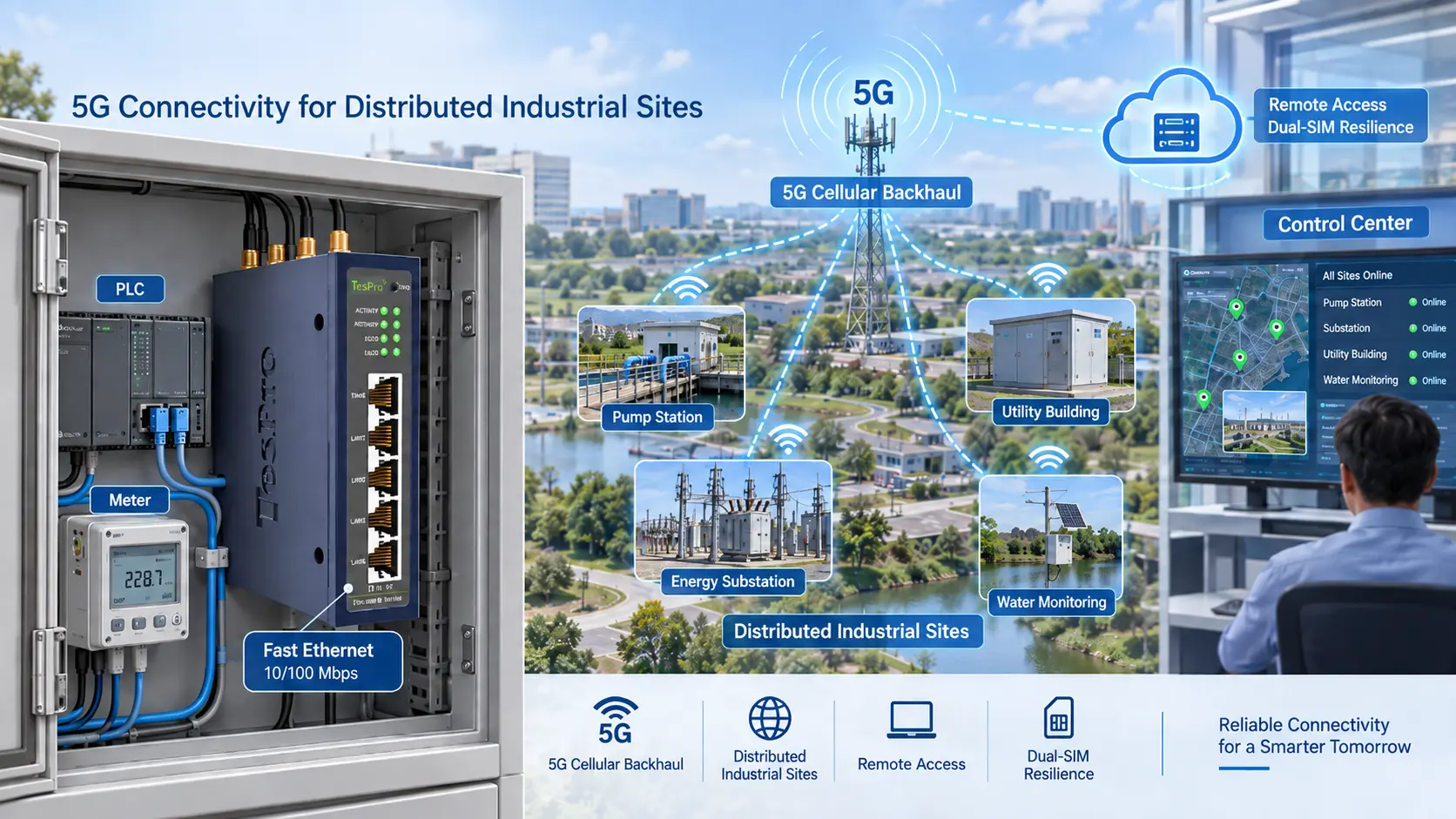
The router's Dual SIM design supports stronger communication continuity by providing an alternative carrier path when the primary network becomes unreliable.
Users can experience higher network reliability because traffic is automatically rerouted to a backup path when the primary path fails.
More secure remote communication between edge devices, sites, and central platforms is supported, making industrial data protection more achievable.
Cloud management platforms support helps operators monitor, configure, and manage large numbers of deployed routers more easily.
With Multi-protocol plug-and-play integration,deployment becomes more simplified by encouraging compatibility with a wider range of industrial devices, communication systems, and application environments.
This combination is important because industrial edge deployments rarely depend on a single clean connection path. In many applications, communication has to remain stable even when field conditions change, carrier quality fluctuates, or the site includes both new and legacy equipment.
That makes Tespro's value proposition more relevant to actual industrial deployment needs rather than purely performance-driven comparisons.
Low-Power Design Supports Deployment Quality
A low-power industrial cellular router should not be treated as a secondary feature. In edge projects, it often affects several parts of deployment quality at once.
First, lower power demand helps reduce pressure on field power systems. This is especially useful in remote or distributed sites where the router may share limited electrical capacity with controllers, sensors, gateways, and monitoring devices.
The second advantage is that less power means less heat generated, which is helpful especially for compact cabinets. Thermal management is part of reliability for industrial enclosures, where there is less room and ventilation options are limited. Therefore, power-efficient devices enhance operating stability in these scenarios.
As for the third advantage, power efficiency becomes more relevant with larger deployments. In a pilot project, the effect might seem negligible. However, in a larger rollout at multiple locations, lower draw reduces operating burden, which simplifies infrastructure planning.
This is why energy-efficient design fits naturally into the broader discussion around modern edge networks. It supports not only cost control, but also deployment practicality.
Why This Matters in Industrial Edge Networks
Industrial edge networks are typically built around a mix of assets rather than a single device type. A site may need to connect meters, sensors, PLCs, serial devices, remote gateways, and cloud-facing systems at the same time. As a result, the router becomes a key link between on-site assets and the broader digital infrastructure.
That role places several expectations on the device. To perform well in these environments, the router must provide reliable communication, practical deployment, protected remote access, and consistent long-term operation without driving up maintenance effort.
This is where Tespro's broader engineering strengths become more useful. Its combination of multi-network access, redundancy-oriented features, industrial interfaces, and remote management capability makes it more suitable for edge deployments that require more than basic wireless access.
Typical application scenarios may include:
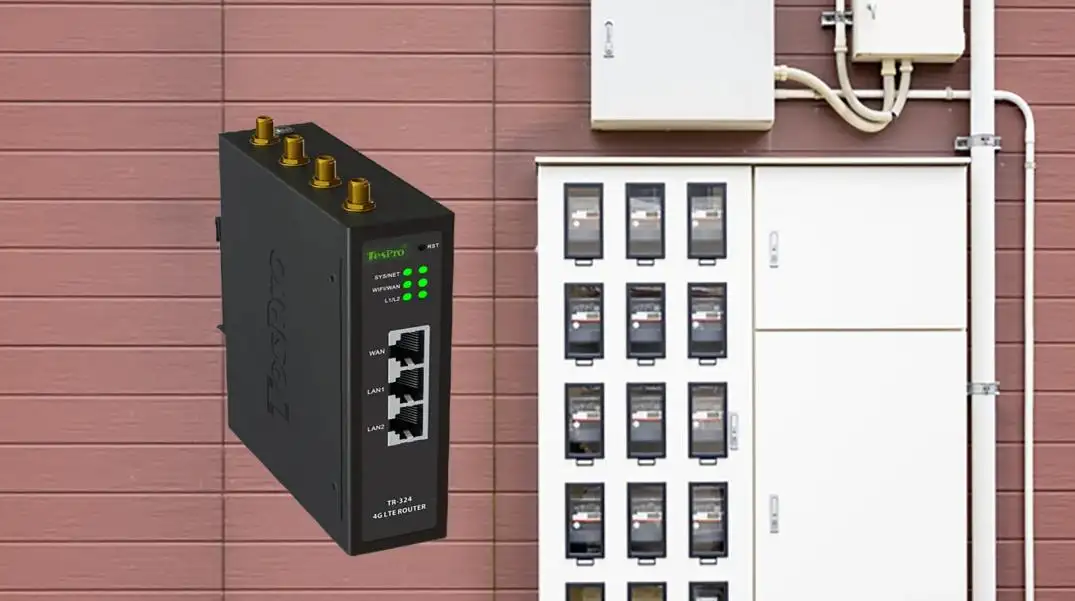
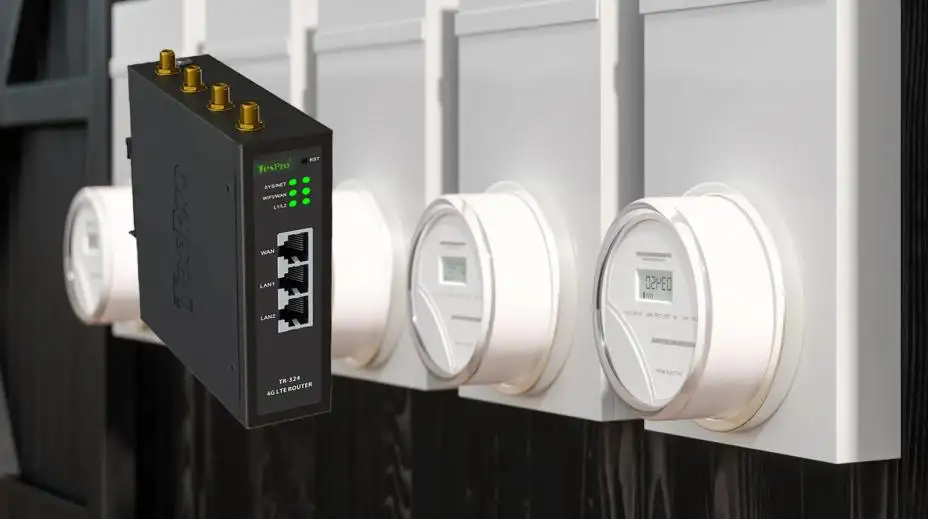
• AMI and AMR communication networks
• Smart utility infrastructure
• Smart campus systems
• Industrial automation environments
• Remote monitoring projects
In these types of projects, power efficiency becomes part of a larger requirement for stable and scalable infrastructure.
What Buyers Should Evaluate More Carefully
For overseas buyers, the better question is not simply whether the router supports 4G or 5G. It is whether the design supports long-term operational value at the edge.
A more useful evaluation checklist includes the following:
• Low-power operation for continuous field use
• Support for cellular, Ethernet, and Wi-Fi connectivity
• Dual SIM and failover capability for higher uptime
• Cloud-based remote management
• Wide voltage adaptability
• Reliable operation in demanding environments
• Secure communication for remote industrial access
• Compatibility with existing edge and IoT systems
This kind of checklist is more aligned with how industrial networks are actually built and maintained. It also helps buyers compare suppliers based on deployment value rather than on isolated specifications.
Tespro Industrial Cellular Router: Built for Global Edge Deployments
For overseas procurement teams, geographic adaptability is as critical as technical performance. Tespro’s industrial cellular router supports wide frequency band coverage (2G/3G/4G/5G) and operates reliably across different regional network infrastructures. Its low-power design and rugged housing make it suitable for extreme climates and unstable power environments—common in remote sites from North American oil fields to Asian smart agriculture projects. By combining edge computing readiness with geo-optimized connectivity, Tespro helps buyers reduce deployment friction and achieve consistent performance wherever the edge lives.
The Direction of the Market Is Clear
As industrial systems become more distributed and more data is processed closer to the source, edge networking hardware has to meet a broader set of expectations. More buyers now look for devices that combine responsiveness, easier maintenance, secure data handling, and improved day-to-day efficiency.
That is why low-power design should be understood as part of a wider infrastructure trend. It is not an isolated technical feature. It is part of building edge networks that are more practical to deploy and easier to sustain.
For manufacturers, that means product design has to keep pace with changing customer priorities. For buyers, it means procurement decisions should reflect long-term deployment realities rather than short-term specification comparisons.
Final Thoughts
Tespro's technical direction aligns well with what many industrial buyers now expect from edge networking hardware. The company's positioning is not only about connecting assets to a network. More importantly, it reflects a move toward edge infrastructure that is more resilient, more manageable, and more efficient in daily operation.
Under the theme of Energy-Efficient Design For Industrial Edge Networks, the strongest message is straightforward. An industrial low-power cellular router saves more than just energy. It also supports ease of deployment, reduces ongoing operational strain, and enhances sustainable usability for industrial edge computing scenarios.
For buying teams targeting industrial IoT and edge use cases, this makes Tespro a pertinent choice
in a changing marketplace that prioritizes operational effectiveness, reliability and lifecycle values over top-line metrics.
FAQ
1. What Is Edge Computing With Industrial Cellular Router?
Edge Computing With Industrial Cellular Router refers to processing, transmitting, and managing industrial data closer to the field device by using a cellular router as part of the edge network. Instead of acting only as a connection tool, the router also supports faster response, more stable communication, and easier coordination between local assets and cloud platforms.
2. Why Is Low-Power Design Important In Industrial Edge Networks?
Low-power design matters because industrial routers are often deployed in cabinets, enclosures, roadside boxes, and remote sites where power resources may be limited or unstable. Lower power consumption can reduce heat buildup, ease the load on field power systems, and support more practical long-term deployment across distributed industrial networks.
3. How Does An Industrial Cellular Router Support Edge Computing?
An industrial cellular router supports edge computing by linking field devices, local control systems, and remote platforms in one communication framework. With cellular, Ethernet, and Wi-Fi connectivity, it helps move data efficiently between edge assets and higher-level systems while maintaining operational continuity.
4. What Makes Energy Efficiency More Valuable In Large Industrial Deployments?
In a single-site project, lower power consumption may seem like a small advantage. In multi-site deployments, however, the effect becomes more meaningful. Energy-efficient routers can help reduce operating cost, simplify infrastructure planning, lower thermal pressure inside cabinets, and improve deployment consistency across a larger connected network.
5. Why Is Dual SIM Important In Industrial Edge Applications?
Dual SIM capability improves communication resilience. If the primary carrier connection becomes weak or unavailable, the router can switch to an alternative network path. This helps reduce downtime and makes the edge network more reliable in remote, mobile, or unstable communication environments.