-1791966549842.webp)







Data Transmission Unit (DTU) projects look relatively simple, but with utility and metering deployments, complexity can arise due to the different field devices, protocols, and network environments at each location. For buyers, the main challenge is not only data transfer, but also integrating mixed meter brands, maintaining stable communication in different regions, and avoiding extra development during project expansion.
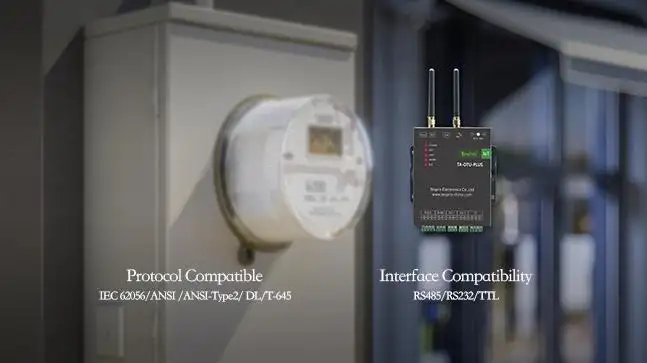
That is why the real value of a modern Data Transmission Unit (DTU) is not just wireless connectivity, but multi-protocol plug and play, which helps reduce integration risk across electricity, water, gas, and heat metering systems.
The Real Bottleneck in Metering Projects
In many automatic meter reading projects, the communication link is only part of the problem. The harder issue appears when one site includes different meter brands, different optical or interface requirements, and different protocol expectations.
A project may start with one meter type, then expand to another supplier, another country, or another network environment. At that point, buyers face three practical questions:
• Will the device work with the installed meter base without custom redevelopment?
• Can it adapt to local network conditions and SIM choices?
• Can the operator manage large numbers of devices without turning maintenance into a field-heavy process?
These are not minor technical details. The value of communication hardware in smart utility environments lies in its integration with the framework of digital operations, as opposed to its stand-alone performance.
Why Plug-And-Play Compatibility Matters More Than Ever
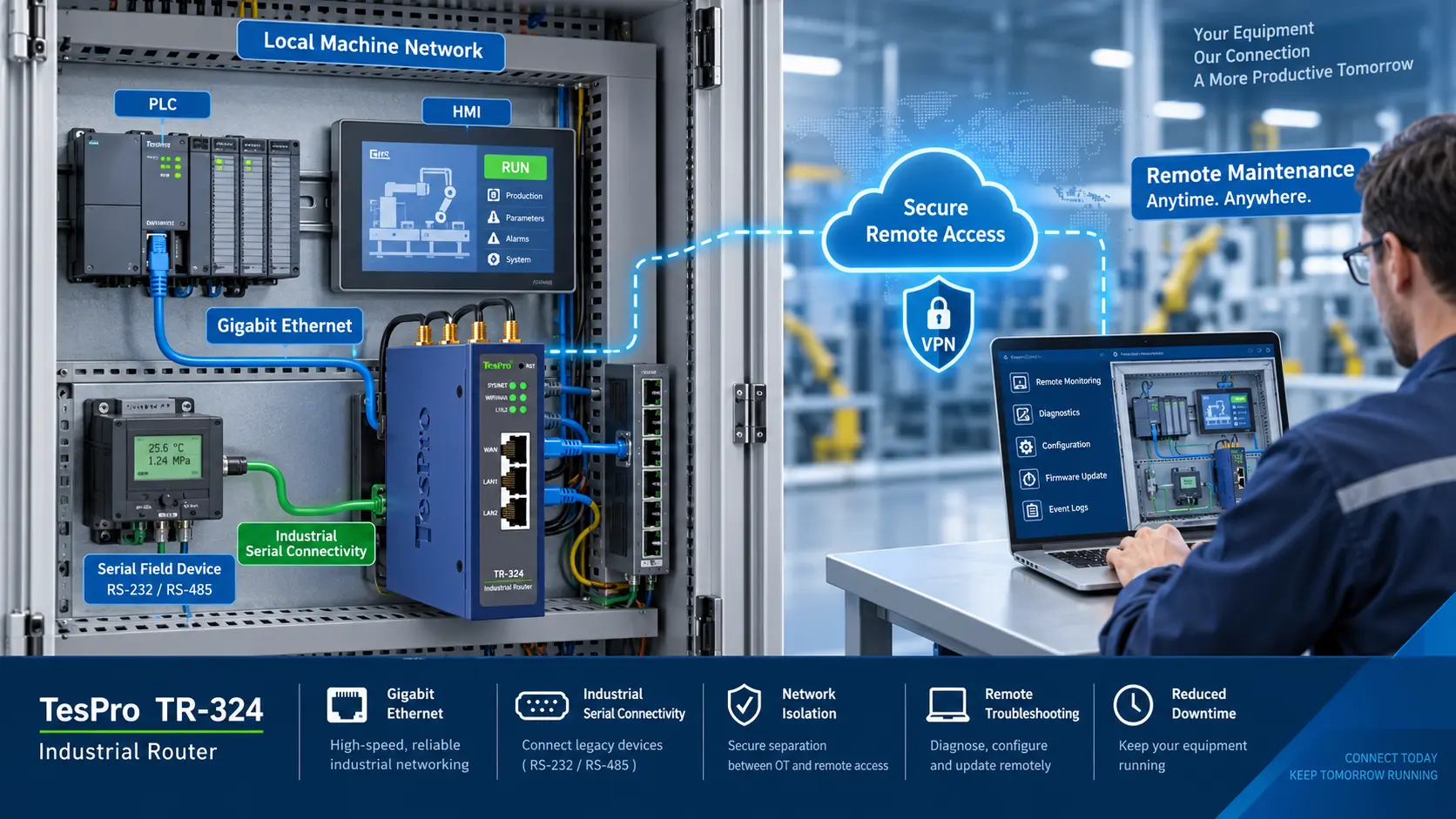
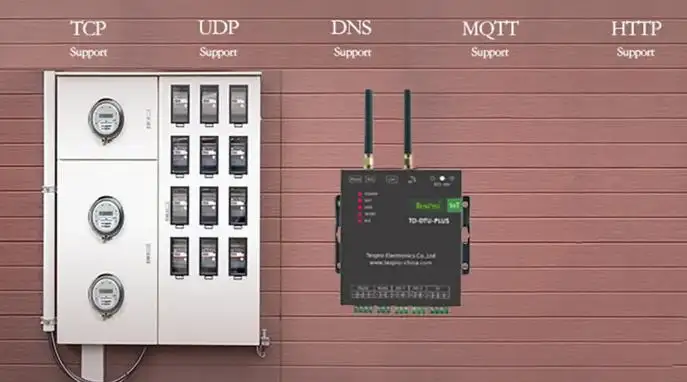
Tespro addresses this challenge by positioning its DTU around broad compatibility rather than narrow single-scenario use. Based on the product information provided, the device is built for industrial-grade metering data transfer, supports multiple communication networks, and can read different types of meter data through configuration. It is designed to work with major meter brands and supports multiple connection and working modes.
That matters for buyers because compatibility is not only a technical benefit. It is also a purchasing advantage.
A DTU with strong protocol adaptability can help teams:
• Shorten integration time
• Reduce site-by-site engineering effort
• Simplify expansion into mixed-brand meter environments
• Improve reuse of the same communication platform across projects
• Lower dependency on custom interface development
This fits current market expectations well. Industrial interoperability standards such as OPC continue to gain weight precisely because buyers want secure and reliable data flow across devices from multiple vendors, not closed systems that increase long-term complexity.
Tespro's Approach to Mixed Network Environments
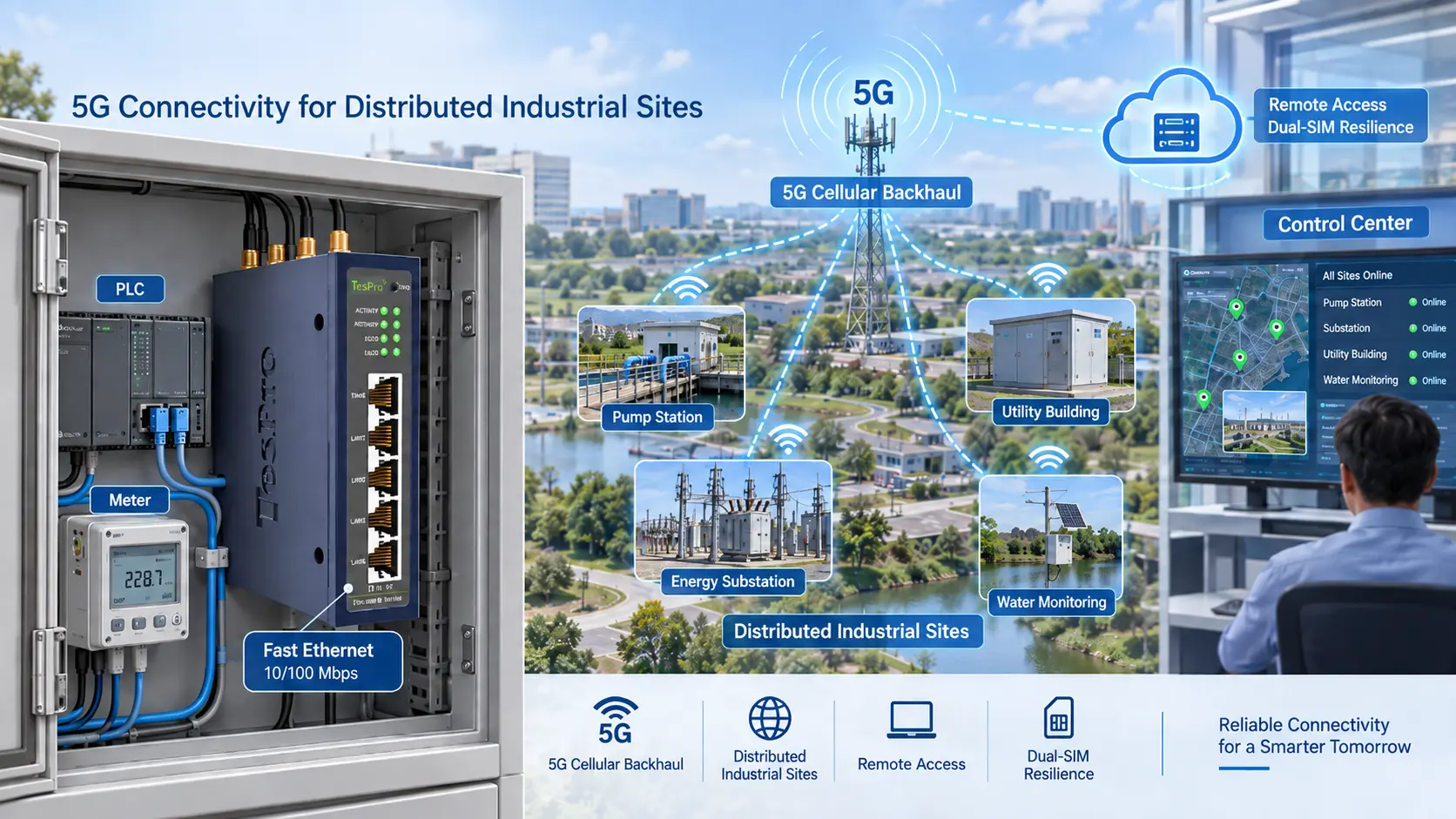
Tespro's technical positioning is especially relevant for projects deployed across regions or across changing telecom conditions. According to the provided specifications, its DTU supports 2G, 3G, 4G, and 5G networks, allows different communication card choices, supports custom registration and heartbeat packets, and offers cloud management capability.
For overseas procurement teams, that combination is commercially attractive because real deployments rarely happen in one perfect network environment. Some projects still require legacy compatibility. Others need a practical migration path toward newer cellular infrastructure. In global IoT, connection diversity remains important, and the mobile industry continues to expand cellular IoT options for large-scale connected assets.
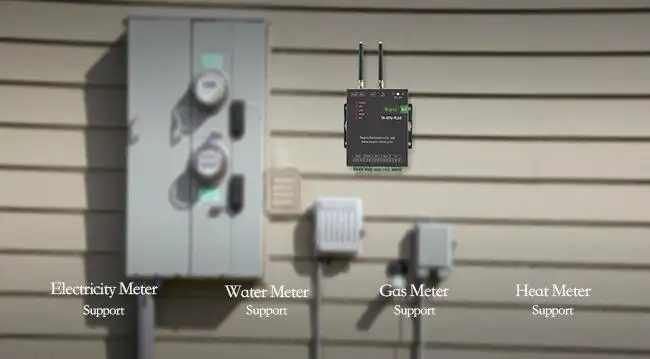
Tespro's DTU therefore aligns with a more realistic field requirement: stable data acquisition across mixed communications conditions.
Its strengths are easier to understand when viewed in operational terms:
• Multi-network flexibility supports use across countries and carrier environments.
• Plug-and-play protocol support reduces the burden of handling different metering protocols.
• Cloud management improves visibility and remote device oversight.
• Remote data acquisition capability helps reduce manual reading dependence.
• Battery-supported operation in some configurations makes remote deployment more practical where external power is limited.
For buyers managing distributed utility assets, these are not isolated features. Together, they improve deployment continuity.
Can Tespro DTU work with different meter brands and protocols without custom coding?
Yes. Tespro DTU is designed for plug-and-play multi-protocol compatibility. It supports common utility protocols (DL/T645, IEC1107, Modbus, etc.) and can be configured to talk to electricity, water, gas, and heat meters from different vendors. This eliminates per-site engineering and reduces integration costs for mixed-brand metering estates.
How does Tespro DTU ensure reliable data transmission in remote areas with unstable network coverage?
Tespro DTU features all-network support (2G/3G/4G/5G) and automatic fallback between carriers. It also includes data caching and retransmission mechanisms. If the network drops, the DTU stores meter readings locally and sends them once connectivity is restored. This ensures data integrity and reduces manual collection even in challenging environments.
A Better Fit for Modern Meter Reading Strategy
The direction of the industry is clear. Utilities, smart campuses, and infrastructure operators are under pressure to digitize more endpoints, improve operational visibility, and support more responsive decision-making. That requires data collection hardware that can connect older field assets to newer management systems without forcing complete infrastructure replacement.
This is where Tespro's DTU proposition becomes commercially relevant. Instead of asking customers to standardize the entire field environment first, it is designed to work across a broad protocol and communications landscape. That lowers the friction between legacy metering assets and modern remote management expectations.
From a buyer's perspective, that can support several strategic goals:
• Faster AMR deployment
• Lower integration risk
• Smoother expansion across multi-brand meter estates
• Better readiness for smart utility modernization
• Improved lifecycle value from one communication platform
In other words, Tespro is not only selling a communication device. It is offering a more deployment-friendly path to remote meter connectivity.
What Overseas Buyers Should Pay Attention To
When evaluating a Data Transmission Unit (DTU) supplier, the smartest question is not simply whether the device can transmit data. The better question is whether it can do so across different meters, networks, and field conditions without creating extra engineering work later.
That is where Tespro's positioning is strongest. With more than 20 years of industry experience stated in the supplied materials, plus a focus on broad protocol support, all-network adaptability, and remote management, the company is speaking to a real procurement concern: scalable interoperability.
For global buyers, that message is timely. As utility networks become more connected and more data-driven, devices that reduce integration friction will usually create more long-term value than devices that only perform well in a narrow setup. Standards bodies and industrial interoperability organizations continue to reinforce the same direction: future-ready infrastructure depends on secure, interoperable, multi-vendor communication.
A well-designed Data Transmission Unit (DTU) should therefore do more than transmit meter data. It should make mixed-network, mixed-protocol deployment easier to manage. That is exactly the space where Tespro's technology appears well aligned with current market needs.
FAQ
1. What Does A Data Transmission Unit (DTU) Do In Meter Reading Systems?
A Data Transmission Unit (DTU) collects data from field meters and sends it to a remote platform through wireless communication networks. In automatic meter reading projects, it helps reduce manual collection work, improve data visibility, and support more efficient utility management.
2. Why Is Multi-Protocol Support Important In A Data Transmission Unit (DTU)?
Multi-protocol support allows one DTU to work with different meter brands and communication methods. This is important for projects involving electricity, water, gas, or heat meters from multiple suppliers, because it reduces integration difficulty and lowers extra development costs.
3. Can A Data Transmission Unit (DTU) Work In Different Countries And Network Environments?
Yes. A well-designed Data Transmission Unit (DTU) can support different cellular networks such as 2G, 3G, 4G, and 5G, depending on project needs and regional carrier conditions. This gives overseas buyers more flexibility when deploying projects across different markets.
4. Is A Data Transmission Unit (DTU) Suitable For Remote Metering Sites Without Stable Power Supply?
Some DTU solutions are designed for remote applications and may include battery-supported operation, which helps in locations where external power is limited or unavailable. This makes remote data acquisition more practical in dispersed field environments.
5. What Types Of Meters Can A Data Transmission Unit (DTU) Connect To?
A Data Transmission Unit (DTU) can typically be configured to connect with different types of electricity, water, gas, and heat meters. Compatibility depends on the supported interfaces, protocols, and project configuration requirements