-1791966549842.webp)





Data Transmission Unit
Product ID: TD-DTU-PRO
Tespro TD-DTU-PRO is an industrial cellular DTU supporting global 2G/3G/4G networks, Dual SIM/eSIM, Wi-Fi 4(2.4GHz), and GNSS positioning. Equipped with 1×RS232 and 1×RS485 ports plus built-in DLMS/Modbus protocols, it delivers reliable data acquisition, protocol conversion, and cloud connectivity for smart metering and IoT automation.
-
Network
2G / 3G / 4G
-
Wi-Fi
Wi-Fi 4 (802.11b/g/n)
-
Serial Port
1*RS232 + 1*RS485
-
Card slot
Dual SIM / eSIM
Get Free Quote Now
Datasheet Download
Features
Core Advantages

4G/3G/2G & Dual SIM/eSIM
Supports extensive 2G/3G/4G cellular network access, with 4G LTE options including Cat1/Cat4/Cat6. Equipped with dual SIM and dual eSIM capabilities to enable flexible switching and link backup.

Wireless Wi-Fi Connection
Supports Wi-Fi 4 (2.4GHz) wireless connectivity to meet requirements for device networking, parameter configuration, and on-site commissioning. Enables rapid device setup and maintenance via a wireless connection, making it suitable for smart metering and Industrial IoT applications.

Serial Communication Interface
It supports dual serial interfaces (RS232 and RS485), baud rates ranging from 300 to 115,200 bps, and various parity modes; it is compatible with diverse industrial equipment, enabling on-site data acquisition, transmission, and reliable communication.

Intelligent Data Acquisition
It supports multiple data acquisition modes—such as real-time acquisition, interval-based acquisition, and scheduled reporting—and can be flexibly configured to meet specific on-site application requirements, ensuring the automatic collection and stable transmission of instrument data.

Support For Multiple Protocols
It features built-in support for multiple protocols—such as IEC1107, DLMS, DLT645, and Modbus—enabling data acquisition and protocol conversion across various types of meters. It flexibly adapts to diverse application scenarios, ensuring stable data transmission between field devices and the cloud platform.

Excellent Weather Resistance
Supporting a wide operating temperature range of -40°C to +75°C and non-condensing humidity levels of 5% to 95% RH, alongside an IP30 protection rating, it reliably handles complex and harsh industrial environments—including high altitudes, high temperatures, and high pressures—to ensure stable equipment operation.
Tech Specs
DTU Specifications Table
Hardware Specifications
| Category | TD-DTU-PRO |
| HardwareSystem | |
| CPU | 32-bit single-core processor, 580 MHz clock speed |
| RAM | 128 MB, DDR3 |
| Flash | 32 MB |
| Network Interfaces | |
| WAN | 1 x WAN 10 / 100 Mbps |
| LAN | 1 x LAN 10 / 100 Mbps |
| Cellular Network | 4G LTE: Cat1 / Cat4 / Cat6 |
| SIM Slot | Dual SIM / Dual eSIM / 1× SIM + 1× eSIM |
| Antenna | SMA male (external thread, inner hole); Antenna Ports: 4 pcs |
| Physical Interfaces | |
| Grounding Terminal | 1 × Grounding Screw |
| Status Indicators | 4 pcs |
| Reset Button | 1 pc |
| Industrial Interfaces | |
| Serial Ports | 1 x RS485 / 1 x RS232, 3kV high-voltage isolation |
| Wi-Fi Wireless Network / WLAN | |
| Wi-Fi Frequency | 2.4GHz |
| Protocol Standards | Wi-Fi 4: 802.11b/g/n |
| Max. Transmission Rate | N300 |
| Data Rate | 802.11b/g/n: Up to 300Mbps |
| Transmit Power | 802.11b: 16dBm ±2dBm (11Mbps); 802.11g: 16dBm ±2dBm (54Mbps); 802.11n@2.4GHz: 16dBm ±2dBm (HT20 MCS7); 802.11n@2.4GHz: 16dBm ±2dBm (HT40 MCS7) |
| Transmission Distance | Line-of-sight ≤ 100 meters (actual distance depends on the on-site environment) |
| Power Supply | |
| Power Interface | DC power interface: 1 (DC2.1) |
| Input Voltage Range | DC power supply: 9–36V; supports reverse polarity protection |
| Standby Power | < 15mA @12V |
| Operating Power | 40mA @12V |
| Peak Power | 160mA @12V |
| Environmental Conditions | |
| Operating Temperature | -40°C to +75°C |
| Operating Humidity | 5% to 95% (non-condensing) |
| Storage Temperature | -40°C to +85°C |
| Mechanical Specifications | |
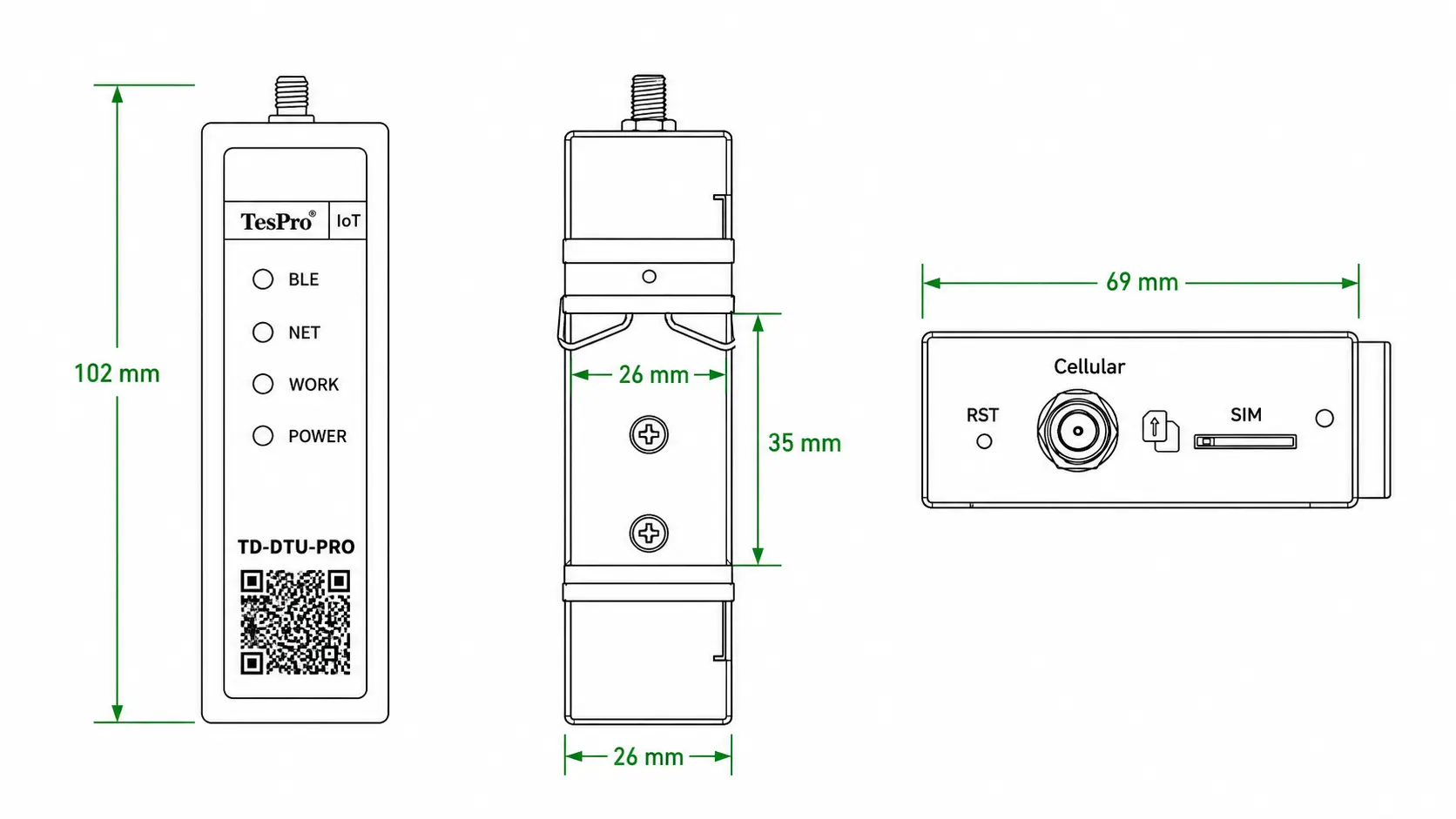
| Product Dimensions | 102 × 69 × 26 mm (including antenna connectors) |
| Protection Rating | IP30 |
| Housing | Metal housing |
| Mounting Method | DIN-rail / Wall-mount |
| Cooling Method | Fanless cooling |
| Product Weight | 200 g |
| Reliability | |
| Shock | IEC60068-2-27 |
| Vibration | IEC60068-2-6 |
| Drop | IEC60068-2-32 |
| Certifications and Standards | |
| Regulatory Certification | CE, RoHS |
| EMC Standards | EN 55032; EN 55035; EN IEC 61000-6-3:2021; EN IEC 61000-6-1:2019; EN 301489-1; EN 301489-17; EN 301 489-52 |
| RF Standards | EN300328; EN301893; EN301511; EN301908-1/-2/-13 |
| SAR+Safety | EN50665; EN IEC62368-1 |
| Cyber | EN18031-1; EN18031-2 |
| ESD (Electrostatic Discharge) | EN 61000-4-2:2009 |
| Radiated Immunity | EN IEC 61000-4-3:2020 |
| Burst (EFT) | EN 61000-4-4:2012 |
| Surge | EN 61000-4-5:2014 + A1:2017 (Ethernet ports) |
| Conducted Immunity | EN 61000-4-6:2014 |
| Oscillatory Waves Immunity | EN61000-4-12, level 3 |
| Magnetic Field Immunity | EN61000-4-8, Horizontal/Vertical 400A/m (>level 2) |
Software Specifications
| Category | TD-DTU-PRO |
| Industrial Protocols and Data Capabilities | |
| Industrial Protocols | Includes Modbus RTU, Modbus TCP, Mbus, and various other protocols |
| Modbus | Modbus RTU, Modbus TCP |
| Electricity Meter Protocols | DLT 645-2007, IEC 1107, IEC 61850, IEC 62056-21, DLMS |
| DLMS/COSEM | DLMS |
| Modbus Custom Registers | Modbus TCP custom register module requests, capable of reading/writing files within the router, extending Modbus TCP client functionality |
| Supported Data Formats | INT/UINT (8/16/32-bit), 32-bit Float, HEX, ASCII; supports MSB/LSB and byte order conversion (ABCD/DCBA/CDAB/BADC) |
| DTU Function | Supports TCP/UDP transparent transmission; supports Modbus RTU to Modbus TCP conversion; supports DCTCP/DCUDP modes |
| Data to Server | HTTP(S)/MQTT/Azure MQTT; multi-source data reporting; min 1s interval; Lua scripting |
| Modbus / MQTT Gateway | Allows sending commands to a Modbus Server via an MQTT Broker and receiving data |
| API / Web API | Supports network Web API; API endpoints for retrieving or changing data |
| Networking Capabilities | |
| Network Access | 2G/3G/4G cellular network (or VPDN private network) |
| Access Authentication | Supports CHAP/PAP authentication |
| LAN Protocols | ARP |
| WAN Protocols | PPP, DHCP |
| Network Protocols | TCP, UDP, IPv4, IPv6, NTP, DNS, HTTP, HTTPS, MQTT |
| NAT | Supports NAT forwarding and port mapping |
| DHCP | Supports DHCP Server (for Wi-Fi client IP assignment) |
| Network Backup / Failover | Wi-Fi WAN and VRRP can both serve as automatic failover solutions |
| QoS | raffic prioritization queuing based on source/destination, service, protocol, or port; WMM; 802.11e |
| IP Applications | Supports Ping, Traceroute, DHCP Server, DHCP Relay, DHCP Client, DNS relay, DDNS, Telnet |
| DNS/DDNS | Supports DoH (DNS over HTTPS); multiple DDNS service provider configurations and manual customizatio |
| Wi‑Fi | |
| Wireless Modes | Wi‑Fi 4: 802.11b/g/n; supports Access Point (AP) and Station (STA) modes |
| Wi‑Fi Security | WPA2‑Enterprise/PSK, WPA‑EAP/PSK, WPA3‑SAE/EAP, OWE; AES‑CCMP, TKIP, client separation, EAP‑TLS, 802.11w PMF, etc |
| Maximum Wi‑Fi Clients | Wi‑Fi 4: up to 30 simultaneous connections |
| Hotspot Relay | Forwards the Wi‑Fi hotspot login page to subsequent connected devices (captive portal relay) |
| SSID / ESSID | SSID stealth mode; MAC‑address‑based access control |
| Operating Modes | Supports AP, Client, and WDS (Wireless Distribution System) modes |
| Security Features | Open system, Shared key, WPA/WPA2 authentication; WEP/TKIP/AES encryption |
| Network Security & VPN | |
| Network Protection Security | Port forwarding / traffic rules / custom TTL; WebUI/CLI firewall configuration; DMZ, NAT/NAT‑T/NAT64 |
| Data Protection Security | Supports VPN functions including PPTP, L2TP, GRE, IPSEC VPN, DMVPN, OPENVPN, WireGuard, etc.; supports digital certificate CA |
| Authentication | Pre-shared keys, X.509 certs, TACACS+, RADIUS (built-in/external), IP/time/login blocking, random password generator |
| Attack Protection | DDoS protection (SYN flood, SSH, HTTP/HTTPS); Port scanning protection (SYN-FIN, SYN-RST, X-mas, NULL, FIN) |
| Access Control | Flexible access control for SSH, Web UI, CLI, and Telnet |
| Web Filter | Blacklist for unwanted websites; whitelist for allowed websites only |
| VPN | Supports PPTP, L2TP, IPSec (IKEv1/IKEv2), OpenVPN, and SSTP client connections, as well as GRE tunneling |
| WireGuard | Supports WireGuard VPN client and server |
| ZeroTier | Supports ZeroTier VPN client |
| Tinc | Encryption, authentication, and compression within tunnels; supports client and server modes |
| Management & Platform | |
| Configuration Methods | Web UI, CLI, SSH, JSON‑RPC, TesproOS, etc |
| Cloud & IoT Platform | Supports Google, Huawei, Amazon, Microsoft Azure, iStarOS, Azure IoT Hub, other third-party cloud platforms, and custom clouds |
| FOTA | Firmware updates from server with automatic notification |
| SNMP | SNMP (v1, v2, v3), SNMP Trap |
| MQTT | MQTT Broker, MQTT Publisher |
| JSON‑RPC | HTTP/HTTPS‑based management API |
| SSH | SSH (v1, v2) |
| Upgrade Methods | FOTA; Web UI |
| Logging Functions | Event log, system log, kernel log |
| Alert Functions | Email message status alerts |
| On-Demand Activation | On‑demand dialing, data activation, SMS activation |
| Receives email message status alerts from various services | |
| Software System | |
| Operating System | TesproOS (Linux) |
| Firmware Customization | Supports custom branded firmware and web page applications (colours, logos, etc.) |
| Package Management | Supports installation of additional software packages |
| Firmware & Configuration | |
| Web UI Upgrade | Update firmware from file, check for firmware on server, configuration file, configuration backup |
| FOTA Upgrade | Update firmware |
| Cloud Bulk Upgrade | Supports updating firmware/configurations of multiple devices at once via TesproOS system |
| Config-Preserved Upgrade | Update firmware without losing current configuration |
| Factory Reset | Full factory reset, restoring all system settings including IP address, PIN code, and user data |
| Environment & Reliability | |
| Hot Backup / VRRP | VRRP (listed under Network Backup) |
| Link Online Detection | Sends heartbeat packets for detection; automatically reconnects upon disconnection |
| Dual SIM Link Switching | Supports dual SIM or dual eSIM link switching |
| Built‑in Watchdog | Device self‑check technology; automatic self‑recovery from runtime faults |

Show All

Show Less
Product Details
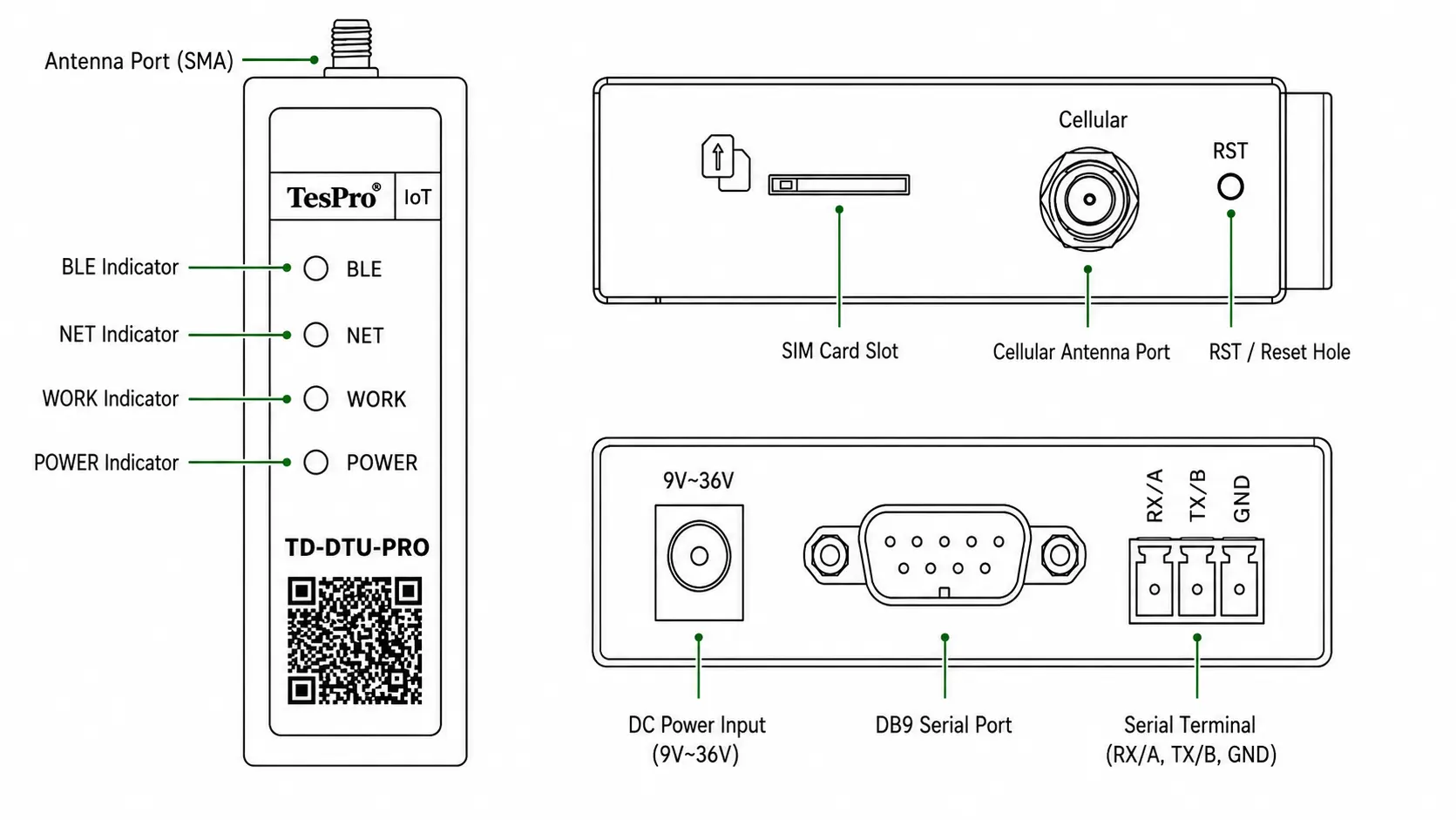
Interface Diagram
Dimensions Diagram
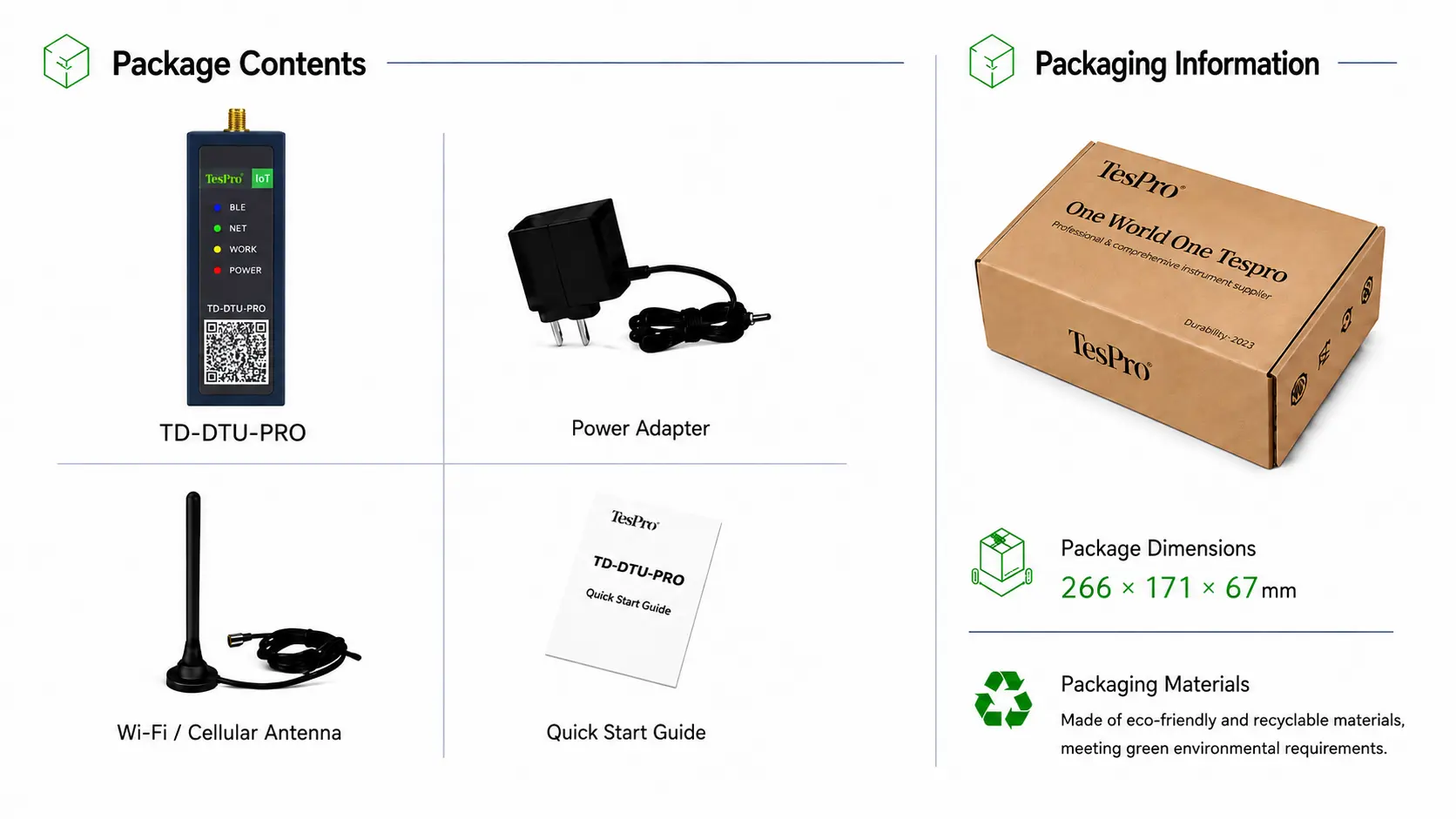
Accessories Diagram
Explore our Solutions
Smart Metering Communication Solutions
Providing multi-protocol optical acquisition devices to provide stable and effective data transmission by various metering requirements.
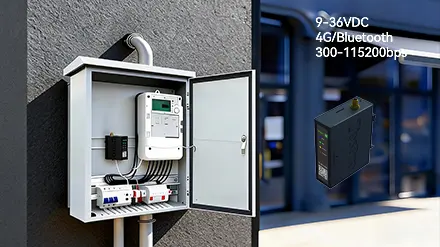
Case
Product Case
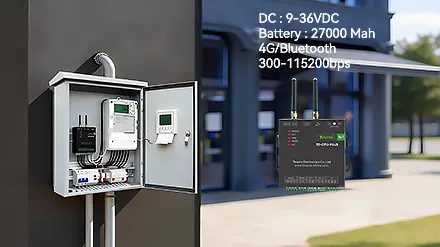
The TD-DTU-PRO may be mounted on the distribution cabinet rail to measure data concerning the voltage, current, power factor and others and then send them to the power monitoring system. This allows anomalies and remedials to be easily identified and taken.
Download Materials


Frequently Asked Questions
To help you better understand our products' performance, compatibility, and usage, we’ve compiled answers to commonly asked questions. If your inquiry isn’t listed below, feel free to contact us directly for further assistance.
Contact Us
-
What wireless networks, power options, and remote-transmission methods does the TD-DTU series support?

-
The TD-DTU series is positioned as “data acquisition + remote transmission” equipment. The TD-DTU-PRO page states support for multi-band 2G/4G, network adaptation for global regions, and optional GNSS; the TD-DTU-PLUS page states that it uses 4G Cat-1, supports 2G + 4G, and offers optional GNSS. Both representative models list 4G/Bluetooth. Local Bluetooth is suitable for nearby debugging or supporting communication, while the cellular network handles remote backhaul.
1. Cellular network: Confirm the country, carrier, frequency bands, SIM card, APN, and network sunset plan. “Global applicability” should not be interpreted as meaning that no module selection or frequency-band verification is required.
2. Remote transmission modes: The specifications confirm TCP Client, UDP Client, and MQTT Client, with support for TCP/UDP/MQTT and SSL. Platform address, port, certificate, and authentication parameters must be configured consistently for the project.
3. Power supply: PRO is rated for DC 9–36 V; PLUS is rated for DC 9–36 V and includes a 27,000 mAh built-in battery. PLUS is intended for acquisition/remote-transmission applications without an external power source. Actual battery life depends on acquisition frequency, network coverage, temperature, load, and battery condition.
4. Positioning: GNSS is listed as optional in the representative model specifications. When ordering, clearly specify whether positioning capabilities such as GPS/GLONASS/BDS/Galileo/QZSS are required.
-
What interfaces does the TD-DTU series provide, and how are meters and field devices connected?
-
Representative models provide 1×RS232 and 1×RS485, and the detail pages state that both can operate simultaneously, with a baud-rate range of 300–115200 bps. This interface combination covers various serial electricity meters, data collectors, controllers, and sensors. If the meter communicates through an optical interface, it can be paired with a standards-compliant TP series optical probe or another project-specific adaptation solution.
1. RS485: Suitable for multipoint bus devices. Confirm A/B/G wiring, termination resistance, bus length, address planning, and isolation/grounding requirements.
2. RS232: Suitable for point-to-point devices. Confirm DB9 or terminal wiring, TX/RX, ground, signal levels, and cable length.
3. SIM/antennas: Representative models list an external Mini SIM slot, one 4G antenna, and one Bluetooth antenna. Actual antenna position, cable length, and waterproof cable routing must be coordinated with cabinet design. 4. Auxiliary interfaces: The pages list a power socket, reset hole, and status indicators to facilitate on-site power-up, network connection, and communication troubleshooting.
-
What are the six key technical advantages of the TD-DTU series?
-
The TD-DTU is designed to perform serial data acquisition, cellular remote transmission, and device-level reliability in relatively compact hardware. For automatic meter reading or remote data-acquisition projects, its selection value can be explained to customers from the following six perspectives.
1. Wide-voltage power supply: Representative models support DC 9–36 V, suitable for common DC control-power environments.
2. Cellular remote transmission: 2G/4G or 4G Cat-1 models enable remote data upload, with frequency bands/modules selected according to the target country.
3. Dual serial access: RS232 and RS485 can operate simultaneously, making it convenient to connect meters or devices from different generations in parallel.
4. Platform protocol compatibility: Support for TCP, UDP, MQTT, and SSL provides a foundation for connecting to private servers, industry platforms, or cloud messaging platforms.
5. Off-grid capability: The TD-DTU-PLUS built-in 27,000 mAh battery is suitable for remote points without a stable external power supply; battery life must be calculated based on the actual workload.
6. Industrial reliability: Representative specification pages list -40°C to +75°C, 5%–95% non-condensing humidity, reverse-polarity, overvoltage/overcurrent, lightning, and surge protection, suitable for installation inside cabinets or protected outdoor equipment enclosures.
-
What are the main application scenarios for the TD-DTU series?
-
TD-DTU is particularly suitable for distributed projects where the data volume is relatively manageable, field devices mainly use serial interfaces, and low-maintenance-cost cellular backhaul is required. The following six scenarios can be used as standardized customer-facing descriptions.
1. Automatic meter reading (AMR): Connect electricity, water, gas, or heat meters and transmit the collected data to billing, energy-management, or O&M systems.
2. Power distribution and electrical monitoring: Install in distribution cabinets/enclosures to collect voltage, current, power factor, and other parameters and report abnormalities.
3. Rural and off-grid scenarios: Use the built-in battery capability of TD-DTU-PLUS for remote villages, farmland, water-conservancy sites, or temporary projects; solar/external power supply and battery life should be evaluated.
4. Environmental and water monitoring: Connect water-quality, flow, liquid-level, weather, or environmental sensors for scheduled acquisition and remote reporting.
5. Remote equipment alarms: Upload status data from pump stations, equipment rooms, cold-chain systems, storage tanks, and similar equipment to the backend, where the platform can generate alarms and work orders.
6. Connectivity retrofit for legacy equipment: Add cellular communication to existing meters and controllers that have RS232/RS485 interfaces but lack network connectivity.
-
Which protocols and data platforms are suitable for the TD-DTU series?
-
Representative specifications explicitly list TCP, UDP, MQTT, and the corresponding TCP Client, UDP Client, and MQTT Client operating modes, with SSL support. These functions address communication and data forwarding from serial devices to remote systems. Whether meter-side protocols such as DLMS, IEC 62056, DL/T 645, or vendor-specific protocols can be read directly depends on the device protocol, configuration capabilities, optical-probe/serial interface, and platform parsing solution, and must be validated during the sample stage.
1. Provide sales/technical support with: remote server address, port, protocol type, authentication method, certificate, message format, heartbeat requirements, and reconnection requirements.
2. Confirm on the device side: serial parameters, meter address, communication password, protocol version, data points, acquisition cycle, exception-retry strategy, and clock requirements.
3. If MQTT is used, define the Topic, QoS, Client ID, authentication, offline caching, and duplicate-message handling rules.
4. If multi-protocol parsing, bulk point-list management, complex edge logic, or multi-Ethernet-port deployment is required, it is recommended to evaluate a TG series gateway at the same time.
-
How are warranty, pricing, and the purchasing process arranged for the TD-DTU series?
-
TD-DTU product pages provide inquiry options and specification downloads, but no uniform published warranty period or public pricing for all models was found. Therefore, it is recommended to state in after-sales and purchasing FAQs that “standard warranty, extended warranty, pricing, lead time, and customization scope are subject to the written sales quotation/contract,” and to fully verify the network, power supply, battery life, and device protocols before the project.
1. Warranty: Ask about the standard warranty and optional commercial packages for 2–5-year extended warranties, spare units, remote configuration, and on-site support; contract terms prevail.
2. Pricing: Small-quantity samples can be viewed in the Tespro Online Shop. Volume/project pricing, built-in batteries, GNSS, specific modules, or customized services should be obtained through sales@tespro.com.
3. Sample testing: At minimum, verify SIM network access, weak-signal reconnection, continuous serial reading, SSL/MQTT reporting, power-supply fluctuations, PLUS battery life, and data recovery after network interruption.
4. Contact information: sales@tespro.com; info@tespro.com; telephone/WhatsApp +852 4609 4648 and +1-213 610 4797.
5. Brand content channels: The official website also lists six official social-media channels—Facebook, LinkedIn, YouTube, TikTok, X, and Instagram—for viewing public cases and product demonstrations.