-1791966549842.webp)







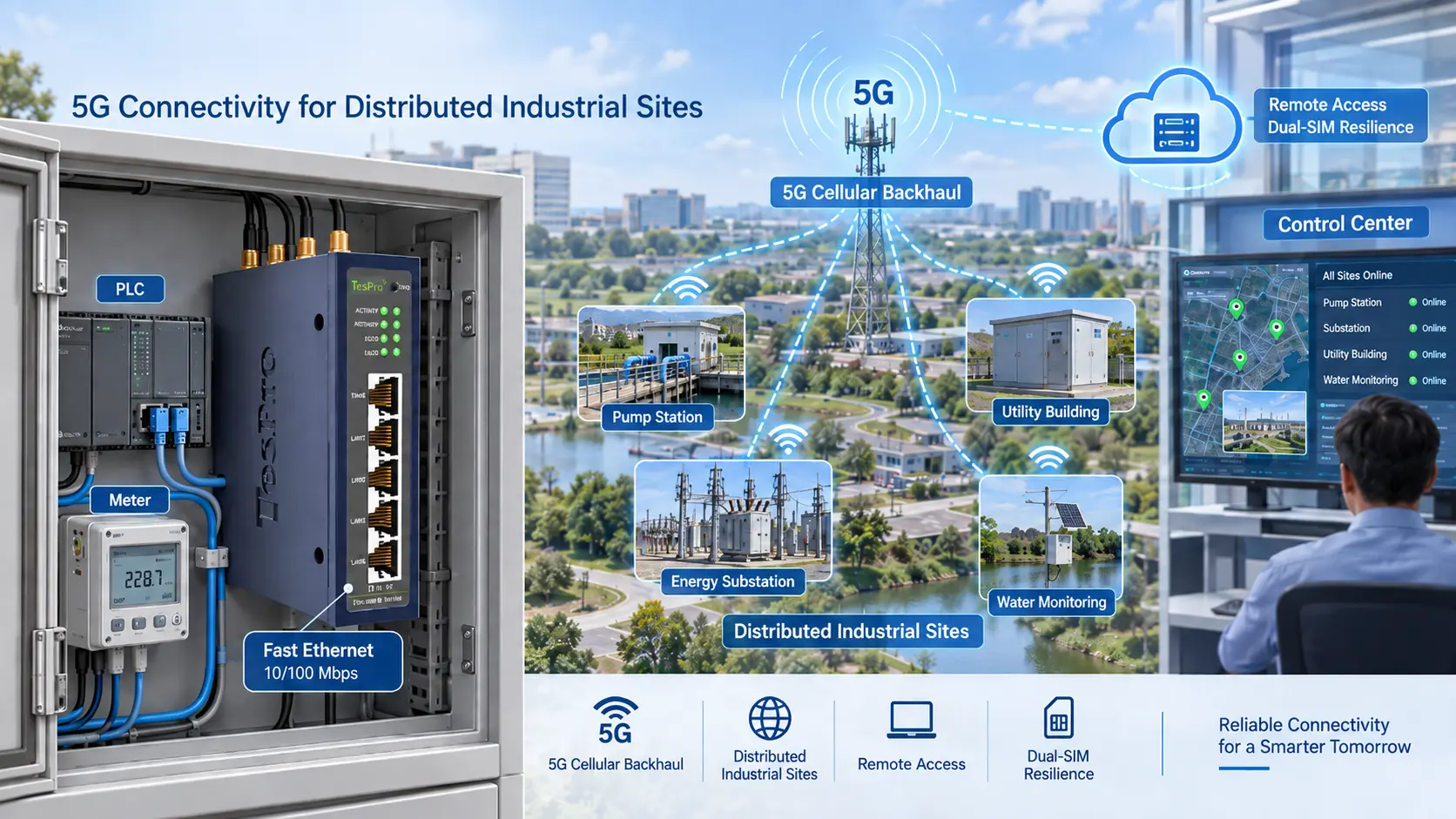
5G Industrial Router for Automation is no longer just a faster way to move data. For overseas buyers in utilities, factory automation, smart campuses, and smart city projects, the bigger issue is whether the network stays available when field conditions turn unstable, traffic increases, or one access path fails. That challenge is becoming more important as automation systems connect more sensors, controllers, meters, cameras, and edge devices across wider and less predictable environments.
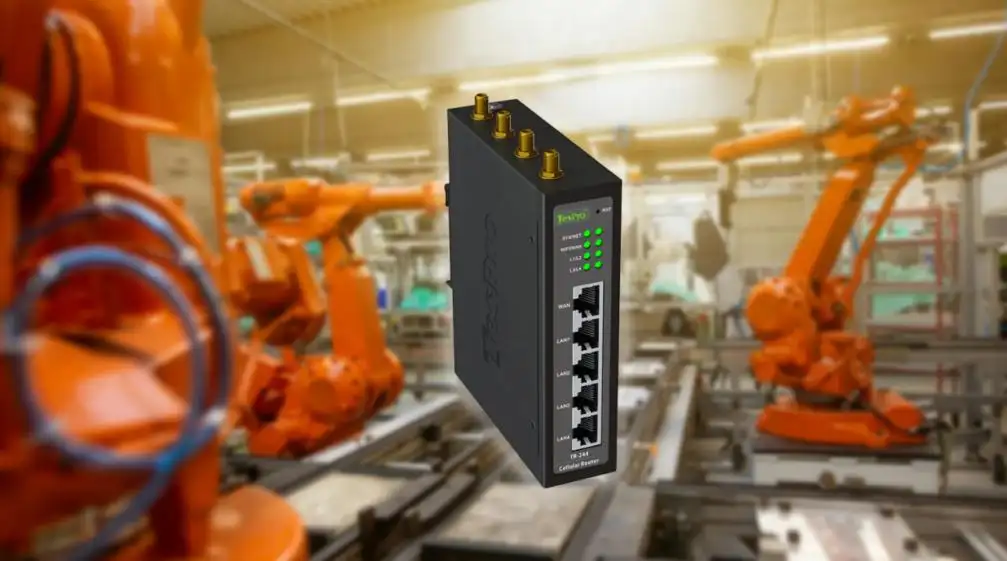
Industry 4.0 is pushing operations toward real-time visibility, predictive maintenance, AI-assisted decisions, and tighter OT/IT integration, which means connectivity has become part of the production system rather than a background utility.
The Real Challenge Is Not Peak Speed
In many industrial projects, buyers do not lose money because a router's headline throughput looks weak on paper. They lose money when communication drops during remote meter collection, equipment diagnostics, robotics coordination, or site-wide monitoring. Modern automation environments need more than bandwidth. They need connection continuity, secure remote access, protocol compatibility, and hardware that can tolerate real field conditions.
This is exactly where many traditional networking choices start to show limits. Ericsson notes that Industry 4.0 environments increasingly demand reliable, secure, and flexible connectivity for IIoT, edge computing, AI, autonomous robots, and digitalized operations. The same source also points out that wired systems can become inflexible during expansion, while Wi-Fi can struggle with mobility, latency, dead zones, and reliability in large industrial environments.
For procurement teams, that changes the buying logic. The better question is no longer, "How fast is the router?" It is, "How well does the router protect uptime when the site becomes more complex?"
Why Network Continuity Fits Today's Automation Needs
The market direction is already clear. Verizon's 2025 IoT Market Insights Report says organizations are showing stronger confidence in 5G and are likely to move toward it when refreshing deployments or supporting new use cases. Ericsson also highlights that reliable cellular connectivity is central to smart manufacturing outcomes such as predictive maintenance, real-time quality control, and secure OT/IT convergence.
That matters because automation networks now support:
•Real-time equipment monitoring
•Remote maintenance and diagnostics
•Distributed control points
•AI-ready data collection at the edge
•Faster response across geographically dispersed assets
When these functions depend on one fragile communication path, downtime risk rises quickly. A 5G industrial router built around continuity is therefore more aligned with current industrial demand than a router designed mainly around lab-style speed claims.
Tespro Focuses on Resilience, Not Just Connectivity
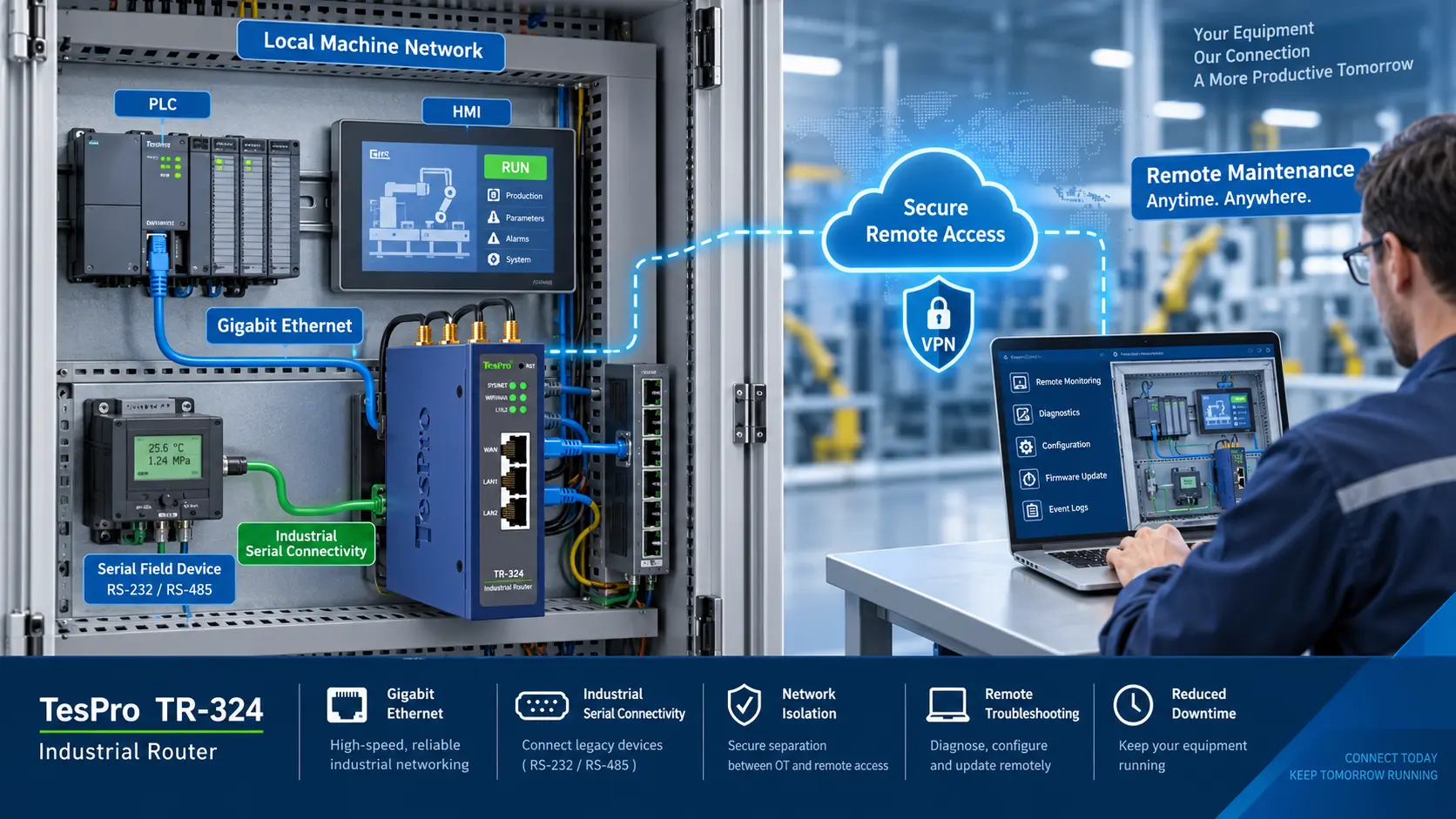
Tespro's industrial router materials show a product strategy built around reliability in mixed industrial environments. Across its industrial router range, the company highlights support for cellular connectivity from 2G to 5G, Ethernet, Wi-Fi, dual SIM redundancy, VPN capability, remote management, and industrial interfaces for automation integration. Tespro also presents these routers as suitable for smart factories, utilities, transportation systems, and broader IoT deployments.
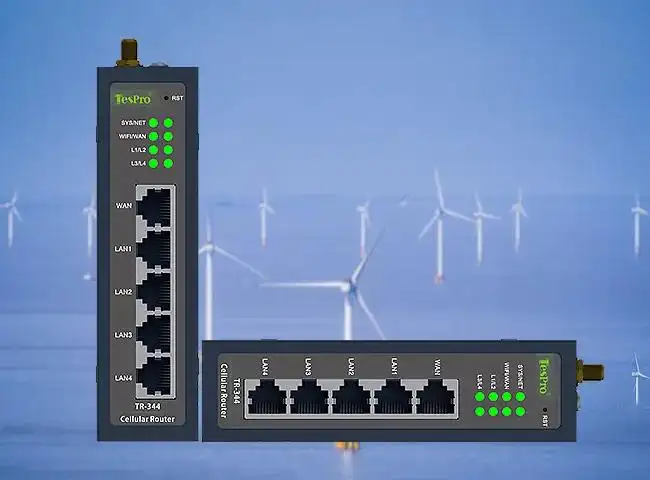
What makes that relevant is the structure of the offer itself. Tespro is not framing the router as a single-network device for ideal conditions. Instead, its technical direction supports a more practical deployment model:
•Multi-network access for different site conditions
•Fallback logic through cellular, 4G, and Wi-Fi paths
•Serial and Ethernet interfaces for industrial device integration
•VPN and firewall support for secure data transmission
•Remote management for lower maintenance effort
For overseas buyers, this is easier to evaluate as business value. It helps sustain uptime, lessens the need for manual processes, and, when paired with expansion of automation infrastructure, safeguards communications.
Standout Feature: Communication via Redundancy
From this angle, the most appealing feature is network redundancy.
Tespro's industrial router provides high-speed 5G access with fallback to 4G, dual SIM failover, and secure remote communications, along with Ethernet and serial communication for industrial devices. That combination is important because industrial automation rarely operates in a single, clean networking environment. Sites often mix legacy controllers, field instruments, local LAN equipment, and remote cloud platforms in one workflow.
A redundancy-led router helps in several ways:
•At a minimum, it reduces the likelihood of a single carrier problem bringing the entire site to a standstill.
•At most, it ensures all distributed assets maintain communication regardless of the number of sites and devices.
•It strengthens the overall network even during maintenance, poor signal coverage, or temporary disruptions to the network.
•It gives buyers more confidence when scaling from pilot projects to wider deployment.
This is also where Tespro follows the direction of modern industrial networking. Ericsson's Industry 4.0 guidance emphasizes that advanced industrial environments need connectivity chosen around latency, throughput, reliability, device density, and energy efficiency, not just one benchmark figure.
Built for OT Integration and Harsh Environments
Tespro's technical positioning also matches another important purchasing trend: buyers want fewer integration barriers between field equipment and modern digital systems. Tespro highlights RS-485, RS-232, Ethernet, and multi-protocol plug-and-play capability, which supports integration with automation devices and legacy equipment more effectively than a basic commercial router would.
That matters in projects such as:
•AMI and AMR utility systems
•Campus infrastructure management
•Industrial automation cells
•Transport and roadside equipment
•Remote environmental and facility monitoring
Tespro also emphasizes rugged construction, wide temperature support, wide voltage support, and suitability for harsh environments. Its materials describe industrial-grade design intended for demanding field conditions rather than office-only deployment.
For procurement teams assessing long-term returns, this makes the total solution more compelling. A router that works with OT systems, withstands demanding environments, and allows remote management often contributes more to operations than one designed around lab-based performance alone.
Tespro's 5G Industrial Router: A Closer Look at Edge-Ready Architecture
Beyond redundancy and rugged design, Tespro's 5G Industrial Router for Automation delivers a set of practical capabilities that directly address field-level pain points. The router supports dual‑SIM 5G/4G fallback, multiple VPN tunnels (IPsec, OpenVPN, L2TP), and a lightweight yet secure remote management platform. For overseas projects spanning smart cities or utility networks, this means IT teams can monitor signal strength, data usage, and failover events from a single dashboard without dispatching on‑site staff.
Additionally, Tespro embeds protocol conversion for Modbus RTU/TCP, DNP3, and IEC‑101/104, reducing integration time between legacy RTUs and modern cloud SCADA. The router’s industrial enclosure operates from ‑40°C to 75°C with 1236V DC wide input, making it suitable for roadside cabinets, solar‑powered metering posts, and factory floors with heavy electrical noise. When procurement buyers search for a 5G industrial router for edge automation, these details translate into lower total cost of ownership, faster deployment, and measurable uptime improvement。
Why This Matters for Buyers in 2026
In 2026, automation buyers are under pressure to improve uptime, reduce site visits, and support more intelligent operations without adding unnecessary infrastructure burden. That makes routers part of a broader digitalization strategy. They are now expected to support secure edge data flow, cloud visibility, remote management, and scalable expansion.
Tespro's industrial router direction fits that shift well. Its combination of 5G readiness, fallback logic, industrial interfaces, VPN support, cloud management, and ruggedized design reflects the way automation networks are evolving.
It also matches the larger industry shift described by Verizon, GSMA, and Ericsson: industrial users are adopting more intelligent, connected, and resilient operating models, and that puts greater pressure on wireless infrastructure to deliver dependable continuity in real applications.
Final Thoughts
For buyers searching for a 5G Industrial Router for Automation, the most compelling feature is not raw peak speed. It is the ability to keep critical communications running when industrial reality becomes less than perfect.
Tespro's approach is relevant because it addresses the real problem at the edge: unstable connectivity can weaken automation value, delay decisions, and increase operational effort. By emphasizing redundancy, industrial integration, secure remote access, and rugged deployment readiness, Tespro shows that its technology is moving in step with current automation and IIoT demands. For overseas procurement teams, that is the kind of specification logic that translates into lower risk and better long-term deployment value.
FAQ
1. What is the main benefit of a 5G Industrial Router for Automation?
The main benefit is not only faster data transmission. A 5G Industrial Router for Automation helps maintain stable communication across industrial sites, which is critical for reducing downtime, supporting remote monitoring, and keeping connected devices online in changing field conditions.
2. Why is network continuity more important than peak speed in automation projects?
Peak speed looks attractive on a specification sheet, but continuity has more practical value in real industrial use. If a network fails during equipment monitoring, diagnostics, or control operations, even a fast router cannot prevent disruption. Reliable uptime is what protects operations.
3. How does network redundancy help reduce downtime at the edge?
Network redundancy allows the router to maintain communication through backup paths when one connection becomes unstable or unavailable. This lowers the risk of a full site communication failure and helps automation systems continue running during carrier issues, signal drops, or maintenance events.
4. What types of projects can benefit from a 5G industrial router?
A 5G industrial router can support many edge and automation applications, including smart factories, utility metering, AMI and AMR systems, smart campuses, transport infrastructure, environmental monitoring, and remote facility management.
5. Why do overseas buyers care about dual SIM and fallback features?
These features help improve resilience in real deployments. If one carrier connection weakens or fails, the router can switch to another available path. For overseas buyers managing distributed projects, that added continuity can reduce service interruptions and lower maintenance pressure.