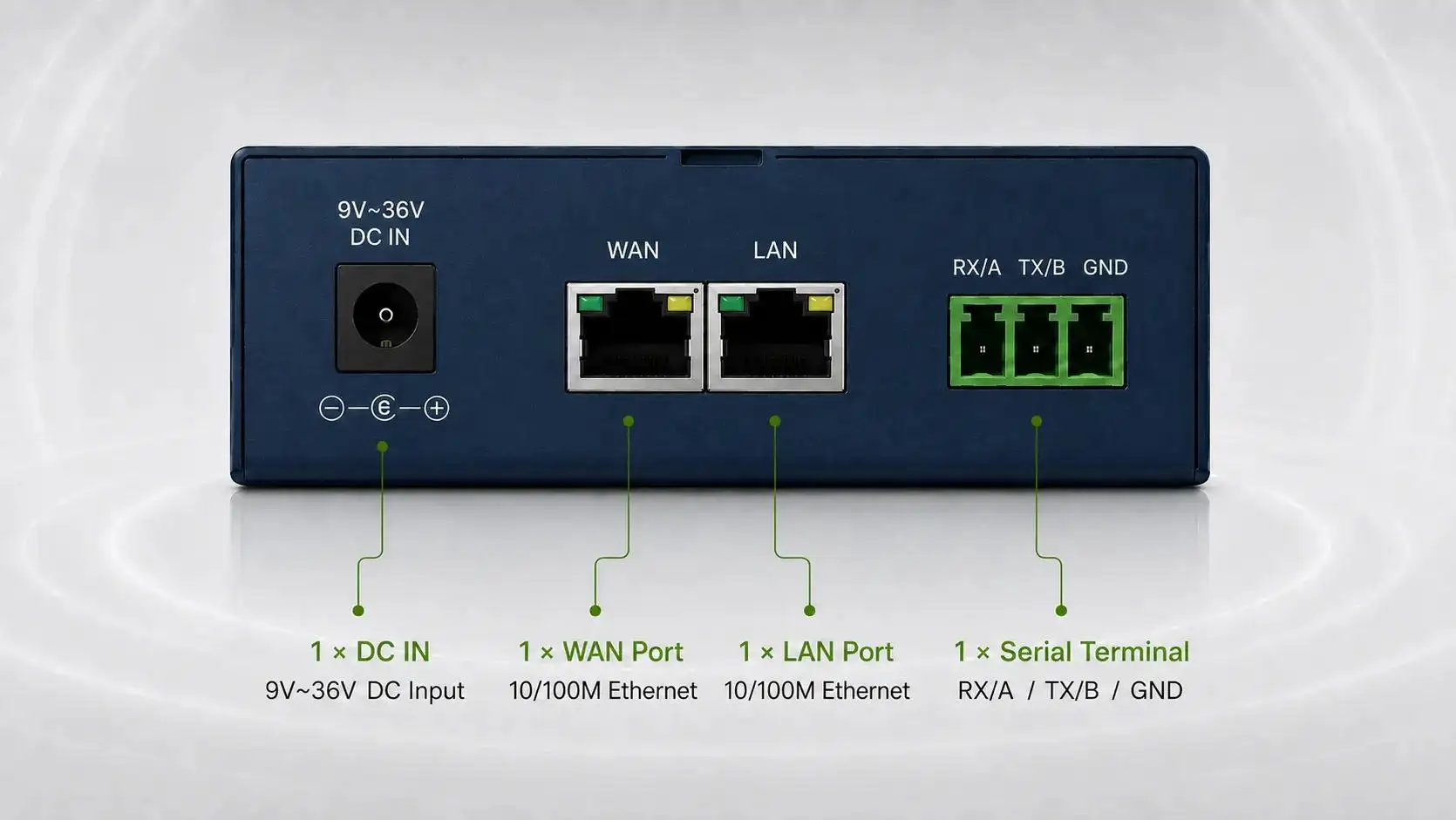
-1791966549842.webp)





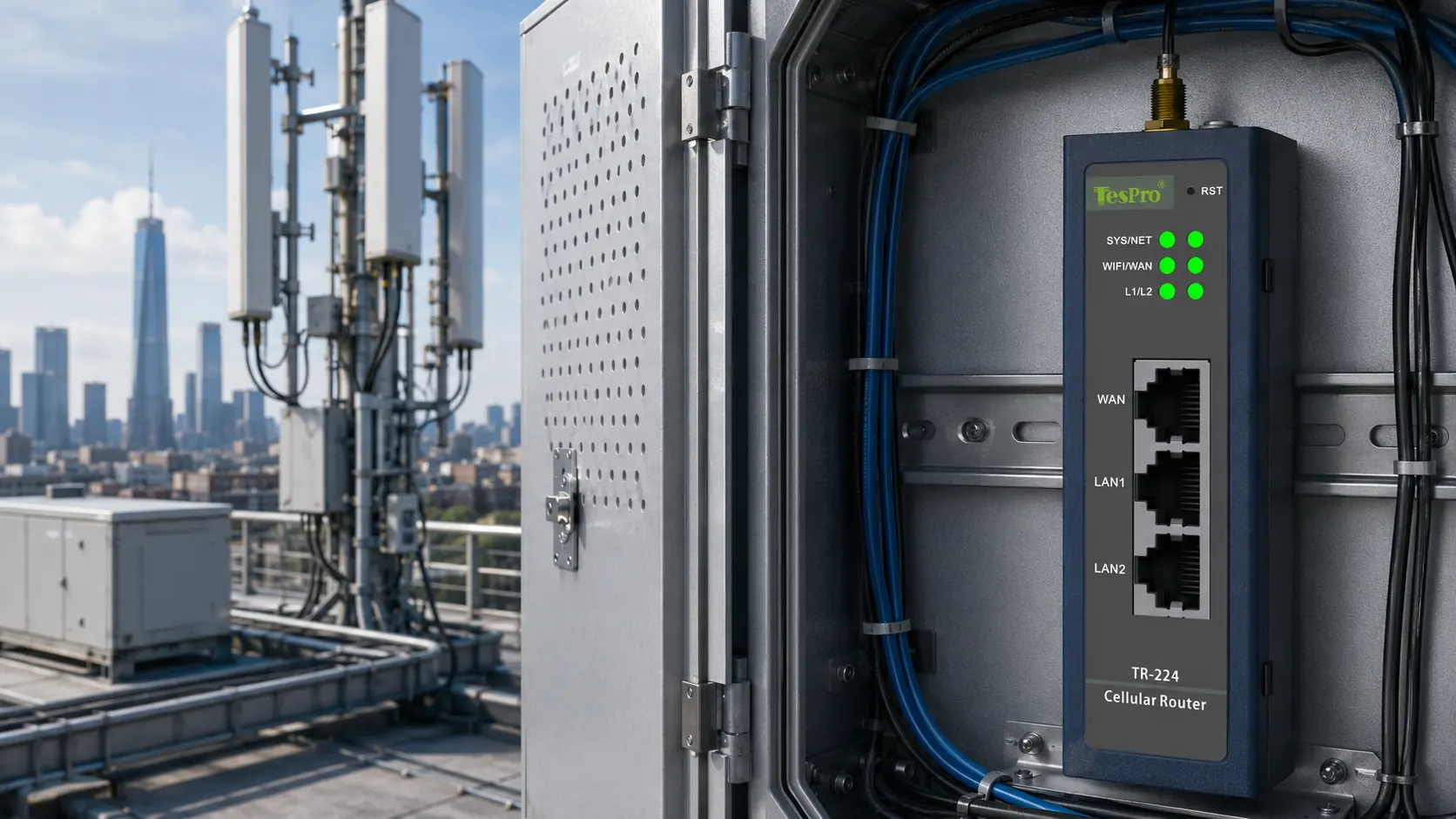

For successful deployment of 4G LTE industrial routers, device specifications are only the starting point. In real projects, practical factors such as antenna placement, carrier selection, firmware maintenance, and security configuration often have a decisive impact on the system's ultimate reliability. For antenna placement, position the router or external antennas where there are few obstructions, typically at least 3 meters in elevation. If antennas are too close to dense equipment, signal can be adversely affected. For routers installed inside metal cabinets, external antennas are strongly recommended, routed outside the cabinet, as metal enclosures significantly attenuate cellular signals. In real deployments, using a signal strength meter to measure RSRP and SINR values at different locations helps identify optimal antenna mounting points — an investment that pays continuous returns over years of subsequent operation.
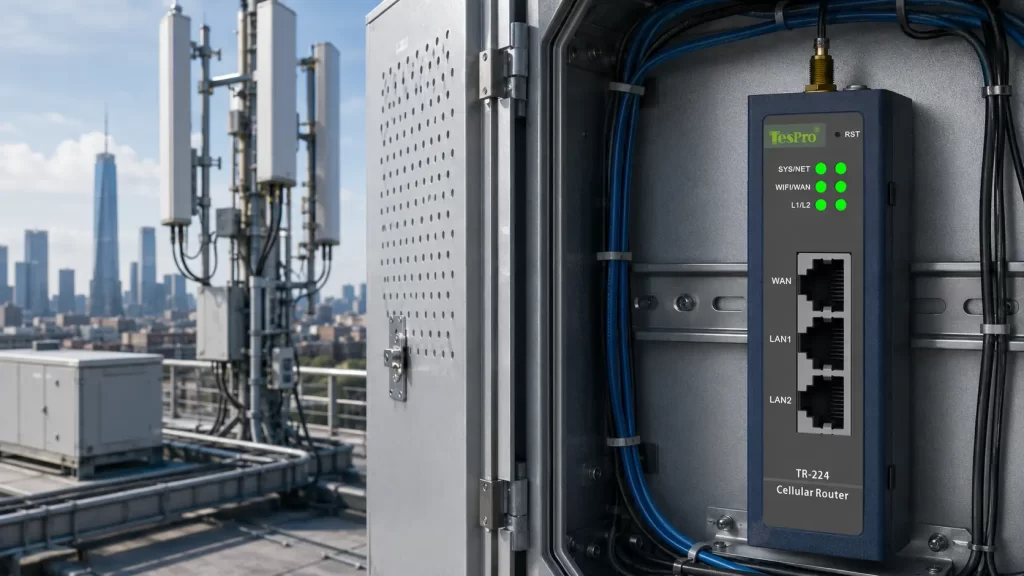
For carrier selection, use SIM cards from carriers with good coverage records at the deployment site and avoid using the same carrier long‑term. Test signal strength on different carriers to determine which provides the best failover performance. For mission‑critical applications, consider using two carriers with complementary coverage in the local network — if Carrier A has stronger signal but Carrier B weaker in one area, and the opposite in another, a dual‑SIM solution achieves complementary advantages. For firmware maintenance, regularly update router firmware to protect against vulnerabilities and enhance performance as the device and firmware mature. Tespro's cloud management platform supports remote batch firmware updates, upgrading hundreds of routers without on‑site operations.
What antenna placement considerations are important for 4G LTE industrial router deployment, and how should carriers be selected?
Antennas should be positioned with few obstructions, at least 3 meters in elevation, away from dense equipment. For metal cabinet installations, external antennas routed outside are mandatory. Use SIM cards from two carriers with complementary coverage at the deployment site, determine the optimal combination through signal strength testing, and avoid long‑term use of a single carrier.
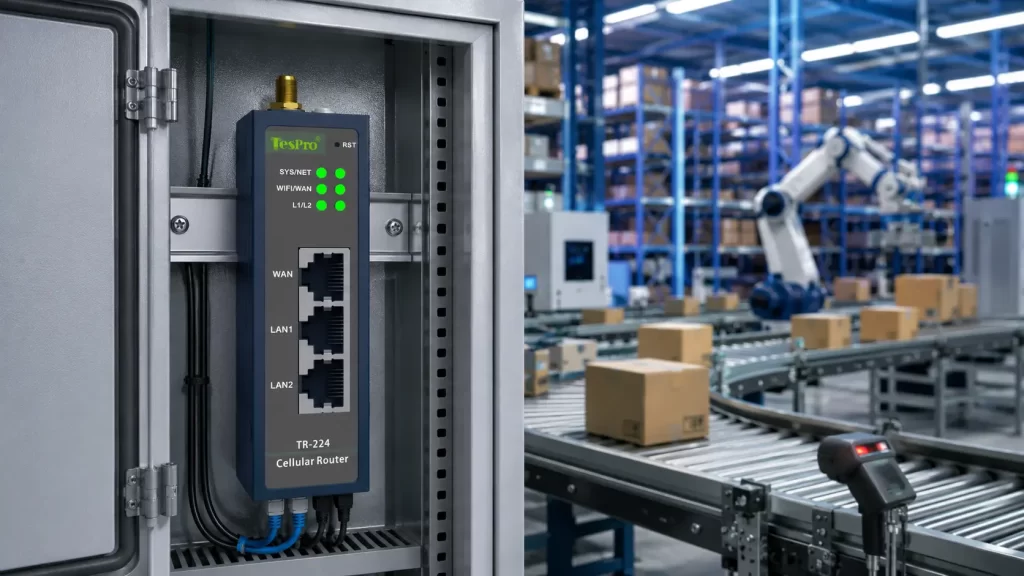
For security configuration, deactivate as many unnecessary remote access features as possible and strengthen password controls. If data confidentiality is a concern, ensure both radio and cellular network data services are encrypted. Tespro industrial routers support multiple VPN protocols including IPsec and OpenVPN, establishing secure encrypted tunnels over public networks to protect data from eavesdropping or tampering during transmission. Additionally, routers feature built‑in firewall capabilities for access control based on IP addresses, ports, and protocols, blocking unauthorized access attempts. The global market for industrial cellular routers is expected to reach 1.08 to 1.19 billion USD in 2025‑2026, with a growth rate of 9.51 percent over the next seven years. The core driver of this growth is dual‑SIM and failover connectivity features. As companies build the network infrastructures required for mission‑critical functions, focus is shifting toward planning different tiers of redundant network availability. For buyers, choosing a 4G LTE industrial router with mature redundancy design, ease of deployment, and long‑term maintainability is not just equipment procurement — it is a strategic investment in operational reliability for years to come.