-1791966549842.webp)





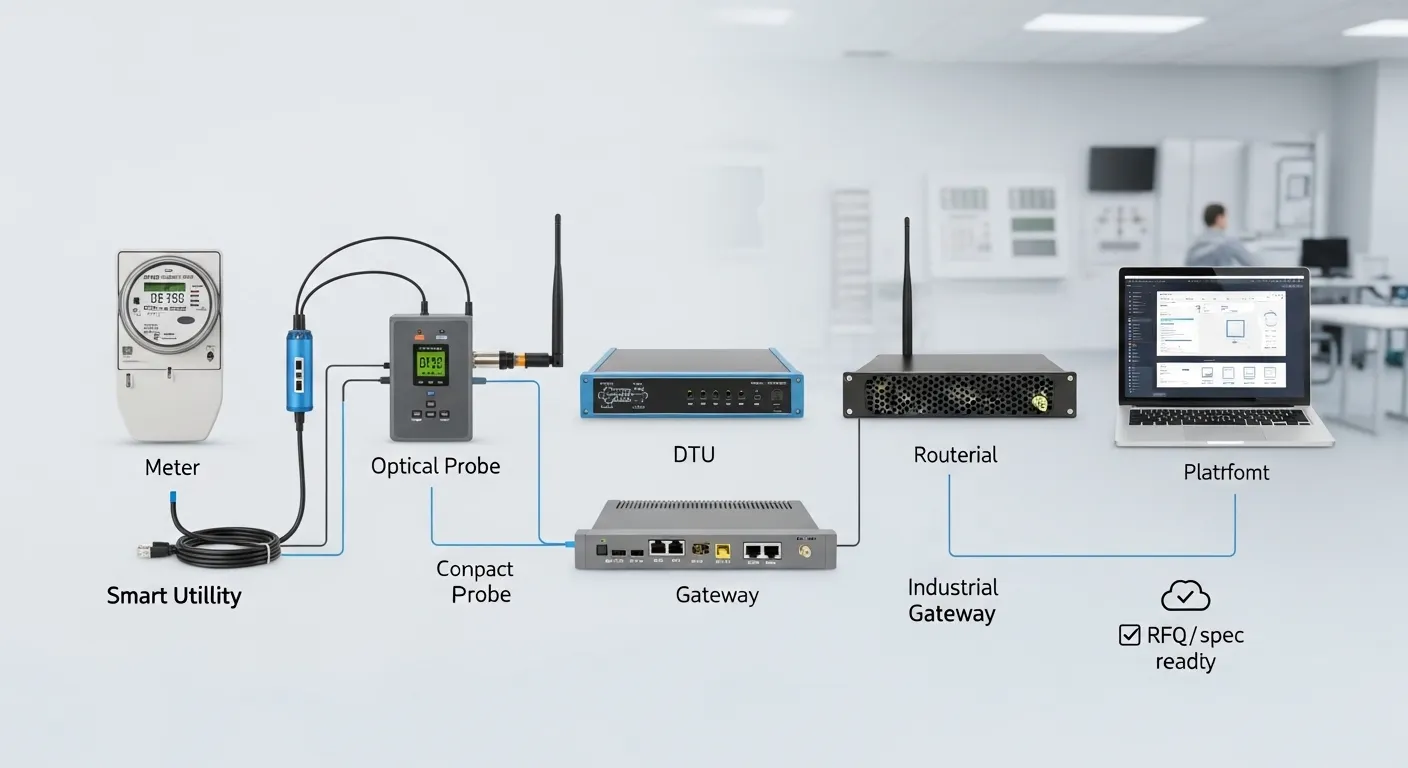

Tespro provides industrial metering, connectivity, and energy data solutions for utility buyers, AMI/AMR project teams, meter manufacturers, system integrators, and industrial IoT deployments. For a smart metering or AMI metering project, buyers should not only ask for “smart meters” or “data collection devices.” They should define the complete field hardware path: meter access, data transmission, network connection, gateway or router requirements, software/platform integration, accessories, and support.
A practical AMI/AMR quotation normally depends on meter model, protocol, interface, network type, SIM/APN/VPN requirements, installation environment, power supply, data destination, and quantity. This checklist helps technical and procurement teams prepare those details before requesting a quote, datasheet, sample, demo, or OEM/ODM consultation from Tespro.
What Should Be Included in a Smart Metering AMI Kit?
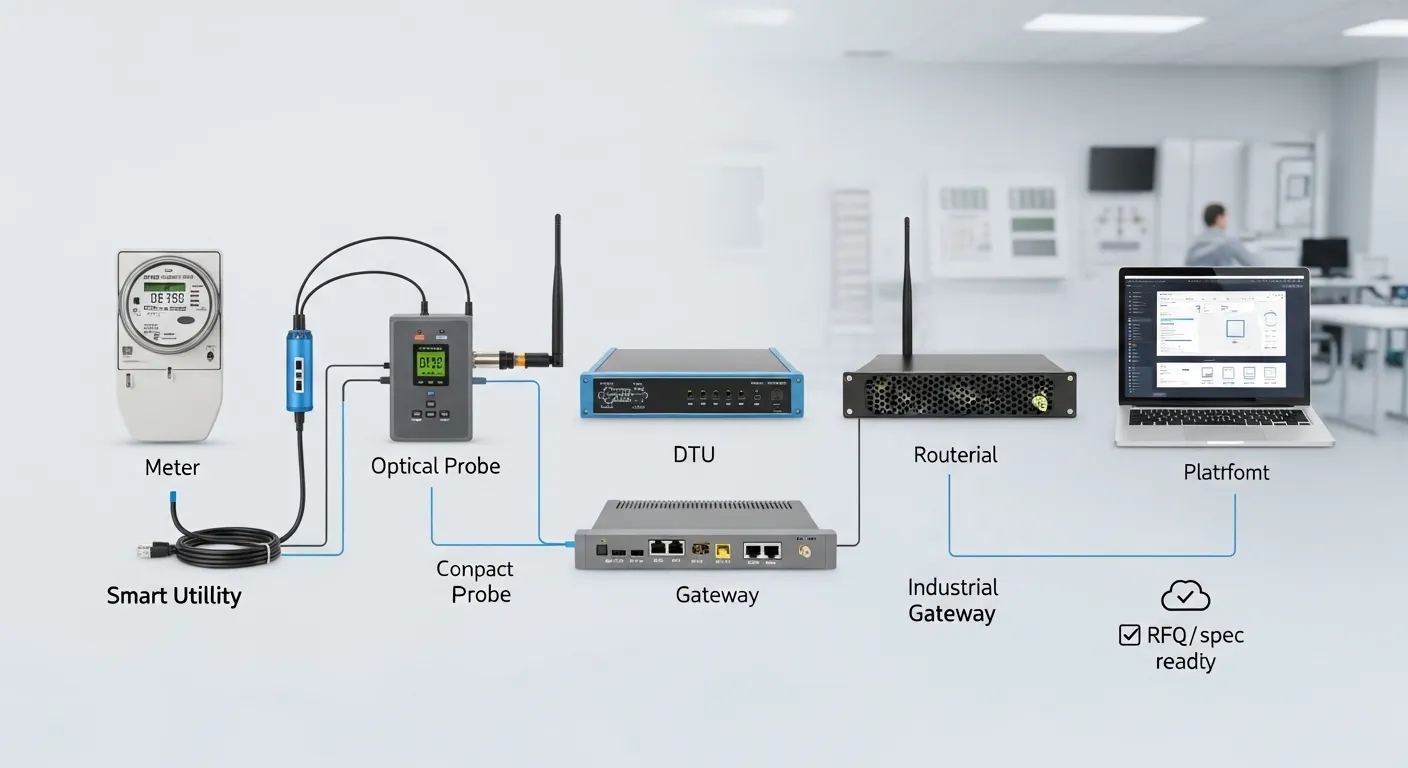
A smart metering AMI kit is not always one device. In many projects, it is a combination of field hardware and software connection points.
Depending on the project design, the kit may include:
- Metering optical probes for meter communication, reading, setup, or field service
- Data transmission units for serial or wireless meter data transfer
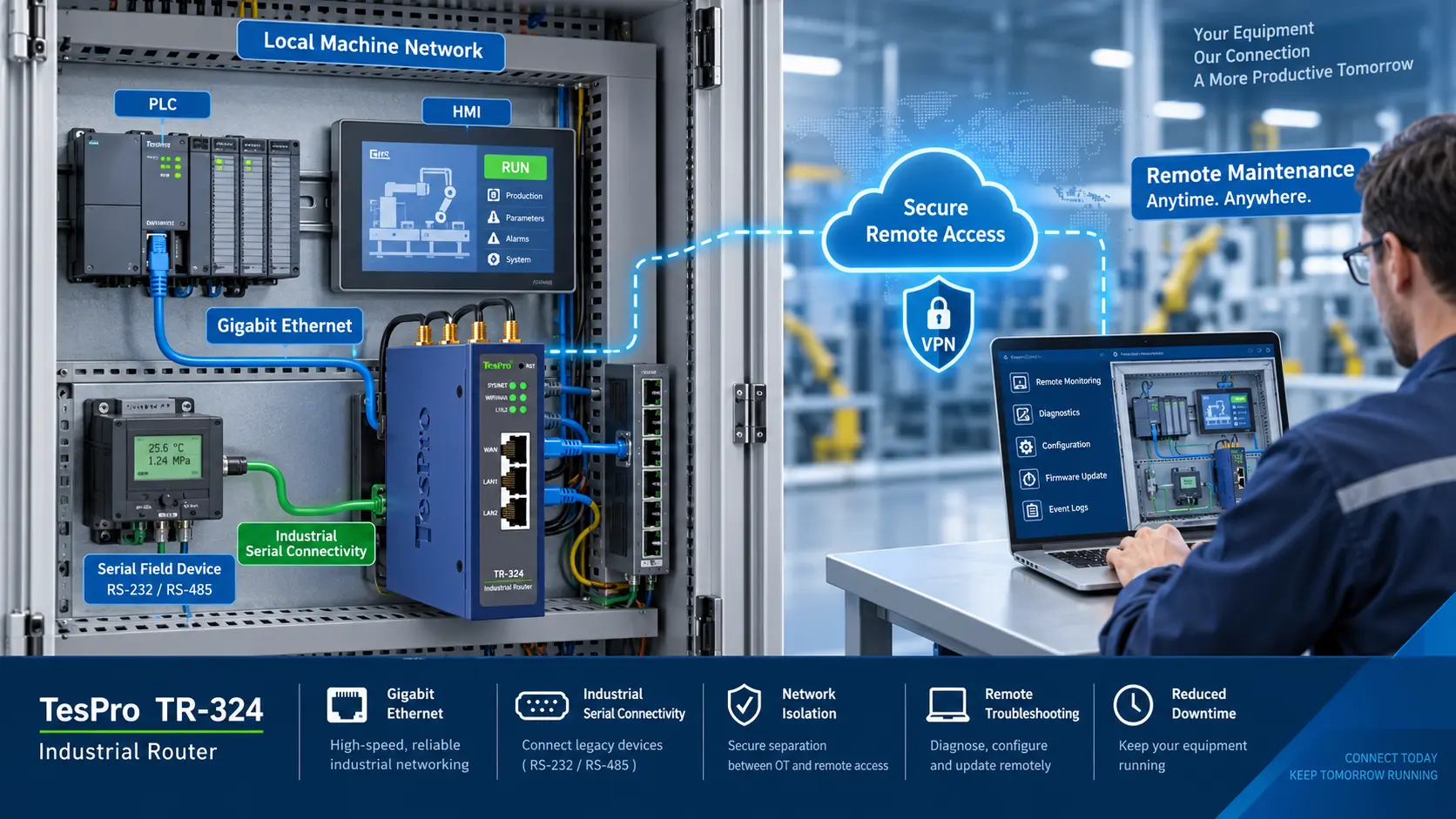
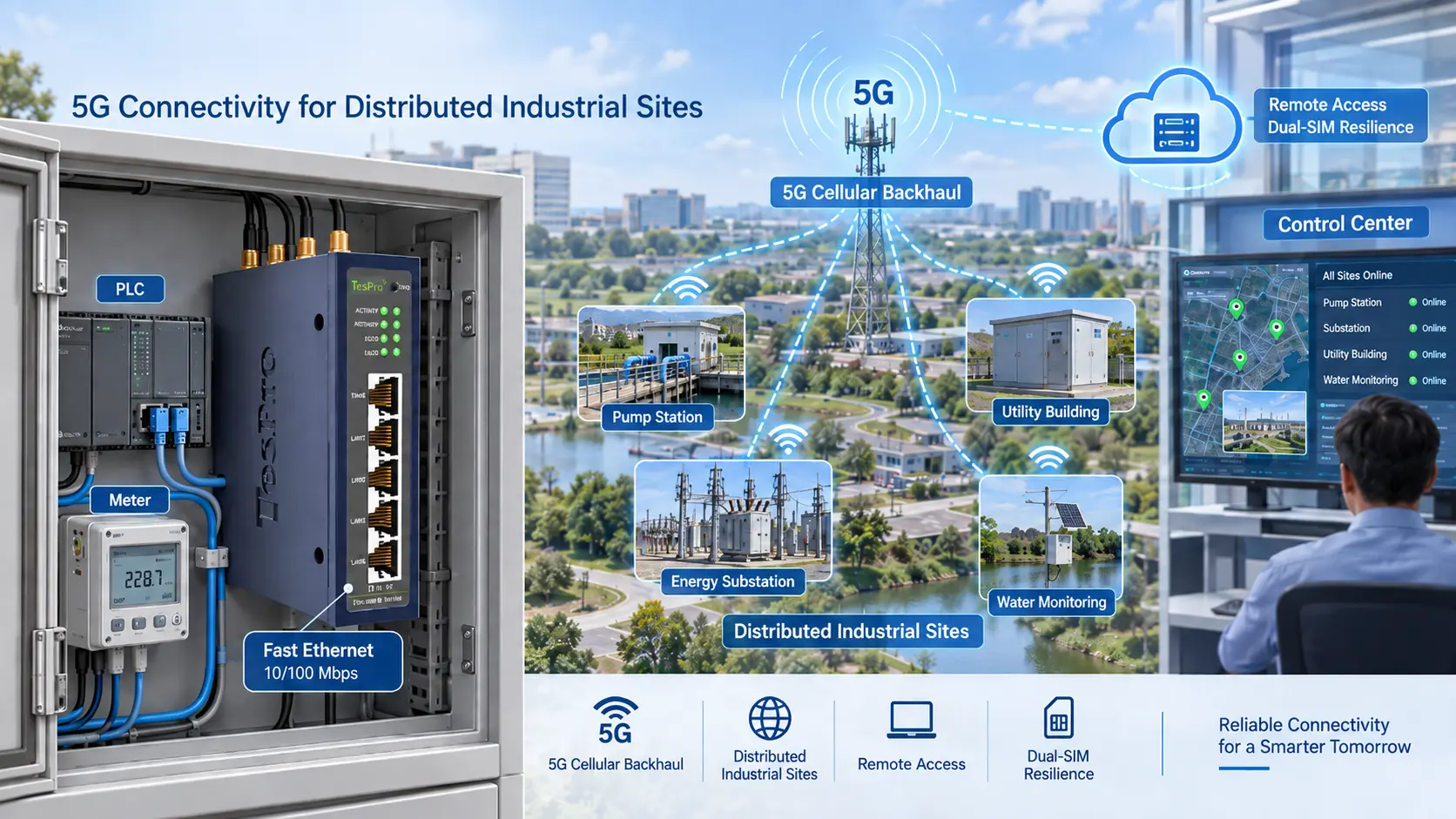
- Industrial routers for cellular or Ethernet site connectivity
- Industrial gateways for protocol conversion and device-to-platform communication
- Cloud, dashboard, or software platform connection
- Antennas, cables, power accessories, mounting parts, and enclosure-related items
- Technical support for configuration, integration, and quotation planning
The buyer’s goal is to make sure every part of the data path is clear before purchase. A missing interface detail, wrong communication method, or unclear software requirement can delay quotation and create field deployment issues.
Do You Need an Optical Probe, DTU, Router, or Gateway?
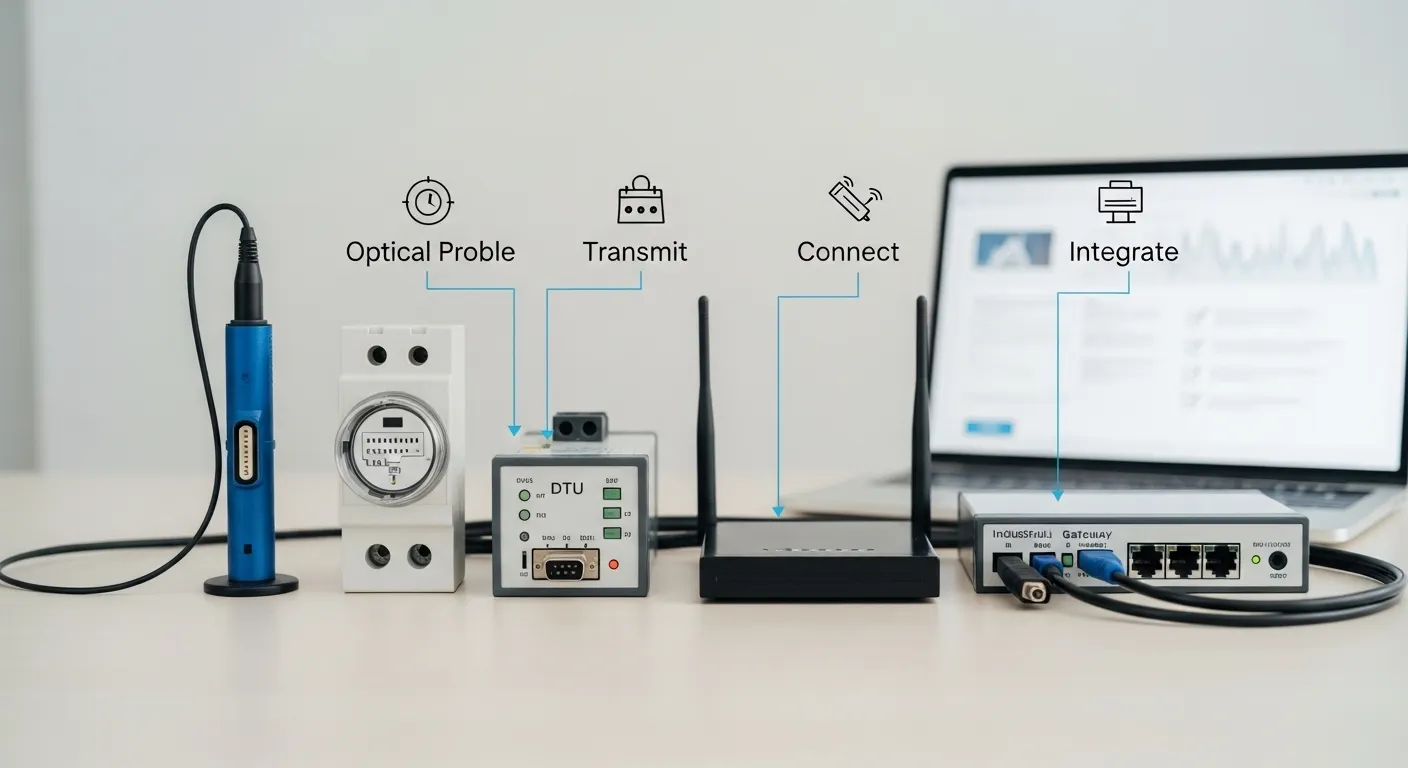
Different AMI/AMR projects need different device combinations. A utility pilot project may need optical probes and DTUs. A remote monitoring project may need routers or gateways. A larger integration project may need field devices plus a platform connection.
| Buyer need | Recommended device category | Specs to confirm | RFQ note |
|---|---|---|---|
| Read or configure meters through optical port | Metering optical probe | Meter standard, interface, software, cable or wireless option | Send meter model and reading software details |
| Transmit meter data from serial devices | DTU | RS485/RS232, network type, protocol transparency, power | Confirm data format and server/platform destination |
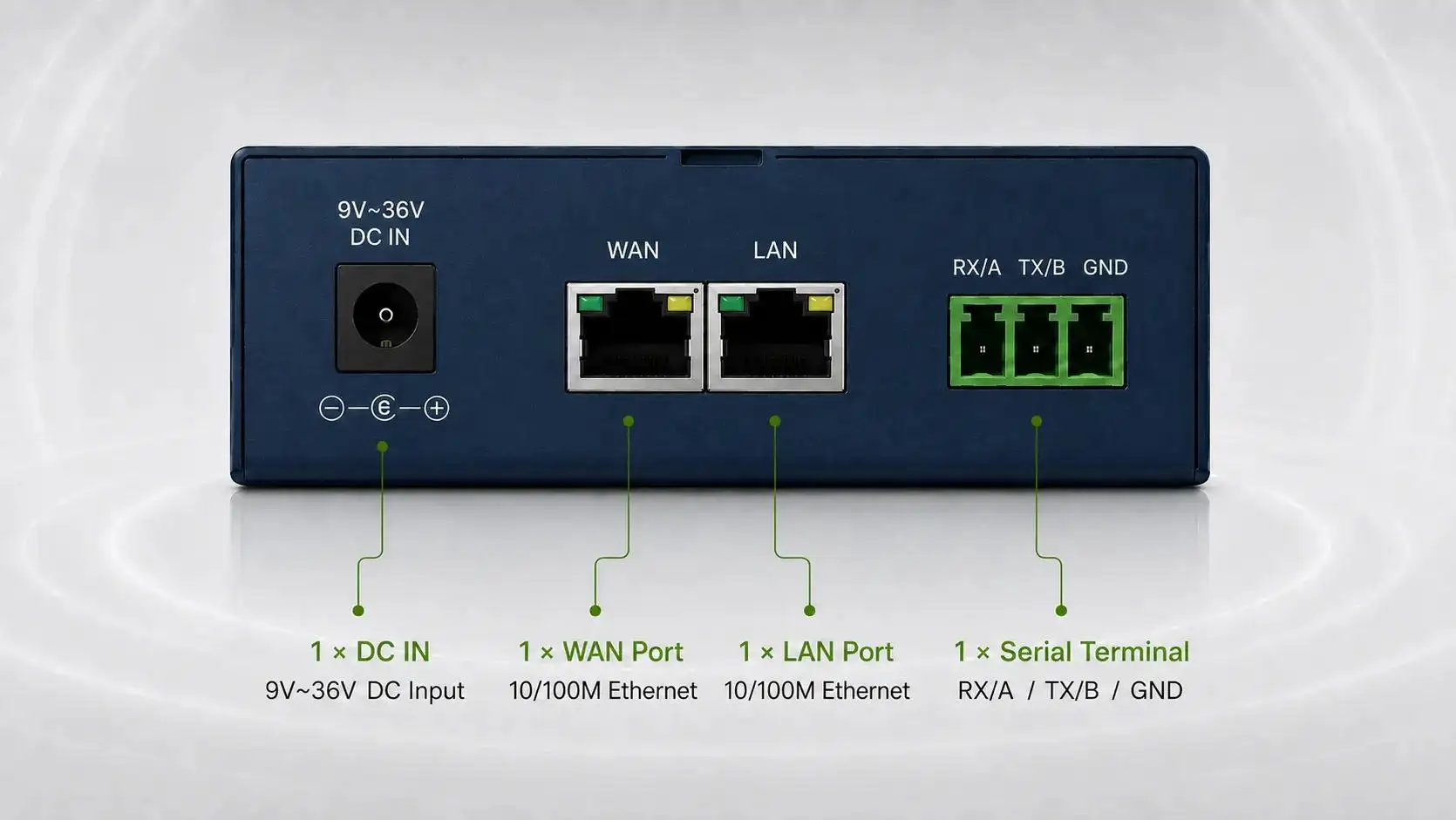
| Provide stable site connectivity | Industrial router | 4G/5G, SIM, APN, VPN, static IP, LAN ports, antenna | Share carrier and remote access requirements |
| Convert field data to cloud/platform format | Industrial gateway | RS485, Ethernet, Modbus, MQTT, TCP/IP, API needs | Send system diagram and cloud/platform requirement |
| View, export, or manage meter data | Software/platform | Dashboard, alarms, API/export, user roles, data frequency | Clarify whether hardware-only or platform support is needed |
This table should be used as a starting point. The final device selection depends on meter compatibility, communication architecture, installation conditions, and backend integration.
Meter Compatibility Comes First
Before selecting smart metering hardware, buyers should confirm how the existing or planned meters communicate. This is especially important for mixed meter fleets, retrofit projects, and projects involving different meter brands or standards.
Prepare these meter details before contacting Tespro:
- Meter brand and model
- Meter type, such as electricity, water, gas, or multi-utility
- Optical port, RS485, RS232, Ethernet, or other interface
- Communication protocol or standard
- Baud rate and data format if already known
- Existing reading software or platform
- Whether the project needs field reading, remote reading, configuration, testing, or continuous monitoring
- Quantity of meters and number of sites
For optical probe selection, buyers should also confirm whether they need USB, RS232, Bluetooth, or another interface type. If the probe will be used in the field, cable length, magnetic attachment, portability, and software compatibility may also affect selection.
Communication and Network Requirements
AMI/AMR projects depend on reliable communication between field meters and the data platform. The right network choice depends on site conditions, data frequency, budget, and maintenance access.
Buyers should confirm:
- Network type: 4G, 5G, NB-IoT, LoRa, RF, PLC, Ethernet, or mixed network
- SIM requirements: single SIM, dual SIM, private APN, static IP, or carrier restrictions
- Remote access requirements: VPN, secure login, firewall, or remote device management
- Data direction: meter-to-server, server-to-device, or two-way communication
- Data frequency: interval reads, daily reads, alarms, events, or on-demand reads
- Antenna needs: internal, external, high-gain, cabinet-mounted, or outdoor placement
- Installation location: meter room, cabinet, pole, substation, basement, or remote site
A 4G DTU may be enough for simple serial data transmission. An industrial router may be better when the site needs LAN connectivity, secure remote access, or multiple connected devices. A gateway may be required when data must be converted, filtered, buffered, or sent to a cloud platform using a specific protocol.
Platform, HES, MDMS, and API Integration
Field hardware is only one part of an AMI metering project. Buyers should also define where the data will go after it leaves the meter or field device.
Common destinations include:
- Utility HES or MDMS
- SCADA or remote monitoring system
- Energy management platform
- Customer cloud platform
- Billing or reporting system
- Tespro-supported software or dashboard
- Third-party API endpoint
The integration requirement affects gateway selection, protocol setup, and software support. For example, a simple meter reading project may only need data transmission. A utility management project may need alarms, device status, user roles, export options, API connection, and remote configuration.
Before quotation, buyers should clarify whether they need:
- Hardware only
- Hardware plus configuration support
- Gateway-to-cloud integration
- Dashboard or platform demo
- API/export support
- Alarm and event data
- Remote monitoring and device management
- OEM/ODM software or platform discussion
Deployment Conditions That Affect Device Selection
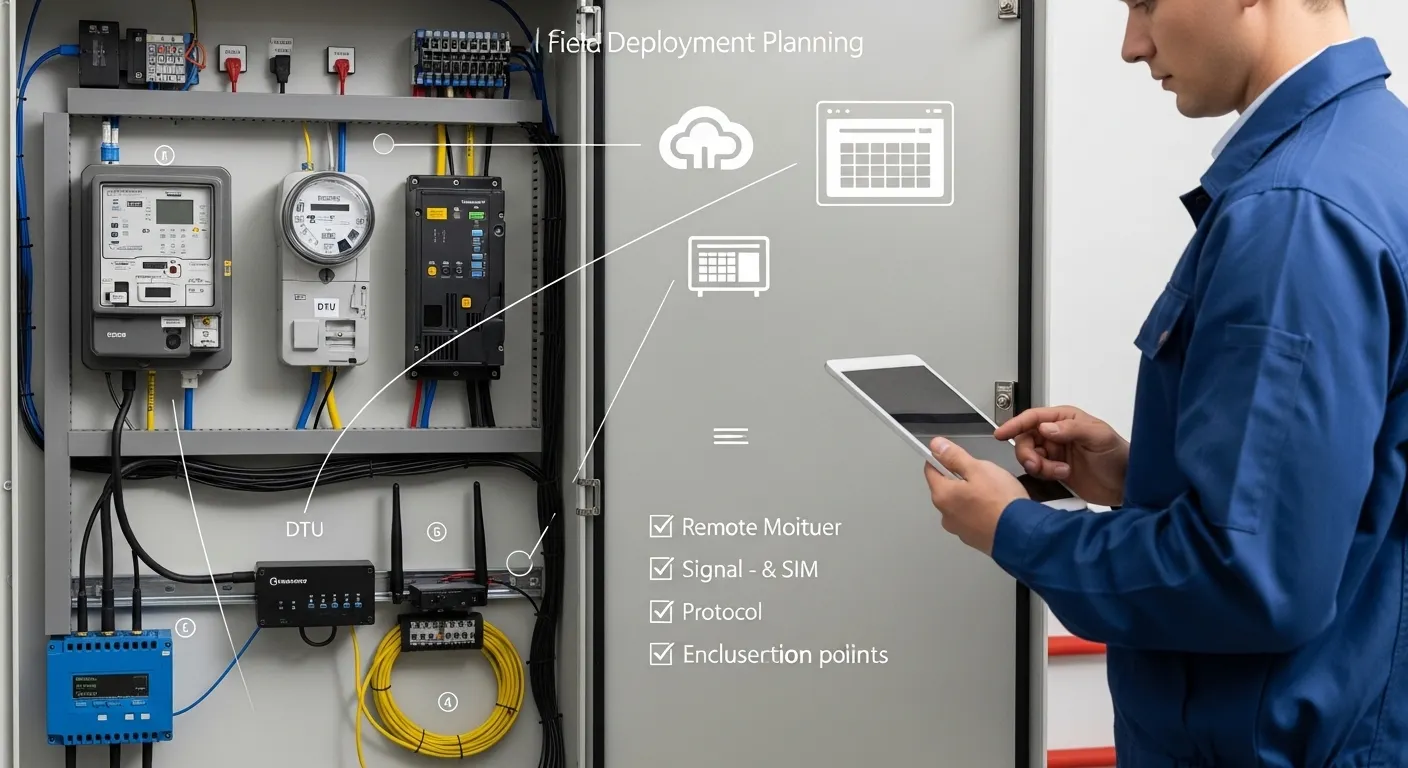
A device that works in a lab may not be the right choice for a field site. AMI/AMR hardware must be selected with the installation environment in mind.
Check these deployment details early:
- Indoor or outdoor installation
- Cabinet, DIN rail, pole, wall, or panel mounting
- Power supply availability
- Backup power or battery requirement
- Operating temperature and humidity conditions
- Dust, moisture, vibration, or electrical noise exposure
- Signal strength and antenna position
- Maintenance access for technicians
- Local carrier coverage and SIM availability
- Security requirements for remote access
These details help Tespro recommend a more suitable device category and configuration. They also help avoid problems such as weak signal, wrong enclosure choice, unstable power, or difficult maintenance after installation.
Common Buying Mistakes in AMI/AMR Projects
Many project delays come from incomplete technical requirements, not from the device itself.
Avoid these common mistakes:
- Requesting a quote without meter model or protocol details
- Choosing a DTU when protocol conversion is actually required
- Choosing a gateway when simple transparent transmission is enough
- Ignoring SIM, APN, VPN, or static IP requirements
- Forgetting antenna placement in metal cabinets or basements
- Assuming all meters use the same interface
- Not confirming backend platform or API requirements
- Ignoring power supply and installation constraints
- Asking for a datasheet without explaining the application
- Comparing suppliers only by unit price, not integration risk
A clear RFQ helps both engineering and procurement teams. It reduces back-and-forth and improves quotation accuracy.
What Should Buyers Send for an AMI/AMR Quote?
For faster technical review, send Tespro a structured requirement list. The more complete the information, the easier it is to recommend the right device combination.
Include these details in your RFQ:
- Product or device type needed: optical probe, DTU, router, gateway, platform, or full kit
- Quantity and expected project scale
- Application type: AMI, AMR, smart grid, energy management, SCADA, factory monitoring, or utility metering
- Meter or device brand and model
- Meter interface: optical, RS485, RS232, Ethernet, USB, Bluetooth, or other
- Protocol or standard if known
- Network type: 4G, 5G, NB-IoT, LoRa, RF, PLC, Ethernet, or mixed
- SIM, APN, VPN, static IP, or remote access requirements
- Cloud, platform, HES, MDMS, SCADA, API, or dashboard requirements
- Power supply and installation method
- Operating environment and enclosure constraints
- Antenna or signal concerns
- Security or remote management needs
- Datasheet, sample, demo, or OEM/ODM requirements
- Delivery destination
- Any system diagram, site drawing, written specification, or tender document
If some details are not confirmed yet, buyers can still contact Tespro. The technical team can help clarify which information is needed before final model selection.
Why Work With Tespro for Smart Metering Project Hardware?
Tespro supports industrial metering and connectivity projects with practical device categories for field communication, remote data transmission, and energy data workflows. Buyers can discuss optical probes, DTUs, industrial routers, gateways, software/platform requirements, accessories, and OEM/ODM needs in one project conversation.
This is useful for utility teams and integrators who need more than a single product datasheet. A real AMI/AMR project often needs compatibility review, device selection, configuration planning, and integration discussion before purchasing.
Tespro can help buyers prepare a clearer quotation request by reviewing the device role, interface, protocol, network, platform, power, and deployment environment. This makes the purchasing process more technical, more practical, and easier to align with field requirements.
Frequently Asked Questions
What devices are usually needed for an AMI/AMR project?
A typical project may need optical probes, DTUs, industrial routers, gateways, software/platform connection, antennas, cables, and power accessories. The final kit depends on meter interface, network type, data destination, and deployment environment.
Do I need an optical probe for smart metering?
An optical probe is useful when the meter must be read, configured, tested, or serviced through an optical port. Buyers should confirm the meter model, standard, interface type, and software requirement before selecting a probe.
When should I choose a DTU instead of a gateway?
Choose a DTU when the main need is data transmission from serial devices. Choose a gateway when the project needs protocol conversion, device-to-cloud communication, local processing, or platform integration.
Is 4G enough for AMI metering?
4G is often suitable for many remote meter reading and monitoring projects. However, the best network depends on data frequency, carrier coverage, latency needs, site conditions, security, and future expansion plans.
What protocol details should I send before quotation?
Send the meter protocol or standard if known, plus interface details such as optical port, RS485, RS232, Ethernet, USB, or Bluetooth. Also include platform protocol needs such as MQTT, TCP/IP, API, or export format.
Can Tespro support mixed meter or retrofit projects?
Tespro can review project requirements for mixed meter or retrofit scenarios. Buyers should send meter brands, models, interfaces, protocols, site conditions, and backend system requirements so the right device options can be discussed.
Talk to Tespro About Your Smart Metering AMI Kit
If you are preparing an AMI/AMR project, smart metering pilot, utility data collection upgrade, or industrial energy monitoring system, share your requirements with Tespro for technical review.
Send your device type, quantity, meter model, interface, protocol, network type, SIM/APN/VPN/static IP needs, platform or API requirements, power supply, operating environment, enclosure limits, security needs, delivery destination, and any drawing or system diagram. Tespro can help you request a quote, datasheet, sample, demo, consultation, or OEM/ODM support for the right smart metering hardware and integration path.